Why a Springer Spaniel Pees When Greeted
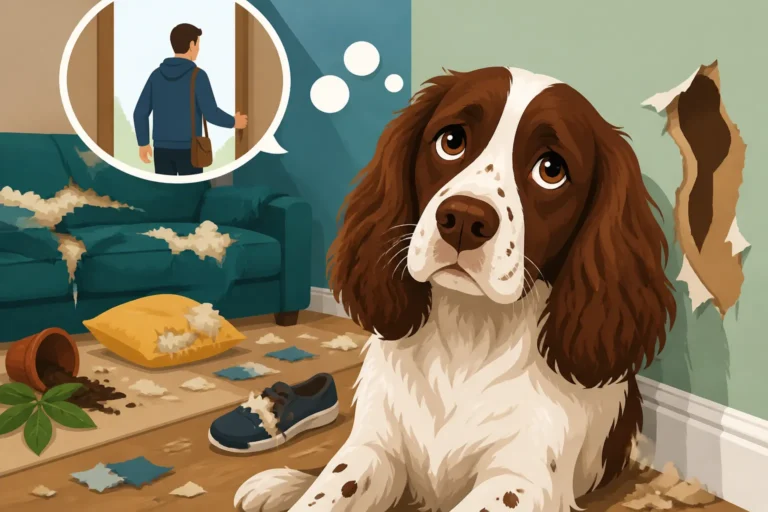
It's disheartening, isn't it? You walk through the door, filled with the joy of seeing your beloved English Springer Spaniel, only for their enthusiastic greeting to be immediately followed by a puddle on your floor. That sudden little leak, often accompanied by a lowered head, tail tucked, and perhaps a frantic wiggle, can leave you feeling frustrated, confused, and worried about your dog's well-being. This guide aims to shed light on why your Springer Spaniel might be peeing when greeted, exploring the common causes and offering practical, empathetic solutions to help both you and your furry friend navigate these sometimes messy moments.
Understanding Submissive Urination in Springer Spaniels
Let's start by digging into what's really going on when your Springer Spaniel pees during a greeting. It's rarely about being naughty or not being house-trained; it's almost always a deeply ingrained behavior, especially for a sensitive breed like ours.
What Exactly Is Submissive Urination?
Submissive urination is precisely what it sounds like: a dog pees as a display of submission or deference, often in response to perceived threats, fear, or overwhelming excitement. Think of it as a canine way of saying, "Please don't hurt me, I mean no harm," or "You're the boss, and I respect that!" It's a non-confrontational signal, an involuntary physiological response, rather than a deliberate act to soil the house. Puppies commonly display this behavior, and many outgrow it as they mature and gain confidence. However, some adult dogs, particularly those with more anxious or sensitive temperaments, can continue to exhibit it. It's crucial to understand that punishing a dog for submissive urination will only exacerbate the problem, increasing their fear and anxiety, which in turn leads to more urination. It's a vicious cycle we absolutely want to avoid.
Why Springer Spaniels Are Particularly Prone
Our beloved English Springer Spaniels are known for their incredibly sensitive, enthusiastic, and often exuberant personalities. These very traits, which make them such wonderful companions and dedicated working dogs, can also make them more susceptible to submissive urination. They are often highly attuned to human emotions and body language, and can easily become overstimulated or intimidated.
Consider a Springer Spaniel puppy: they're typically bundles of boundless energy and eager-to-please attitudes. When a human giant leans over them, makes direct eye contact, or speaks loudly (even in a happy tone), a young, impressionable Springer might interpret these actions, however well-intentioned, as imposing or even slightly threatening. This can trigger the submissive response. Even as adults, their intense desire to please, coupled with their often-high energy and emotional sensitivity, can lead to uncontrolled urination when greetings become too intense. They genuinely want to be good, but their bodies simply can't hold it when the emotional floodgates open. The Soft Springer Spaniel That Shuts Down If You Shout is a related read that explores their sensitive nature further.
Common Triggers and Scenarios
Identifying when your Springer Spaniel exhibits submissive urination is key to managing it. The triggers are often consistent, helping you to anticipate and adjust your interactions.
The Excitement Factor
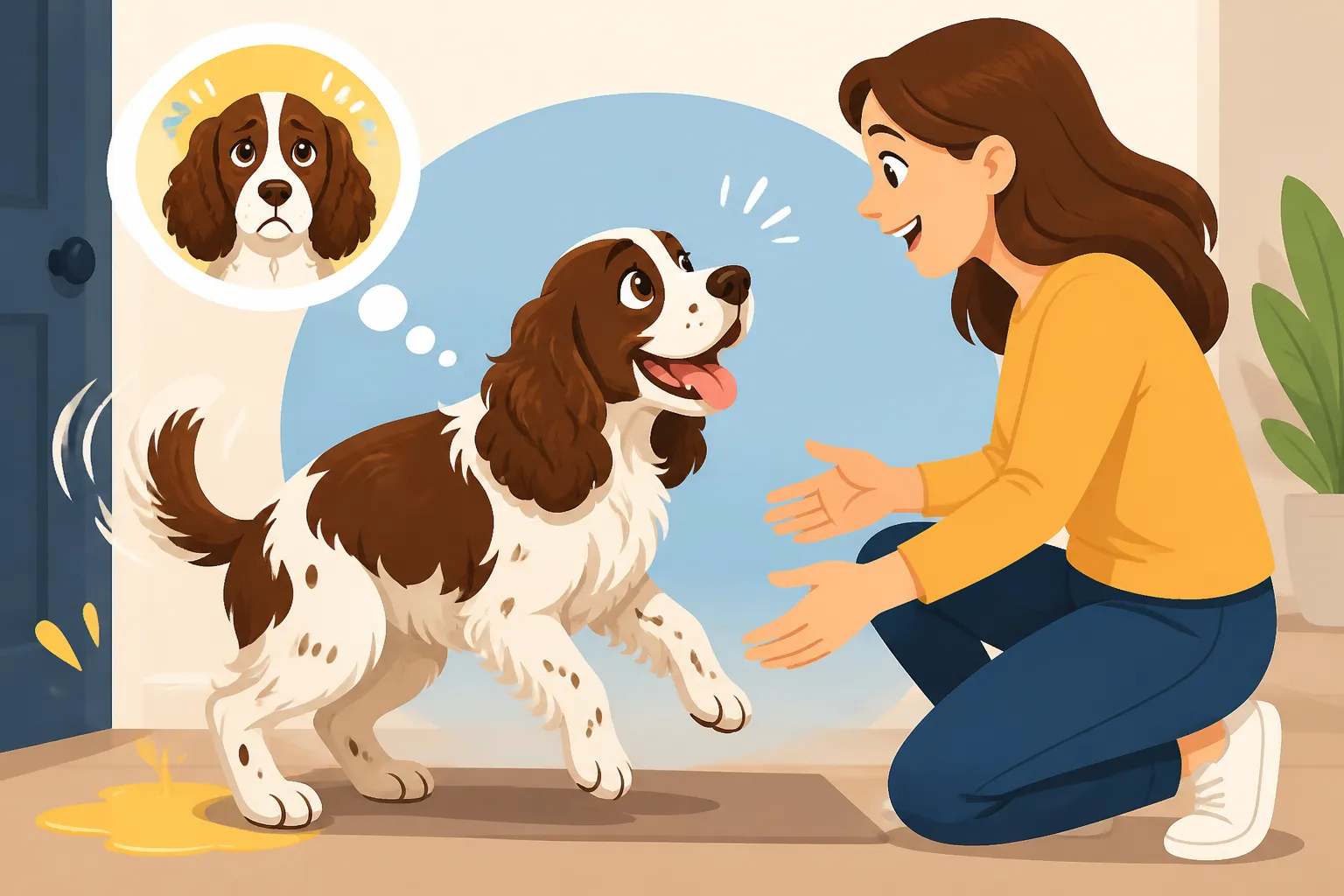
This is probably one of the most common scenarios for our Springers. Imagine you've been gone all day, and your Springer has been waiting patiently, perhaps even taking a nap. The moment you unlock the door, their world explodes with happiness! Their tail wags so hard their whole body wiggles, they might whine with joy, and they practically dance with anticipation. This surge of overwhelming excitement can simply cause them to lose bladder control. It's not about fear here, but pure, unadulterated canine glee. They're so happy to see you, their brain just can't quite send the "hold it!" message to their bladder in time. Guests arriving, new toys, or even the sound of a leash being picked up can trigger this level of excitement, leading to an accidental puddle. Whether a Springer Spaniel Is Overexcited by Visitors touches upon their general exuberance around new people.
The Fear and Anxiety Connection
While excitement is a big player, fear and anxiety can also be powerful triggers. A Springer Spaniel who is naturally shy, has had negative experiences, or lacks confidence might urinate when feeling intimidated. This could manifest when:
- Loud noises or sudden movements: A door slamming, a dropped pan, or someone quickly approaching can startle them.
- Intense direct eye contact: For many dogs, direct, prolonged eye contact can be perceived as confrontational.
- Leaning over or looming: Humans bending directly over a dog can be very intimidating, especially for smaller or more sensitive Springers.
- Harsh verbal corrections: As mentioned earlier, scolding or yelling will almost always make submissive urination worse, as it heightens their fear and confirms their perception of being in trouble.
- Unfamiliar people or situations: A new person reaching out too quickly or being in a strange environment can induce anxiety.
In these situations, the urination is a clear signal of their discomfort or fear. It's their attempt to pacify and de-escalate what they perceive as a tense situation.
Greeting Rituals Gone Awry
Our human greeting rituals often clash with a dog's natural communication. We tend to lean in, make eye contact, talk in high-pitched voices, and reach out to pet, sometimes immediately. For a sensitive Springer Spaniel prone to submissive urination, this can be a recipe for disaster. Think about it from their perspective:
- Overbearing approach: A person walking directly and quickly towards them.
- Loud, excited voices: While we mean well, an overly enthusiastic voice can be overwhelming.
- Direct petting on the head: Many dogs find this invasive and prefer petting on the chest or side.
- Picking up small puppies: While adorable, picking up a puppy during an excited greeting can trigger a feeling of vulnerability and lead to urination.
A well-meaning guest might unknowingly be doing all the wrong things, leading to repeated incidents. It's important to educate family and friends on how to interact with your Springer in a way that minimizes stress and overstimulation. This isn't about blaming anyone; it's about understanding canine communication.
Differentiating From Other Urinary Issues
Before you label every puddle as submissive urination, it's really important to rule out other possibilities. Sometimes, what looks like a behavioral issue can actually be a medical one.
Medical vs. Behavioral: Ruling Out Health Problems
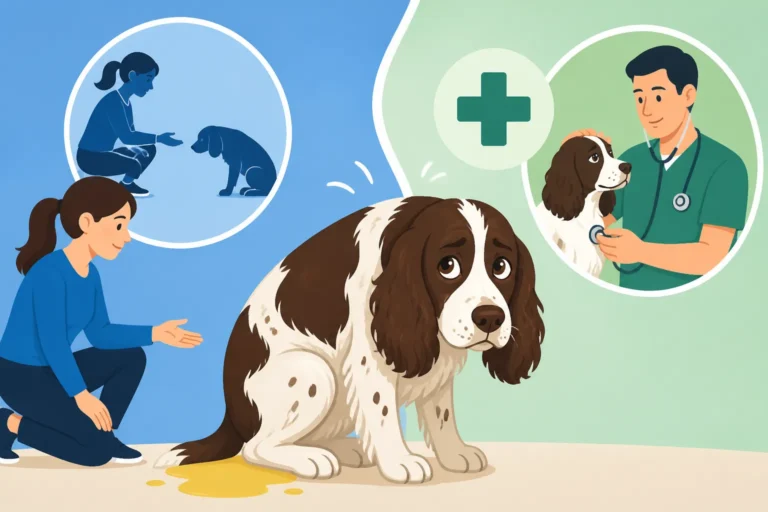
The very first step when your Springer Spaniel starts having accidents, especially if it's a new behavior or occurs outside of greeting contexts, is always a trip to the vet. There are several medical conditions that can cause a dog to lose bladder control, mimicking behavioral issues. These include:
- Urinary Tract Infections (UTIs): These are incredibly common and can cause frequent, uncontrollable urination. Your dog might strain to pee, have bloody or cloudy urine, or lick their genital area excessively.
- Kidney Disease: Impaired kidney function can lead to increased thirst and urination, and a reduced ability to hold urine.
- Diabetes: Similar to kidney disease, diabetes often presents with increased thirst and urination.
- Bladder Stones: These can cause irritation, pain, and leakage.
- Weak Bladder Sphincter (Urinary Incontinence): This is more common in older dogs, especially spayed females, and results in involuntary urine leakage, often while resting or sleeping.
- Hormonal Imbalances: Certain hormonal issues can affect bladder control.
- Neurological Problems: Damage to nerves controlling the bladder can lead to incontinence.
Your veterinarian can perform a thorough physical examination, urine tests (urinalysis and culture), and potentially blood tests or imaging to diagnose or rule out these underlying health issues. It's a foundational step. Whether a Springer Spaniel's Submissive Urination Is Medical delves deeper into this aspect.
Excitement Urination vs. Submissive Urination
While often grouped together, there's a subtle but important distinction between excitement urination and purely submissive urination. Both involve involuntary peeing, but the emotional state behind them differs.
| Feature | Submissive Urination | Excitement Urination |
|---|---|---|
| Underlying Emotion | Fear, anxiety, deference, appeasement, insecurity | Overwhelming joy, anticipation, high arousal |
| Body Language | Lowered head, tucked tail, averted gaze, flattened ears, trembling, crouching, rolling onto back | Wiggly body, high tail wag (sometimes frantic), jumping, whining, zoomies, general exuberance |
| Typical Triggers | Perceived threat, scolding, looming figures, direct eye contact, unfamiliar people/places | Enthusiastic greetings, arrival of owner/guests, anticipation of play/walks, new events |
| Response to Punishment | Worsens the behavior, increases fear and anxiety | Can still worsen, as it adds stress to an already overstimulated state |
| Frequency | Can occur more often in shy or anxious dogs | Common in puppies and young, high-energy dogs, often outgrown |
| Likely Age Range | Can persist into adulthood, especially with anxiety issues | Most common in puppies and adolescents, often resolves with maturity |
Understanding this difference helps you tailor your approach. If it's pure excitement, you might focus on calmer greetings. If it's rooted in fear, building confidence and gentle interactions become paramount. Often, for Springers, it's a mix of both, a "joyful submission" if you will, where their excitement pushes them over the edge and they default to a submissive posture.
Strategies for Managing Submissive Urination
The good news is that there are many things you can do to help your Springer Spaniel overcome or significantly reduce submissive urination. It takes patience, consistency, and a whole lot of empathy.
Adjusting Your Greeting Routine
This is perhaps the most impactful change you can make. The goal is to make greetings as low-key and non-threatening as possible, allowing your Springer to manage their emotions and bladder.
- Ignore them initially: When you first arrive home, completely ignore your Springer Spaniel for the first few minutes. No eye contact, no talking, no petting. Walk in, put your keys down, perhaps even start a small chore. This prevents that immediate burst of overwhelming excitement.
- Allow them to approach you: Once they've settled a little (maybe after 2-5 minutes, depending on the dog), crouch down to their level, avoid direct eye contact, and let them come to you for a calm greeting. Offer a gentle scratch on the chest or side, rather than reaching over their head.
- Speak softly and calmly: Keep your voice low and soothing. Avoid high-pitched, excited tones during greetings, as this can escalate their arousal.
- Take them outside immediately: If you anticipate urination, take your Springer straight outside upon arrival, before any greeting. Let them relieve themselves, then bring them back in for a calm, delayed greeting.
- Manage guest greetings: Instruct guests to follow the same protocol. Ask them to ignore your dog initially, and then offer a calm, low-key greeting only when the dog is settled. Sometimes having the dog on a leash when guests arrive can help you guide the interaction.
By diffusing the intensity of the greeting, you reduce the pressure on your Springer's bladder and their emotional state.
Building Your Springer's Confidence
Many cases of submissive urination, particularly those rooted in fear or deference, benefit greatly from confidence-building exercises. A more confident dog feels less need to display extreme submission.
- Positive reinforcement training: Enroll in an obedience class that uses positive reinforcement. Teaching cues like "sit," "stay," and "down" can give your Springer a sense of control and accomplishment. When they know what's expected of them and are rewarded for it, their overall confidence grows. Whether Confidence Training Helps a Springer Spaniel explores specific methods. Companies like BAXTER & Bella offer online puppy and dog training programs that focus heavily on positive reinforcement and building confidence, which can be a great resource if you're looking for structured guidance from home.
- Socialization: Carefully expose your Springer Spaniel to a variety of positive experiences, people, and other dogs from a young age. Ensure these interactions are always positive and never overwhelming. If your dog is fearful, a controlled environment with a few calm, dog-friendly people is better than a busy dog park.
- Controlled exposure to triggers: If your dog urinates when people lean over them, practice having friends gently squat down without making eye contact, offering a treat, and then standing back up. Gradually increase the intensity of the interaction as your dog shows comfort.
- Avoid punishment: Never scold or punish your Springer for submissive urination. This will only reinforce their fear and make the problem worse. Remember, it's an involuntary response, not defiance. You want to build trust, not fear.
A confident Springer is a happier Springer, less likely to feel the need to appease or show extreme deference through urination.
Environmental Management and Cleaning
While working on the behavioral aspects, you'll need to manage the environment to prevent frustration and ensure hygiene.
- Frequent potty breaks: Especially for puppies or dogs prone to excitement urination, ensure they have ample opportunities to relieve themselves before potentially triggering events (like a visitor arriving). A full bladder is much harder to control.
- Crate training: A well-crate-trained Springer might feel more secure in their crate during initial greetings, allowing them to settle down before being let out for a calm interaction. Many dogs are less likely to soil their 'den.'
- Easy-to-clean surfaces: If possible, consider restricting your Springer to areas with hard floors during periods when urination is most likely (e.g., when guests are over) until the behavior improves.
- Thorough cleaning: Use an enzymatic cleaner to thoroughly remove urine odors. If the scent remains, your dog might be drawn back to the spot to urinate again. Products found on Amazon, specifically formulated for pet urine, can be incredibly effective at breaking down the enzymes and eliminating the smell completely. This not only discourages re-soiling but also eliminates any lingering odors that might bother you or your guests.
By taking these proactive steps, you can reduce the frequency of accidents and make the learning process less stressful for everyone involved.
When to Seek Professional Help
Sometimes, despite your best efforts, submissive urination can persist or even worsen. This is when it's absolutely crucial to call in the experts. You don't have to tackle this alone.
Consulting Your Veterinarian
As we've discussed, a medical issue can often present as a behavioral one. If you haven't already, your vet is the first port of call. They can:
- Perform a full diagnostic workup: This includes a physical exam, urinalysis, urine culture, and possibly blood work to rule out any underlying infections, metabolic diseases, or anatomical abnormalities that could be contributing to incontinence.
- Discuss medication options: In some cases, especially where anxiety is a significant factor, a veterinarian might suggest anti-anxiety medication in conjunction with behavior modification. This isn't a "magic bullet" but can lower your dog's anxiety enough to make training more effective. It can provide a window for learning and confidence building that wouldn't otherwise be possible.
- Refer to specialists: If the vet suspects a complex neurological issue or severe anxiety, they may refer you to a veterinary neurologist or a board-certified veterinary behaviorist. These specialists have advanced training and tools to diagnose and treat more challenging cases.
Never hesitate to involve your vet. Their expertise is invaluable in ensuring your Springer's physical health is not compromised.
Working With a Certified Professional Dog Trainer or Behaviorist
Once medical causes are ruled out, if the problem continues, a qualified professional dog trainer or a certified applied animal behaviorist (CAAB or DACVB) can be a game-changer.
- Professional assessment: They can observe your Springer Spaniel's body language, assess their temperament, and identify specific triggers and underlying anxieties that you might be missing. They'll consider their individual history, genetic predispositions as a Springer, and the household dynamics.
- Tailored behavior modification plan: These professionals can develop a personalized training plan that addresses your dog's unique needs. This might involve structured confidence-building exercises, desensitization to triggers, counter-conditioning techniques, and specific protocols for managing greetings. They understand the nuances of canine communication and how to teach you to communicate more effectively with your sensitive Springer.
- Guidance and support: They will guide you step-by-step through the process, providing ongoing support and adjusting the plan as needed. They can also help you understand how your own actions and reactions might be inadvertently contributing to the problem. What a Behaviorist Costs a Springer Spaniel Owner is a good resource if you're considering this option. Look for trainers who use positive reinforcement methods and are certified by reputable organizations. Avoid anyone who suggests harsh corrections or punishment for submissive urination, as this will be detrimental to your Springer's emotional well-being and the progress you hope to make.
Long-Term Outlook and Patience
Dealing with submissive urination can be a marathon, not a sprint. It truly requires a significant dose of patience, understanding, and a consistent approach from everyone in the household.
The Role of Age and Maturation
It's important to remember that many Springer Spaniel puppies naturally exhibit submissive urination. Their bladders are small, their emotional regulation skills are still developing, and they are learning about the world and their place in it. For many, this behavior naturally diminishes as they mature, typically by 6 to 12 months of age, as their confidence grows and their bladder control improves.
However, some Springers, due to inherent sensitivity, past experiences, or continued exposure to triggers, may continue to struggle well into adulthood. For these dogs, age alone might not solve the problem. That's when proactive intervention, consistent training, and sometimes professional guidance become even more crucial. Don't simply assume they'll "grow out of it" without any effort on your part, especially if it's persisting past puppyhood. The Age a Springer Spaniel Finally Settles and The First Year With a Springer Spaniel Puppy offer more context on their development.
Celebrating Small Victories
When you're dealing with a persistent issue like submissive urination, it's easy to get discouraged by setbacks. You might have a great week with no accidents, only for a particularly exciting greeting to result in a puddle. It happens. The key is to acknowledge and celebrate every small victory.
Did your Springer manage to hold it for an extra minute before going outside? Did they offer a calm sit instead of a frantic wiggle when a guest arrived? Did you successfully implement a new greeting strategy? These are all signs of progress! Every dry greeting is a step forward, and every time you successfully redirect their excitement or diffuse a potentially fearful situation, you're building a stronger, more confident, and happier relationship with your dog.
Remember, your Springer Spaniel isn't peeing to annoy you; they're communicating. With understanding, patience, and the right approach, you can help them navigate their big emotions and greet the world with a dry, confident tail wag. It's a journey, but a deeply rewarding one for both of you. Whether a Springer Spaniel Grows Out of Submissive Urination is a worthwhile read on this topic.
Disclaimer
This article is for general informational purposes only and does not constitute professional advice. Laws, prices and regulations vary by location and change over time. Consult a qualified professional for guidance on your specific situation.