Whether an Oversized Springer Spaniel Can Be Shown
An English Springer Spaniel can look “too big” for the show ring because of height, weight, heavy coat, or simply a large frame. Those are not the same thing, and only some affect judging. This guide explains how show standards assess size, how to measure your dog fairly, and what an oversized Springer Spaniel’s chances may depend on.
What oversized means in the show ring
Height matters more than a number on the scale
When people ask whether an oversized Springer Spaniel can be shown, they often mean one of two things: the dog looks larger than the breed type they expect, or the dog measures above the height described in a breed standard. Those are different concerns. A dog can be heavy but within the expected height range, or tall and lean without weighing much.
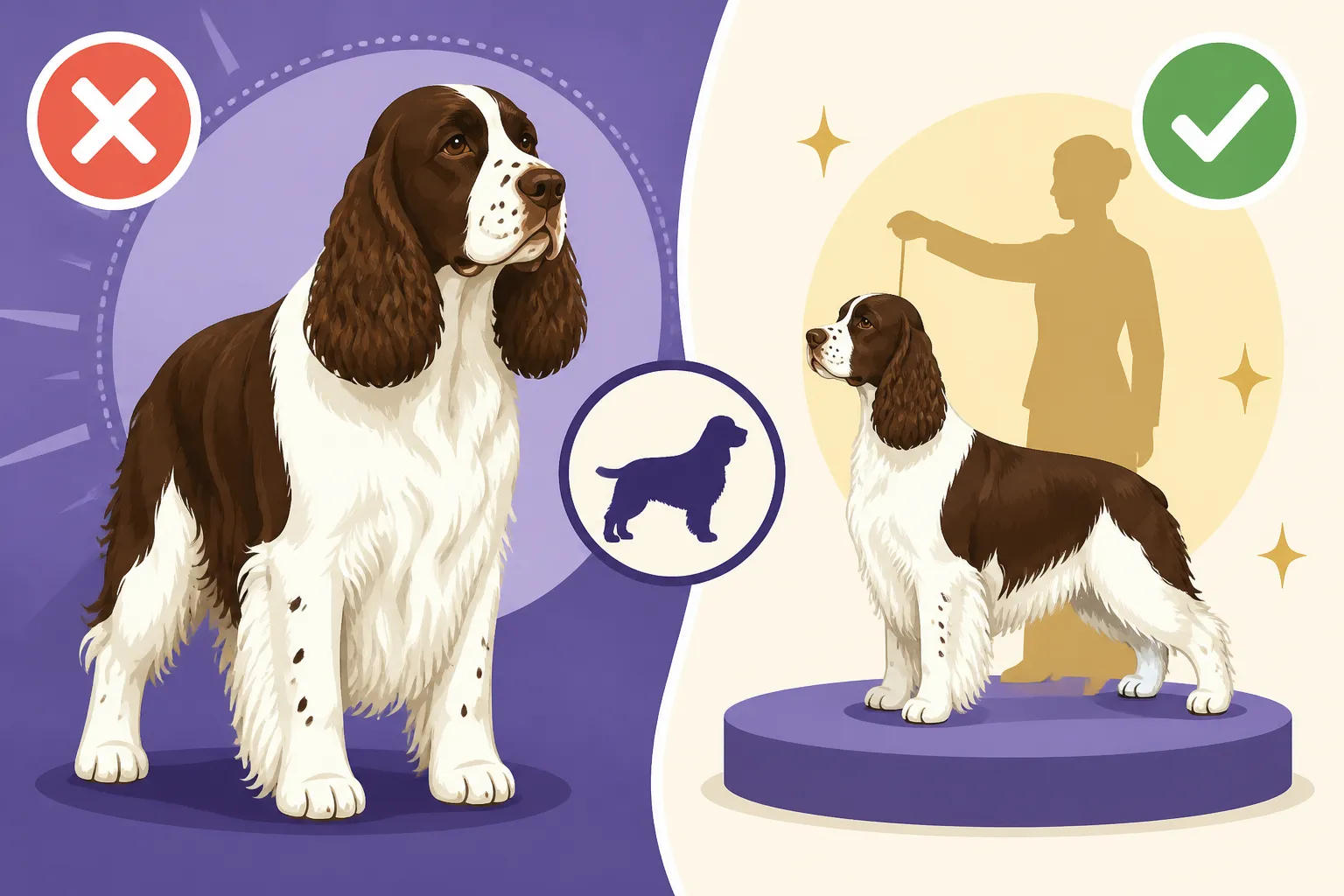
In the American Kennel Club standard, the stated height is 20 inches for dogs and 19 inches for bitches, measured at the withers—the highest point of the shoulder blades. A deviation of more than one inch above or below the prescribed height is severely penalized. That does not mean every dog above the ideal is automatically barred from competition. It does mean that a significant departure can count against the dog in the ring.
Standards and show procedures can differ between registries and countries, so check the rules that apply to the event you plan to enter. A Springer Spaniel shown under one organization’s rules may not be evaluated under precisely the same wording as one entered elsewhere. The general point remains: judges assess the dog against the standard for that registry, rather than against a casual impression of what “looks normal.”
If you are unsure whether your dog is tall for the breed, start with How Tall a Springer Spaniel Stands. It helps to distinguish actual height from the visual impression created by posture, coat, or a substantial build.
Weight and coat can make a dog look larger
A scale reading by itself does not determine whether a Springer Spaniel fits the standard. Weight varies with sex, frame, muscle, and condition. A broad, fit dog may weigh more than a fine-boned dog without being excessively tall, while a dog carrying extra fat may look oversized even if its height is unremarkable. The breed’s coat can add another layer of visual bulk, particularly when feathering is long or fluffy.
That is why it is useful to assess height, weight, and body condition separately. You should be able to feel your dog’s ribs under a light covering of tissue, and there should generally be a visible waist when looking down from above. Heavy feathering can disguise both a waist and excess weight, so use your hands as well as your eyes. For more context on size and build, see What a Springer Spaniel Actually Weighs.
A dog that looks big because of coat or condition may need a different conversation from a dog that stands well above the standard. If weight is a concern, ask your veterinarian to assess body condition and an appropriate target. Avoid trying to make a dog look smaller through crash dieting, dehydration, or restrictive exercise. Those approaches can harm health and will not change the dog’s underlying height or proportions.
| What looks oversized | What to check | Why it matters |
|---|---|---|
| Tall legs or a high shoulder line | Measure height at the withers using the relevant registry’s method | Height is the clearest measurement for judging whether a dog exceeds the standard |
| A broad or heavy body | Ask a veterinarian to assess body condition and muscle | Weight alone does not show whether a dog is fit or overweight |
| Thick feathering | Look and feel for the dog’s outline beneath the coat | Coat can exaggerate apparent size |
| A large head or heavy bone | Compare the dog’s overall proportions with the breed standard | Breed type is about balance, not one feature in isolation |
| A dog that looks larger beside another Springer | Compare measured height and build, not just side-by-side appearance | Individual dogs and breeding lines vary |
How a Springer Spaniel’s size is assessed
Measure carefully before drawing conclusions
A home measurement can help you decide whether to seek a show mentor’s opinion, but it is easy to get an inaccurate result. Measuring while a dog is slouching, leaning, or standing on an uneven surface can change the reading. Long hair or feathering around the shoulder can also make it harder to identify the actual point to measure.
For a useful first check, have your dog stand squarely on a firm, level surface. The dog should be relaxed rather than stretched up or crouched down. Use a proper measuring device if available, and measure to the top of the withers—not to the head or the highest point of the coat. If you are unfamiliar with the landmarks, ask a veterinarian, experienced breeder, or show handler to demonstrate.
A single measurement is not a diagnosis of show eligibility. If your dog is close to the upper limit, repeat the measurement on another day and have someone experienced check your technique. A small difference caused by posture or measuring error can matter when a dog is near a stated threshold. For a formal decision, confirm the relevant registry’s rules and ask a knowledgeable person in that show community how measurement is handled at the events you are considering.
Judges assess the whole dog, not height alone
Show judging is not simply a contest to find the smallest dog. The judge considers the breed standard as a whole, including proportions, movement, outline, coat, and the characteristics that make the dog recognizably an English Springer Spaniel. A dog that is slightly above the ideal may still be presented, but a serious departure in size can affect how the dog compares with others and how closely it fits the standard.
The manner in which size affects a placing depends on the dog and the competition. A judge may weigh the dog’s height alongside its construction and movement. A taller dog with balanced proportions may give a different impression from a dog that is both tall and coarse, or one whose proportions appear out of balance. This is why no one can reliably predict a result from a height measurement alone.
Also be realistic about the difference between entering a show and being competitive. A dog may be eligible to enter under the event’s rules but still be unlikely to place well if its size is a marked fault under the standard. If your main goal is to enjoy showing and learning, that may not be a reason to stay home. If you are considering a breeding or show career, get a candid assessment from a reputable breeder or experienced handler before investing heavily in that plan.
Field and show types can affect your expectations
Different lines may create different impressions
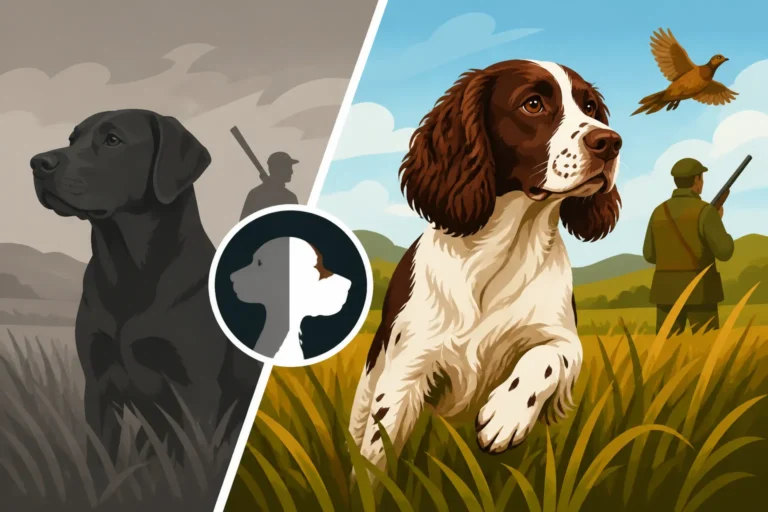
English Springer Spaniels are registered as one breed, but field-bred and show-bred dogs can look quite different. Their height, frame, coat, and overall outline may vary, so a dog that seems unusually large beside one type may look less unusual beside another. The distinction is not a guarantee that every field-bred dog is tall or every show-bred dog is heavy; individuals vary within both groups.
Understanding those differences can help you compare your dog fairly. How Different the Two Springer Spaniel Types Look explains some of the visible contrasts, while How the Field and Show Springer Spaniel Diverged gives more background on how the types developed. A field-bred Springer may have a leaner outline and less coat, while a show-bred dog may appear fuller because of both build and feathering. Either can be within or outside the standard for its registry depending on the individual dog.
It is also worth remembering that a breeder’s description of a dog as “field type,” “show type,” or “large for the breed” does not settle whether it meets show expectations. Those labels are conversational shorthand, not a substitute for a measured height and a knowledgeable evaluation. Look at the dog’s actual structure and the standard that applies to the show you want to enter.
A large dog is not automatically healthier or more valuable
Size alone is not a health assessment, and being larger does not automatically make a Springer Spaniel stronger, healthier, or more suitable for work. Excess weight can put additional strain on joints, but a tall, lean dog is not necessarily overweight. If your dog is growing rapidly, limping, reluctant to exercise, or changing weight unexpectedly, discuss those signs with a veterinarian rather than treating them as a show issue.
Breed type and health are related in more complicated ways than a simple field-versus-show comparison. For perspective, read Which Springer Spaniel Type Is Healthier. Whether a dog is a suitable breeding prospect should depend on health screening, temperament, structure, and other responsible-breeding considerations—not on whether it is especially tall or visually impressive.
If you are comparing dogs from different lines, avoid making assumptions from photographs. Camera angle, stance, and coat can make one dog look much bigger than another. When possible, see dogs standing on level ground and compare reliable measurements, while keeping in mind that the breed standard—not an online image—is the reference for show evaluation.
What to do if your Springer Spaniel is above the ideal
Get an informed assessment before entering
If your dog appears taller than the standard’s ideal, the most useful next step is a calm, objective assessment. Ask a reputable breeder, an experienced Springer Spaniel exhibitor, or a qualified show mentor to look at the dog in person. Share the dog’s age and sex, how you measured, and whether the measurement was taken at the withers. A clear measurement and a side-on view are more useful than a vague description such as “very big.”
For a young dog, remember that its adult size may not be settled. Growth and proportions change as puppies mature, and a young Springer may temporarily look leggy or unbalanced. Do not assume that a puppy’s current appearance predicts its final show prospects. Ask your veterinarian or breeder what to expect for your individual dog, and avoid pushing a growing puppy into strenuous activity simply to improve its outline.
If the dog is fully mature and clearly exceeds the height range described by your registry, ask whether the local show rules include a measurement procedure or specific eligibility requirements. Rules can vary by organization and event. Confirm them with the show organizer or governing body instead of relying on a general online answer.
Choose a showing goal that fits your dog
If your dog can be entered but is unlikely to be competitive on size, you can still decide that showing is worthwhile. Some owners enjoy learning ring handling, meeting other Springer Spaniel people, and giving their dog a positive outing. Others would rather focus on activities that suit their dog’s interests, such as obedience, scent work, field training, or simply being a well-managed companion. There is no need to turn every show-standard mismatch into a disappointment.
If you want to try the ring, keep the first steps low-pressure. Attend a local show as a spectator, talk with exhibitors, and ask whether a breed club or training group offers handling practice. Be honest about your dog’s size when asking for guidance. A constructive mentor can explain what the standard says, how the dog is likely to be viewed, and whether entering makes sense for your goals.
It is also sensible to separate presentation from conformation. Routine grooming can help a dog look neat, but trimming, coat products, or clever posing cannot change its actual height or underlying structure. Keep grooming appropriate for the breed and the event rules, and prioritize the dog’s comfort. The aim is to present the Springer Spaniel clearly—not to disguise its size.
A dog that stands above the ideal may still be eligible to enter, depending on the governing organization’s rules, but eligibility and competitiveness are not the same. Measure accurately, consider the dog as a whole, and seek an informed opinion before making plans. Most importantly, your Springer Spaniel’s value as a companion is not decided by a number at the withers or a show result.
Disclaimer
This article is for general informational purposes only and does not constitute professional advice. Laws, prices and regulations vary by location and change over time. Consult a qualified professional for guidance on your specific situation.