How a Show Springer Spaniel’s Coat Differs
If you've ever admired a beautifully groomed English Springer Spaniel in the show ring, you might have noticed their undeniably luxurious, flowing coat and wondered just how much work goes into achieving that look. It's a stark contrast to the often shorter, more practical coats seen on their field-bred cousins, and this difference isn't just aesthetic; it impacts everything from grooming routines to daily care. This guide will delve deep into the distinct characteristics of a show Springer Spaniel's coat, explaining why it looks the way it does, the immense effort required to maintain it, and the unique challenges owners face.
The Distinctive Appearance: What Makes a Show Springer Coat Unique?
The coat of a show-bred English Springer Spaniel is, without a doubt, one of its most defining features. It’s bred for elegance, profuseness, and a specific silhouette that commands attention in the show ring. This isn't merely about having long hair; it's about the quality, texture, and strategic presentation of that hair.
The Grandeur of Feathering: Length and Volume
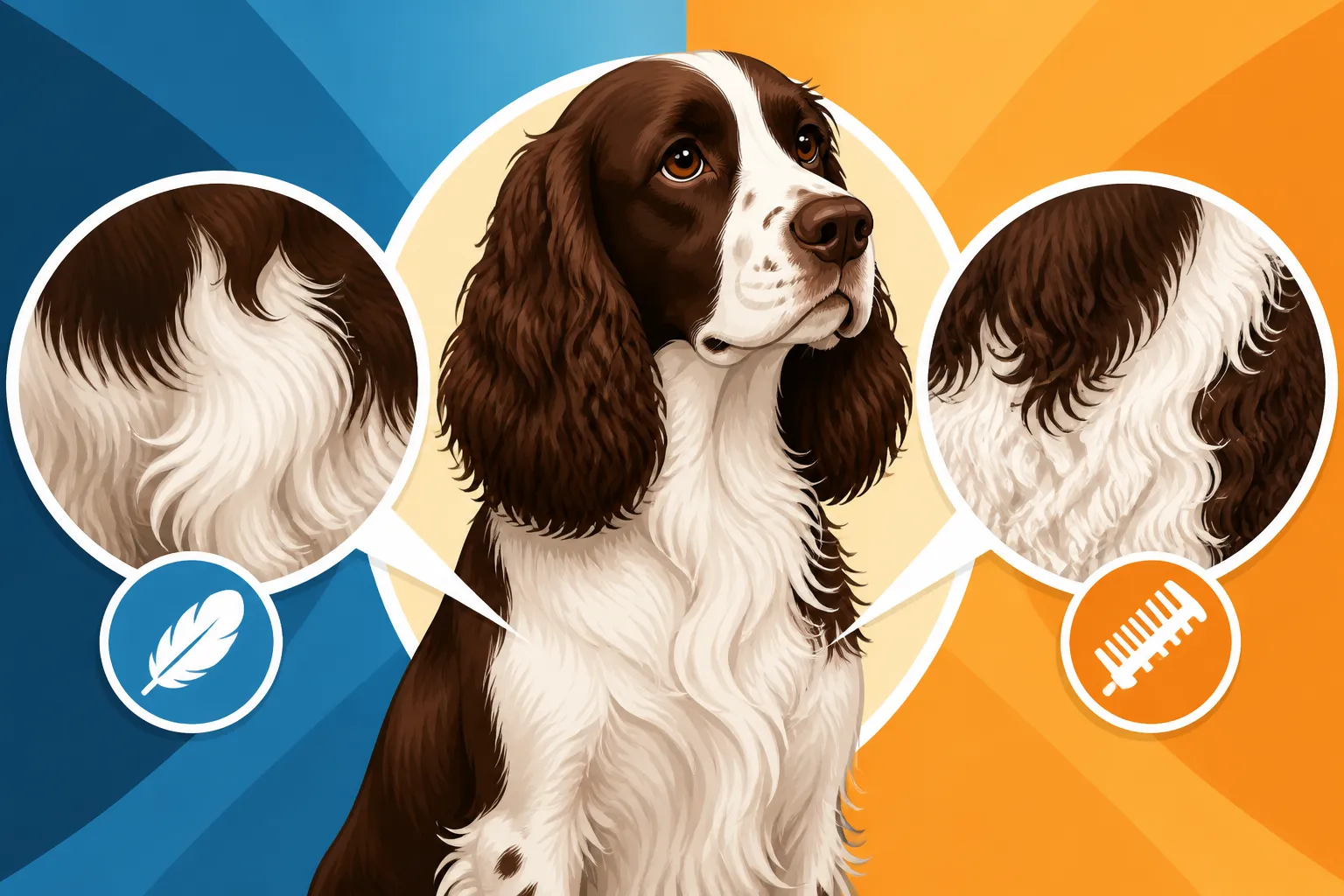
When you look at a show Springer, the first thing that often catches your eye is the abundant "feathering." This refers to the longer, silky hair that graces the back of their legs (both front and hind), their chest, belly, and tail. On a well-bred and well-maintained show dog, this feathering cascades beautifully, giving them a truly regal appearance. It’s an intentional visual statement, carefully cultivated to enhance the dog's overall outline and movement in the conformation ring. The standard calls for a coat that is dense and moderate in length, with feathering that is neither too heavy nor too sparse, creating a balanced and flowing picture.
Compared to a field Springer, which typically has much shorter, sparser feathering that offers practicality over pomp, the show coat prioritizes aesthetic impact. A field dog's coat needs to be functional above all else, allowing them to move through dense cover like briars, thickets, and tall grasses without collecting too much debris or getting tangled. For a show Springer, however, this deliberate length means that special care is always required to prevent the feathering from dragging on the ground, picking up every leaf and twig, or becoming a matted mess after a simple walk in the park. It’s a constant battle against the elements and everyday life to keep those beautiful fringes pristine.
Texture and Density: A Luxurious Double Coat
Beyond just length, the texture and density of a show Springer's coat are equally important. They possess a true double coat: a soft, insulating undercoat nestled beneath a longer, water-repellent outer coat. The outer coat, often described as medium length, straight or wavy, and never curly, should lie flat and close to the body, giving a sleek, refined look despite its volume. This combination of dense undercoat and flowing outer coat contributes significantly to the "full" and substantial appearance desired in the show ring. The undercoat provides warmth and protection, while the outer coat offers a polished finish.
This specific texture and density further differentiate it from the field-bred Springer. Field coats tend to be coarser, often somewhat thinner, and designed for maximum weather resistance and minimal snagging. The show coat, while still protective, leans more towards softness and flow. Maintaining both layers of the show coat is crucial. If the undercoat isn't regularly brushed out, it can become compacted, leading to skin irritation and matting. If the outer coat isn't cared for, it can lose its luster and lie improperly, detracting from the overall presentation. Neglecting this density can quickly lead to painful mats and underlying skin issues. You can imagine how easy it is for things to get tangled when you've got so much beautiful hair!
Color and Markings: Bred to Standard
While not directly about coat texture or length, the color and markings are an integral part of the show Springer Spaniel's coat presentation and adhere strictly to breed standards. English Springer Spaniels come in a range of recognized colors, primarily black and white or liver and white. Tricolor variations (black, white, and tan; or liver, white, and tan) are also accepted and can be quite striking. What is particularly important in the show ring is the clarity and distribution of these markings. The patches of color should be well-defined, and the white areas should be clean and bright, allowing for "ticking" or "roaning" where small flecks of color appear on the white.
The specific pattern and vibrancy of these colors are crucial for judges assessing the dog against the breed standard. A strong, rich color and clear markings enhance the dog's overall elegance and presence. For instance, a muddy or indistinct liver color might be less desirable than a rich, dark liver. The amount of ticking can vary, but it should contribute to the overall aesthetic without obscuring the main patches of color. Breeders of show Springers meticulously consider these color and marking traits in their breeding programs, striving to produce puppies that exemplify the ideal appearance. This emphasis on precise coloring and marking is another element that distinguishes the show Springer's coat from that of its field-bred counterpart, where performance and working ability are paramount, and coat color, as long as it's within the breed's natural range, is less critical.
Why the Divergence? The Purpose Behind the Coat
The distinct differences in coat between a show-bred and a field-bred English Springer Spaniel didn't happen by accident. They are the direct result of decades, if not a full century, of selective breeding programs focused on optimizing the dogs for entirely different roles. The Seventy Year Gene Pool Divide Inside One Springer Spaniel Breed tells you just how deep this separation goes.
The Show Ring Ideal: Form Over Function
For the show Springer Spaniel, the coat is undeniably a major part of its appeal and success in the conformation ring. The breed standard, which guides breeders and judges, explicitly details the desired length, texture, and overall presentation of the coat. Breeders meticulously select for dogs that possess these traits, often prioritizing a lush, profuse coat with extensive feathering. The goal is to create an animal that embodies grace, elegance, and beauty according to a specific aesthetic ideal. Every aspect of the show coat, from the luxurious feathering on the legs and belly to the density of the double coat, is designed to contribute to this overall picture of canine perfection as judged by human eyes.
This means that form often takes precedence over what might be considered "function" in a working environment. While the show coat is still fundamentally a Springer Spaniel coat – offering some protection against the elements – its exaggerated length and volume are not optimal for crashing through brambles or swimming through icy water all day. Instead, it serves as a beautiful canvas for skilled grooming, enhancing the dog's movement and overall silhouette in the ring. The effort and expense required to maintain this coat are significant, as The Show Springer Spaniel Coat That Adds a Groomer to Your Budget readily attests. It’s a labor of love for those dedicated to the show ring, but it's a far cry from the utilitarian coat of their working relatives.
Field Work Realities: Practicality and Protection
In stark contrast, the coat of a field-bred English Springer Spaniel is engineered for maximum practicality and protection in challenging outdoor environments. These dogs are bred to be robust, agile hunting partners, capable of working long hours in various terrains and weather conditions. Their coat, therefore, is designed to withstand the rigors of heavy cover, provide insulation, and dry relatively quickly. It’s shorter, often coarser, and much less adorned with the elaborate feathering seen on show dogs. Any excessive coat would be a significant hindrance in the field, collecting burrs, mud, and water, slowing the dog down, and making them uncomfortable.
Imagine a field Springer bursting through dense thorny bushes or plunging into a cold lake to retrieve a duck. A long, silky coat would quickly become a matted mess, snagged on every twig, and saturated with water, taking forever to dry and potentially leading to chilling. The field coat, on the other hand, is generally tighter to the body, with enough density for insulation but without superfluous length. This minimizes debris collection and allows for quicker drying, which is crucial for a dog that might be working in and out of water all day. Two Breeds Registered as One: the Field and Show Springer Spaniel truly captures this divergence, highlighting how deeply these two types have separated over time due to their differing purposes. For the working dog, less coat often means more efficiency and comfort in their demanding job.
The Art and Labor of Show Coat Grooming
Owning a show Springer Spaniel isn't just about admiring their beautiful coat; it's about a deep and ongoing commitment to maintaining it. This isn't a "wash and wear" kind of dog. It's a daily ritual, an art form, and frankly, a significant amount of labor to keep that luxurious coat in pristine condition, whether for the show ring or just for everyday living.
Brushing and Dematting: An Everyday Commitment
Let's be real: daily brushing is not optional for a show Springer Spaniel. It's an absolute necessity. Those long, flowing feathers, combined with a dense undercoat, are a magnet for mats and tangles. Neglect this for even a day or two, especially in high-friction areas like behind the ears, in the armpits, and along the belly and legs, and you'll find yourself battling painful knots. Mats don't just look bad; they pull on the skin, causing discomfort, irritation, and can lead to serious skin infections if moisture gets trapped underneath. A proper brushing session should be thorough, working in small sections, layer by layer, to ensure you reach the skin and remove any loose undercoat or forming tangles.
You'll need a variety of tools for this job. A good quality pin brush is excellent for general brushing and going over the feathering, while a slicker brush can help with the denser parts of the body coat, especially during shedding season. For serious detangling and getting to the roots, a sturdy metal comb with both wide and fine teeth is indispensable. I find the Greyhound combs from Amazon to be excellent for this. Start with the wide-toothed end and finish with the finer teeth. Patience is key here. It’s not a race, and pulling on mats will hurt your dog and make them dread grooming. Many owners find that making grooming a positive experience with treats and praise can actually strengthen the bond with their dog. If you're wondering Which Brush Suits a Springer Spaniel, it's often a combination of several!
Strategic Trimming and Shaping: Crafting the Silhouette
Beyond just brushing, a show Springer's coat requires strategic trimming and shaping to achieve the desired silhouette and meet the breed standard. This isn't about giving them a "puppy cut" or a summer shave; it's an art that enhances their natural lines and presents them to their best advantage. This often means carefully thinning and tidying certain areas rather than outright cutting. The goal is to make the coat look natural, yet perfectly sculpted. Many show Springer owners rely on professional groomers who specialize in the breed, as improper trimming can take months to grow out and negatively impact a dog's show career. How Often a Show Springer Spaniel Needs Trimming depends on the individual dog's coat growth and how close they are to a show date, but it's often every 4-6 weeks for maintenance.
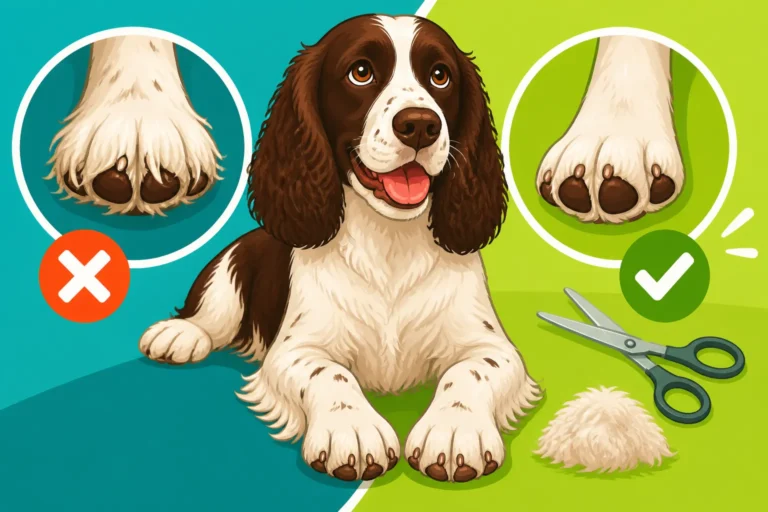
Specific areas that receive attention include the feet, where hair is trimmed to create a neat, cat-like paw; the hocks, where excess hair is thinned and tidied; the ears, where the leather is cleanly defined and excess hair is stripped or thinned; and the throat and chest, where hair is blended to create a smooth, elegant line down to the abundant chest feathering. Techniques like hand stripping, where dead outer coat is pulled out by hand or with a stripping knife, are often used to maintain correct coat texture and density, particularly on the back and head. This selective removal of hair encourages new, harsher growth, which is preferred for the show ring. Trimming a Springer Spaniel's Feathering specifically requires a delicate touch and an understanding of the breed's outline. It's not a job for the faint of heart or the inexperienced hand!
Bathing, Drying, and Conditioning: The Foundation of Luster
Maintaining the luster and health of a show Springer's coat involves a meticulous bathing and drying routine. The frequency of bathing depends on the dog's lifestyle and how often they're shown, but it's typically more often than a field Springer might get. High-quality shampoos and conditioners are a must to clean thoroughly without stripping natural oils, maintaining the coat's softness and shine. Whitening shampoos are often used for the white areas to keep them bright and pristine, while moisturizing conditioners help prevent dryness and reduce static.
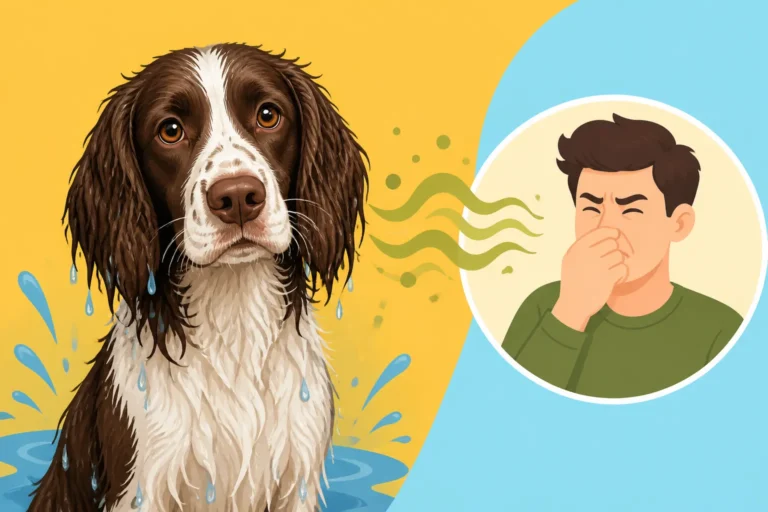
However, bathing is only half the battle. Thorough drying is paramount. A damp, dense coat can quickly become a breeding ground for skin infections, like hot spots, and can lead to matting. Professional-grade high-velocity dryers are a common tool, as they efficiently remove water and help to straighten the feathering, ensuring the coat lies flat and smooth. This isn't just about getting dry; it's about setting the coat correctly for optimal presentation. Many handlers will line-dry, using brushes to lift and separate the hair as it dries to ensure every strand is perfectly placed. Finishing sprays and leave-in conditioners can also be used to add shine, detangle, and protect the delicate feathering between baths. Without proper drying, all the effort put into bathing can be undone, resulting in a frizzy, dull, or even matted coat.
Navigating the Challenges of a Show Coat
The beauty of a show Springer Spaniel's coat comes with its own unique set of challenges. It's not always glamorous; it requires constant vigilance, special techniques, and a readiness to tackle common problems head-on. These issues can range from minor annoyances to significant health concerns if not managed properly.
The Battle Against Matting
This is perhaps the biggest and most consistent challenge for show Springer Spaniel owners. The combination of long feathering and a dense undercoat creates a perfect storm for matting. These knots can form incredibly quickly, especially in areas of high friction or movement, such as behind the ears (a notorious hotspot for mats), in the armpits, on the belly, and the long feathering on the legs and tail. Even a simple roll in the grass or a playful romp can start the process. If not immediately addressed, a small tangle can rapidly escalate into a large, dense mat that becomes painful and difficult to remove.
Beyond the aesthetic detriment, mats are a serious welfare issue. They pull on the skin, causing pain and discomfort, and can restrict movement. If left unchecked, mats create a breeding ground for bacteria and yeast, trapping moisture and debris against the skin, leading to hot spots, skin infections, and other dermatological problems. It's a vicious cycle where irritation leads to scratching, which leads to more matting. This is why daily brushing, as detailed earlier, is absolutely non-negotiable. Regularly checking Whether a Springer Spaniel Mats Behind the Ears is just one small part of the ongoing battle.
When matting becomes severe, owners face difficult choices. Sometimes, the only humane solution is to shave the dog down, which is devastating for a show dog as it takes many months for the coat to grow back to show length. Whether a Matted Springer Spaniel Has to Be Shaved is a question no owner wants to face, but it underscores the importance of preventative care. While some might worry Whether Shaving a Springer Spaniel Ruins the Coat, the priority must always be the dog's comfort and health.
Keeping it Pristine: Stains and Environmental Debris
The beautiful, often predominantly white coat of a show Springer Spaniel is a magnet for dirt, stains, and environmental debris. Just stepping outside can present a challenge. Mud, grass stains, urine stains on the belly and leg feathering, and even tears or saliva can quickly discolor the pristine white areas. For a dog that needs to look immaculate in the show ring, this means constant vigilance and a proactive approach to cleanliness. A dog rolling in something less-than-pleasant is a common scenario that can ruin a meticulously groomed coat in seconds.
Preventative measures become part of the daily routine. Many owners use "snoods" (fabric tubes worn around the head and ears) when their dog eats to keep the long ear feathering out of the food and water bowl. Carefully supervising outdoor playtime, especially in wet or muddy conditions, is essential. For show dogs, protective garments might even be used to shield delicate feathering on walks. Despite best efforts, stains will happen. Specialized whitening shampoos and stain removers become staples in the grooming kit, but they require careful application to avoid irritating the skin or drying out the coat. The commitment to maintaining those bright white sections can be incredibly time-consuming and labor-intensive, highlighting the contrast with a field dog whose coat is simply expected to get dirty.
Underlying Skin Health Concerns
Beyond mats and stains, the dense, long coat of a show Springer Spaniel can pose challenges for underlying skin health. The thick layers of hair can trap moisture and heat against the skin, creating an ideal environment for yeast and bacterial overgrowth. This is particularly true if the dog gets wet (from a bath, swimming, or rain) and isn't thoroughly and quickly dried. Hot, humid conditions can exacerbate these issues, leading to various forms of dermatitis. If a dog has underlying allergies, the dense coat can make it even harder to spot skin irritation or hot spots until they become advanced.
Regular grooming isn't just about appearance; it's a vital opportunity to conduct thorough skin checks. Parting the hair and examining the skin for any redness, flaking, bumps, rashes, or unusual odors is crucial. Early detection of a skin problem can prevent it from escalating into a more serious condition that requires veterinary intervention. Owners need to be mindful of products that might irritate sensitive skin and ensure their dog's diet supports skin and coat health from the inside out. A beautiful show coat is a reflection of overall health, and maintaining healthy skin beneath all that hair is the foundation.
Essential Grooming Arsenal for the Show Springer
To successfully maintain a show Springer Spaniel's coat, you need more than just a brush and a prayer. You need a dedicated grooming arsenal, a collection of specialized tools and products designed to handle the unique demands of their luxurious hair. Investing in quality equipment from reputable brands is paramount, as cheap tools can damage the coat and make the grooming process more difficult for both you and your dog.
The Must-Have Brushes, Combs, and Rakes
Your grooming kit for a show Springer will be far more extensive than for many other breeds. You'll need an array of brushes and combs, each serving a specific purpose.
- Pin Brushes: These are great for general brushing, detangling larger sections of feathering, and gently removing loose hair from the body. Look for one with smooth, rounded pins to avoid scratching the skin.
- Slicker Brushes: Often used for the denser body coat and to remove dead undercoat. Be gentle, as the fine wires can be harsh if used improperly, especially on sensitive skin or delicate feathering.
- Metal Combs (Greyhound Comb): Absolutely essential for line brushing and getting right down to the skin to find and remove small tangles before they become full-blown mats. A good quality comb will have both wide and fine teeth. I often recommend models available through Chewy or Amazon, as they stock a wide range of professional grooming tools.
- Undercoat Rakes: During heavy shedding seasons, an undercoat rake can be invaluable for removing dead, loose undercoat, which, if left in, will quickly contribute to matting.
- Dematting Tools: While prevention is key, a good dematting tool or mat splitter can help carefully break apart small mats without excessive pulling. Use these with extreme caution, as they are sharp.
Remember, the technique is as important as the tool. Always work slowly and gently, holding the hair at the base near the skin when working on tangles to minimize pulling.
Shampoos, Conditioners, and Styling Aids
Choosing the right bathing products is critical for maintaining coat health and presentation. You can't just use any old dog shampoo!
- Shampoos: You'll likely need a few types. A good clarifying shampoo helps remove buildup without stripping essential oils. Whitening shampoos are a must for keeping those white markings bright, but ensure they don't dry out the coat. Look for pH-balanced formulas specifically designed for dogs. Brands like Chris Christensen or Espree offer excellent professional-grade options often found on Amazon.
- Conditioners: Essential for moisturizing the coat, preventing tangles, and adding shine. Rinse-out conditioners are used after shampooing, while leave-in conditioners or detangling sprays can be used between baths to help with brushing.
- Styling Aids: These can include anti-static sprays, coat shines, or light holding sprays to help manage the feathering and create a polished finish for the show ring. Again, these should be gentle and non-irritating.
Always follow the product instructions, and make sure to rinse thoroughly. Any shampoo or conditioner residue left in the coat can irritate the skin or make the coat feel sticky and heavy.
Professional-Grade Equipment for Home Use
While you can get by with basic tools, truly dedicated show Springer owners often invest in professional-grade equipment for home use, recognizing it makes the job easier and yields better results.
- Grooming Table: A dedicated grooming table, often with an adjustable arm and grooming loop, raises your dog to a comfortable working height. This saves your back and keeps your dog securely in place, making the entire grooming process more efficient and less stressful for both of you. You can find a good selection of these on Chewy or Amazon.
- High-Velocity Dryer: As mentioned, these are almost essential. A high-velocity dryer drastically reduces drying time, helping to prevent skin issues and ensuring the coat dries completely and lies correctly. It also helps to "fluff" the feathering for maximum volume if desired.
- Nail Clippers and Grinders: Keeping nails short is important for health and conformation. Learn how to use guillotine-style clippers or a dremel-style nail grinder effectively.
- Ear Cleaning Solutions: Springer Spaniels are prone to ear issues due to their drop ears. Regular cleaning with a veterinarian-approved solution is vital.
Investing in these tools might seem like a lot initially, but they are crucial for keeping your show Springer Spaniel looking their best and maintaining their health and comfort over their lifetime.
| Feature | Show Springer Spaniel Coat | Field Springer Spaniel Coat |
|---|---|---|
| Length & Feathering | Profuse, long, flowing feathering on legs, chest, belly, tail | Shorter, sparser feathering for practicality |
| Texture | Soft, silky outer coat with dense undercoat, lies flat | Coarser, denser, more weather-resistant outer coat |
| Density | Double coat, dense and full for aesthetic volume | Dense but less bulky, geared for protection & quick drying |
| Purpose | Bred for aesthetic appeal, elegance in the show ring | Bred for functionality, protection in hunting conditions |
| Grooming Needs | Daily brushing, regular professional trimming, meticulous bathing/drying | Minimal brushing, less frequent trimming, quick drying after work |
| Challenges | Matting, staining, environmental debris, skin issues if neglected | Burrs, thorns, cuts, general wear and tear from activity |
| Overall Look | Polished, luxurious, sculpted, flowing | Rugged, utilitarian, streamlined, ready for action |
Disclaimer
This article is for general informational purposes only and does not constitute professional advice. Laws, prices and regulations vary by location and change over time. Consult a qualified professional for guidance on your specific situation.