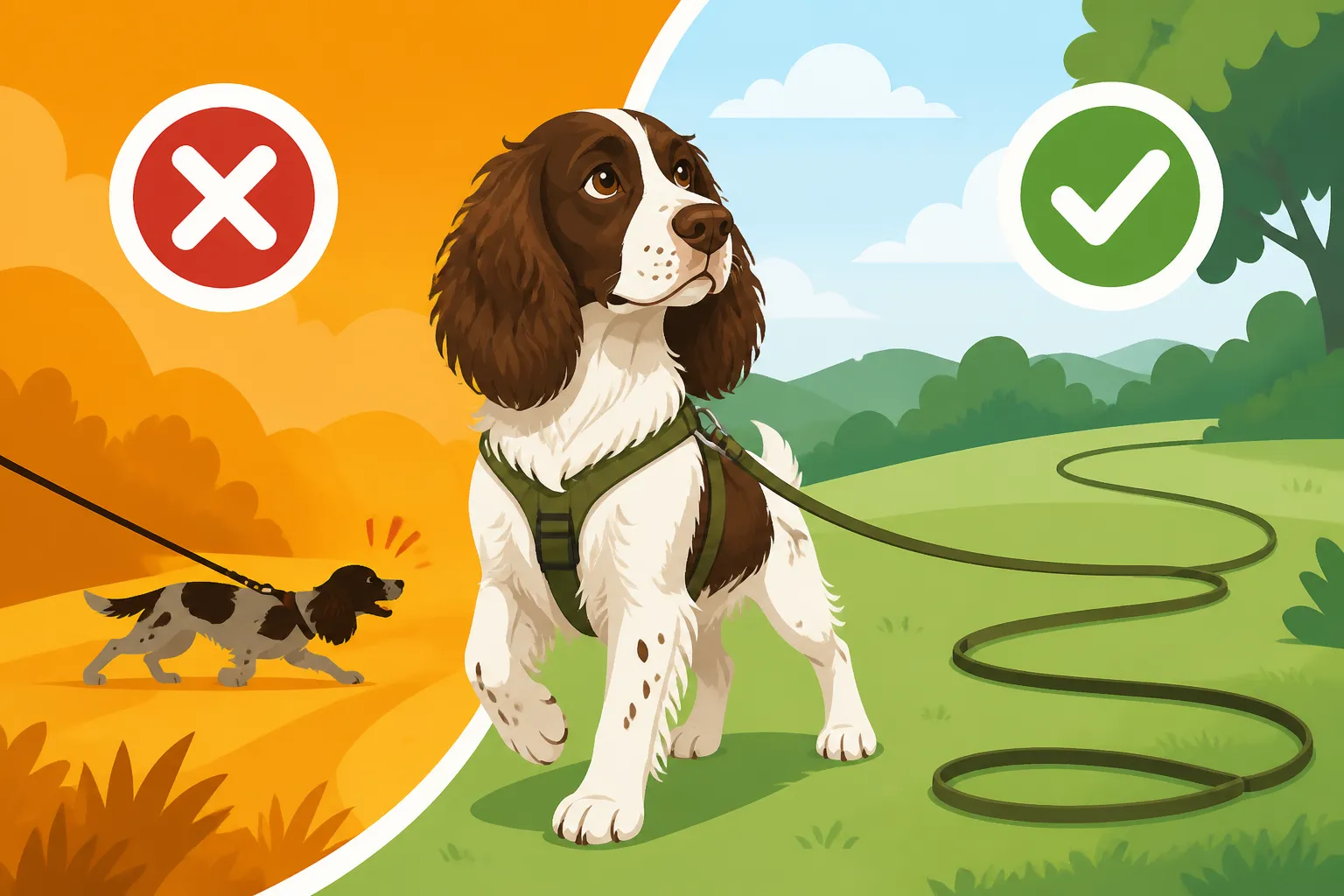
Whether a Long Line Suits a Springer Spaniel
It’s a tale as old as time for many English Springer Spaniel owners: you dream of idyllic off-leash romps in the park, but reality quickly sets in as your dog’s nose hits the ground, and their inherent drive sends them off on an adventure, often ignoring your frantic calls. This guide is here to explore whether a long line is the unsung hero you need to safely satisfy your Springer Spaniel’s boundless energy and sharp instincts, bridging the gap between contained walks and true freedom.
Understanding Your Springer Spaniel's Instincts and the Challenge of Off-Leash Freedom
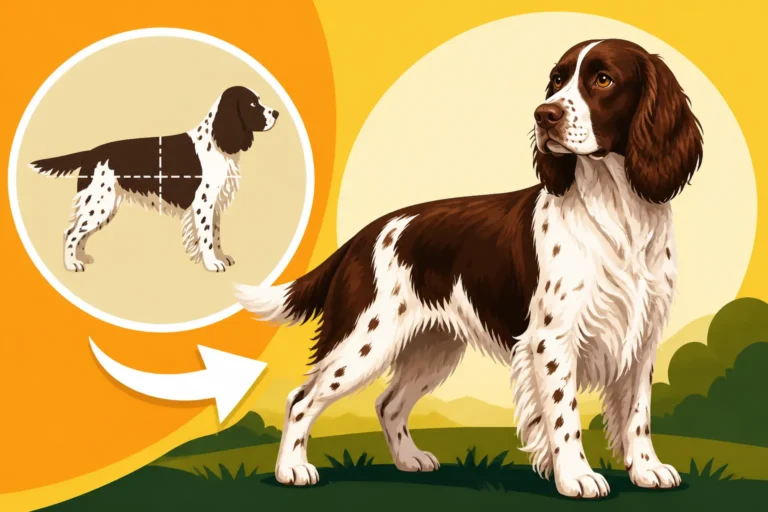
Let's be real, owning a Springer Spaniel means embracing a dog with a built-in "seek and find" radar. These aren't just pretty faces; they are purpose-bred gundogs with centuries of instinct hardwired into their DNA. Their job was, and for many still is, to hunt game birds, flushing them from cover and retrieving them. This means they have an incredible drive, a keen nose, and an independent streak when a captivating scent hits the air.
The Irresistible Pull of Scent and Prey Drive
One of the biggest frustrations for Springer Spaniel owners is that moment when their beloved companion's nose drops, and they suddenly seem to go deaf. It's not personal; it's instinct. A Springer Spaniel's world is rich with smells, and an interesting scent trail—be it a rabbit, a squirrel, or even just another dog's passing—can be an almost overwhelming temptation. They are born to follow these trails, often with remarkable speed and single-mindedness. It’s why you might find your usually attentive dog suddenly vanishing over a hill, wholly consumed by their pursuit. This strong Why a Springer Spaniel Puts Its Nose to the Ground and Vanishes tendency makes conventional off-leash walks a genuine risk, especially in areas with wildlife or near roads.
They don't do it to be disobedient; they do it because every fiber of their being is screaming "hunt!" This intense focus can make it incredibly difficult to get their attention back once they're on a scent, and it's a huge source of anxiety for owners who just want to give their dogs a good run without fear of them getting lost or hurt. Trying to compete with the allure of a fresh deer trail with a simple "come!" command can often feel like bringing a knife to a gunfight.
The Need for Vigorous Exercise
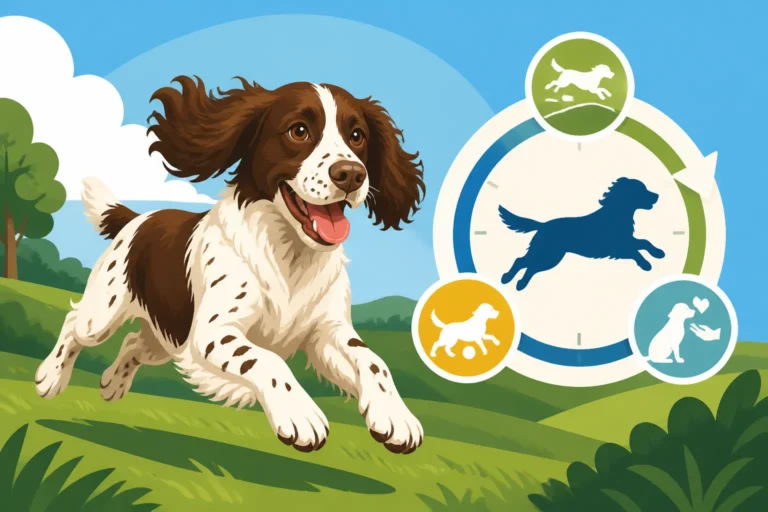
Springer Spaniels are not content with a leisurely stroll around the block. They are high-energy dogs that require a significant amount of physical and mental exercise to thrive. A bored Springer is often a destructive Springer, and many owners find their furniture, shoes, or even door frames becoming casualties of an under-stimulated dog. Whether a Bored Springer Spaniel Destroys Things is a common concern. Without an outlet for their energy, they can develop undesirable behaviors, becoming restless, anxious, or excessively vocal.
This need for vigorous exercise often conflicts directly with their strong prey drive and the challenge of reliable recall. You want them to run, stretch their legs, and burn off that incredible energy, but you also need to ensure their safety and the safety of others. Trying to manage this balancing act solely on a short leash means they aren't getting the full physical workout they crave, which can lead to a less happy, more problematic dog at home. It’s a vicious cycle where a lack of appropriate exercise exacerbates the very behaviors that make off-leash freedom risky.
The Long Line: A Bridge to Freedom and Control
This is where the humble long line steps in as a game-changer for many Springer Spaniel owners. Think of it not as a longer leash, but as a dynamic training tool that allows you to grant your dog a taste of freedom while maintaining crucial safety and control. It’s about building trust and solidifying commands in a semi-controlled environment, before you even consider taking the leap to full off-leash privileges.
Safely Exploring and Practicing Recall
The primary benefit of a long line is the ability to give your Springer Spaniel more room to roam, sniff, and run, all while keeping them physically connected to you. This is invaluable when you're working on their recall, which, let's be honest, can be an ongoing project with a breed as driven as the Springer. With a long line, you can practice your "come" command in a variety of environments, from an open field to a local park, knowing that if your dog gets too distracted or decides to test the boundaries, you still have that physical connection to reel them in. This eliminates the panic that often accompanies an ignored recall when your dog is truly off-leash.
Imagine a scenario where your Springer, let’s call him Buster, spots a distant squirrel. His nose drops, his tail wags furiously, and he starts to bolt. If he were off-leash, you’d be yelling his name, heart pounding, hoping he eventually tires of the chase. With a long line, you can calmly apply pressure, step on the line, or gently guide him back to you. This allows you to interrupt the undesirable behavior before it becomes self-rewarding and gives you an opportunity to re-engage him with a positive reward for returning. It’s about teaching them that coming back to you is always more rewarding than whatever they're chasing, without the consequence of them actually getting away. This kind of consistent, successful practice is essential for building a reliable Whether a Springer Spaniel's Recall Can Be Trusted.
Building Confidence and Encouraging Natural Behavior
For a breed designed to cover ground and use their nose, being constantly tethered to a six-foot leash can be limiting. A long line allows your Springer Spaniel to engage in more natural behaviors like sniffing extensive scent trails, quartering (the characteristic zigzag pattern they use to search for game), and running in wider arcs without breaking away from your control. This mental and physical stimulation is incredibly important for their overall well-being.
Consider a younger Springer Spaniel, perhaps still in The First Year With a Springer Spaniel Puppy stage, who might be a bit hesitant or unsure in new environments. A long line can provide a sense of security for both of you. They get to explore and gain confidence in new sights and smells, knowing you're still "there" if they need you, while you can observe their reactions and intervene if they become overstimulated or fearful. It’s a fantastic tool for socialization, too, allowing them to investigate new people or other dogs at a safe distance while you maintain a subtle connection. This freedom, even if tethered, greatly contributes to their physical fitness and mental enrichment, essential for a happy, well-adjusted Springer.
Choosing the Right Long Line for Your Springer Spaniel
Selecting the right long line isn't just about grabbing the longest leash you can find. The material, length, and even the clip can make a significant difference in ease of use, durability, and safety for both you and your dog. A good long line should feel comfortable in your hand and withstand the pulling power of an excited Springer.
Material and Length Considerations
When it comes to long lines, you typically have options like nylon, biothane, or cotton webbing. Nylon is generally affordable and comes in many colors, but it can absorb water, get tangled easily, and cause rope burn if it slides through your hands quickly. Biothane, a coated webbing, is a favorite among gundog trainers. It's waterproof, doesn't absorb odors, is easy to clean, and provides a good grip, even when wet. It's more expensive but incredibly durable. Cotton webbing offers a soft grip and is gentle on the hands, but it shares nylon's propensity for water absorption and tangling. For purchasing, I often recommend looking on platforms like Amazon for a good selection of various materials and lengths.
The length is critical. For basic recall practice in an open field, a 20 to 30-foot line is often a good starting point. This provides enough distance for your Springer to feel some independence but keeps them within a manageable range for training. If you're working in denser cover or want to give them even more freedom in a very safe, large area, a 50-foot line might be appropriate. However, longer lines can be cumbersome, prone to tangling, and harder to manage quickly, especially if your dog bolts. It's often better to start shorter and ensure mastery before gradually increasing the length. For instance, if your goal is truly to practice Teaching a Springer Spaniel to Stay in Range, a shorter, more controllable line might be more effective initially.
Hardware and Safety Features
Beyond the line itself, pay attention to the hardware. A sturdy, reliable snap hook is paramount. Look for one that's easy to clip and unclip but won't accidentally come undone. Solid brass or stainless steel hardware tends to be more durable and rust-resistant than plated options, especially if your Springer loves water work. A swiveling snap is also helpful to prevent the line from twisting.
Some long lines come with handles, which can be convenient for gripping, but many trainers prefer lines without a fixed handle, as it reduces the risk of getting your hand tangled if the dog makes a sudden dash. Instead, you learn to manage the line by letting it slide through your open hand or by stepping on it to stop your dog. Always ensure your dog is wearing a well-fitting, secure harness or a flat buckle collar when on a long line. A harness distributes pressure across their chest rather than their neck, which is crucial if they hit the end of the line unexpectedly. Using a head halter or choke chain on a long line is generally ill-advised due to the potential for sudden, forceful jerks to the neck. For advice on positive training techniques, resources like BAXTER & Bella can offer guidance on appropriate equipment and methods.
| Long Line Material | Pros | Cons | Best Use Cases |
|---|---|---|---|
| Nylon Webbing | Affordable, lightweight, wide color range | Absorbs water, tangles, can cause rope burn | Casual use, short distances, dry conditions |
| Biothane | Waterproof, odor-proof, durable, easy to clean, good grip | More expensive, can be heavier, stiff when new | All-weather training, wet environments, high-drive dogs |
| Cotton Webbing | Soft on hands, good grip | Absorbs water, tangles, less durable | Gentle training, sensitive hands, dry conditions |
Effective Training and Exercise with a Long Line
A long line is more than just a really long leash; it's a versatile training instrument that, when used correctly, can dramatically improve your Springer Spaniel's responsiveness and build a solid foundation for future off-leash adventures. It requires conscious effort and consistency, but the rewards are immeasurable.
Mastering the Art of "Dragging" and "Stopping"
The beauty of the long line is that it allows your Springer Spaniel to drag the line behind them, giving them the illusion of freedom while you maintain ultimate control. Start in a safe, open area, letting them explore. Keep an eye on the line to prevent it from snagging on obstacles or getting tangled around their legs. The key is to intervene before they build up too much momentum or get too far. If they start to head in an undesirable direction or ignore a verbal cue, gently step on the line to stop them, rather than yanking it. The goal is a subtle interruption, not a harsh correction. This teaches them that even with distance, your control is always present, and that listening to your voice is the easiest way to avoid that gentle stop.
Once you've stopped them, immediately call them back to you with your recall cue. When they return, lavish them with praise and high-value treats. This positive reinforcement makes coming back a truly rewarding experience. Gradually, they'll associate the subtle pressure of the line or the physical stop with the need to re-engage with you. It's a much kinder way to teach boundaries than letting them make a mistake off-leash and then trying to chase them down or getting frustrated. This consistent practice is vital for building a reliable recall, especially when your dog is engaged in something enticing, like a strong scent trail that makes them want to test How Far a Springer Spaniel Will Go on a Scent.
Integrating Commands and Building a Reliable Recall
The long line is your best friend for proofing all sorts of commands in distracting environments. Once your Springer has a decent grasp of basic obedience in a low-distraction setting, you can use the long line to practice "stay," "leave it," and especially "come" around more tempting stimuli. For example, if your dog tends to Whether a Springer Spaniel Chases Deer, you can practice in an area where deer might be present (at a distance, initially) and use the line to reinforce your "leave it" or recall cue before they have a chance to fully engage in the chase.
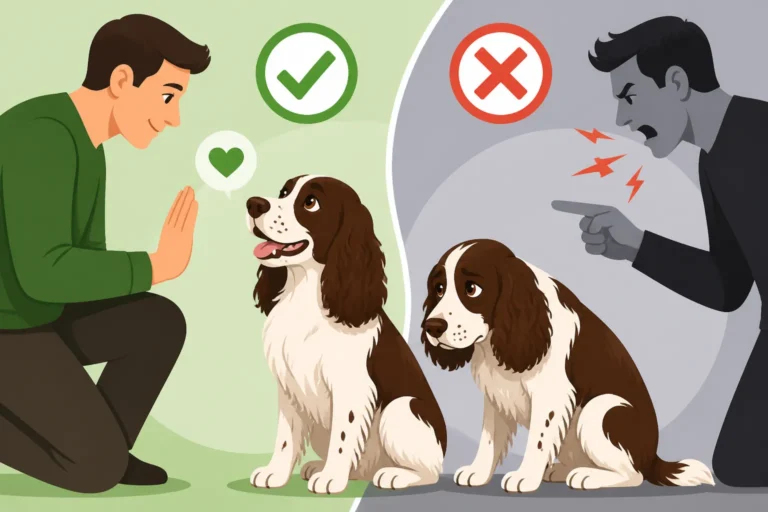
Consistency is absolutely vital here. Every time you issue a command, be prepared to follow through, even if it means stepping on the line. Over time, your Springer Spaniel will learn that your commands are not optional, regardless of their distance from you. Remember, Springers are generally soft dogs; The Soft Springer Spaniel That Shuts Down If You Shout means you need to keep your tone positive and encouraging, relying on the physical connection of the line for gentle guidance rather than harsh verbal corrections. Keep training sessions fun and relatively short to maintain their enthusiasm. Resources from online trainers, like those found through BAXTER & Bella, often provide structured approaches to long line training that can be very helpful for beginners.
Meeting Exercise Needs Safely
Beyond formal training, a long line is excellent for providing your Springer Spaniel with much-needed vigorous exercise in areas where full off-leash freedom isn't safe or permitted. This could be a large, open park, a quiet beach, or even a spacious backyard if you don't have a secure fence. Your dog can run, gallop, and explore at a much faster pace and over a wider area than a standard leash allows. This helps them burn off that boundless energy, which is particularly important for How Much Exercise a Field Bred Springer Spaniel Needs.
It's a way to let them be a Springer Spaniel, to really stretch those legs and use their powerful musculature, without the constant worry of them bolting. You can even use it for fetch, throwing toys a good distance and letting them retrieve while still connected. This can prevent many behavioral issues that stem from under-exercised dogs. Just make sure you're wearing appropriate footwear and have a good grip, because an excited Springer accelerating to full speed at the end of a long line can certainly pull you off balance!
Safety Considerations and Common Pitfalls
While a long line is an incredible tool, it's not without its specific safety considerations. Improper use can lead to injuries for both dog and handler, and it's important to be aware of these potential pitfalls before you head out for your first long line adventure.
Avoiding Injury to Dog and Handler
The most common long line injuries occur when the line gets tangled or when a dog hits the end of the line at high speed. Never wrap the line around your hand or any part of your body. If your dog suddenly bolts, the line can tighten and cause severe rope burns, fractures, or even amputations. Instead, learn to manage the line by letting it slide through an open hand or by stepping on it with your foot to bring your dog to a halt. Always wear gloves, especially when starting out, to protect your hands from friction burns.
For your dog, the risk comes from sudden stops or entanglement. Ensure they are wearing a comfortable, well-fitting harness, which distributes pressure across their chest if they reach the end of the line. A collar can cause neck injury in such situations. Before letting your dog run on the line, always visually check the area for obstacles like trees, bushes, or benches that the line could snag on, potentially causing your dog to be jerked unexpectedly or to get tangled. If the line does get tangled, calmly approach your dog and untangle it; don't yank or pull aggressively, as this can cause fear or injury.
Choosing the Right Environment and Being Aware of Surroundings
The effectiveness and safety of a long line are heavily dependent on the environment you choose. Start in a large, open, and relatively flat area with minimal distractions. Avoid busy parks, sidewalks, or areas with heavy pedestrian or vehicle traffic. A securely fenced area (if available) can be a great place to start, giving you peace of mind that even if the line slips, your dog is still contained.
Be acutely aware of other dogs, people, and wildlife. A long line can quickly become a tripping hazard for unsuspecting passersby, and a fast-moving dog on a long line can easily become entangled with another dog or person. Always maintain control and shorten the line if you see others approaching. This also applies to areas where your Springer Spaniel might encounter Whether a Springer Spaniel Chases Squirrels or other small animals; you need to be prepared to intervene quickly. In urban or semi-urban environments, using a long line responsibly often means seeking out dedicated, less crowded green spaces where you have ample room to maneuver. It might even be worth considering a Whether a Springer Spaniel Should Wear a GPS Collar as an extra layer of security, especially if you're training in larger, less confined natural areas.
Maximizing the Potential of Your Long Line
A long line isn't just for puppies learning recall; it's a valuable tool throughout your Springer Spaniel's life, adapting to different training goals and circumstances. It helps reinforce good habits and allows for continued supervised exploration.
Progressing to Off-Leash Freedom (When Appropriate)
The long line is a stepping stone, not necessarily the final destination. Once your Springer Spaniel consistently responds to your recall and other commands while dragging the long line, even with distractions, you can gradually move towards true off-leash freedom in appropriate environments. Start by letting them drag a much shorter line, or even just a lightweight tab, as a mental safety net for both of you. Over time, you can remove the line entirely in safe, controlled areas. This journey to a truly Whether a Springer Spaniel Can Be Trusted Off Leash requires patience and incremental steps.
Remember that "off-leash freedom" doesn't mean "no rules." Even the most well-trained Springer Spaniel can have an off day or be overcome by an irresistible scent. Always choose your off-leash locations wisely, prioritizing safety. Continue to carry treats and reward good behavior, even when they're off-leash, to maintain that strong positive association with returning to you. For continued engagement and problem-solving, exploring training modules on platforms like BAXTER & Bella can provide fresh ideas and reinforce good habits.
Continuing to Use the Long Line for Enrichment and Safety
Even if your Springer Spaniel eventually achieves a reliable off-leash recall, the long line doesn't have to be retired to the back of the closet. It remains an invaluable tool for exploring new or unfamiliar environments where you're unsure of the safety or potential distractions. For instance, if you're hiking in a new area with varied terrain or unfamiliar wildlife, a long line offers that crucial peace of mind without completely restricting your dog's ability to explore.
It’s also wonderful for letting your dog explore water features safely if you're concerned about currents or their ability to navigate deeper sections, while they are still Whether a Springer Spaniel Retrieves From Water. The long line ensures they can enjoy the mental and physical stimulation of sniffing and running without the constant anxiety that they might bolt or get into trouble. It allows you to give your Springer Spaniel the maximum amount of freedom possible while still fulfilling your responsibility as a safe and conscientious owner, truly supporting their inherent drive and zest for life. This tool truly supports their natural instinct for Teaching a Springer Spaniel to Stay in Range by reinforcing boundaries while still allowing them to explore.
Disclaimer
This article is for general informational purposes only and does not constitute professional advice. Laws, prices and regulations vary by location and change over time. Consult a qualified professional for guidance on your specific situation.