Whether a Springer Spaniel Anticipates Cues
It's incredibly frustrating, isn't it? You've spent hours teaching your Springer Spaniel a command, you know they know it, but the moment you start to give the cue, they're already halfway through the action. This eagerness, while endearing, can lead to real challenges in training and everyday life. This guide will help you delve into why your intelligent and enthusiastic Springer Spaniel might be anticipating your cues and, more importantly, how to channel that brilliant energy into precise, thoughtful responses.
The Eager Mind: What Cue Anticipation Looks Like in a Springer Spaniel
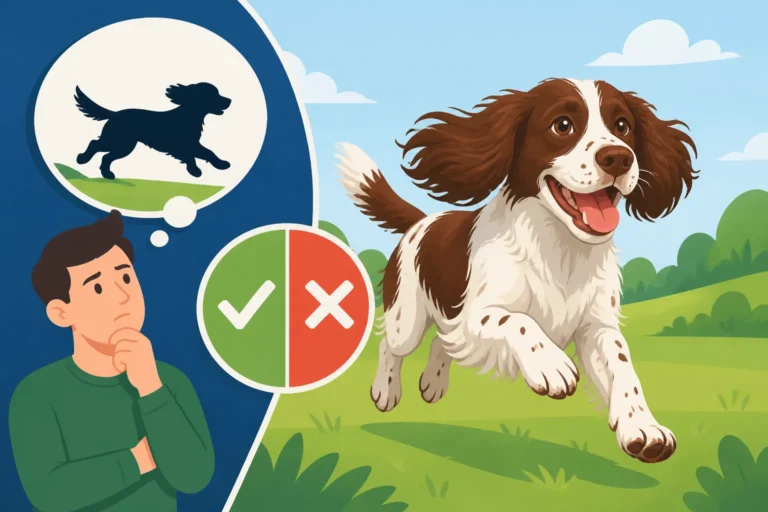
When we talk about cue anticipation in dogs, especially smart, driven breeds like Springer Spaniels, we're not talking about outright disobedience. Far from it! We're talking about a dog who is so keen to please, so intelligent, and so eager to get things "right" – or perhaps just eager for the reward – that they jump the gun. They predict what you're going to ask before you've even finished asking it.
Differentiating Anticipation from True Understanding
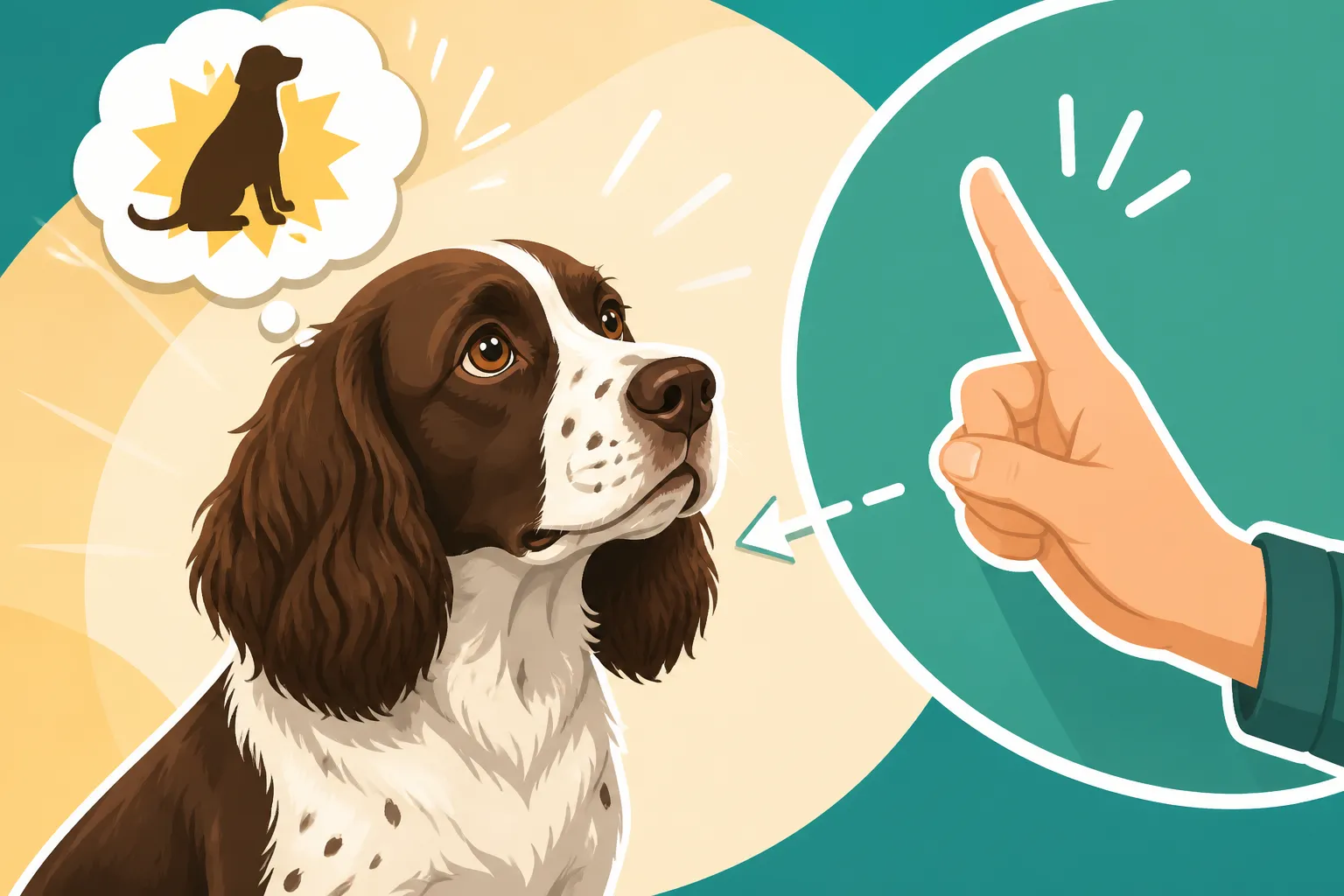
It’s crucial to understand the difference between a dog who genuinely understands a cue and waits for it, and one who simply anticipates it based on patterns, body language, or environmental triggers. A Springer Spaniel that truly understands "sit" will sit when you say "sit" in any context, with any body language, and regardless of whether you have a treat in your hand. An anticipatory Springer, however, might sit the moment you shift your weight, or even just look at them in a certain way, because that's usually followed by the "sit" cue and a reward. They've built a strong association, but not necessarily a deep understanding of the spoken word or specific hand signal as the sole trigger.
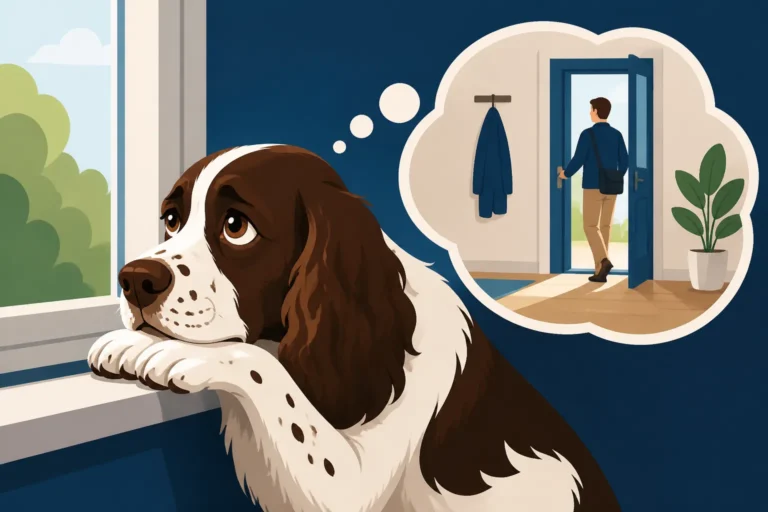
Think about it like this: your morning routine. Your Springer Spaniel likely knows that when you pick up your keys, put on your shoes, or grab their leash, a walk is imminent. They'll start to bounce and get excited even before you open the door or give the "let's go!" cue. That's anticipation. In the context of training, this becomes problematic because it means they're not truly listening to the finer details of your communication. It’s an enthusiasm that sometimes overruns the specific instruction, and while it comes from a good place, it needs to be managed for clearer communication and safety.
Everyday Examples of a Springer Spaniel Jumping the Gun
In daily life, this can manifest in numerous ways. Perhaps you always give your Springer a treat after they've sat patiently before their meal. Over time, your dog might start sitting the moment you reach for their food bowl, without you ever uttering the "sit" command. Or maybe when you're practicing retrieves, your Springer takes off running the instant you even think about throwing the bumper, rather than waiting for your "fetch" cue. They're so keyed into your body language, your routines, and the environmental signals that they bypass the actual verbal or hand cue entirely.
This eagerness is a hallmark of the breed; after all, they were bred to be highly responsive and quick to react in the field. A field bred Springer Spaniel, for instance, is naturally inclined to quarter your yard without being asked, driven by instinct and a desire to work. While this natural drive is wonderful, it needs careful shaping to ensure that they respond to your cues, not just their own predictions. These moments, while often cute, highlight the need for consistent and precise training to build a truly reliable dog.
More Than Just Smart: Why Springer Spaniels Are Prone to Jumping the Gun
Springer Spaniels are renowned for their intelligence, eagerness to please, and boundless energy. These wonderful traits, however, are precisely why they can be so prone to anticipating cues. It's a double-edged sword: their cleverness means they pick things up quickly, but sometimes too quickly, skipping ahead of the lesson plan.
Their Intelligence and Eagerness to Please
Springer Spaniels are incredibly bright dogs. They observe, learn, and form associations at a rapid pace. This means they often pick up on subtle pre-cues long before you even realize you're giving them. A slight shift in your weight, a particular hand movement, or even the tone of your voice can become a signal for them. Because they are so eager to please, and because they often associate performing a command with a reward (whether it's a treat, praise, or a tossed toy), they quickly learn to offer the behavior they think you want as soon as they pick up on any hint. They're trying to be good, to earn that coveted praise or reward, and sometimes that means they just can't wait for you to finish your sentence!
This level of attentiveness is one of the joys of owning a Springer, but it also places the responsibility firmly on the handler to be clear, consistent, and unpredictable in a controlled way. If you always give the "sit" cue immediately after you stop walking, your Springer will quickly learn to sit the instant you halt, regardless of the verbal cue. Their smarts make them pattern-seekers, and they excel at connecting the dots, even if those dots aren't quite what you intended.
The Strong Work Ethic and Drive for Action
Springer Spaniels were bred for work, specifically to "spring" game from cover and retrieve it. This means they possess a natural, inherent drive for action and a high level of enthusiasm. They are not content to sit idly by; they want to do something, engage with you, and participate. This strong work ethic, while incredibly valuable in gundog work and other canine sports, translates into a dog that is always ready to go, always looking for the next task. When they anticipate a cue, it's often an expression of this innate drive – they want to get to the "doing" part as quickly as possible.
Consider a Springer who is learning to retrieve. Their instinct is to run and grab. Asking them to "sit" and "stay" while you throw something, and then wait for a "fetch" cue, goes against their natural inclination to go. The anticipation comes from this strong desire to engage in the activity they love. This is why building strong impulse control and patience is particularly important for this breed, especially if you're engaging in any sort of field work. A dog that cannot be reliably steadied to flush can cause a real headache in the field, making the hunt less enjoyable and potentially even unsafe.
Patterning During Training Sessions
One of the biggest contributors to cue anticipation is patterning during training. As humans, we often fall into predictable routines without even realizing it. We might always give the "sit" cue followed by a treat, or always ask for a "down" after a "sit." Our dogs, with their incredible ability to observe and predict, quickly pick up on these patterns.
For example, if you always follow your hand signal for "come" with the verbal cue "come," your Springer Spaniel will soon respond to the hand signal alone. Or, if you always use the same sequence of commands (sit, down, stay, come), your dog will start predicting the next command in the sequence. This is why varying your training sessions, introducing random elements, and working in different environments is so important. If training always happens in the same spot, with the same rewards, and the same sequence, your Springer will become a master of prediction, not necessarily a master of precise, cue-dependent responses. How Many Repetitions a Springer Spaniel Needs to learn a command is often less about the sheer number of repetitions and more about the quality and variability of those repetitions.
When Eagerness Becomes a Problem: The Downsides of Anticipation
While a Springer Spaniel's eagerness is charming, when it leads to constant cue anticipation, it can become a genuine hurdle. It’s not just about a dog being a little too keen; it has practical implications for safety, reliability, and the overall enjoyment of working with your dog.
Safety Concerns in Real-World Scenarios
The most significant downside of anticipation is the potential safety risk. Imagine you're walking your Springer Spaniel off-leash in an area where you occasionally encounter other dogs or distractions. You need a rock-solid "come" cue. If your dog has learned to anticipate "come" merely from your body language (e.g., you turn to face them, crouch down slightly), they might start to bolt towards you or something else before you've even had a chance to assess the situation and deliver the actual, precise cue. This premature action could put them in harm's way, running into traffic, or startling another animal or person.
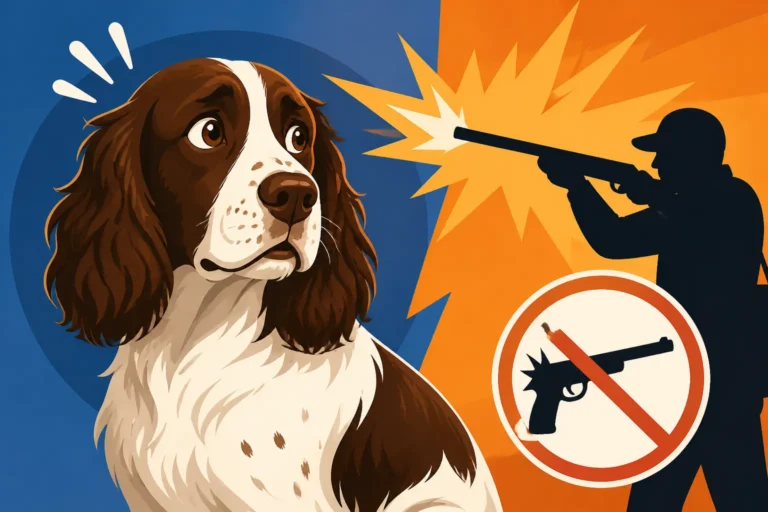
Similarly, in a hunting context, a Springer Spaniel that anticipates the "fetch" command might break from its "stay" before a bird has dropped safely, potentially running into the line of fire or flushing game out of range. The difference between a dog who responds precisely to a clear cue and one who acts on a prediction can be the difference between a controlled, safe situation and a dangerous one. Whether a Springer Spaniel's Recall Can Be Trusted hinges entirely on their ability to wait for and respond to the actual command, not just what they think is coming.
Breaking Steadiness and Precision in Training
Anticipation fundamentally undermines the precision we strive for in training. A huge part of gundog training, for example, is teaching a dog to be "steady" – to hold their position and not break until given an explicit release cue. If your Springer Spaniel anticipates the retrieve and breaks early, all that hard work on steadiness goes out the window. It becomes a constant battle to regain control and rebuild that crucial patience. This can be especially frustrating in a structured environment like a hunt test or field trial, where breaking from a command can lead to immediate disqualification.
Even in basic obedience, a dog that consistently anticipates cues isn't truly performing the command; they're performing a guess. This makes it hard to advance to more complex tasks, as the foundational behaviors aren't truly solid. You can't chain commands together effectively if your dog is always trying to jump to the third step before you've even finished the first. It's like trying to build a house on an unstable foundation.
Frustration for the Handler and the Dog
Let's be honest, it's incredibly frustrating when your dog doesn't wait for your cue. You might feel like you're not being heard, or that your dog isn't respecting your commands. This can lead to you repeating commands, raising your voice, or even becoming exasperated – none of which is conducive to effective training. The Soft Springer Spaniel That Shuts Down If You Shout means that getting frustrated and raising your voice might actually hinder their learning and eagerness, rather than improve it.
From the dog's perspective, constant anticipation might stem from a desire to please, but if they're always "wrong" because they acted too soon, it can create confusion and even anxiety. They might become hesitant, unsure if they should wait or act on their instinct. This breakdown in communication can strain the bond and make training less enjoyable for both of you. The goal is to create a clear, consistent dialogue where both parties understand the rules of engagement.
Cultivating Patience: Strategies to Guide Your Springer Spaniel
Managing cue anticipation in a smart, high-drive Springer Spaniel requires a thoughtful and consistent approach. It’s not about stifling their enthusiasm, but rather channeling it into precise, cue-dependent responses. Building patience and focus takes time and dedication, but the results—a reliable, confident dog—are well worth the effort.
Varying Routines and Avoiding Predictable Patterns
The first step in combating anticipation is to become unpredictable yourself, in a controlled way. If your Springer Spaniel is anticipating cues because of predictable patterns, then you need to break those patterns. Instead of always asking for a "sit" before putting down the food bowl, sometimes just place the bowl down. Other times, ask for a "down" or a "stay" for a moment before releasing them to eat. This teaches your dog that the environment or your posture alone doesn't always signal a specific action.
When training, avoid always doing commands in the same sequence. Mix it up! Go from a "sit" to a "come," then to a "down," then back to a "sit." Practice commands in different locations in your house and yard. If you always use treats, sometimes use a toy as a reward, or just enthusiastic verbal praise. The more varied your approach, the less your Springer will be able to predict your next move, forcing them to actually listen for the specific cue. Many trainers offer structured programs emphasizing this variability; for instance, online resources like those from BAXTER & Bella often provide excellent guidance on how to introduce randomness into your training sessions, helping your dog learn to wait for the explicit cue rather than guessing.
Proofing and Generalizing Commands
Proofing is the process of practicing a command in various environments, with different distractions, and with different people, until your dog performs it reliably in any situation. This is absolutely critical for managing anticipation. A Springer Spaniel might "sit" perfectly in your quiet living room, but will they "sit" and wait for your cue at the park when squirrels are darting about? If they anticipate, they might break before you've even finished your instruction, especially if a strong distraction presents itself.
Start by practicing commands in slightly more distracting environments than your initial training spot, gradually increasing the challenge. Work on durations for "stay" commands, slowly increasing the time your dog has to hold still before being released. Use a long line, easily found on Amazon, to practice recall in open spaces, ensuring you can still enforce the "come" if they anticipate and bolt early. The goal is for the cue itself, not the context, to be the trigger for the behavior. Whether a Springer Spaniel Needs a Gundog Trainer can sometimes come down to the need for advanced proofing techniques that only an experienced professional can provide, especially for working dogs.
Rewarding Correct Timing and Ignoring Anticipatory Behaviors
This is perhaps the most important strategy: reward only the behaviors that are offered after the specific cue, and not those that are anticipated. If your Springer Spaniel sits before you say "sit," simply ignore the behavior. Wait for them to stand up, then clearly give your "sit" cue, and only reward if they sit after your cue. This can be tough, especially with a dog as insistent as a Springer, but consistency is key.
When you're teaching a new command, or re-teaching an old one to improve precision, be very deliberate with your cue delivery. Say the command once, clearly. If your dog anticipates, don't repeat the command. Instead, reset the situation. For example, if they start to retrieve before you say "fetch," pick up the bumper, wait for them to calm down, and then try again, only throwing the bumper after your explicit cue. Using a "no-reward marker" like "oops!" or "nope" can also be helpful, immediately followed by resetting the scenario without punishment. The idea is to teach them that guessing doesn't pay off, but listening attentively does.
Breaking Down Complex Tasks into Smaller Steps
Sometimes, anticipation occurs because the overall task is too complex, and the dog is trying to get to the "end game." For example, if you're working on a multi-stage retrieve (e.g., sit, stay, mark, fetch, return, sit, drop), your Springer might anticipate the "fetch" because they know that's the ultimate goal. In these cases, break the task down into much smaller, individual components.
Work on a rock-solid "sit" and "stay" completely separate from the retrieve. Practice the "fetch" itself by just having them pick up an object from your hand. Then, slowly, gradually, start linking these behaviors together, always emphasizing the importance of waiting for each individual cue. Don’t rush the process. A helpful training aid, like a check cord or a steadying stick (again, resources available on Amazon), can be invaluable during these stages, providing gentle physical guidance to reinforce the wait. Remember, the goal is not speed, but precision and understanding, especially as The Age a Springer Spaniel Can Start Gundog Training often begins with these foundational components.
By implementing these strategies, you'll not only reduce anticipation but also build a stronger, clearer line of communication with your intelligent and spirited Springer Spaniel. They'll learn that patience and careful listening lead to the most rewarding outcomes, making them a more reliable and enjoyable companion in all aspects of life.
Table: Anticipation vs. Precision in Springer Spaniel Training
Understanding the nuances between anticipation and truly precise responses is vital for effective training. This table illustrates common scenarios and offers quick tips to guide your Springer Spaniel towards better listening.
| Command Scenario | What Anticipation Might Look Like | What Precision Looks Like | Training Tip to Encourage Precision |
|---|---|---|---|
| Sit Before Meal | Your Springer sits immediately when you pick up their food bowl. | Your Springer waits patiently, then sits only after your "sit" cue. | Vary your routine. Sometimes just put food down. Reward only correct timing. |
| Recall in Park | Your Springer starts running towards you when you turn to face them. | Your Springer only starts moving after your clear "come" cue. | Practice "come" unexpectedly. Use a long line for safety and to enforce the wait. Whistle Work: The Language a Springer Spaniel Learns can be key here too. |
| Stay with Ball | Your Springer breaks from "stay" as you raise the ball to throw. | Your Springer remains in "stay" until your explicit release cue. | Only throw the ball after a successful, cue-dependent "stay." If they break, reset. |
| Door Manners | Your Springer pushes past you as you reach for the doorknob. | Your Springer waits for your "OK" or "free" cue before moving through the door. | Teach a "wait" at the door. Practice opening and closing without release, rewarding patience. |
| Retrieve | Your Springer runs for the bumper the instant it leaves your hand. | Your Springer waits for the "fetch" cue after the bumper lands. | Start with short throws, rewarding for waiting. Build up distance and distraction slowly. |
The Long Game: Patience and Consistency Are Your Best Friends
Training a Springer Spaniel, especially one prone to anticipation, is a journey that requires a deep well of patience and unwavering consistency. It's not a quick fix, but a process of constantly reinforcing the correct behavior and kindly, but firmly, redirecting anticipatory actions. Remember that your Springer isn't trying to be difficult; they're simply responding to their own intelligence, drive, and the patterns they've observed.
One crucial aspect is understanding that your dog's learning isn't linear. There will be days when they seem to "get it" perfectly, and others where they revert to old habits. Don't get discouraged. Every training session is an opportunity to clarify your expectations and strengthen your bond. Whether Positive Training Alone Works on a Springer Spaniel is a topic often discussed, but in the case of anticipation, positive reinforcement for waiting and responding correctly is paramount, combined with simply not rewarding the anticipatory actions.
Always strive to make training enjoyable for your Springer Spaniel. They thrive on engagement and working with you. Keep sessions short, fun, and varied to maintain their enthusiasm without causing burnout or confusion. Celebrate successes, even small ones, and understand that developing a truly reliable, cue-dependent response is a testament to both your training skill and your Springer's incredible capacity to learn and please. By approaching anticipation with understanding and a solid plan, you'll foster a Springer Spaniel who not only knows their commands but waits patiently and precisely for your lead.
Disclaimer
This article is for general informational purposes only and does not constitute professional advice. Laws, prices and regulations vary by location and change over time. Consult a qualified professional for guidance on your specific situation.