Whether a Springer Spaniel Can Be a Service Dog
It’s a natural thought for any devoted Springer Spaniel owner: our intelligent, eager-to-please, and utterly charming companions seem like they could do anything. When you witness their focus and drive, especially when they're "on," it's easy to wonder if they could extend that brilliance to something as impactful as service dog work. This guide is here to unravel the complexities of what it truly means for a Springer Spaniel to be a service dog, separating the hopeful dreams from the practical realities and immense dedication required.
Understanding What Makes a Service Dog
The term "service dog" carries a lot of weight, and for good reason. It's not just about a dog being well-behaved or comforting; it's about a highly trained animal performing specific, life-enhancing tasks for an individual with a disability. Many people confuse service dogs with emotional support animals or therapy dogs, and understanding the differences is the very first step in this journey.
More Than Just a Well-Behaved Pet
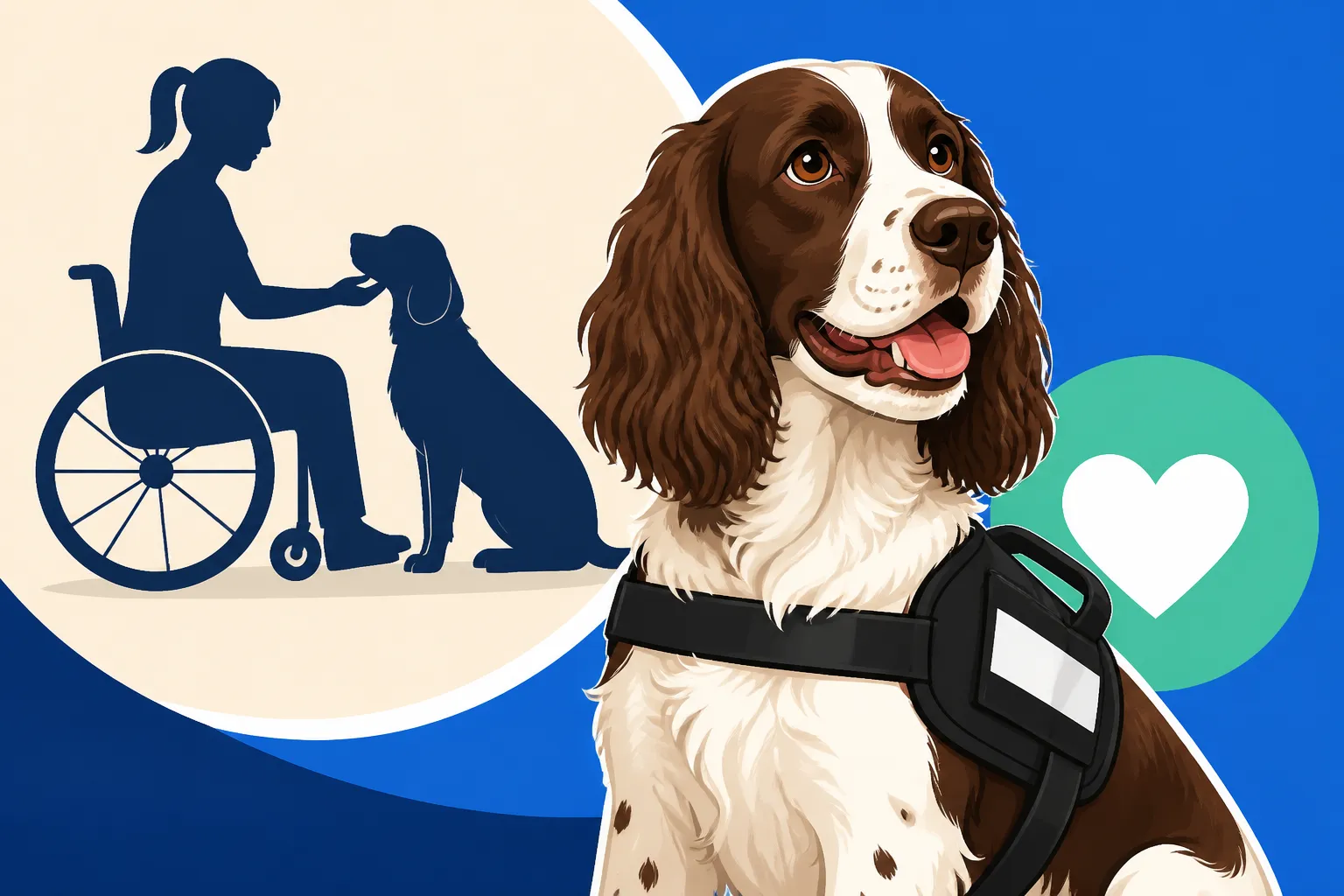
When we talk about service dogs, we're talking about dogs that are specifically trained to perform tasks directly related to a person's disability. This isn't about general companionship or a wagging tail making you feel better, as lovely as that is. A service dog might retrieve dropped items for someone in a wheelchair, alert a diabetic to low blood sugar, guide a visually impaired person, or provide deep pressure therapy to interrupt a panic attack. These are tangible, trained behaviors that mitigate a disability.
The distinction is critical because it impacts where the dog can go and the legal protections it has. Service dogs, by law, are generally allowed in all public places where pets are typically prohibited, like restaurants, grocery stores, and hospitals. This privilege comes with an enormous responsibility, demanding impeccable behavior and absolute reliability from the dog. It's a level of professionalism that far exceeds what we expect from even the best-behaved household pet.
This intensive role means a service dog isn't just a beloved family member; it's also a vital piece of medical equipment, a partner in independence. The bond is deep, certainly, but the dog’s primary function is its work. This focus on specific, trained tasks is what elevates a service dog beyond simply being a cherished companion, no matter how much joy and support they bring to their human.
Essential Temperamental Traits for Service Work
Beyond the training, the dog's inherent temperament is arguably the most crucial factor in determining if they can succeed as a service dog. A dog can be taught many things, but some foundational personality traits are incredibly difficult, if not impossible, to instill. We’re looking for a very specific blend of confidence, calm, and willingness.
First and foremost, a service dog must possess an unwavering calmness and resilience. They will encounter all sorts of novel, distracting, and potentially startling situations in public – loud noises, strange smells, curious people, other animals, sudden movements. A dog that is easily spooked, reactive, or prone to anxiety will not be able to perform its duties reliably. They need to be able to "shake off" distractions and remain focused on their handler, consistently delivering their trained tasks regardless of the environment. Imagine a dog that jumps at every loud truck or barks at every passing stranger; such a dog would create more problems than it solves in a public access setting.
Confidence is another non-negotiable trait. A service dog needs to navigate busy environments without fear or hesitation, whether it's walking through a crowded airport or ignoring a child’s sudden tantrum in a store. They must be self-assured enough to handle new situations without becoming overwhelmed, yet humble enough to accept guidance and direction from their handler. Focus is also paramount; they need to be able to tune out irrelevant stimuli and maintain a strong connection with their person. While many Springer Spaniels are friendly and intelligent, their natural enthusiasm needs to be carefully channeled.
Finally, and perhaps most importantly for a working dog, is biddability and a profound willingness to work. This isn't just about being smart enough to learn commands; it's about a deep-seated desire to please and collaborate with their human partner. A service dog must want to do its job, consistently and without complaint. This intrinsic motivation is what allows them to push through discomfort, ignore temptations, and remain dedicated to their handler’s needs day in and day out. Without this drive to work for their person, even the most intelligent dog will falter under the pressure of service dog duties.
| Trait Category | Ideal Service Dog Trait | Common Springer Spaniel Trait | Service Dog Suitability |
|---|---|---|---|
| Temperament | Calm, confident, resilient, non-reactive, biddable | Enthusiastic, friendly, intelligent, sometimes sensitive, highly scent-driven | Good potential with careful selection & training |
| Focus | Handler-oriented, able to ignore distractions | Can be easily distracted by scents/movement, intense focus on tasks once engaged | Requires significant desensitization & focus training |
| Drive | Moderate to high work ethic, task-oriented | High prey drive, high retrieve drive, eager to please | Excellent for retrieve/alert tasks, needs channeling for focus |
| Energy | Balanced, able to settle in varied environments | High energy, needs significant exercise and mental stimulation | Requires consistent outlet for energy to prevent restlessness |
| Social | Indifferent to strangers/other animals | Very friendly, can be overly enthusiastic in greeting | Needs specific training to ignore distractions & remain focused |
Springer Spaniels and Their Service Dog Potential
So, where do our beloved English Springer Spaniels fit into this demanding picture? They certainly possess many qualities that, on the surface, seem perfectly suited for service work, but they also come with a set of breed-specific traits that present unique challenges. It’s about understanding these nuances and how they can be leveraged or managed.
Strengths of the Springer Spaniel for Service Roles
Springer Spaniels are renowned for their intelligence and their eager-to-please nature. These are absolutely foundational qualities for any working dog, especially one destined for service. They pick up new commands and concepts with remarkable speed, often seeming to anticipate what you want before you even ask. This intelligence means they can be taught a wide array of tasks, from opening doors to retrieving specific items. Their desire to work with their handler makes training a truly collaborative experience, which is essential when the dog's duties are so intertwined with its human partner's daily life.
Another significant strength lies in their incredible scenting ability. Springers were, after all, bred to find and flush game, putting their noses to constant, effective use. This powerful sense of smell can be a tremendous asset in certain service roles, particularly medical alert tasks. Imagine a Springer trained to detect subtle changes in a person's blood sugar levels, or to recognize the onset of a seizure, signaling their handler before a crisis fully unfolds. Their keen nose and focused retrieve drive can also make them exceptional at finding lost items or carrying small, important objects. For more on their capabilities, you might explore Whether a Springer Spaniel Can Do Agility, which showcases their athleticism and willingness to learn complex sequences.
Their size and generally friendly disposition also work in their favor. A Springer is large enough to perform many physical tasks, such as bracing for balance (though not full mobility support like a large retriever) or retrieving heavier items, yet compact enough to fit comfortably under a table or in crowded public spaces. They're typically approachable without being overly boisterous with strangers, which can be a tricky balance for a public access dog. People generally find Springers endearing, which can sometimes ease public interactions, though proper "do not pet" etiquette is always vital for a working dog.
Common Challenges for Springer Spaniels in Service Work
Despite their many wonderful traits, Springer Spaniels also bring a set of challenges that need to be carefully considered and managed if they are to succeed as service dogs. Their history as active gundogs is a double-edged sword. While it instills a strong work ethic, it also means they have extremely high energy levels and an intense drive that, if not properly channeled, can lead to restlessness and difficulty settling in quiet environments. A service dog needs to be able to "turn off" when not actively working, lying calmly for hours in a doctor’s office or a quiet restaurant. For a Springer, this requires immense self-control and often more rigorous training than other breeds might need.
Their incredible scenting ability, while a strength for specific alert tasks, can also be a significant distraction in public. A service dog cannot be constantly pulling towards every interesting smell on the sidewalk or sniffing around a restaurant floor. This natural instinct to put their nose to the ground and explore can override their focus on their handler, making public access training particularly demanding. Anyone who has walked a Springer knows that Why a Springer Spaniel Puts Its Nose to the Ground and Vanishes is a very real phenomenon, and mitigating this natural inclination requires consistent, dedicated effort.
Another aspect to consider is their inherent sensitivity. While often seen as a positive trait for their eagerness to please and responsiveness to gentle guidance, it also means that Springers can shut down or become anxious if handled harshly or inconsistently. A service dog needs to be incredibly resilient and able to bounce back quickly from unexpected events or minor corrections. If you’ve ever had a Springer sulk after a raised voice, you know that Whether a Springer Spaniel Sulks After a Correction is a real concern. This sensitivity means their training must be overwhelmingly positive, building confidence rather than relying on punitive measures, which demands a high level of skill from the trainer.
The Demands of Training a Service Springer Spaniel
The path to becoming a service dog is long, arduous, and incredibly demanding, regardless of breed. For a Springer Spaniel, it requires an exceptional training program that understands their specific drives and temperament. This isn’t a weekend hobby; it's a full-time commitment that can span years and often requires significant financial investment.
Professional Training vs. Owner-Training Paths
When considering training a Springer Spaniel for service work, you generally have two main routes: professional programs or owner-training. Professional service dog organizations are fantastic resources. They breed or select dogs specifically for temperament, provide intensive, specialized training, and then place them with individuals who need them. The dogs in these programs typically undergo years of structured training, focusing on obedience, task work, and extensive public access socialization. The benefit is a highly reliable dog, but the waitlists can be long and the costs for these fully-trained dogs are substantial, even if grants or fundraising opportunities exist.
Owner-training, on the other hand, means you, the handler, are responsible for all aspects of your Springer's training. This path demands an incredible amount of time, dedication, and a deep understanding of dog behavior and training methodologies. You'll need to research extensively, find qualified professional guidance for specific task training and public access work, and commit to consistent, daily training sessions. It's not simply teaching basic obedience; it's about conditioning a dog to perform complex tasks reliably under extreme distraction, and to maintain perfect public manners. Many owner-trainers find immense value in structured online courses or academies, like those offered by BAXTER & Bella, which provide comprehensive curricula for foundational skills, socialization, and problem-solving, creating a strong base before advanced service dog work.
Regardless of the path, the reality is that the training is intensive. You might think, "I've taught my Springer a ton of tricks and they're pretty smart!" and that's wonderful! But service dog training goes far beyond that. It's about instilling absolute reliability in any environment, under any stress. It requires countless hours of exposure to different places, people, and situations, all while maintaining perfect focus and manners. For many, consulting with a specialized gundog trainer might even be beneficial for channeling their natural drives, as highlighted in Whether a Springer Spaniel Needs a Gundog Trainer, even if the end goal isn't hunting.
Specialized Tasks and Public Access Training
Once a Springer Spaniel has a solid foundation of basic and advanced obedience, the real specialized work begins. This is where the dog learns to perform the specific tasks that mitigate their handler's disability. For a Springer, this might involve retrieving medications, opening and closing doors, turning lights on or off, or even providing a "deep pressure therapy" by leaning against a person experiencing anxiety. Their scenting abilities make them strong candidates for medical alert tasks, such as signaling changes in blood sugar or detecting specific allergens. Each task requires meticulous, repetitive training, breaking down complex actions into small, achievable steps.
Parallel to task training is the rigorous public access training. This is where the service dog learns to behave impeccably in all public environments. This means no sniffing things off the floor in a grocery store, no greeting strangers, no reacting to other dogs, and settling quietly under tables for extended periods. It involves systematic desensitization to novel sounds, sights, and smells that would distract most dogs. It's an ongoing process of exposing the dog to every conceivable situation, gradually increasing distractions while always ensuring they remain focused on their handler. The dog must learn to ignore everything except their job, even when a child drops a hot dog right next to them. This level of self-control is incredibly difficult for a high-drive, curious Springer and requires a very patient and skilled trainer. Understanding how sensitive a Springer can be, as explored in The Soft Springer Spaniel That Shuts Down If You Shout, underscores the need for positive reinforcement and careful management of their emotional state throughout this demanding process.
This training isn't a one-and-done deal. Service dogs, and their handlers, commit to a lifetime of maintaining these skills. Regular practice, refresher sessions, and continued public exposure are essential to ensure the dog remains reliable and proficient. It's a testament to the incredible bond and dedication between a service dog team.
Realistic Expectations and Choosing the Right Dog
The dream of having your beloved Springer by your side as a service dog is compelling, but it's crucial to approach this journey with realistic expectations. Not every dog, even within a capable breed, is cut out for the intense demands of service work, and that's perfectly okay.
Not Every Springer Spaniel Is Suited
It’s a hard truth, but the most important thing to understand is that temperament always trumps breed. While Springer Spaniels have many positive attributes, not every individual Springer will possess the specific combination of calmness, resilience, and unwavering focus required for service dog work. Some might be too high-strung, too easily distracted by scents, or too sensitive to external stimuli to consistently perform their duties in public. Their innate drive to hunt and investigate can be incredibly difficult to redirect into the constant, focused attention a service dog needs.
This is why health clearances and early temperament testing are absolutely vital when selecting a potential service dog prospect. A puppy from solid lines, bred for stable temperaments, and with all genetic health screenings in place (like those mentioned in The Health Tests Both Springer Spaniel Parents Should Have), will have a far better chance. Even then, careful observation of a puppy's individual personality from a very young age is crucial. Look for the puppy that is confident but not pushy, resilient but not hyperactive, and shows an early willingness to engage with humans in a cooperative manner.
It’s also important to be honest with yourself if, after significant effort, your Springer isn’t thriving in a service dog role. It can be emotionally taxing to admit, but forcing a dog into a job it's not suited for benefits no one. A dog that is constantly stressed or overwhelmed by its duties will not be happy or effective. Recognizing when a dog is happier in a less demanding role, even if it's "just" being a fantastic pet, is a sign of responsible and empathetic ownership. There are so many other wonderful ways a Springer can enrich your life.
Considering Alternatives and Support Systems
If your Springer Spaniel doesn't quite fit the mold for full service dog work, or if the demands of training become overwhelming, please know that there are many other incredibly valuable roles your dog can fill. For example, many Springer Spaniels excel as therapy dogs. In this role, they visit hospitals, nursing homes, or schools to provide comfort and affection. This allows them to use their natural friendliness and warmth to bring joy to others without the stringent public access requirements and task training of a service dog. Whether a Springer Spaniel Makes a Therapy Dog highlights just how impactful they can be in these supportive capacities.
Emotional support animals (ESAs) are another category. While they don't have public access rights beyond housing and air travel, an ESA provides comfort and companionship that alleviates symptoms of a person's disability. For a breed known for its "Velcro dog" tendencies, where The Springer Spaniel That Cannot Be Left Alone is a common concern, being a devoted ESA might be a perfect fit, providing immense comfort and presence to their owner within the home.
The journey of training any dog, especially for specialized roles, is enhanced by a strong support system. Local professional dog trainers who specialize in positive reinforcement and advanced obedience can offer invaluable guidance. Online communities, accessible through platforms like Amazon where you can find books, training aids, and specific gear, can also connect you with experienced owner-trainers who share similar goals and can offer advice and encouragement. Remember, even if your Springer isn't a service dog, the dedication you pour into their training and well-being strengthens your bond and enriches both your lives immeasurably.
Disclaimer
This article is for general informational purposes only and does not constitute professional advice. Laws, prices and regulations vary by location and change over time. Consult a qualified professional for guidance on your specific situation.