Whether a Springer Spaniel Can Be Trained for Detection Work
Many English Springer Spaniel owners look at their dog, with that incredible, constantly twitching nose, and that boundless energy, and wonder if there's more their furry friend could do than just chase squirrels or bring back a tennis ball. It's a common thought for those of us with these intelligent, driven dogs: could this energy and scent drive be channeled into something truly meaningful? This guide is here to explore whether a Springer Spaniel can truly be trained for detection work, delving into their natural abilities, the types of work they excel at, and the commitment required from you as an owner.
Why Springer Spaniels Excel at Scent Work
When you watch a Springer Spaniel work, whether it's quartering a field in search of pheasant or meticulously vacuuming your living room floor for dropped crumbs, one thing is abundantly clear: their nose is paramount. These dogs live through scent, and it's this innate ability coupled with other key traits that makes them surprisingly adept at various detection tasks.
Their Phenomenal Olfactory Prowess
Let's be honest, your Springer's nose is a superpower. They have an incredible number of olfactory receptors – far more than humans – and a brain specifically wired to process and differentiate a vast array of smells. This isn't just about smelling more things; it's about smelling things in incredible detail, picking out a specific target odor even amidst a cacophony of other scents. Imagine trying to find a single grain of rice in a huge bowl of mixed spices. That's what a Springer Spaniel's nose can do with odors. Their ability to track a scent, even when it's faint or dispersed, is a testament to their breeding and natural talent. This means they can be taught to pinpoint minuscule traces of substances that would be entirely undetectable to us. This inherent gift is the foundation of all detection work. Many of us have wondered How Far a Springer Spaniel Will Go on a Scent, and in detection work, that drive is harnessed and directed.
Unmatched Drive and Stamina
Beyond their nose, Springer Spaniels possess an extraordinary amount of drive. They are tireless workers, bred for long days in the field, flushing game and retrieving. This isn't just a physical stamina; it's a mental tenacity. They love having a job to do and are intensely motivated to please their handlers and earn their reward, whether that's a favorite toy, a treat, or enthusiastic praise. This drive translates directly into a dog that can stay focused on a search for extended periods, working methodically without losing interest, which is absolutely crucial in demanding detection scenarios. A bored Springer is a destructive Springer, but a working Springer is a happy, productive Springer. They thrive on purpose, and detection work provides that in spades.
Their Compact, Agile Build
Compared to some of the larger, more powerful scent dogs like German Shepherds or even Labradors, the Springer Spaniel has a more compact and agile build. This isn't a disadvantage; it's a huge asset. Their size allows them to navigate tight spaces, clamber over obstacles, and access areas that a larger dog might struggle with. Think about searching a cluttered storage unit, a collapsed building, or even the confines of a vehicle interior. Their athleticism and moderate size mean they can get into nooks and crannies, making them excellent choices for detailed, close-quarters searching. Plus, their soft mouth, while often praised for delicate bird retrieval, means they can indicate a find without damaging fragile evidence.
Types of Detection Work Suitable for Springer Spaniels
Given their unique blend of scenting ability, drive, and physical attributes, Springer Spaniels can excel in a surprising variety of detection roles. It's not just about what they can smell, but also how they work to find it.
Narcotics and Explosives Detection
This is perhaps the most widely recognized form of detection work, and Springer Spaniels have made a significant impact here. Their keen noses are perfectly suited to identifying the specific chemical signatures of various illicit drugs or explosive compounds. They're often deployed in airports, border crossings, and public events. Their enthusiastic search pattern, often a methodical "quartering" motion that mirrors their hunting instincts, allows them to cover areas efficiently. When a Springer Spaniel is properly trained, they learn to provide a clear, unmistakable indication when they locate a target odor. This isn't just about finding the stash; it's about helping law enforcement prevent crime and ensure public safety. You'll often see these incredible dogs working with various agencies, a testament to their capabilities.
Search and Rescue (SAR)
While often associated with larger breeds, Springer Spaniels are proving their worth in search and rescue efforts, particularly in situations requiring agility or the ability to work in dense brush or rubble. They can be trained for live-find searches, locating missing persons by detecting human scent, or even for cadaver detection, identifying human remains. Their relentless drive means they won't give up easily, and their manageable size allows them to navigate challenging terrain or debris fields where larger dogs might get stuck. The bond with their handler is also a crucial element in SAR, as trust and clear communication are paramount in high-stress situations. Whether a Springer Spaniel Needs a Job is a resounding 'yes' in this context; SAR provides immense purpose.
Specialized Scent Detection
Beyond the more common roles, Springer Spaniels are increasingly being utilized in highly specialized detection work. This could include:
- Accelerant Detection: After a fire, investigators often rely on dogs to detect traces of accelerants (like gasoline or kerosene) that might indicate arson. Springers are excellent at this, meticulously sweeping burned-out structures for tell-tale scents.
- Termite/Bed Bug Detection: Yes, really! Their ability to pinpoint specific biological scents makes them ideal for locating infestations in homes or businesses, often with greater accuracy and efficiency than human inspectors.
- Conservation Detection: These dogs can be trained to find invasive species, endangered wildlife scat for population monitoring, or even detect specific plant diseases to protect crops. This is a fascinating and growing field where the Springer Spaniel's natural hunting drive and nose are invaluable for ecological preservation. For those interested in home scent training, kits for these types of detection can sometimes be found on platforms like Amazon, offering a fun way to engage your dog's nose.
The Training Journey for a Detection Springer Spaniel
Training a Springer Spaniel for detection work is a serious undertaking, requiring dedication, consistency, and a deep understanding of positive reinforcement. It's not just about teaching them to find a smell; it's about shaping their natural instincts into a precise, reliable skill.
Early Foundations and Socialization
The journey often begins much earlier than you might think. A detection dog needs to be confident, resilient, and well-socialized. Puppy classes, like those often recommended by organizations such as BAXTER & Bella, are crucial for building a strong foundation. Exposure to various environments, sounds, people, and other animals from a young age helps create a dog that isn't easily distracted or spooked when working in novel situations. They need to be comfortable in bustling airports, quiet rural fields, or even the eerie silence of a post-disaster site. A well-adjusted Springer Spaniel puppy will be much more receptive to advanced training later on. Ensuring a strong bond and clear communication early on is key. The First Year With a Springer Spaniel Puppy is foundational for any advanced training.
Scent Introduction and Imprinting
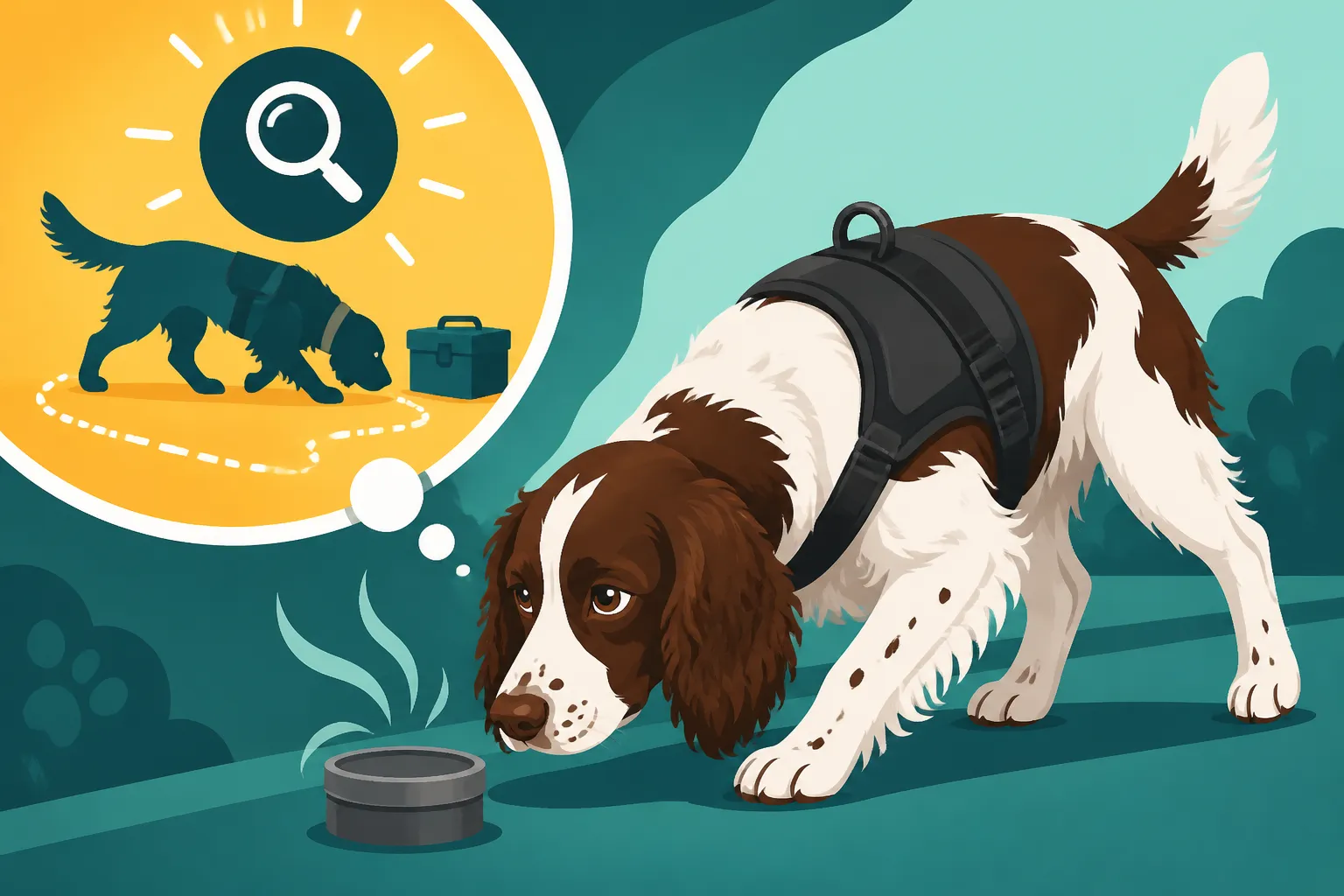
The core of detection training involves introducing the specific target odor (or odors) in a highly controlled and positive manner. This is called "imprinting." Trainers use small, pure samples of the substance (e.g., a tiny amount of a specific drug, or a specific accelerant scent) and associate it with a high-value reward, like a favorite toy or a delicious treat. The goal is to make the dog incredibly excited to find that particular smell.
Initially, the scent might be very easy to find, perhaps hidden in a clear container right in front of them. As the dog consistently shows enthusiasm for the scent, the difficulty increases. It's hidden in increasingly challenging locations, with varying amounts of distraction. This process teaches the dog that finding this specific odor leads to the best reward. It's all about positive associations; yelling or punishing a dog during scent work will only make them fearful and less effective. This is why Whether Positive Training Alone Works on a Springer Spaniel is so critical in this field.
Indication Training and Search Patterns
Once the dog reliably identifies the target odor, the next step is teaching them an "indication"—a clear, consistent behavior that tells the handler they've found something. For many detection dogs, this is a passive alert, like sitting, lying down, or freezing with their nose pointed at the source. This is vital because you don't want the dog to disturb or contaminate the actual substance.
Simultaneously, the dog is trained on search patterns. For a Springer Spaniel, this often involves harnessing their natural quartering instinct, teaching them to systematically cover an area. They learn to work a grid, sweep a room, or clear a vehicle, ensuring no area is missed. This methodical approach, combined with their sharp nose, makes them incredibly efficient. Mastering these techniques requires many repetitions, patience, and a trainer who understands how to build on the dog's natural instincts. Regular training sessions, even short ones, are far more effective than infrequent, long ones.
Challenges and Considerations for Detection Work
While Springer Spaniels possess many admirable qualities for detection, it's essential to approach this path with a realistic understanding of the challenges and commitment involved. This isn't a casual hobby; it's a demanding discipline.
The Time and Financial Commitment
Training a fully certified detection dog takes an enormous amount of time, effort, and often, financial investment. You're looking at years of consistent training, not just a few weeks of classes. This typically involves working with professional detection dog trainers who specialize in these areas. Their expertise is invaluable for shaping a dog into a reliable working partner. These specialized programs can be costly, and ongoing maintenance training is essential to keep the dog sharp and proficient. For most dedicated handlers, this is a full-time commitment that extends well beyond the initial training phases. It's a journey, not a destination.
| Aspect of Training | Description | Impact on Springer Spaniel |
|---|---|---|
| Scent Imprinting | Teaching the dog to identify and prioritize specific target odors. | Taps into natural drive. |
| Indication Training | Developing a clear, consistent signal when a scent is located (e.g., sit). | Requires patience. |
| Proofing & Generalization | Training in varied environments with distractions. | Builds resilience. |
| Search Patterns | Learning systematic methods to cover an area thoroughly. | Utilizes quartering instinct. |
| Handler Skills | Learning to read the dog, interpret alerts, and manage searches. | Demands handler dedication. |
Handler Skill and Dedication
A detection dog is only as good as its handler. You, as the handler, need to be deeply committed, patient, and capable of reading your dog's subtle cues. You'll need to learn how to set up effective training scenarios, how to reward appropriately, and how to troubleshoot when things don't go according to plan. It's a partnership, and both halves need to be well-trained. A good handler understands their dog's body language, knows when to push, and when to give a break. If you're considering this path, prepare for significant personal growth alongside your dog's development. This isn't just about training the dog; it's about training yourself to be an effective partner.
Environmental and Distraction Management
Real-world detection scenarios are rarely pristine and distraction-free. A detection dog must be able to work effectively in chaotic, noisy, or unfamiliar environments. This means training needs to expose them to all sorts of distractions: other animals, loud noises, unfamiliar people, moving vehicles, and varying weather conditions. Overcoming these distractions requires extensive proofing in training, gradually building the dog's ability to maintain focus on the task at hand, regardless of what else is happening around them. A Springer Spaniel's tendency for Why a Springer Spaniel Puts Its Nose to the Ground and Vanishes can be both a blessing and a curse; it needs to be channeled correctly. Many find that Scent Games Tire a Springer Spaniel and build focus, which is a great starting point for more serious work.
Maintaining Proficiency
Detection work is a perishable skill. Once trained, a detection Springer Spaniel requires ongoing, regular training to maintain their proficiency. This means fresh scent hides, new environments, and continued practice with their handler. Without consistent work, their skills can degrade, and their reliability can diminish. This isn't a "set it and forget it" kind of training; it's a lifelong commitment to keeping your dog sharp and ready for duty. Organizations that deploy detection dogs typically have rigorous certification and recertification standards to ensure their canine teams remain at the peak of their abilities.
Is Detection Work for Your Springer Spaniel?
Ultimately, whether your Springer Spaniel is cut out for detection work depends on a combination of their individual temperament, your dedication, and access to professional training resources. While the breed as a whole possesses many excellent qualities for scent work, not every individual Springer will have the intense drive, focus, and resilience required for demanding detection roles.
It's a huge commitment, but for those who embark on this journey, the rewards are immense. Imagine your energetic, beloved companion using their natural talents to save lives, prevent crime, or contribute to conservation efforts. It's a powerful way to provide purpose and fulfillment for a breed that truly thrives on having a job to do, taking Whether a Springer Spaniel Needs a Job to a whole new level. If you're considering this path, start by exploring local scent work clubs or trainers. Even if you don't aim for professional detection, engaging your Springer Spaniel in fun scent games can be incredibly rewarding and mentally stimulating for them. You might be surprised at what your extraordinary dog can achieve!
Disclaimer
This article is for general informational purposes only and does not constitute professional advice. Laws, prices and regulations vary by location and change over time. Consult a qualified professional for guidance on your specific situation.