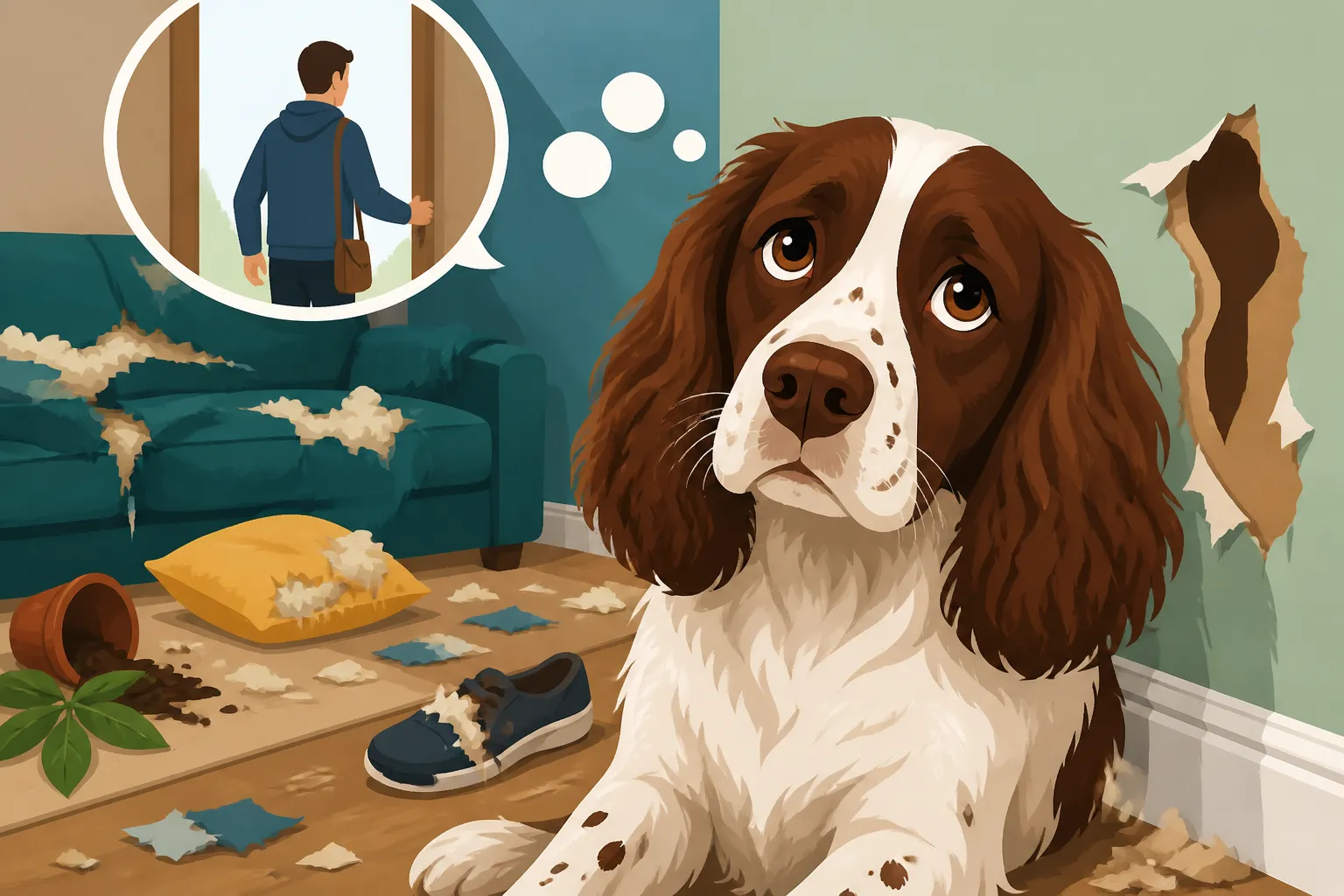
The Springer Spaniel That Cannot Be Left Alone
There's a specific kind of heartache that comes with owning a Springer Spaniel who simply cannot be left alone. You yearn for the freedom to run errands, go to work, or even just step into another room, but the ensuing destruction, barking, or desperate whining makes it feel impossible. This guide is here to shed light on why your energetic, devoted Springer might be struggling with solitude and, more importantly, to offer a comprehensive, empathetic roadmap to helping them find peace when you're not by their side.
The Heart of the Matter: Why Springers Struggle with Solitude
Many Springer Spaniel owners find themselves bewildered by their dog's inability to cope when left alone. It's easy to feel like you've done something wrong or that your dog is simply "naughty." However, understanding the deep-rooted reasons behind this behavior is the first step toward effective solutions. Springers are not inherently bad dogs; they are intensely social, intelligent, and historically driven animals whose needs aren't always met by modern domestic life.
Bred for Companionship and Connection
Let's rewind a bit. The English Springer Spaniel was developed over centuries to be an indispensable working partner. They weren't just tools; they were members of the hunting party, working closely with their human counterparts to flush game. This means they were bred to be constantly engaged, aware of their handler's movements, and deeply connected. Their entire purpose revolved around collaboration and presence.
This inherent desire for connection translates directly into their home life. Your Springer Spaniel isn't following you into the bathroom or watching you wash dishes just because they're curious; it's a genetic predisposition to be involved, to be part of the action, and to be close to their "pack leader." When you leave, that deep-seated instinct for companionship is suddenly thwarted, leaving them feeling lost, vulnerable, and confused. It's not personal spite that drives them to chew your couch; it's a profound sense of isolation and a desperate attempt to cope with the sudden absence of their most vital connection. For them, being alone goes against everything they've been selectively bred for. Why a Springer Spaniel Follows You Everywhere delves deeper into this fascinating aspect of their temperament.
The Drive for Purpose and Activity
Beyond companionship, Springers possess an incredible drive and intelligence. These aren't dogs content to simply lounge around all day. Whether they are field-bred or show-bred, they come with a substantial engine that needs both physical and mental fuel. A bored Springer is a destructive Springer, and an anxious Springer is often a bored one whose energy has nowhere productive to go.
Imagine a highly intelligent person locked in a blank room with nothing to do. They might pace, talk to themselves, or eventually start picking at the wallpaper out of sheer under-stimulation. Your Springer is no different. If they haven't had adequate exercise – and for a Springer, "adequate" often means a solid hour or two of vigorous activity daily, sometimes more for field lines – their physical energy builds up. Couple that with a sharp mind that thrives on problem-solving and sniffing, and you have a recipe for disaster when left alone. They need a job, even if that "job" is just a long sniffy walk, a challenging puzzle toy, or a training session. When that mental and physical stimulation is missing, the house becomes their canvas for "solving" the problem of boredom, which unfortunately often involves your furniture, shoes, or the drywall. How Much Exercise a Field Bred Springer Spaniel Needs illustrates just how much activity some of these dogs truly require.
Separation Anxiety vs. Isolation Distress
It's crucial to understand that not all "can't be left alone" behaviors are created equal. There's a significant difference between true separation anxiety and what we call isolation distress, though both cause immense stress for both dog and owner. Recognizing which one your Springer is experiencing can guide your training approach.
Isolation Distress typically means your Springer doesn't like being alone, period, but isn't necessarily having a full-blown panic attack. They might whine, bark, or be a bit destructive simply because they're bored, lonely, or under-stimulated. This isn't to say it's easy or pleasant; it's still a real problem that needs addressing. However, they might be perfectly fine if another dog or even a person they're not deeply bonded to is present. It's the absence of any companionship that's the issue.
Separation Anxiety, on the other hand, is a clinical condition characterized by a true panic response triggered specifically by the absence of their primary attachment figure (you!). These dogs often exhibit extreme distress, regardless of other dogs or people being around. They might hyperventilate, salivate excessively, injure themselves trying to escape, or engage in frantic, repetitive behaviors. It's a severe panic disorder that requires a very structured and often multi-faceted approach, sometimes including medication, in addition to behavioral modification. This distinction is vital because simply getting another dog, while sometimes helpful for isolation distress, often does little for true Separation Anxiety in a Springer Spaniel. We'll dive into how to differentiate these further in a table below.
Recognizing the Signs: What Does "Can't Be Left Alone" Actually Look Like?
When your Springer Spaniel struggles with solitude, their distress can manifest in a variety of ways, none of which are pleasant for either of you. It's important to view these behaviors not as defiance or spite, but as desperate cries for help. Your dog isn't trying to punish you; they are trying to cope with an overwhelming emotional state.
The Destructive Chewer and Digger
This is perhaps the most common and financially impactful sign. You return home to find shredded cushions, gnawed table legs, or deep gouges in your doorframes. Your beautiful Springer, normally so well-behaved, seems to have transformed into a furry wrecking ball. This isn't malice. When a Springer is overwhelmed by being alone, chewing is a self-soothing mechanism. It releases endorphins and provides a physical outlet for intense internal stress.
Imagine someone fidgeting relentlessly when nervous or biting their nails. Chewing for a dog is similar, but on a much larger, more destructive scale due to their powerful jaws. They might target items that smell strongly of you, like your slippers or a discarded shirt, seeking comfort in your scent. Digging at doors or windows is an attempt to escape and find you. It's heartbreaking to come home to, especially when you're facing repair bills, but try to remember your dog is not being "bad." They are genuinely suffering. Whether a Springer Spaniel Destroys Things often points back to this underlying anxiety or boredom. If your Springer is Whether a Springer Spaniel Chews Through a Crate, it's a clear sign of extreme distress, not just a preference for being out.
The Unending Vocalizer
Oh, the dreaded noise complaints. You get calls from neighbors, or you simply know from your pet camera that your Springer spent your entire absence barking, howling, or whining. This is another potent indicator of distress. Vocalization is their way of calling out for you, expressing their unhappiness, or releasing pent-up energy and anxiety.
A Springer's bark can be quite insistent, and their howls can be mournful and prolonged. This isn't just attention-seeking in the traditional sense; it's often a genuine manifestation of panic or profound loneliness. They might start the moment you leave, or it could escalate after a few minutes of quiet. The problem here is twofold: it's distressing for your dog, and it's incredibly stressful for you, knowing your dog is upset and potentially bothering your community. It also makes it incredibly difficult to extend alone time when you're worried about disturbing the peace. Understanding Whether a Springer Spaniel Barks Much in general can help distinguish between general vocal tendencies and anxiety-driven noise.
The Puddles and Poops
Few things are more disheartening than finding an accident on your pristine carpet when your dog is otherwise perfectly house-trained. This is often misinterpreted as spite, as if your Springer is deliberately "punishing" you for leaving. However, dogs do not operate with such complex, vengeful emotions. Inappropriate elimination, especially in an otherwise clean dog, is almost always a physiological response to stress or fear.
When a dog is highly anxious or in a state of panic, their bodily functions can go haywire. Their bladder and bowels might involuntarily empty. It's a loss of control, not an act of defiance. Imagine yourself in a moment of extreme fear; your body often reacts in unexpected ways. For a Springer experiencing intense separation distress, this can lead to accidents. It's crucial to rule out any underlying medical conditions first with your vet, but once health issues are excluded, these accidents point directly to an emotional struggle with being left alone.
Setting the Stage for Success: Management Before Training
Before you can effectively teach your Springer Spaniel to be comfortable alone, you need to set them up for success. This isn't about quick fixes but about creating an environment and routine that minimizes their anxiety and maximizes their chances of remaining calm. Think of it as laying the groundwork before building the house.
Creating a Safe and Predictable Space
Your Springer needs a designated area where they feel secure and can relax when you're away. For many dogs, this means positive crate training. A crate, when introduced correctly, becomes a den—a cozy, safe space rather than a punishment. It should be comfortable, perhaps covered with a blanket to mimic a cave, and contain familiar, comforting items. The goal is for your Springer to choose to go into their crate, viewing it as their personal sanctuary. If you haven't positively conditioned the crate, now is the time to start slowly, feeding meals in it, and offering high-value chews only there.
If a crate isn't an option, or your Springer finds it too confining (especially if they have severe separation anxiety, where a crate can exacerbate panic), consider a dog-proofed room. This might be a laundry room or a spare bedroom where all potential hazards and valuables are removed. The key is consistency and ensuring the space is genuinely safe, comfortable, and boring enough not to invite mischief but stimulating enough to prevent utter boredom. Think about calming elements like a soft dog bed, a water bowl, and perhaps a long-lasting chew or puzzle toy. Creating this reliable space can help ease a Springer who Whether a Springer Spaniel Panics When Crated Alone.
Enrichment is Key: Draining Energy Proactively
A tired Springer is a good Springer, and a mentally stimulated Springer is even better. Before you even think about leaving your dog alone, you absolutely must ensure their physical and mental energy tanks are adequately depleted. This isn't about exhausting them to the point of collapse, but about providing productive outlets for their natural drives.
Start with a long, vigorous walk or run, not just a quick potty break. For a Springer, this means sniffing, exploring, and engaging with the world. Off-leash time in a safe, enclosed area where they can sprint and quarter is ideal. Following physical exertion, engage their incredible minds. A short training session with new tricks, hide-and-seek with their kibble, or a challenging puzzle toy can do wonders. A stuffed Kong, lick mat, or a long-lasting chew from a brand like Amazon can provide mental stimulation and a positive distraction for a good chunk of time. The goal is for them to be pleasantly fatigued and content, ready for a nap, rather than brimming with unspent energy and anticipation. This proactive approach significantly reduces the likelihood of anxiety-driven behaviors when left alone.
The Art of the Low-Key Departure and Return
We often, unwittingly, contribute to our Springers' anxiety by making our departures and returns into grand, emotional events. Exaggerated goodbyes ("Oh, my poor baby, Mommy's going to miss you so much!") or overly enthusiastic greetings upon return ("I'M HOME, MY SWEET ANGEL! I MISSED YOU!") inadvertently signal to your dog that your absence is a big, dramatic deal.
Instead, strive for low-key, calm transitions. About 15-20 minutes before you plan to leave, stop interacting directly with your Springer. Don't make eye contact, don't pet them, don't talk to them. This helps them transition into a state of calm before you actually walk out the door. When you do leave, simply go. Don't make a fuss. Upon returning, reverse the process. Ignore your Springer for the first few minutes (yes, it's hard!). Let them settle, get a drink, and calm down. Once they are relaxed, then you can offer a calm, quiet greeting. This teaches them that your departures and arrivals are normal, non-dramatic occurrences, reducing the emotional roller coaster they might otherwise experience.
Building Confidence: Training for Solitude, Step by Step
Teaching a Springer Spaniel to be comfortable alone is a gradual process that requires patience, consistency, and a methodical approach. It's about slowly desensitizing them to your absence and building their confidence in their ability to cope without you. There are no shortcuts here, but every small victory is a step towards a more peaceful home.
Desensitization to Departure Cues
Think about all the little things you do before you leave the house: picking up your keys, grabbing your purse or wallet, putting on your shoes, turning off lights. Your Springer Spaniel is highly intelligent and quickly learns to associate these "departure cues" with your impending absence. For an anxious dog, these cues can trigger distress even before you've walked out the door.
The key is to break this association. Practice these departure cues randomly throughout the day, without actually leaving. Pick up your keys, walk to the door, put on your coat, then sit back down on the couch. Do it dozens of times a day, without any drama. The goal is to make these actions mundane and meaningless. Your Springer will learn that "keys" doesn't always equal "mommy is leaving," which helps to reduce their pre-departure anxiety. This simple but consistent exercise chip away at the emotional charge associated with your routine.
Gradual Increase in Alone Time
This is the cornerstone of separation training. You cannot simply leave your anxious Springer alone for an hour and expect them to cope. You must start small and build up very, very slowly. This process often feels tedious, but it's vital.
Begin by leaving for literally seconds. Walk out the door, close it, count to five, and then come back in. Don't make eye contact or a fuss. If your Springer remained calm, great! If they showed any sign of distress (whining, pacing), you left for too long. The next time, leave for only three seconds. The golden rule is to return before your dog shows any signs of anxiety. This teaches them that you always come back, and they can remain calm during your short absences. Gradually, over days and weeks, you'll increase the duration: 10 seconds, 30 seconds, 1 minute, 5 minutes, 15 minutes, and so on. A pet camera is invaluable here, allowing you to monitor their behavior discreetly. Some structured programs, like those offered by BAXTER & Bella, provide clear, step-by-step guidance for gradually increasing alone time, which can be a huge help for owners feeling overwhelmed. How Long a Springer Spaniel Can Be Left Alone safely will depend entirely on this careful, incremental training.
The Power of Independent Play and Relaxation
Many Springer Spaniels become "Velcro dogs," constantly seeking your attention and presence. While this is endearing, it can hinder their ability to be alone. You need to foster a sense of independence and teach them that relaxing by themselves is a positive experience, even when you are home.
Encourage independent play with appropriate toys. Offer a high-value, long-lasting chew or a stuffed puzzle toy (readily available on Amazon) when you're busy, rather than constantly engaging with them. You can also teach a "place" command, where your Springer learns to go to a specific bed or mat and settle calmly while you move about the house. Reward them for quiet, calm behavior when they are not actively interacting with you. This isn't about ignoring them, but about providing opportunities for them to choose self-settling and enjoy their own company. Building this foundation of independent relaxation will make the transition to being truly alone much smoother.
Tools and Resources to Aid the Journey
Embarking on the journey to help your Springer Spaniel cope with being alone can feel overwhelming, but thankfully, there are many tools and resources available to support you. From technology that helps you monitor their progress to professional guidance, don't feel like you have to do it all by yourself.
Monitoring and Intervention: The Role of Cameras
A pet camera is an absolute game-changer when working on alone-time issues. It allows you to observe your Springer's behavior when you're not there, giving you invaluable insights. You can see precisely when they start to get anxious, what their specific behaviors are, and whether your training efforts are having an impact. This information is crucial for adjusting your training plan.
Many cameras offer features like two-way audio, so you can speak to your dog (though for severe anxiety, this can sometimes exacerbate distress) or dispense treats remotely. More importantly, they provide peace of mind. Instead of wondering if your Springer is frantically barking, you can check your phone and see that they are, in fact, snoozing soundly. This empowers you to make informed decisions about how long you can truly leave them. Knowing Whether a Camera Helps a Springer Spaniel Owner is immensely beneficial for behavior modification.
Calming Aids and Supplements
For some Springers, especially those with moderate anxiety, various calming aids can provide an extra layer of support. These are not magic bullets but can help take the edge off their stress, making them more receptive to training.
- Pheromone Diffusers and Sprays: Products that release synthetic canine appeasing pheromones can create a comforting environment. These are often plug-in diffusers placed in the room where your Springer spends their alone time.
- Thundershirts or Anxiety Wraps: These snug-fitting garments apply gentle, constant pressure, similar to swaddling a baby. For many dogs, this pressure has a calming effect, reducing anxiety.
- Calming Chews and Supplements: There's a wide range of over-the-counter supplements containing ingredients like L-Theanine, chamomile, or tryptophan. While results vary, some owners find them helpful. Always consult your veterinarian before introducing any new supplement to ensure it's safe and appropriate for your Springer.
- White Noise or Classical Music: Leaving on a radio (classical music has been shown to have a calming effect on dogs) or a white noise machine can block out external sounds that might trigger barking and create a consistent, soothing auditory environment. Many options for these aids can be found easily on Amazon.
Professional Help: When to Call in the Experts
While many owners can make significant progress with the strategies outlined here, sometimes the anxiety is simply too severe to manage alone. Don't feel ashamed or defeated if you reach this point; it takes courage to recognize when you need outside help.
- Certified Professional Dog Trainer (CPDT): A trainer specializing in separation anxiety can provide a personalized plan, guide you through the gradual desensitization process, and help troubleshoot issues. They can objectively assess your Springer's behavior and offer expert advice.
- Veterinary Behaviorist (Dip ACVB): For severe cases of separation anxiety, especially those where your Springer is causing self-harm or showing extreme panic, a board-certified veterinary behaviorist is the most appropriate professional. These are veterinarians with advanced training in animal behavior and often work closely with owners to develop comprehensive treatment plans, which may include prescription anti-anxiety medication. Medications, when used correctly under veterinary supervision, are not a "cure-all" but can significantly lower your dog's anxiety threshold, making them more capable of learning to cope with your absence.
Living with a Springer Spaniel: Long-Term Strategies
Helping your Springer Spaniel become comfortable alone isn't a one-time fix; it's an ongoing commitment. Building resilience and independence requires consistent effort and integration into your daily life. The goal is to create a well-adjusted dog who can happily manage your absence, even if they'd always prefer to be by your side.
Integrating Alone Time into Daily Life
Once your Springer has made progress, it's vital to continue practicing alone time regularly. Don't just stop once they can manage an hour. Continue to vary the duration of your absences—sometimes leave for just a few minutes, sometimes for longer periods. This prevents them from predicting your schedule and keeps them adaptable.
Consistency in routine is important, but so is variety within that routine. Always ensure they receive ample exercise and mental stimulation before you leave, even for short absences. Provide those engaging puzzle toys or long-lasting chews. Make alone time a normal, unremarkable part of their day, rather than an infrequent, high-stakes event. This continued practice reinforces the positive association with solitude and helps solidify their confidence. Consider the broader implications of Whether a Springer Spaniel Suits a Full Time Worker – it requires significant dedication to manage their needs around a demanding schedule.
Balancing Clinginess with Independence
Springer Spaniels are known for their affectionate, "shadow" tendencies. While it's lovely to have such a devoted companion, an over-reliance on your constant presence can make alone time particularly challenging. It’s about finding a healthy balance between their desire for connection and fostering their ability to exist comfortably without you as their sole focus.
Encourage your Springer to entertain themselves even when you're home. Instead of always engaging with them when they nudge you for attention, sometimes redirect them to a favorite toy or a comfy bed. Teach them that while you love them dearly, you also have your own activities. This doesn't mean ignoring them; it means gently promoting self-sufficiency. If your Springer literally Why a Springer Spaniel Cannot Bear to Be in Another Room, working on these small moments of independent relaxation while you're present can be a powerful step toward coping when you're truly gone.
The Importance of a Strong Foundation
Many behavioral issues, including struggles with being left alone, can often be mitigated or prevented with a strong foundation in puppyhood. Early socialization, positive reinforcement training, and gradual exposure to various situations, including short periods of solitude, are paramount.
When you bring home a Springer Spaniel puppy, start teaching them to be comfortable alone from day one. Use positive crate training methods, making the crate a happy place with treats and toys. Practice leaving them for very brief periods, building up slowly. This isn't about ignoring a puppy's needs, but about teaching them vital life skills. A well-socialized, well-trained puppy is far more likely to develop into a confident adult who can handle the ups and downs of life, including your occasional absence. The First Year With a Springer Spaniel Puppy is a critical time to establish these foundational behaviors that will serve them for a lifetime.
| Feature | Isolation Distress (ID) | Separation Anxiety (SA) |
|---|---|---|
| Primary Emotion | Loneliness, boredom, frustration | Panic, fear, extreme distress |
| Trigger | Absence of any familiar companion (human or animal) | Absence of specific attachment figure (usually primary owner) |
| Vocalization | Whining, barking, some howling (often for attention/boredom) | Intense, sustained howling, barking, distress cries, hyperventilation |
| Destructive | Chewing, digging (often opportunistic or boredom-driven) | Destructive acts focused on exit points (doors, windows) or items with owner's scent |
| Elimination | May occur due to boredom, lack of timely potty break, or mild stress | Involuntary, stress-induced urination/defecation (even shortly after being let out) |
| Self-Harm | Rare | Common (broken nails, bloody paws, raw spots from licking/chewing) |
| Other Symptoms | Pacing, vigilance, mild restlessness | Excessive salivation, trembling, frantic attempts to escape, repetitive behaviors (e.g., licking) |
| Relief by Presence | Often comforted by any familiar person or dog | Only comforted by the specific attachment figure; may ignore other companions |
| Initial Approach | Increase exercise, mental stimulation, gradual alone time, provide puzzle toys | Same as ID, but with much slower progression, veterinary consultation, potentially medication |
Disclaimer
This article is for general informational purposes only and does not constitute professional advice. Laws, prices and regulations vary by location and change over time. Consult a qualified professional for guidance on your specific situation.