What Trimming a Springer Spaniel’s Feathering Costs
One of the most defining characteristics of an English Springer Spaniel is their beautiful, flowing feathering, especially if you have a show-bred line. While absolutely stunning, this lovely fringe of hair on their legs, chest, belly, and tail can also become a magnet for burrs, mud, and mats, creating a real grooming challenge for owners. This guide will help you understand the true costs involved in keeping your Springer's feathering tidy, whether you choose to tackle it yourself or rely on professional groomers.
Understanding Your Springer Spaniel's Feathering
Springer Spaniels are renowned for their elegant appearance, much of which comes from their distinctive feathering. But this isn't just for looks; it has historical purpose, offering some protection from undergrowth and cold. However, in our modern homes and environments, it often becomes more of a maintenance item than a functional advantage. Knowing what you're dealing with is the first step in managing those grooming costs effectively.
The Difference Between Field and Show Coats
It's crucial to understand that not all Springer Spaniel feathering is created equal. The breed has diverged into two distinct types: the field-bred (or working) Springer and the show-bred Springer. This divergence significantly impacts the amount of coat your dog carries and, consequently, the grooming effort and expense involved.
Field-bred Springers, bred primarily for hunting and working in dense cover, typically possess a shorter, coarser coat with much less feathering. Their feathering is usually practical, designed to offer some protection without hindering movement or collecting excessive debris. Owners of field-bred Springers often find that their grooming needs are less demanding. You might just need a good brush-through after a romp in the woods and perhaps a tidy-up a few times a year. This practical approach to coat care is a big reason why Whether a Field Bred Springer Spaniel Needs Grooming is often a question with a different answer than for their show cousins.
On the other hand, show-bred Springers are bred to a standard that emphasizes a long, profuse, silky coat with abundant feathering on the ears, legs, chest, and tail. This luscious coat is undeniably beautiful, but it requires substantial upkeep to maintain its pristine condition. This type of coat is the primary driver behind concerns like The Show Springer Spaniel Coat That Adds a Groomer to Your Budget. The longer hair is a magnet for dirt, burrs, and tangles, and if not meticulously cared for, it can quickly become a matted mess.
Why Feathering Needs Trimming
Beyond aesthetics, there are very practical reasons why your Springer Spaniel's feathering needs regular attention and trimming. Ignoring it can lead to a host of problems that are not only uncomfortable for your dog but also costly to fix.
Firstly, matting is a huge issue. The long, fine hair of a Springer's feathering, especially on show lines, is highly prone to tangling and forming tight mats. These mats aren't just unsightly; they can pull on your dog's skin, causing pain and irritation. Imagine having a patch of hair constantly tugging at your skin – it's no fun for them. Mats also trap moisture and dirt against the skin, creating a perfect breeding ground for bacteria and skin infections. If you've ever had to deal with a matted dog, you know the process can be stressful for both of you, often requiring professional intervention. This is why regular grooming is essential to prevent these painful knots from forming.
Secondly, cleanliness and hygiene are a major concern. Feathering on the belly and legs can easily drag through mud, puddles, and even their own urine or feces. This leads to a perpetually dirty dog, bringing grime into your home and increasing the frequency of baths. Keeping these areas trimmed to a manageable length helps immensely with keeping your Springer cleaner and healthier. On the ears, long feathering can also contribute to ear infections by trapping moisture and reducing airflow. While not a direct cause, it certainly doesn't help. Why a Springer Spaniel's Ears Are Never Quite Healthy is a common worry, and proper ear care, which includes trimming the hair around the ear canal, is part of managing that risk.
Finally, comfort and mobility play a role. Excessively long feathering can impede a dog's movement, especially in dense brush if they're a working dog, or just make them hot and cumbersome. Trimming helps to keep them agile and comfortable, allowing them to move freely without hair getting in the way or causing overheating during active play.
DIY vs. Professional Grooming: The Cost Factors
When it comes to managing your Springer Spaniel's feathering, you essentially have two paths: doing it yourself or hiring a professional groomer. Both have their own set of costs and benefits, and the best choice often depends on your budget, time commitment, and comfort level with grooming tools.
The Investment in DIY Grooming Tools
Deciding to groom your Springer's feathering at home can save you money on recurring professional grooming fees, but it requires an initial investment in the right tools. Think of it as setting up your own mini-salon. You'll need more than just a brush.
At a minimum, you'll want a good pair of thinning shears, sometimes called blending shears, to achieve a natural, layered look on the feathering rather than a harsh straight-cut line. What Thinning Shears Cost a Springer Spaniel Owner can vary widely, but investing in a decent quality pair will make the job much easier and give better results. You'll also need a sturdy pair of straight grooming shears for any precise trimming, especially around the paws and hocks.
For bulk removal or if your Springer has very dense feathering, electric clippers are invaluable. What Clippers for a Springer Spaniel Cost also varies greatly by brand and motor power, but a good set designed for dog grooming is a must. Don't skimp here; cheap human clippers can pull and hurt your dog. Along with clippers, you'll need various blade sizes or detachable combs to achieve different lengths. A fine-toothed metal comb and a slicker brush are essential for daily brushing and detangling before you even pick up the shears. Other handy items include nail clippers or a dremel, ear cleaner, dog shampoo and conditioner, and maybe a high-velocity dryer if your dog enjoys baths at home. You can find a wide range of these supplies on pet retail sites like Chewy, making it convenient to stock up.
Consider the time commitment too. DIY grooming isn't just about the money saved; it's about the hours you'll spend learning the techniques, bathing your dog, and meticulously trimming their coat. It can be a bonding experience, but it's also a skill that takes practice and patience.
The Price of Professional Grooming
For many Springer Spaniel owners, especially those with show-bred dogs, professional grooming is a worthwhile investment. It saves you time, effort, and ensures your dog looks their best, without the risk of an uneven haircut or accidental nicks. What Grooming a Show Bred Springer Spaniel Costs is a common question, and the answer isn't always straightforward as it depends on several factors.
A basic full groom for a Springer Spaniel typically includes a bath, blow-dry, brush-out, nail trim, ear cleaning, and a full-body trim, which would encompass the feathering. The cost for this can vary significantly based on your location, the groomer's experience, and the specific services included. Some groomers specialize in breed-specific cuts, which can be particularly beneficial for maintaining the classic Springer Spaniel look, especially for show dogs. These specialized services might come with a higher price tag due to the skill and time involved in hand-stripping or scissoring to achieve the correct profile.
Another factor influencing price is the condition of your dog's coat. If your Springer arrives heavily matted, the groomer will need extra time to carefully de-mat or, in severe cases, shave the affected areas. This additional work will incur extra charges, often significantly increasing the total bill. This is why regular brushing at home, even if you use a professional groomer, is still vital to keep costs down.
Deciding Between DIY and Professional Care
Choosing between DIY and professional grooming for your Springer Spaniel's feathering comes down to a balance of cost, convenience, and control.
| Feature | DIY Grooming | Professional Grooming |
|---|---|---|
| Initial Cost | Moderate (tools) | Low (no tools needed) |
| Ongoing Cost | Low (consumables like shampoo) | Moderate to High (per session) |
| Time/Effort | High (learning, doing, cleaning) | Low (drop off, pick up) |
| Skill Required | Moderate to High (develops over time) | None (relies on groomer's expertise) |
| Results | Varies (can improve with practice) | High (consistent, breed-appropriate) |
| Convenience | Schedule at your leisure | Appointment-based, may require booking in advance |
| Dog's Comfort | Can be less stressful in familiar home | May be stressful if dog dislikes grooming setting |
| Maintenance | Crucial to prevent matting between sessions | Less critical if done frequently, but still helps |
If you have a field-bred Springer with minimal feathering, the DIY route is often perfectly sufficient. A good pair of thinning shears, a brush, and some basic know-how from online tutorials or a friend can keep them tidy. You might only need to pay for What a Springer Spaniel's Nail Trim Costs at the vet or a quick ear clean. However, for those with show-bred Springers, or owners who simply don't have the time or confidence, professional grooming offers peace of mind. The cost of trimming a Springer Spaniel's feathering professionally is an ongoing expense, but it ensures proper care and a beautiful outcome. Keep in mind that How Often a Springer Spaniel Needs a Groomer will depend on their coat type and how well you maintain it at home.
Factors Influencing Grooming Costs for Feathering
The price you pay to have your Springer Spaniel's feathering trimmed isn't just a flat fee. Several variables can push that price tag up or down, and understanding them can help you budget and make informed decisions about your dog's care.
Your Dog's Temperament and Coat Condition
This is probably one of the biggest hidden cost drivers. A groomer's time is money, and if your dog is uncooperative, anxious, or aggressive during grooming, it takes significantly more time and skill to complete the job safely. A groomer might need an assistant, more breaks, or special handling techniques, all of which can increase the overall cost. Some groomers might even charge a "difficult dog" fee. It’s a good idea to work on positive reinforcement and desensitization to grooming tools from a young age to make the experience less stressful for your dog and less costly for your wallet.
Then there's the coat condition. As mentioned earlier, severe matting is a major issue. If your Springer's feathering is heavily matted, it might take hours to carefully detangle, or require shaving down the affected areas. Both scenarios involve extra time and effort from the groomer, leading to higher charges. Sometimes, a severely matted dog might even need veterinary sedation to be safely groomed, which adds significant medical costs on top of the grooming fee. Regular brushing, even for just 10-15 minutes a day, can go a long way in preventing matting and keeping your grooming bills manageable. This is where tools from places like Chewy can be incredibly helpful for daily maintenance.
Geographic Location and Groomer Experience
Just like most services, grooming prices vary depending on where you live. Groomers in large metropolitan areas or affluent suburbs typically charge more than those in rural areas, reflecting the higher cost of living and overheads. It's always a good idea to call a few different groomers in your area to get price quotes and compare.
The groomer's experience and reputation also play a significant role. Highly experienced groomers, especially those specializing in specific breeds like Springer Spaniels or those who compete in grooming competitions, often command higher prices. They bring a level of expertise that can deliver a superior cut and handle challenging coats or temperaments more effectively. While a more expensive groomer might seem like a splurge, their skill can prevent common grooming mishaps, ensure a beautiful, long-lasting trim, and identify potential skin issues early. A less experienced groomer might be cheaper upfront but could lead to a less satisfactory result or even discomfort for your dog.
Ancillary Services and Bundled Packages
Most full grooming sessions for a Springer Spaniel don't just involve trimming the feathering; they're usually a comprehensive package. This often includes bathing, conditioning, blow-drying, a full brush-out, nail trimming, and ear cleaning. These additional services are essential for your dog's overall hygiene and comfort, but they do add to the total cost. For instance, What Ear Cleaner Costs a Springer Spaniel Owner Yearly can add up, but it's often included in a professional groom. If your Springer is prone to ear infections, regular professional ear cleaning can be a preventative measure. Neglecting ear care can lead to more serious problems, potentially requiring vet visits and treatments, which is where having pet insurance like Healthy Paws might become useful.
Some groomers also offer specialized add-ons, such as de-shedding treatments, anal gland expression, teeth brushing, or even luxurious spa packages. While these can enhance your dog's comfort and appearance, they will increase your bill. You can often save money by choosing a bundled package rather than paying for each service individually.
It's also worth noting that a healthy coat can often make grooming easier and potentially less costly. Factors like diet, for example, play a role in coat health. While a specific brand like Ollie might be more expensive upfront, a high-quality diet can contribute to a healthier, shinier coat that is less prone to matting and skin issues, potentially reducing the need for intensive grooming interventions or specialized skin treatments in the long run.
Maximizing Value and Saving Money on Feathering Trims
Owning a beautiful Springer Spaniel doesn't have to break the bank on grooming, especially when it comes to those lovely feathered areas. With a bit of proactive effort and smart choices, you can ensure your dog looks great without excessive costs.
Regular Maintenance at Home
This is hands down the most effective way to save money on professional grooming, or at least keep those professional bills from skyrocketing due to neglected coats. As we've discussed, mats are the enemy of affordable grooming. They are painful for your dog and time-consuming (and therefore expensive) for a groomer to remove.
Commit to a daily or every-other-day brushing routine, especially if you have a show-bred Springer with profuse feathering. Focus on the areas most prone to matting: behind the ears, armpits, flanks, and the long hair on the legs and belly. Use a good slicker brush and a metal comb. The comb is crucial for finding those hidden tangles that the brush might miss. If you encounter a small tangle, gently work it out with your fingers and the comb, rather than letting it become a massive mat. Products like detangling sprays can also be your best friend here.
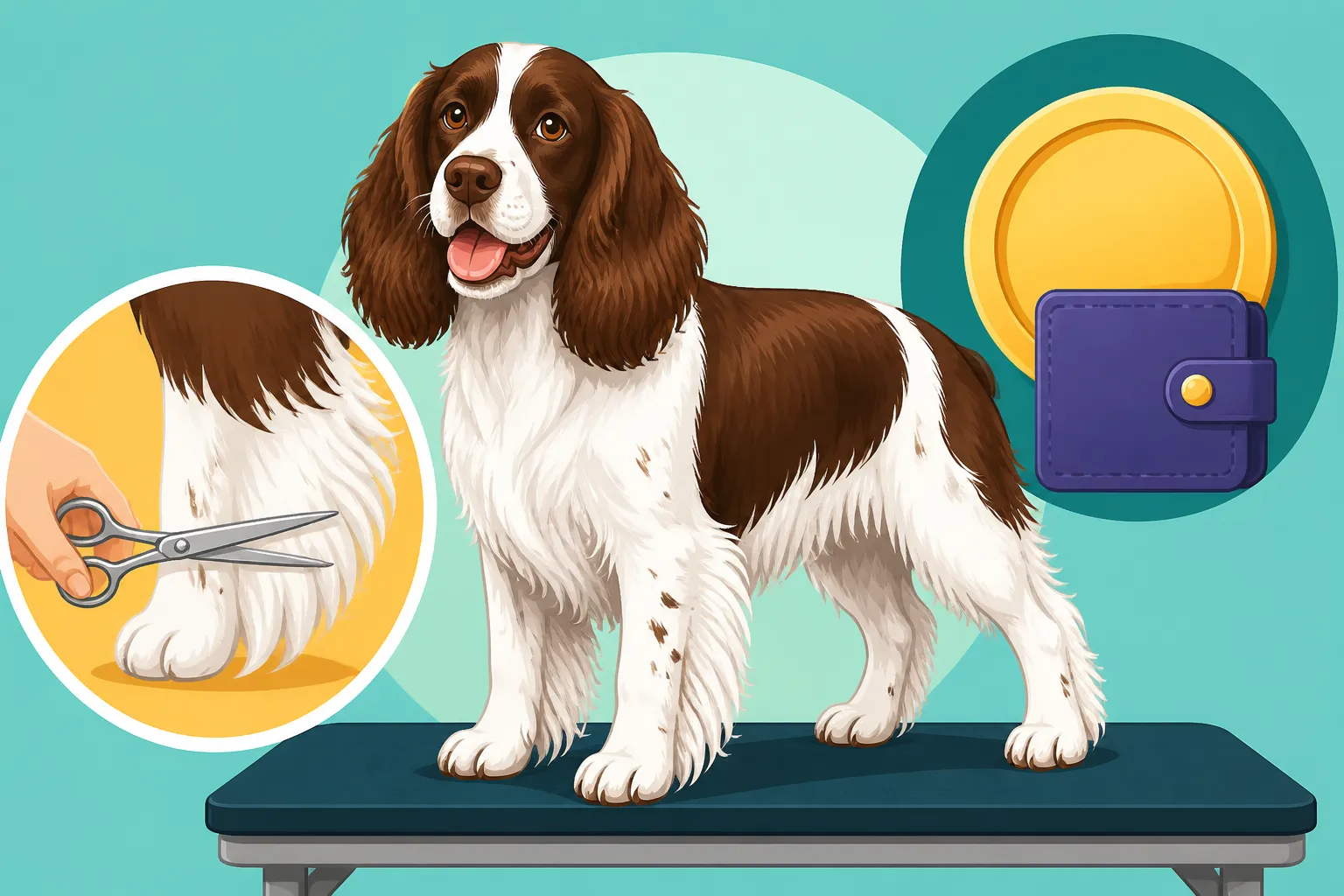
For the legs and belly feathering, regular tidying with thinning shears can prevent it from becoming too long and unwieldy. Trimming a Springer Spaniel's Feathering at home requires a steady hand and some practice, but it's a skill worth developing. You don't have to aim for a show ring finish; just keeping it neat and free of drags can make a huge difference.
Beyond brushing, regularly check your Springer's paws for debris, especially if they've been out in tall grass or rough terrain. Grass awns, burrs, and foxtails can get deeply embedded and cause serious issues, requiring costly vet visits. Prompt removal at home is key.
Grooming Schedules and Frequency
How often your Springer Spaniel needs their feathering trimmed depends heavily on their individual coat type, lifestyle, and how much home maintenance you're able to do. A show Springer in a rural environment that runs through fields daily will likely need more frequent attention than a field Springer who is mostly a couch potato.
For show-bred Springers or those with very full coats, a professional groom every 6-8 weeks is often recommended to maintain the coat's shape and prevent excessive matting. If you're diligent with daily brushing and regular home trims, you might be able to stretch that to 10-12 weeks. However, if your dog gets wet or dirty frequently, you might need to increase the frequency.
Field-bred Springers, with their typically shorter coats, can often go much longer between professional trims, perhaps every 3-4 months, or even just a few times a year for a general tidy-up. Whether a Springer Spaniel Owner Can Groom at Home is much more likely to be a "yes" for these dogs. The key is to be realistic about your capacity for home care. If you know you're not going to keep up with daily brushing, then more frequent professional grooming will be a better (though more expensive) option in the long run, saving your dog from discomfort and you from costly de-matting fees.
Choosing the Right Professional
Finding the right groomer for your Springer Spaniel is an investment in their comfort and appearance. Don't just pick the cheapest option. Ask for recommendations from other Springer Spaniel owners, your vet, or local breed clubs. Look for groomers who have experience with sporting breeds and understand the specific grooming requirements of a Springer Spaniel, especially if you have a show line.
When you contact potential groomers, ask detailed questions. What does a full groom for a Springer Spaniel include? What is their policy on matted coats? Do they offer breed-specific cuts? Can you take a tour of their facility? A good groomer will be transparent about their pricing, services, and how they handle dogs. They should also prioritize your dog's comfort and safety.
Consider a groomer who builds a rapport with your dog. A positive experience can make future grooming sessions much smoother. Some groomers even offer puppy grooming packages to help young dogs get accustomed to the process, which can be invaluable for setting them up for a lifetime of stress-free trims. By choosing wisely, you not only get a better quality trim for your Springer's feathering but also a positive ongoing relationship that benefits both you and your beloved companion. Remember, a professional who knows the breed well can also spot early signs of skin issues or ear problems, which can save you trouble down the line and prevent bigger vet bills.
| Grooming Choice | Pros | Cons | Ideal For |
|---|---|---|---|
| DIY Home Groom | Lowest ongoing cost, flexible schedule, bonding | Requires skill & tools, time-consuming, inconsistent results initially | Field Springers, owners with time/patience, dogs with minimal feathering |
| Professional Grooming | Expert results, less effort for owner, complete care | Higher ongoing cost, appointment-based, potential stress for dog | Show Springers, busy owners, owners uncomfortable with grooming, matted coats |
| Hybrid Approach | Combines benefits, keeps professional costs down | Requires commitment to home care, still some professional expense | Most Springer owners, balancing cost and quality, maintaining coat between pro grooms |
Disclaimer
This article is for general informational purposes only and does not constitute professional advice. Laws, prices and regulations vary by location and change over time. Consult a qualified professional for guidance on your specific situation.