Whether a Springer Spaniel’s Health Panel Covers Both Diseases
Bringing a gorgeous English Springer Spaniel into your life is an absolute joy, filled with the promise of countless adventures and loyal companionship. But it also comes with a deep sense of responsibility, especially when it comes to their health. It's completely understandable to feel overwhelmed when you're trying to navigate the world of genetic testing and health clearances, often wondering if the "health panel" breeders often mention truly covers everything, particularly those critical, breed-specific conditions like Fucosidosis and PFK Deficiency. This guide is here to clarify exactly what you should expect from a comprehensive health panel for your beloved Springer, so you can make informed decisions and sleep a little easier.
Understanding the Health Panel Jargon: What Does "Comprehensive" Really Mean?
When you first start looking for a Springer Spaniel puppy, you'll hear breeders talk a lot about "health clearances" and "health panels." This sounds wonderfully reassuring, doesn't it? It implies that every potential health pitfall has been thoroughly investigated, giving you a healthy start with your new family member. However, the truth is that "health panel" can mean different things to different people, and it's not always a one-size-fits-all solution that covers every single genetic disease known to the breed. It's vital to dig a little deeper than just hearing the term and understand precisely what tests are included.
A true comprehensive health panel for a Springer Spaniel should ideally encompass screenings for the most prevalent and serious genetic conditions. This isn't just a nicety; it's a fundamental part of responsible breeding and ensures the future health of the breed as a whole. Many national breed clubs and reputable organizations, like the Orthopedic Foundation for Animals (OFA), recommend specific tests. These typically include evaluations for hip and elbow dysplasia, eye certifications from a board-certified veterinary ophthalmologist, and specific DNA tests for breed-specific genetic disorders. The frustration for many prospective owners is that these "panels" aren't always a neatly packaged deal, and you might need to ask pointed questions to ensure you're getting the full picture.
The challenge lies in the fact that genetic science is always advancing, and new tests become available, while older, more generalized panels might not be updated as quickly. A breeder might genuinely believe their "panel" is comprehensive, based on what was available years ago, but it might lack the latest, highly specific DNA tests. This is where your diligence comes in. You're not being pushy by asking for detailed results and specific test names; you're being a responsible future dog parent. It's about empowering yourself with knowledge, so you're not left in the dark wondering if your puppy's parents were truly screened for everything that could impact your dog's quality of life down the line.
Distinguishing Between General and Specific DNA Tests
It's helpful to understand that genetic tests can vary widely in their scope. Some DNA tests are "panel" tests in the truest sense, looking for a multitude of genetic markers across many different diseases at once. Companies like Embark or Wisdom Panel offer these comprehensive breed-specific DNA health panels. These can be incredibly valuable because they screen for dozens, sometimes over a hundred, genetic mutations relevant to various breeds, including specific ones for English Springer Spaniels. This type of broad panel is often what people hope for when they hear "health panel."
However, there are also individual DNA tests, often offered by university labs or specialized veterinary diagnostic companies, that focus on one specific genetic disease. A breeder might perform these individual tests for specific conditions known to their lines, without necessarily running a broader, multi-disease panel. This is perfectly acceptable, provided all the necessary conditions are covered. The key is to verify that these individual tests collectively cover the critical conditions. This distinction is crucial because relying solely on a generic "DNA test was done" statement might leave gaps in the health information, leading to nasty surprises later.
For example, a breeder might say their dogs are DNA tested, but they might only have tested for one of the major concerns, or perhaps a condition that is actually rare in Springers. Without asking for the specifics, you simply won't know. Always ask for the actual names of the conditions tested for and, if possible, the laboratory that performed the tests. This transparency is the hallmark of a breeder who genuinely cares about their dogs' health and the families they go to.
Fucosidosis: Why This Devastating Disease Needs Specific Attention
Fucosidosis is a truly heartbreaking neurodegenerative disease that unfortunately affects English Springer Spaniels. It’s an inherited lysosomal storage disease, meaning affected dogs can’t produce a specific enzyme (alpha-L-fucosidase) needed to break down certain complex sugars in their cells. Over time, these sugars build up, particularly in the brain and nervous system, leading to severe and progressive neurological problems. As a veteran Springer owner, hearing about Fucosidosis always makes my heart ache, knowing what these poor dogs and their families go through. You can learn more about its impact in Fucosidosis Kills a Springer Spaniel Within Weeks of the First Sign.
The symptoms of Fucosidosis usually begin to show when a Springer Spaniel is relatively young, typically between 18 months and four years old. Early signs can be subtle, like changes in temperament, increased anxiety, or difficulty coordinating movements. As the disease progresses, dogs might experience severe ataxia (loss of coordination), balance issues, hearing loss, vision impairment, and extreme behavioral changes. It's a cruel disease because it essentially steals your dog's personality and physical abilities, often culminating in the difficult decision of euthanasia. There's no cure, and treatments are only supportive, making prevention through genetic testing paramount.
Because of its severity and the specific age of onset, ensuring your prospective puppy's parents have been tested for Fucosidosis is non-negotiable. Thankfully, a reliable DNA test exists. This test identifies whether a dog is clear, a carrier, or affected by the disease. This is where the term "health panel" can sometimes be misleading if it doesn't explicitly include this test. It's not enough for a breeder to say their dogs are "healthy"; you need to know they've been specifically screened for this devastating condition.
The Specifics of Fucosidosis DNA Testing
The good news is that Fucosidosis is an autosomal recessive genetic disorder. This means a puppy will only be affected if it inherits two copies of the faulty gene – one from each parent. A dog can be a "carrier," meaning it has one copy of the gene but will not develop the disease itself. However, if two carriers are bred together, there's a 25% chance that each puppy in the litter will be affected, a 50% chance they'll be carriers, and a 25% chance they'll be clear. This is why testing both parents is so incredibly important to prevent affected puppies. For more on carrier status, see Whether a Carrier Springer Spaniel Is Affected.
The DNA test for Fucosidosis is typically a cheek swab or blood sample sent to a specialized laboratory. Results usually come back as "Clear," "Carrier," or "Affected." Reputable breeders will always provide documentation of these results for both the dam and sire of the litter. If you're told a general "DNA panel" was done, you absolutely must clarify if the Fucosidosis test was specifically included. Some of the broader commercial DNA panels (like those from Embark or Optimal Selection) do include Fucosidosis, which is a fantastic step forward for the breed. These comprehensive tests often get right to the heart of The DNA Test That Should Precede Every Springer Spaniel Purchase.
If a breeder uses an older or less comprehensive panel, or individual tests, they should still be able to show you a separate Fucosidosis test result. Never be shy about asking for specific documentation, complete with the dog's registered name and microchip number. This transparency protects you and ensures you're bringing home a puppy with the best possible genetic start. This is a critical point that can literally save you years of heartache, so don't overlook it in your puppy search.
PFK Deficiency: The Energy Robber That Requires Targeted Testing
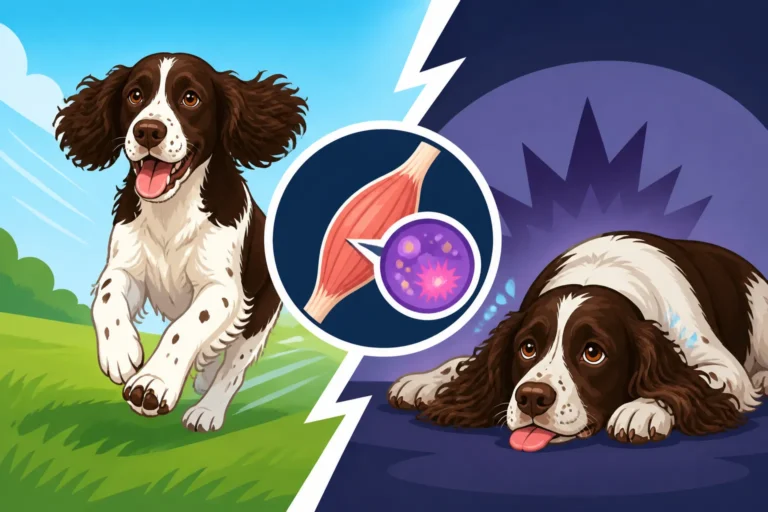
Another significant genetic health concern for English Springer Spaniels is Phosphofructokinase (PFK) Deficiency. This condition is a metabolic disorder that affects a dog's red blood cells and muscle cells, preventing them from properly metabolizing glucose into energy. Essentially, it's like a battery that can't hold a charge, particularly when the dog needs energy the most. As an owner, it's terrifying to see your energetic Springer suddenly collapse after what seems like normal activity. This is the stark reality of PFK Deficiency and the Springer Spaniel That Collapses After Exercise.
Dogs with PFK Deficiency appear normal and healthy until they are subjected to stress, excitement, or sustained exercise. When their bodies need to convert glucose into energy, the deficient enzyme causes red blood cells to break down, leading to anemia, weakness, and muscle cramping. You might see symptoms like extreme lethargy, dark urine (due to the breakdown products of red blood cells), pale gums, and muscle stiffness. These episodes can range from mild to severe, sometimes requiring emergency veterinary care. While not immediately fatal like Fucosidosis can be, it significantly impacts a dog's quality of life and ability to engage in normal Springer Spaniel activities.
Just like Fucosidosis, PFK Deficiency is an autosomal recessive inherited disease. This means a puppy must inherit a copy of the faulty gene from both parents to be affected. Carriers, with only one copy, will not show symptoms themselves but can pass the gene on. Again, this highlights the absolute necessity of testing both breeding dogs. Without this critical information, breeders run the risk of inadvertently producing affected puppies, which then live lives constrained by their condition. Understanding What PFK Deficiency Does to a Springer Spaniel is key to appreciating the importance of this specific test.
How PFK Deficiency is Included (or Missed) in Health Panels
Fortunately, a highly reliable DNA test is also available for PFK Deficiency. Similar to Fucosidosis testing, this involves a simple cheek swab or blood sample, and the results will tell you if a dog is Clear, Carrier, or Affected. When you're reviewing a breeder's health documentation, make sure PFK Deficiency is explicitly listed among the tests performed. This is another area where a generic "health panel" declaration just isn't sufficient.
Many of the more comprehensive genetic health panels offered by major DNA testing companies for English Springer Spaniels do include PFK Deficiency. This is a huge benefit, as it means breeders using these advanced panels are likely covering this base. However, if a breeder is using older testing protocols or a patchwork of individual tests, PFK Deficiency might be one that slips through the cracks if you don't specifically ask. You might be told What a Full Springer Spaniel DNA Panel Costs, but that price tag doesn't guarantee every condition is covered unless you confirm.
Knowing about PFK Deficiency testing is crucial, especially if you envision your Springer as an active companion, perhaps even participating in dog sports or hunting. An affected dog would struggle immensely with these activities. Even a family pet needs to be able to enjoy walks and playtime without collapsing. This is why it's so important that reputable breeders are vigilant about screening for this condition, alongside Fucosidosis. When considering a puppy, ask for proof of parentage and the corresponding PFK test results for both parents.
Ensuring Your Springer Spaniel's Future: Beyond the Basic Panel
While Fucosidosis and PFK Deficiency are critically important, a truly comprehensive health strategy for your Springer Spaniel goes beyond just these two DNA tests. It involves looking at the full spectrum of recommended health clearances and understanding the breeder's commitment to the overall health and longevity of their lines. The goal isn't just to avoid two specific diseases, but to set your dog up for a long, healthy life, perhaps even making it to The Twelve to Fourteen Years a Springer Spaniel Lives.
Beyond genetic diseases, English Springer Spaniels are prone to other inherited conditions that require physical examinations and evaluations. Hip and elbow dysplasia are common concerns in many medium-to-large breeds, including Springers. These are evaluated through X-rays, often submitted to organizations like the OFA, to get a quantifiable score on joint health. Eye conditions, such as Progressive Retinal Atrophy (PRA), Retinal Dysplasia, and Glaucoma, are also significant concerns. These require annual examinations by a board-certified veterinary ophthalmologist (CERF/OFA Eye Certification). A good breeder will have all these clearances for their breeding stock, in addition to DNA tests.
It’s about understanding the breeder's philosophy. Are they just checking boxes, or are they genuinely striving to improve the health of the breed? Ask about the health history of the wider family, not just the parents. What about grandparents and siblings? This holistic approach gives you a much better indication of what you can expect with your own puppy. For a complete list, always ask about The Health Tests Both Springer Spaniel Parents Should Have.
Proactive Steps for Your Puppy and Long-Term Health Planning
Once you bring your Springer puppy home, your proactive health management truly begins. Even with impeccably tested parents, life happens, and a healthy start doesn't mean you'll never face a veterinary bill. This is where pet insurance can be a real lifeline. Companies like Healthy Paws offer various plans that can help manage unexpected veterinary costs, from accidents to illnesses. It's a pragmatic step to consider, knowing that even the healthiest dogs can encounter unforeseen issues.
| Health Concern | Type of Test/Screening | Typical Timing (Breeding Dogs) | Notes |
|---|---|---|---|
| Fucosidosis | DNA Test (cheek swab/blood) | Once in lifetime | Identifies Clear, Carrier, Affected. Essential for Springers. |
| PFK Deficiency | DNA Test (cheek swab/blood) | Once in lifetime | Identifies Clear, Carrier, Affected. Essential for active Springers. |
| Hip Dysplasia | X-ray evaluation (OFA, PennHIP) | After 24 months | Evaluates hip joint structure to minimize risk. |
| Elbow Dysplasia | X-ray evaluation (OFA) | After 24 months | Evaluates elbow joint structure. |
| Eye Certifications (CERF) | Board-certified ophthalmologist exam | Annually | Screens for Progressive Retinal Atrophy, glaucoma, and other eye issues. |
| Cardiac Exam | Veterinary examination | Annually | General heart health check. |
Beyond insurance, establish a good relationship with your own veterinarian from day one. They will be your partner in your Springer's health journey, from routine vaccinations and parasite prevention to advising on diet and exercise. Discuss your dog's activity levels and any breed-specific concerns with them. Even if a breeder says their "panel" covers everything, you might still want to ask your vet about a comprehensive general check-up for your puppy, especially if you're concerned about Whether an Untested Springer Spaniel Litter Is Worth Buying.
Remember, while DNA tests give us incredible insight into genetic predispositions, they are just one piece of the puzzle. Good nutrition, appropriate exercise, regular veterinary care, and a loving home environment all contribute to a dog's overall well-being. Thinking ahead about things like What Insuring a Springer Spaniel Runs can make a huge difference if you ever face unexpected medical challenges. A healthy Springer is a happy Springer, and a proactive owner is their best advocate.
Disclaimer
This article is for general informational purposes only and does not constitute professional advice. Laws, prices and regulations vary by location and change over time. Consult a qualified professional for guidance on your specific situation.