Whether the Field Springer Spaniel Still Looks the Part
A field-bred English Springer Spaniel can look noticeably leaner and less feathered than the dog many people picture from show rings. That difference can make owners wonder whether the working type still resembles the breed at all. It does: the field Springer remains recognizably a Springer Spaniel, but its build and coat tend to reflect a life designed for practical work.
What people mean by “looks the part”
The field type still has the Springer outline
A field-bred Springer Spaniel is generally built to move through cover, turn quickly, and keep going over rough ground. You may notice a leaner outline, less coat, and a more athletic appearance than in a heavily coated show dog. Those features can make the dog look different at first glance, but they do not make it a different breed.
Look at the whole dog rather than judging by coat alone. The field Springer should still have the recognizable spaniel character: a moderate, balanced body, drop ears, a friendly expression, and the lively, practical look of a flushing dog. Its appearance is shaped by working priorities, not by a requirement to look unkempt or unlike a Springer.
The contrast is easiest to see when two types stand side by side. A show-bred dog may have more substance and fuller feathering, while a field-bred dog may appear lighter and less ornamental. For a closer look at the broader contrast, see How Different the Two Springer Spaniel Types Look and Two Breeds Registered as One: the Field and Show Springer Spaniel.
“Working-looking” does not mean poorly bred
A short or sparse coat does not, by itself, prove that a dog is a well-bred field Springer. Nor does a glossy, fuller coat mean that a Springer cannot work. Coat and shape vary among individual dogs, breeders, and regional lines. A useful question is whether the dog’s overall build and condition suit the work it is expected to do.
A field dog may return from cover with burrs in its feathering, damp ears, and mud along its legs. That is ordinary evidence of an active day, not a standard of breed type. A dog that is permanently scruffy, underweight, or poorly cared for is not more authentic simply because it looks rugged.
People also use “looks the part” in different ways. A hunter might mean a dog that looks fit and ready to work. Someone familiar with conformation shows may mean a dog that matches the written breed standard in outline and presentation. Those ideas overlap, but they are not identical. Understanding that distinction makes it easier to assess a field Springer without expecting it to look like a show-ring specialist.
Why field and show Springers look different
Selection has emphasized different qualities
Over many generations, field and show breeders have often prioritized different traits. Field breeders tend to place strong emphasis on working ability, stamina, responsiveness, and a build that can cope with practical activity. Show breeders generally pay closer attention to the details evaluated in the conformation ring, including outline, coat presentation, and overall balance against the breed standard.
These priorities can influence how a dog looks without erasing its breed identity. A dog selected for regular work may have less coat to collect debris and a lighter, more athletic impression. A dog selected for the ring may be presented with a fuller, tidier coat that highlights its outline. Neither description applies perfectly to every dog: some field dogs are more substantial, and some show-bred dogs have a relatively moderate coat.
It also helps to remember that “field-bred” is not a single uniform appearance. Working lines are shaped by their own breeding histories, and breeders do not all seek precisely the same look. The longer history of separation between the types is explored in The Seventy Year Gene Pool Divide Inside One Springer Spaniel, but it is still useful to think in terms of tendencies rather than two rigid templates.
Coat, feathering, and grooming change the impression
The coat is often the first difference people notice. Field-bred Springers commonly have less abundant feathering than show-bred dogs, particularly on the ears, legs, and underside. Less feathering can make the dog appear more streamlined and can mean fewer tangles to work through after a day in long grass. It does not mean there is no grooming: ears, feet, nails, and the coat still need regular attention.
Grooming can also exaggerate the contrast. A show dog prepared for presentation may have its coat carefully tidied and arranged, while a working dog may be kept in a simpler, practical trim. A recently brushed field Springer can look quite polished; a show Springer after a muddy walk can look thoroughly practical. For details on the field coat, see How Short a Field Springer Spaniel's Coat Runs.
If you are setting up a home grooming routine, focus on suitable tools and calm handling rather than trying to create a particular “working” look. Owners sometimes browse general grooming supplies at retailers such as Chewy, but the right brush depends on the individual dog’s coat and the tangles you are managing. For a very matted coat or uncertainty about trimming, ask a groomer or veterinarian for guidance instead of cutting close to the skin.
| Feature | Common field-type impression | Common show-type impression |
|---|---|---|
| Overall outline | Leaner and more athletic-looking | Often fuller or more substantial-looking |
| Coat and feathering | Usually less abundant and kept practical | Often more noticeable and carefully presented |
| Grooming emphasis | Comfort and ease of movement through cover | Neatness and presentation for the ring |
| What it suggests | A tendency toward working priorities | A tendency toward conformation priorities |
| Important caveat | Individual dogs vary | Individual dogs vary |
How to judge a field Springer fairly
Look beyond coat color and markings
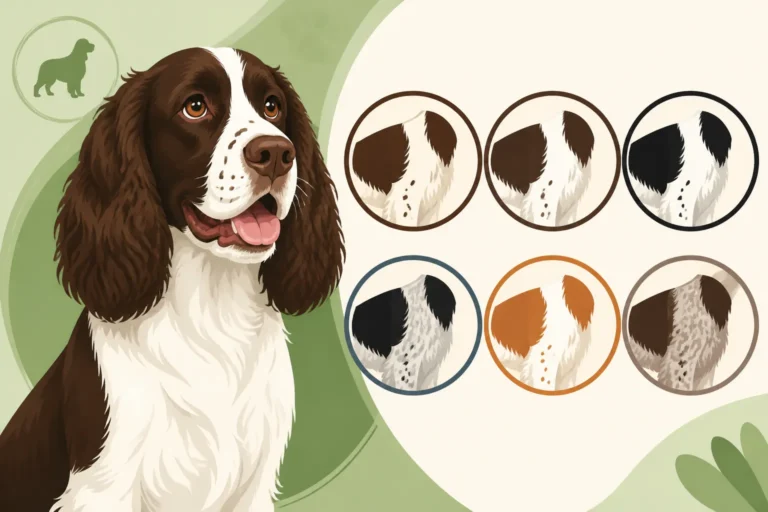
Field and show English Springer Spaniels share the breed’s accepted colors and patterns, even if particular markings may be more familiar to you from one type. Color alone does not tell you whether a dog is field-bred, show-bred, or capable of work. A liver-and-white dog and a black-and-white dog can both belong to working lines, and neither color automatically signals superior working ability.
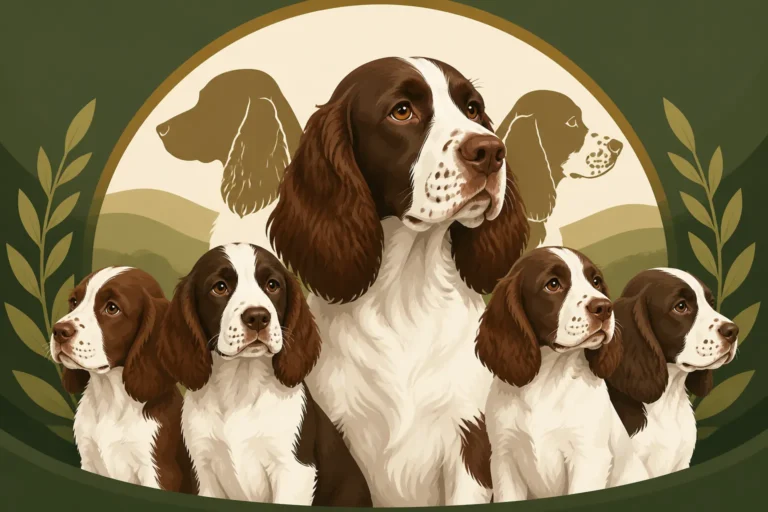
A puppy’s markings may also become more noticeable as it grows, so an early photograph can give an incomplete impression of its adult appearance. If color and pattern are part of what you are comparing, The Colors a Springer Spaniel Comes In explains the range more fully. Focus on the dog’s proportions, movement, health, and temperament rather than reading too much into its coat pattern.
When meeting a prospective dog, ask the breeder what the parents do and what traits they have been selected for. “Field-bred” is most useful when it describes a real working background or deliberate working-line breeding, not just a label attached to a lean-looking dog. Ask to see adult relatives if possible; they offer a better sense of how that line develops than a puppy’s current coat.
Consider movement, condition, and practical function
A fit field Springer should look comfortable moving, not merely slim when standing still. Watch how it walks and turns, and notice whether its body appears balanced rather than fragile. A dog’s condition matters more than a fashionable silhouette: visible ribs, poor muscle tone, or persistent lameness are reasons to ask questions, not signs of an ideal working build.
Think about the dog’s daily life, too. A field-bred Springer may spend time in brambles, wet grass, or muddy woodland, so a practical coat and a healthy, manageable body can be more relevant than a neatly sculpted outline. After outdoor activity, check the ears, paws, and feathering for debris. That kind of care has more to do with a dog’s wellbeing than making it appear rugged.
If your interest is specifically in field trials or gundog work, ask what the dog has been bred and trained to do. Appearance can offer clues, but it cannot prove steadiness, scenting ability, stamina, or reliable handling. For a ring-focused comparison, How a Field Springer Spaniel Fares in the Ring looks at how the working type may be viewed in conformation settings.
Is the field Springer still a recognizable Springer Spaniel
Yes, although the difference can be striking
The field Springer still looks like an English Springer Spaniel when you consider its overall type rather than expecting the coat and outline of a show-bred dog. Its ears, expression, proportions, and general spaniel character remain familiar. What often changes is the degree of coat, the impression of substance, and the way the dog is groomed and carried.
The difference may feel especially pronounced in the United States, where many people encounter one type more often than the other. British and American breeding histories have not followed identical paths, so the dogs people expect to see can vary by region. How Britain and America Diverged on Springer Spaniel Type provides useful context for why a field Springer in one place may not match someone’s mental picture formed elsewhere.
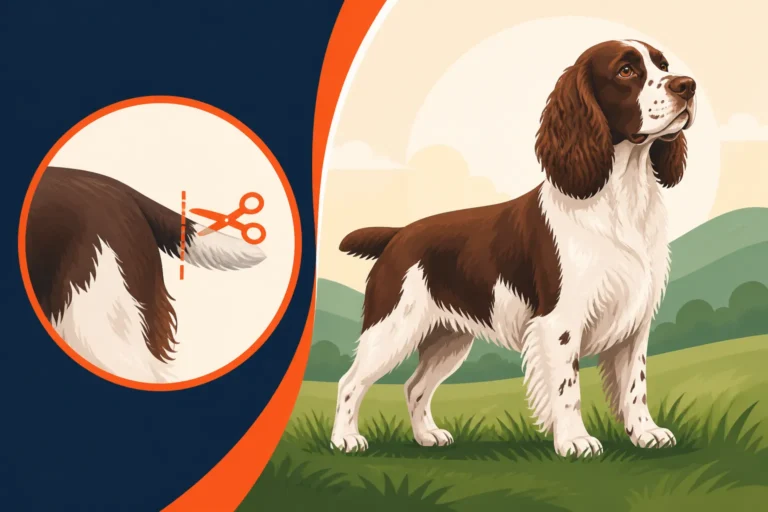
Tail appearance can also affect first impressions. Docking practices differ by location and circumstance, and an undocked tail does not make a dog less of a Springer. The subject is covered in Tail Docking in Field Springer Spaniels. In any comparison, consider local law and animal welfare rather than assuming that one tail length is the universal mark of a working dog.
Choose for the life you can offer, not just the look
If you are choosing a dog, decide first whether its likely energy, training needs, and working drive fit your household. A field-bred Springer can be an appealing companion, but a working background does not automatically make it easy to live with. A dog bred for activity may need consistent exercise, training, and enrichment even if you never take it hunting.
The same practical thinking applies to grooming. Less feathering may simplify some parts of coat care, but field dogs still need brushing, ear checks, nail care, and attention after outdoor adventures. Chewy is one place owners may look for routine grooming supplies, but a tool should suit the dog’s coat and comfort rather than a type label. If you are unsure how to handle a knot or trim, a professional groomer familiar with spaniels can help.
Ultimately, the field Springer still looks the part when “the part” means a balanced, capable spaniel shaped by working priorities. It may not resemble the more profusely coated dog in a show photograph, and that is precisely why comparisons can be misleading. If you want to maintain a straightforward home routine, retailers such as Chewy can be a convenient place to explore basic brushes and combs; the important thing is choosing carefully and keeping the dog comfortable. The breed identity is not carried by feathering alone.
Disclaimer
This article is for general informational purposes only and does not constitute professional advice. Laws, prices and regulations vary by location and change over time. Consult a qualified professional for guidance on your specific situation.