How a Springer Spaniel Works Cover Against a Labrador
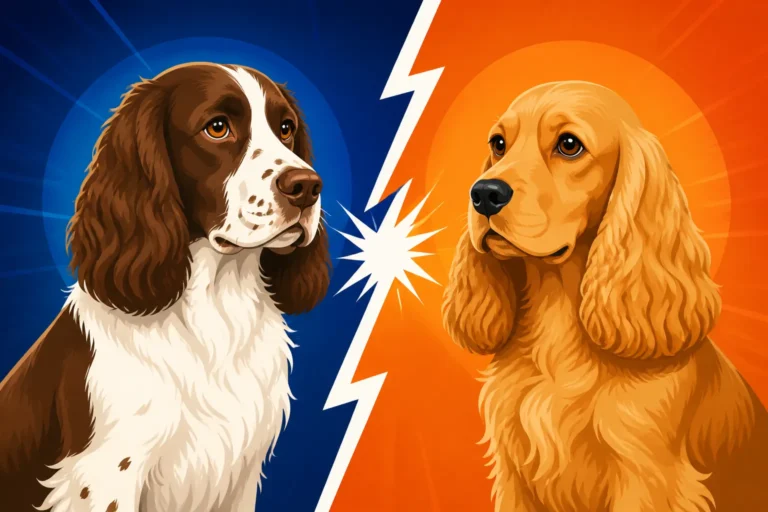
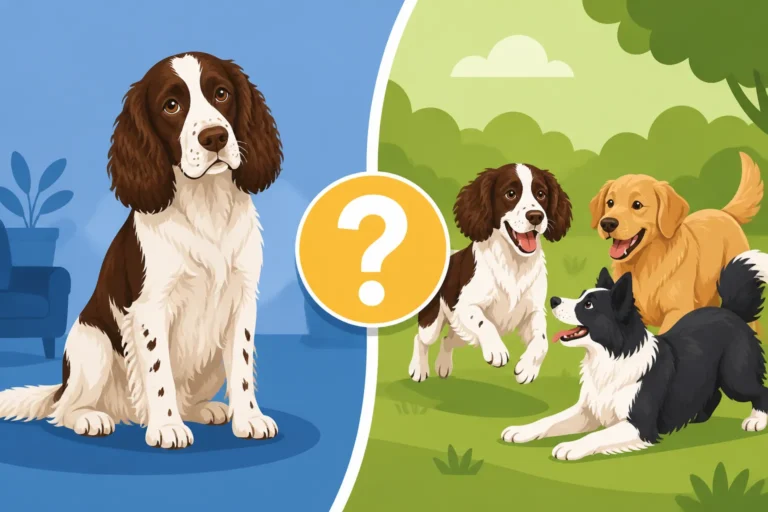
An English Springer Spaniel and a Labrador can both work upland cover, but they usually approach it differently. A Springer is bred to search close ground, find game and flush it; a Labrador is more often expected to retrieve, though many Labs can hunt cover too. This guide explains how their working styles compare, what training changes, and which dog may suit a particular day in the field.
What working cover means
How a Springer Spaniel searches
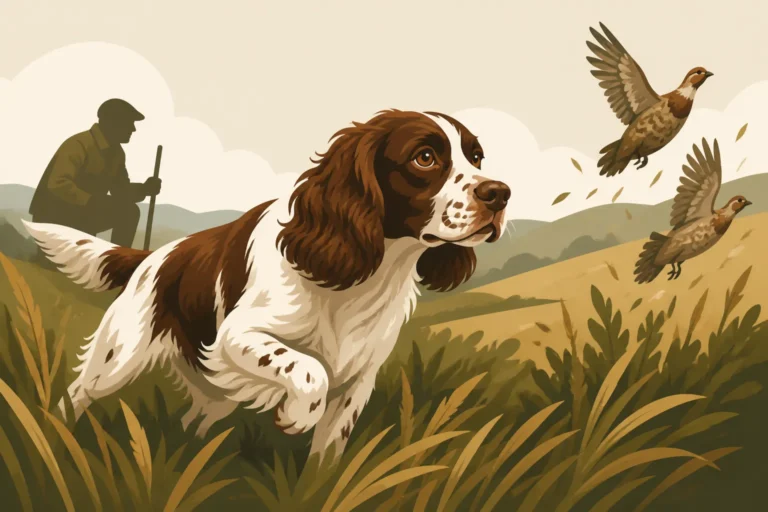
A Springer Spaniel’s traditional job is to work within gun range, using its nose to locate game in places a person cannot easily search: hedgerows, brambles, reed beds, woodland edges and thick grass. The dog moves through that ground in a pattern often called quartering, sweeping back and forth in front of the handler rather than simply charging straight ahead.
The goal is not to cover the greatest possible distance. A good working Springer searches likely holding spots, responds to direction and remains close enough for the handler to follow safely. The dog’s pace, range and responsiveness depend on its breeding, experience, training and individual temperament. Some field-bred dogs are naturally fast and enthusiastic; others are more measured.
When the Springer locates game, it is expected to flush it so the handler has an opportunity to take a safe shot. Depending on the dog’s training and the situation, it may then be asked to retrieve the downed bird. That sequence—search, flush and possibly retrieve—is central to understanding What a Springer Spaniel Did for a Gun Before Retrievers.
How a Labrador’s cover work differs
A Labrador is commonly associated with marking and retrieving, especially waterfowl, but that does not mean it cannot search upland cover. A trained Lab may work through grass or brush to find game, flush birds and retrieve them. Its style, however, often reflects a stronger emphasis on steadiness, marking falls and carrying game back to the handler.
There is considerable variation. A Labrador bred and trained for upland hunting may search actively and thoroughly, while another may be most comfortable waiting for a retrieve. Likewise, some Springers are reliable retrievers, even though their characteristic hunting role begins with searching and flushing. Breed tendencies are a useful starting point, not a guarantee of what an individual dog will do.
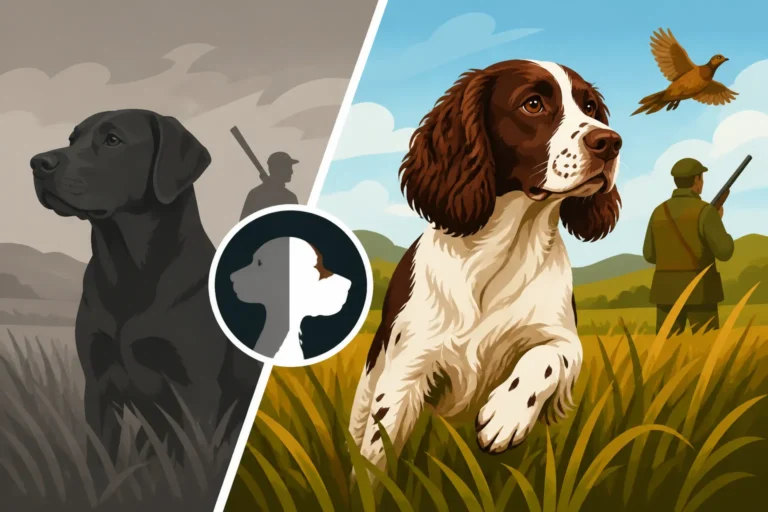
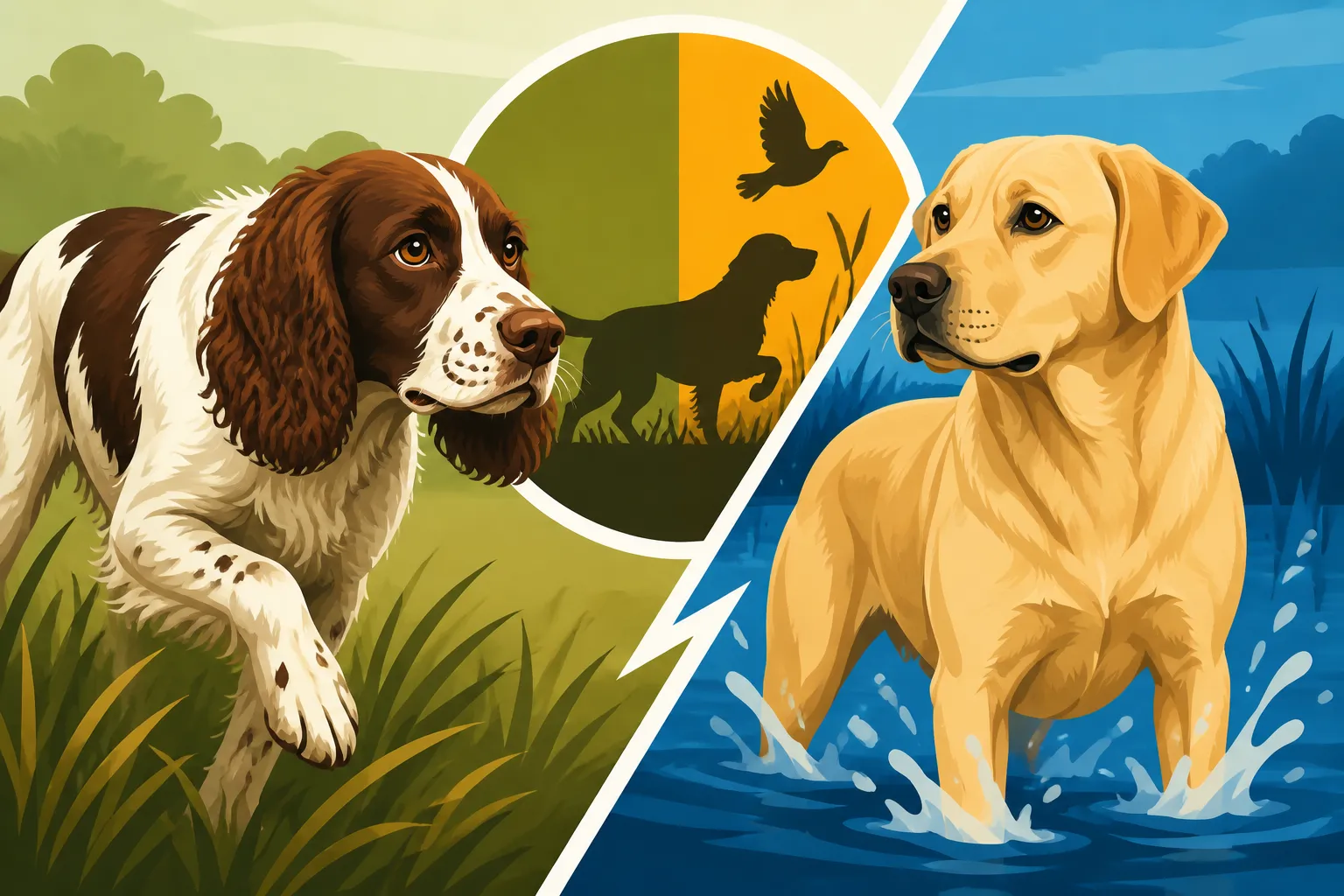
In practice, the handler’s needs shape the comparison. If the priority is a dog that independently searches close cover to push game into the air, a Springer may be the more natural fit. If the priority is a dog that marks and retrieves birds over distance or from water, a Labrador may be the more obvious choice. The two breeds’ different origins are discussed further in How a Springer Spaniel Works Cover Against a Labrador and How a Springer Spaniel and a Labrador Divide the Work.
How the two breeds work in the field
Search pattern, range and handler contact
A Springer’s value in dense cover often comes from its willingness to enter difficult ground and keep checking likely places. Rather than being sent far ahead to search a large area alone, it is generally expected to work back and forth in a manageable zone. This keeps the dog in contact with the handler and makes it easier to direct the search around cover edges, wind and terrain.
A Labrador can be trained to search close as well, but the handler may need to establish that pattern deliberately, particularly if the dog’s natural tendency is to range farther or focus on retrieves. Neither breed should be judged only by how fast it moves. In thick cover, a controlled search that checks likely holding spots may be more useful than a fast, wide cast that leaves gaps.
The right range is also a safety issue. A dog working beyond the handler’s reliable control can be difficult to manage around roads, livestock, other people or gunfire. Training a Springer to stay within an appropriate working area is covered in Teaching a Springer Spaniel to Stay in Range. For a Labrador or Springer, the practical standard is the same: the dog should be close enough to respond to cues and work safely with the handler.
Flushing, steadiness and retrieving
The most visible difference often comes at the flush. A Springer’s job is to find game and cause it to rise. The handler then needs the dog to respond appropriately to the bird going up and to any shot. Steadiness—the ability to stop or remain controlled rather than chase—is important for safety and for an orderly retrieve.
A Labrador working upland cover may be expected to flush, but many handlers place more emphasis on sitting or holding position when game rises, then retrieving after a command. That approach can be useful where the dog’s main role is to mark a fall and bring the bird back. A Springer may also be trained to sit to flush and retrieve on cue, but the desired style depends on the handler’s hunting method and local rules.
Both breeds need a dependable recall, a clear stop cue and a positive retrieve foundation. Those skills are not interchangeable with enthusiasm. A dog that eagerly chases every flushed bird may be exciting to watch but difficult to control; a dog that retrieves beautifully may still need patient work to search cover effectively. For a closer look at the Springer’s retrieve role, see What a Springer Spaniel Retrieves and Whether a Springer Spaniel Was Bred to Flush or Retrieve.
| Field task | English Springer Spaniel tendency | Labrador tendency | What training should establish |
|---|---|---|---|
| Searching dense cover | Often naturally suited to close, active flushing work | Can search cover, with style shaped by breeding and experience | A useful pattern, manageable range and response to direction |
| Finding game | Uses scent and searches likely holding cover | Uses scent too; may be trained for upland search or retrieve work | Search persistence without losing handler contact |
| Flushing | A characteristic working role | Possible, though many are trained to remain steady | Safe, controlled behavior when game rises |
| Retrieving | Often part of the job after a flush | A common strength, especially for marked retrieves | A reliable return, delivery and release |
| Water work | Many will enter water, but ability and enthusiasm vary | Often well suited to water retrieving, depending on the dog | Safe entry, recall and confidence around water |
Choosing a dog for the cover you hunt
Terrain, weather and the length of the day
Dense cover can favor a compact, agile dog that is eager to push through vegetation, but no breed is automatically suited to every patch of ground. Thorny hedges, rough stubble, wet reeds and tangled woodland each present different challenges. A Springer’s feathering may collect burrs and debris, while a Labrador’s coat and build can also pick up seeds, mud or plant material. Either dog needs a thorough check after working.
Weather and fitness matter as much as breed. A high-drive Springer can keep searching long after its handler thinks the outing should end, and a Labrador may also work with great enthusiasm. Handlers need to watch for overheating, fatigue, cuts, sore pads and signs that a dog has picked up a grass awn or tick. Build in water breaks, keep the dog’s condition in mind and stop if its movement or responsiveness changes.
A post-field routine makes a real difference. Check between the toes, around the ears, under the collar, through the feathering and across the body for burrs, ticks, cuts or foreign material. Owners who are putting together a basic grooming and field-care kit may find practical items through retailers such as Chewy, but the priority is choosing tools that suit the dog and using them safely. For a step-by-step after-work check, see What to Check on a Springer Spaniel After a Day in Cover.
Breed type is only part of the decision
“Springer Spaniel” describes dogs with a wide range of working styles. Field-bred Springers are often selected for hunting drive and athleticism, while show-bred dogs may differ in build, coat and typical energy level. Those are broad patterns, not a promise about any individual dog. A calm, responsive dog with suitable training may be a better hunting partner than a faster dog whose range is difficult to manage. The differences between the types are explored in How the Field and Show Springer Spaniel Diverged.
The same caution applies to Labradors. A dog from lines selected for retrieving may show different tendencies from one bred for other work or companionship. Ask about the parents’ working ability, temperament, health and the kind of training the breeder has seen succeed. If possible, watch adult relatives work or talk with handlers who know the line.
Your own experience matters too. A first-time handler may find a close-working Springer’s search pattern intuitive, or may find the dog’s energy and independence demanding. A Labrador may suit someone who wants a steady retrieving partner, but that does not make it an effortless choice. Both breeds need exercise, practice and clear handling. If you are comparing them as hunting partners, Springer Spaniel or Labrador for Rough Shooting can help frame the decision around the kind of work you actually do.
Training for useful, safe cover work
Build control before adding distractions
Start with foundation skills in quiet, familiar places. Teach the dog to come when called, walk calmly on a lead, respond to its name and settle when asked. Then build those behaviors around gradually stronger distractions, rather than taking a young or inexperienced dog straight into exciting cover and expecting it to make good decisions.
For a Springer, introduce a simple search pattern in low cover. Reward the dog for checking back in, responding to a turn cue and searching an area you can manage. If it is running too wide, shorten the distance and make the exercise easier. If it is hesitant, avoid dragging it into difficult vegetation; confidence grows more reliably through short, positive exposures.
For a Labrador, give equal attention to search behavior and retrieving control. A dog that wants to chase a thrown object may not automatically understand how to search naturally for game. Practice steady responses, delivery to hand and waiting for a release cue, while also helping the dog gain confidence in different terrain. Training plans should fit the dog’s age, health and experience.
Add game, gunfire and real conditions gradually
Game scent, flushed birds and gunfire can produce a dramatic change in a dog’s excitement. Do not assume that a dog who listens perfectly in the yard will behave the same way when a bird rises. Work through distractions in manageable steps with a qualified trainer or experienced mentor, and prioritize safety around firearms. A dog should not be exposed to gunfire abruptly or at close range as a test of its nerves.
Practice recall and stop cues in varied settings before relying on them in the field. A long line can provide some control during early training, but it must be used carefully to prevent tangling, and it does not replace a trained response. A GPS collar may help locate a dog in large or difficult terrain, but tracking equipment is a backup, not a substitute for a suitable search range and reliable handling.
After a session, clean and dry the dog as needed, check its ears and feet, and look for debris in its coat. Chewy may be one place owners look for basic grooming or travel supplies, such as a brush or portable water bowl; for injuries, persistent lameness, eye irritation or suspected foreign material in the ear, contact a veterinarian rather than trying to solve the problem with equipment alone. Owners dealing with burrs and ticks can also review How to Find a Grass Awn on a Springer Spaniel.
A practical training record can help you spot patterns. Note where the dog searched well, how far it ranged, whether it responded to cues, how it handled a flush and how quickly it recovered afterward. That record makes it easier to adjust the next outing instead of relying on a vague impression that the dog was “good” or “too much.”
Disclaimer
This article is for general informational purposes only and does not constitute professional advice. Laws, prices and regulations vary by location and change over time. Consult a qualified professional for guidance on your specific situation.