Britain’s Ban on Docking Springer Spaniel Tails
A Springer Spaniel born in Britain may have a full, natural tail, while a dog of the same breed elsewhere may have a docked one. The difference can be confusing, especially when working dogs and show-ring traditions enter the conversation. This guide explains the rules across Great Britain, why limited exceptions exist, and what owners should know about tail health and care.
What Britain’s tail docking ban means
Docking is different from medical treatment
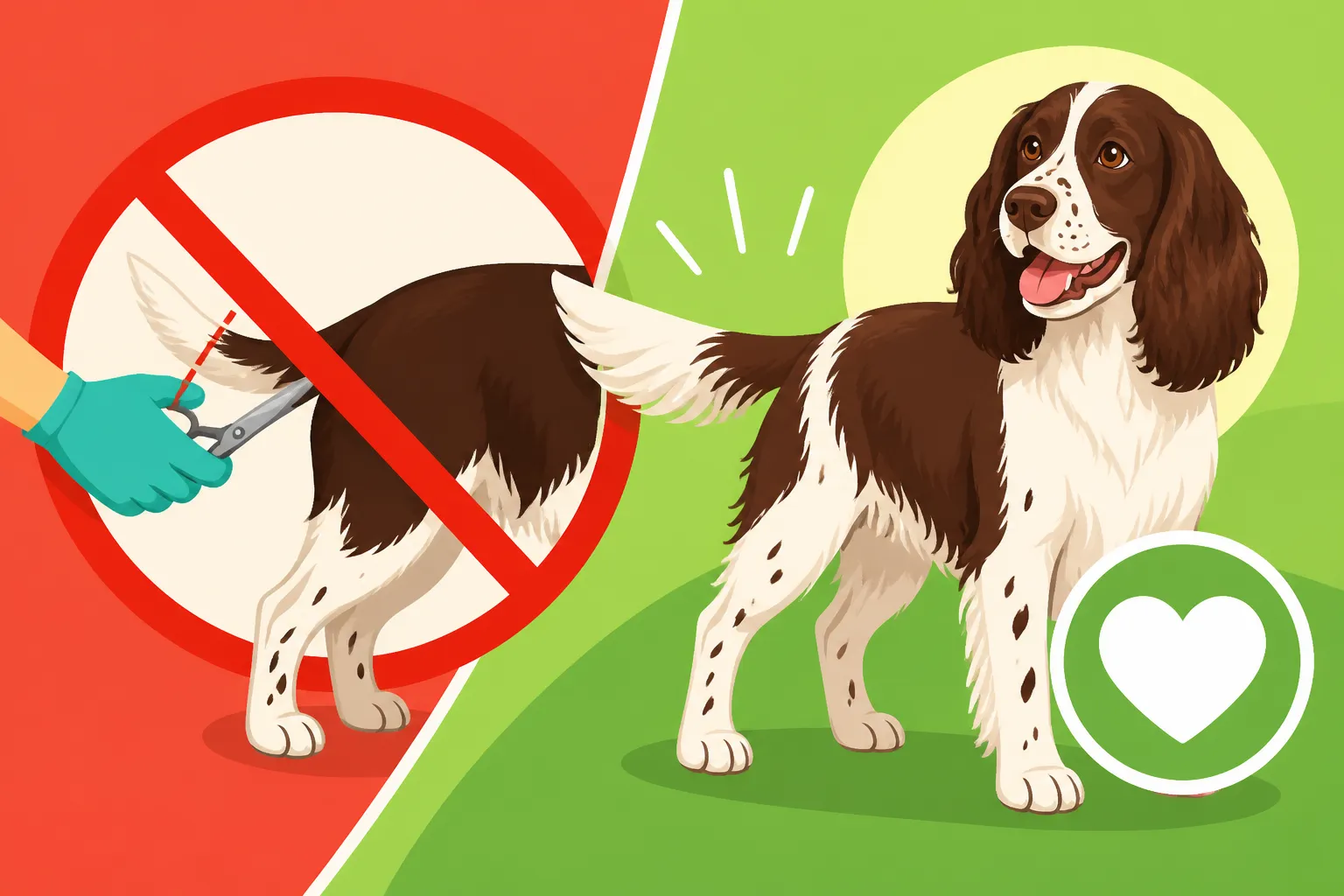
Tail docking means removing part of a puppy’s tail, usually when the puppy is very young. It is not the same as a veterinarian amputating a tail later because of a serious injury or disease. A medically necessary operation is considered treatment, and the vet decides whether it is appropriate for the individual dog.
The legal approach is not simply “all docking is illegal everywhere in Britain” or “working dogs can always be docked.” Rules differ among England, Wales and Scotland, and the exceptions are narrow. Northern Ireland has its own laws, so the rules there should be checked separately rather than assumed to match those in Great Britain.
That distinction matters to Springer Spaniel owners because “working dog” can sound like a broad category. It does not automatically give an owner or breeder permission to dock a puppy. Where an exemption exists, it applies only under specific conditions, and the required evidence and veterinary procedures matter.
| Location | General position | What owners should keep in mind |
|---|---|---|
| England | Routine cosmetic docking is prohibited, with a limited exemption for certain working dogs | A Springer Spaniel’s working prospects alone do not establish eligibility; prescribed conditions and documentation apply |
| Wales | Routine cosmetic docking is prohibited, with a limited working-dog exemption | Check the current requirements with a vet before making assumptions about a litter |
| Scotland | Routine docking is prohibited, and owners should not assume the England and Wales working-dog exemption applies | Ask a Scottish veterinary practice or relevant authority about the rules that apply locally |
| Northern Ireland | Governed separately from Great Britain | Check Northern Ireland’s specific rules rather than relying on guidance for England, Wales or Scotland |
The table is a practical guide, not a substitute for checking the rules where the puppy is born and where the procedure would take place. If a breeder tells you a docking exception applies, ask which legal provision they rely on and what documents support that claim.
Why the law makes a distinction between cosmetic and working-dog docking
Supporters of docking working dogs have historically argued that a shorter tail may be less likely to be injured when a dog works through dense cover. Springer Spaniels can push through brambles, hedges and rough vegetation, and the tail can be exposed to knocks or cuts. That concern is part of the debate, but it does not turn every working-bred puppy into an eligible case.
Opponents point out that docking is a permanent procedure carried out on a very young puppy, and that preventing a possible future injury is different from treating an injury that has actually happened. They also note that a tail has a role in movement and communication. The disagreement is not just about tradition; it is about how to weigh a possible working risk against the welfare effects of an irreversible procedure.
The legal exemptions reflect that tension, but the details are decisive. In England and Wales, specified working-dog circumstances may qualify for an exemption, subject to requirements involving the puppy’s type, intended work, veterinary involvement and records. The law does not create a general right to dock a litter because its breeder describes the puppies as field dogs.
If you are considering a puppy, discuss the question before a litter is born. A responsible breeder should be able to explain the approach they take, show the relevant paperwork where applicable, and answer questions without treating a buyer’s uncertainty as an inconvenience.
Why Springer Spaniels may have docked or natural tails
Field tradition does not tell you whether a dog was legally docked
English Springer Spaniels have long been associated with flushing game from cover, and some working lines have traditionally been seen with shorter tails. That history can make docking seem like an automatic feature of a field-bred dog. It is not. A dog’s field-bred background does not, by itself, tell you how its tail was handled or whether the relevant legal requirements were met.
There is also a big difference between understanding a tradition and assuming it is compulsory. Plenty of Springer Spaniels can work with natural tails. A long tail may need closer checking after days in brambles or other dense cover, but owners should not treat that practical consideration as proof that docking is necessary for every dog.
The field and show types have also diverged in appearance and emphasis over time. Tail length is only one part of a much broader conversation about how the two types look and work. For more on that background, see How the Field and Show Springer Spaniel Diverged.
Ask the breeder precise questions
A puppy buyer can ask whether the litter’s puppies will have natural tails, whether any docking is planned, and what legal basis the breeder believes applies. If an exemption is claimed, ask how eligibility is established and what records the veterinarian will provide. Clear answers should come before you place a deposit, not after you arrive to collect a puppy.
Pay attention to how the breeder responds. “Everyone does it,” “they’re working dogs,” or “the vet sorts it out” are not explanations of the applicable rules. A careful breeder should be willing to discuss the procedure and provide the required documentation, while recognizing that laws and procedures can differ by location.
Also ask how the puppy will be identified and what paperwork will accompany it. Keep any veterinary certificates, microchip records and purchase documents together. If you later move, register the dog, enter a show or take part in a working event, having a clear history may prevent avoidable confusion.
For a closer look at why owners ask whether the procedure is necessary for a working dog, read Whether a Working Springer Spaniel Needs a Docked Tail. The useful question is not only whether a dog might encounter rough cover, but also whether the individual dog’s circumstances meet the law and what alternatives exist for managing risk.
Living with an undocked Springer Spaniel
Tail health is part of the post-walk check
A natural tail does not need special treatment every day, but it should be included in the same sensible after-walk check as the feet, ears and coat. Run your hands gently along the tail and look for cuts, swelling, tenderness, stuck vegetation or blood in the coat. A Springer Spaniel that suddenly guards its hindquarters or reacts when the tail is touched may be telling you something is wrong.
After a day in dense cover, take a moment to check the underside and tip of the tail as well as the areas hidden by feathering. Small wounds can be easy to miss under longer hair. If you find a wound, avoid repeatedly bending or handling the tail to inspect it; a painful dog may react defensively even if it is normally gentle.
Call a veterinarian for a deep cut, persistent bleeding, swelling, significant pain, a change in tail movement or a wound that looks infected. A vet can assess whether cleaning, medication, wound closure or another treatment is needed. Do not assume that a tail injury should be dealt with by docking: any operation later in life is a veterinary decision based on the dog’s actual condition.
Some US owners use retailers such as Chewy to browse for basic first-aid supplies, but a product listing is not a diagnosis. If your dog has a tail wound, contact a vet before applying a product you found through Chewy. Keep any supplies you do use suitable for dogs and follow the veterinarian’s instructions rather than relying on advice in Chewy product reviews.
Tail movement is part of how dogs communicate
Dogs use their whole bodies to communicate. Tail position and movement can contribute to a dog’s signals, but a wag does not always mean “happy,” and a still tail does not automatically mean “aggressive.” Read the tail alongside posture, facial expression, ears, movement and the situation.
A natural tail may be more visible when a dog is excited or alert, but owners should avoid treating it as a simple mood meter. For example, a Springer Spaniel standing still with a high, stiff tail and a fixed stare may be showing tension, even if the tail moves slightly. A loose body and relaxed movement tell a different story.
When introducing a dog to children or unfamiliar dogs, teach people to give the Springer space rather than grabbing or pulling its tail. This is especially important with puppies, who may be startled by handling, and with injured or older dogs, whose tails may be sore. If your dog reacts strongly to tail handling, stop and ask your vet whether pain could be involved before trying to train through it.
Showing an undocked Springer Spaniel
An undocked tail does not automatically prevent a Springer Spaniel from being shown. Show rules depend on the registry and venue, and the applicable breed standard and competition regulations should be checked for the event you plan to enter. A dog should not be judged on assumptions drawn from another country’s rules or from how a particular line has traditionally been presented.
If you are buying a puppy with plans for the show ring, ask the breeder which registry they follow and what paperwork will be needed. A natural tail may look different from the outline some people associate with older photographs or particular lines, but that is not a reason to treat the dog as unsuitable. The relevant question is how the dog meets the applicable standard and rules.
For practical context, see Showing an Undocked Springer Spaniel. If you are comparing the UK with North American expectations, Whether a Springer Spaniel's Tail Is Docked in America discusses the difference in common practice. And for the working-line context, Tail Docking in Field Springer Spaniels looks at how tradition and the dog’s actual needs can be confused.
Questions to settle before choosing a puppy
What to ask when a breeder says docking is permitted
Start by asking which jurisdiction applies. The location where the puppy is born and the procedure would happen is central; a breeder cannot rely on rules from another part of Britain. If you are unsure, contact a local veterinary practice or the relevant authority before treating a breeder’s explanation as settled.
Then ask what specific exemption is being used, what evidence is required, who will carry out the procedure, and what records you will receive. The breeder should be prepared to explain the process calmly and provide documentation, not simply assure you that it is routine. If the answer is vague, pause the purchase until you understand the situation.
It is also reasonable to ask whether the litter could remain undocked and how the breeder plans to support owners of working dogs with tail checks and injury prevention. A breeder’s willingness to discuss natural-tail care can tell you a lot about their approach to the dogs beyond the sale.
What to do if you already own a docked Springer Spaniel
If your adult dog has a docked tail, focus on its comfort and health rather than making assumptions about why it was docked. If you know the breeder or previous owner, you can ask for the dog’s history and records. A short tail alone does not establish whether the procedure was lawful, and an owner should not try to investigate by examining or manipulating a healed tail.
For future travel, showing, breeding or working activities, check the rules and documentation expected by the relevant organization. Requirements can differ by location and by event. Keep veterinary records and identification details accessible, particularly if the dog’s history is incomplete.
If the tail or stump seems painful, swollen or irritated, arrange a veterinary examination. A dog may have discomfort for reasons unrelated to the original docking, and a vet can assess what is happening now. Chewy may be useful to some US households looking for ordinary pet-care items, but Chewy cannot assess a painful tail or determine whether an older procedure complied with British law. For medical concerns, your veterinarian is the right first call.
Britain’s approach to Springer Spaniel tail docking is shaped by welfare concerns, working traditions and rules that differ across jurisdictions. The practical takeaway for owners is straightforward: do not assume that a working label makes docking legal, ask for clear documentation where an exemption is claimed, and include the tail in routine health checks whether it is natural or docked.
Disclaimer
This article is for general informational purposes only and does not constitute professional advice. Laws, prices and regulations vary by location and change over time. Consult a qualified professional for guidance on your specific situation.