Whether a Springer Spaniel’s Tail Is Docked in America
A Springer Spaniel puppy in the United States may come home with a short tail, a full-length tail, or—less commonly—a naturally short tail. That difference can be surprising when littermates look alike. This guide explains why some American Springers have docked tails, what affects the practice, how to check a puppy’s history, and what to consider when caring for a dog with either tail type.
Are Springer Spaniels’ tails docked in America
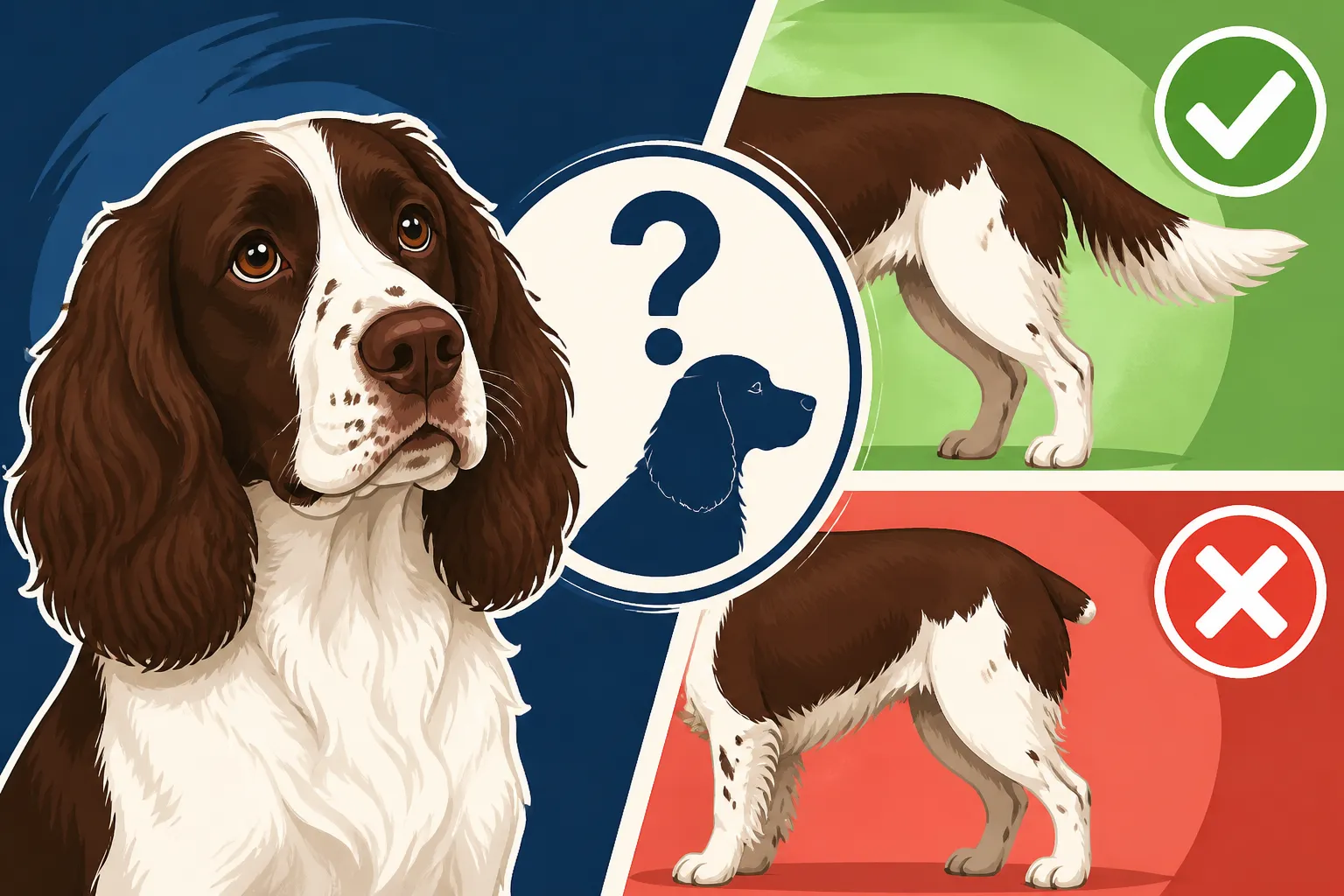
Some are, but docking is not automatic for every English Springer Spaniel in the United States. A puppy’s tail may be docked by its breeder, left at its natural length, or shortened later because of a medical problem. The breeder’s practices, local laws, the dog’s intended activities, and show requirements can all influence the outcome.
Why some American Springer Spaniels have short tails
Tail docking means surgically shortening a dog’s tail. In some American breeding circles, especially among working or field-bred Springers, docking has been a familiar tradition. Supporters have argued that a shorter tail may be less likely to be injured while a dog works through thick cover. However, the practice is not universal, and the possibility of injury alone does not mean every Springer needs a docked tail.
A puppy with a short tail may also have had its tail shortened for a medical reason, or it may simply have a naturally short tail. Those are different situations. Natural short tails are not the usual appearance for the breed, so if a puppy’s tail is unusually short, ask the breeder to explain whether it was docked, naturally short, or treated for an injury. Don’t assume that a short tail proves a dog comes from a particular type of line.
The history of tail docking is tied in part to the different ways field and show Springers have been bred and presented. The differences between those types are explored in How the Field and Show Springer Spaniel Diverged. Tail docking is also discussed in Tail Docking in Field Springer Spaniels, which focuses more specifically on the practice within working lines.
Is docking required in the United States
There is no single rule that makes every Springer Spaniel in the United States docked or undocked. Laws and regulations concerning cosmetic procedures on dogs vary by state and may change. Some jurisdictions restrict non-medical docking or set conditions for who may perform it; others may have different rules or exceptions. A dog’s breeder may also follow a particular breed-club or veterinary policy.
Breed standards and show rules are another part of the picture, but they should not be confused with a legal requirement to dock a puppy. A breed standard describes the desired appearance of a breed for conformation judging; it does not, by itself, determine what a breeder is legally allowed to do. Rules for a particular show or registry may also depend on the dog’s circumstances and applicable law. If you plan to show a Springer, check the relevant organization’s current rules rather than relying on a general claim that all show dogs must have docked tails.
It helps to think of the question as several separate ones: Is docking legal where the puppy was born? Who performed it, and for what reason? What rules apply to the activities or shows the dog may enter? For a wider look at the differences between the two countries’ breeding traditions, see How Britain and America Diverged on Springer Spaniel Type.
Why Springer Spaniels may have docked or natural tails
There is no single explanation that applies to every short-tailed Springer. The reason can be historical custom, a breeder’s preference, concern about a working dog’s environment, a medical necessity, or simply the dog’s natural anatomy. Getting the breeder’s specific explanation is more useful than guessing from the dog’s appearance.
The working-dog argument and its limits
A working Springer may push through dense vegetation, brambles, and uneven ground. People who favor docking have argued that a shorter tail could reduce the chance of a tail injury in those conditions. The concern is understandable: a painful injury can be stressful for the dog, difficult to manage in the field, and frustrating for an owner who wants to keep a working dog comfortable.
But a working role does not automatically mean docking is necessary. Dogs with full-length tails can work, and the risks depend on the individual dog, the terrain, the type of work, and how the dog is managed. A short tail also does not make a dog immune to injury. Rather than treating docking as a guaranteed safeguard, owners can look at the dog’s actual activities and discuss practical injury prevention with a veterinarian.
If you’re wondering whether a full-length tail prevents a Springer from doing its job, Whether a Working Springer Spaniel Needs a Docked Tail looks at that question directly. A dog’s suitability for field work involves much more than tail length: conditioning, training, temperament, health, and the handler’s expectations all matter.
Natural tails, medical shortening, and docking are different
A Springer born with a full-length tail has an undocked natural tail. A puppy docked by a breeder has had the tail shortened. A dog whose tail is shortened later for an injury or another medical problem has undergone a separate procedure for a different reason. These distinctions can matter when you’re reviewing a puppy’s records or discussing a dog’s history with a veterinarian.
A very short tail does not always tell you which explanation applies. Ask for a clear account and, where appropriate, veterinary documentation. If the breeder says a tail was shortened because of a medical issue, ask what happened and whether the puppy needs any follow-up care. If the breeder says the puppy was docked as part of a routine practice, ask who performed the procedure and whether it complied with local requirements.
A natural tail is not necessarily a sign of poor breeding, and a docked tail does not by itself establish that a puppy is healthier, better suited to work, or more authentic as a Springer. For a conformation-show perspective, Showing an Undocked Springer Spaniel is a useful related topic.
How to find out whether a puppy’s tail was docked
If you’re choosing a puppy, the simplest approach is to ask directly before placing a deposit. Tail length can be visible, but the reason for it may not be. A responsible breeder should be able to describe their usual practice and explain what happened with the individual puppy.
Questions to ask a breeder
Keep the conversation specific and calm. You’re not only asking whether the puppy has a short tail; you’re asking what the breeder knows about its origin and care. If you’re speaking with a breeder in a different state, don’t assume that their local rules match the rules where you live.
Useful questions include:
- Was this puppy’s tail docked, or was it born with a naturally short tail?
- If it was docked, who performed the procedure and why?
- What rules or veterinary guidance did the breeder follow?
- Is there any veterinary record or other documentation?
- How does the breeder handle puppies whose tails are left natural?
- Are there any plans or rules that may affect the dog if I want to show or work it?
Pay attention to how clearly the breeder responds. A straightforward explanation is more reassuring than a vague answer such as “Springers are always docked” or “it’s required everywhere.” Because laws and show requirements vary, an absolute statement about what happens throughout the entire country should prompt a follow-up question.
If you’re still deciding whether a particular litter is the right choice, it may help to read Whether a Springer Spaniel Suits a First Time Owner. Understanding your likely day-to-day life with the dog is just as important as understanding one physical feature.
What to check in adoption or veterinary records
For a rescue or adult Springer, the dog’s original breeder may not be available to answer questions. Check any intake, veterinary, or transfer records for references to docking, a tail injury, surgery, or a congenital difference. If the history is unknown, say so when you speak with your veterinarian. The veterinarian can examine the tail and note any signs of discomfort or previous injury.
Avoid trying to infer a dog’s full history from the tail alone. A docked tail does not reveal exactly when or where the procedure happened, and a natural tail does not tell you whether the dog has ever injured it. If a tail is sore, swollen, bleeding, or suddenly held differently, treat that as a health concern rather than as a question of breed appearance and contact a veterinary professional.
Living with a docked or natural Springer Spaniel tail
Most owners can care for a Springer with either tail type as part of ordinary dog care. The practical differences tend to be about observing the dog, preventing avoidable knocks or snags, and making sure its tail is comfortable—not about choosing a different everyday routine based on appearance alone.
Tail communication and everyday handling
Dogs use posture and movement to communicate, and the tail can contribute to those signals. A shorter tail may make some movements less obvious, so take in the whole dog’s body language: posture, facial expression, ears, movement, and whether the dog is trying to approach or move away. This is useful around unfamiliar dogs, when a wag alone can be misread even in a dog with a full-length tail.
A natural tail may brush against furniture, catch on objects, or get stepped on in a busy home. That doesn’t mean it should be shortened. Keep walkways clear, avoid shutting doors on the tail, and give the dog room when it turns in narrow spaces. If you’re buying a harness or other everyday gear, look for a fit that doesn’t rub the tail base or restrict movement. Chewy is one retailer where owners may compare general dog supplies, but fit and comfort matter more than the shop you choose.
For outdoor work, make a habit of checking the dog after a run through dense cover. Look for cuts, tenderness, swelling, or a change in how the tail is carried. A short tail still needs attention: the base and remaining tail can be injured, and any wound should be assessed rather than dismissed because the tail is docked.
Comparing docked and natural tails
| Question | Docked tail | Natural-length tail |
|---|---|---|
| Does the appearance explain why it is short or long? | No. Ask whether it was docked and why. | Usually indicates it was not docked, but records can clarify history. |
| Can it be injured? | Yes. The remaining tail and its base can still be hurt. | Yes. The full tail may be exposed to knocks, snags, or other injuries. |
| Does it determine whether the dog can work? | No. Fitness, training, terrain, and individual ability matter too. | No. A full tail does not automatically prevent field work. |
| What should an owner do? | Watch for discomfort and check the tail after activity. | Protect it from avoidable knocks and check it after activity. |
Chewy and other pet-supply retailers may carry items such as harnesses or grooming tools, but a product cannot prevent every tail injury. Check the dog’s skin and coat where equipment sits, and stop using anything that causes rubbing or discomfort. For an active dog, the most valuable habit is often a calm check after exercise rather than buying a special tail product.
A practical decision checklist for prospective owners
Before choosing a puppy, decide whether the dog’s tail appearance is a preference, a practical concern, or a show-related question for you. Then confirm the facts with the breeder instead of relying on assumptions about American Springers as a whole.
- Ask whether the tail is natural, docked, or shortened for a medical reason.
- Request an explanation of the breeder’s practice and any available records.
- Check the law and veterinary guidance relevant to the puppy’s location.
- If showing is a possibility, confirm the rules with the organization and event you have in mind.
- If the dog will work in cover, discuss activity-specific risks and care with a knowledgeable veterinarian.
- Focus on the puppy’s overall health, temperament, and fit for your home—not tail length alone.
Chewy may be convenient for comparing routine supplies after you bring your dog home, but it cannot answer questions about a breeder’s procedure or substitute for veterinary guidance. Those questions are best handled directly with the breeder and, when needed, a veterinarian familiar with the dog.
A Springer Spaniel’s tail may be docked or natural in America; neither appearance tells the whole story. Ask how the dog’s tail came to look as it does, check the rules that apply to your situation, and care for the individual dog in front of you. For more context on the working-type question, see Tail Docking in Field Springer Spaniels and Whether a Working Springer Spaniel Needs a Docked Tail.
Disclaimer
This article is for general informational purposes only and does not constitute professional advice. Laws, prices and regulations vary by location and change over time. Consult a qualified professional for guidance on your specific situation.