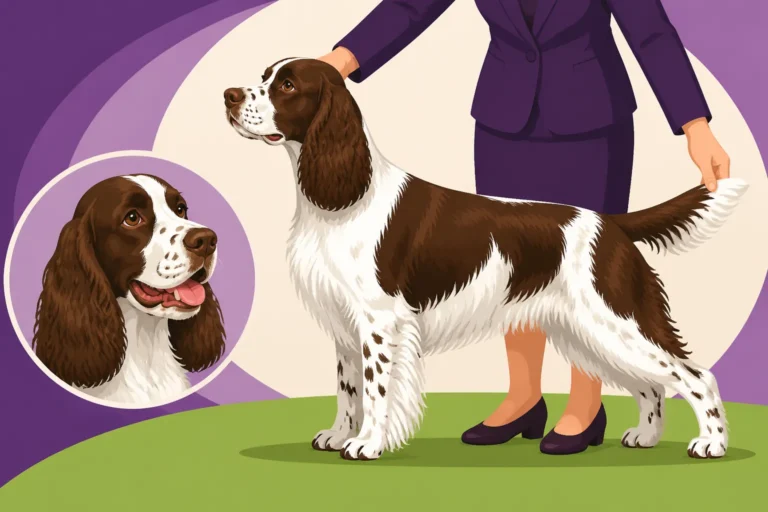
Whether Any Registry Separates the Two Springer Spaniel Types
Choosing an English Springer Spaniel can feel confusing when one breeder talks about “field” dogs and another means “show” or “bench” dogs. They can look and work quite differently, yet major kennel registries generally register them as one breed. This guide explains what registration papers do—and don’t—tell you, and how to investigate a dog’s type and background.
Do registries separate field and show Springer Spaniels?
In the major kennel systems, field-bred and show-bred English Springer Spaniels are generally registered as members of the same breed, not as two separately registered breeds. The distinction matters in everyday conversation, breeding choices, and competition, but it usually isn’t a separate breed category on the registration certificate.
That’s the key point behind Two Breeds Registered as One: the Field and Show Springer Spaniel. The registry may document a dog’s breed and ancestry without assigning it a formal “field type” or “show type” label.
What a registration certificate usually tells you
A registration certificate is primarily a record of identity and pedigree. Depending on the registry, it may include the dog’s registered name, breed, registration number, date of birth, breeder or owner information, and recorded ancestors. It can help you confirm that a dog is registered as an English Springer Spaniel and trace its recorded family tree.
What it usually doesn’t do is certify that a dog belongs to a distinct field or show variety. You may see clues in the pedigree: ancestors with field trial or hunting titles, or ancestors with conformation show titles, can point toward the sort of lines the breeder has chosen. But those titles are recorded achievements, not necessarily a registry’s official classification of the dog’s type.
That difference can catch buyers off guard. A puppy’s papers may say “English Springer Spaniel” without explaining whether its parents were bred primarily for field work, the show ring, or a combination of both. For a closer look at the development of those lines, see How the Field and Show Springer Spaniel Diverged.
What the major registry approach means in practice
In the United States, the American Kennel Club recognizes the English Springer Spaniel as one breed. Field-bred and show-bred dogs can both be registered under that breed name. Registration does not, by itself, guarantee that a dog has a particular working style, appearance, temperament, or level of training.
The United Kingdom also treats the English Springer Spaniel as one breed in its main kennel-club framework. A working-bred dog and a show-bred dog may come from very different breeding priorities, but that doesn’t make them separate registered breeds. Other national registries may have their own procedures and terminology, so check the registry named on the dog’s paperwork rather than assuming every country handles records identically.
A helpful way to think about it is that the registry records the dog’s recognized breed and ancestry, while breeders, clubs, and competition records offer more detail about what the dog’s family has been bred to do. The history of a line may be very informative, but it is not the same as a formal registry designation.
Why field and show labels still matter
The field and show labels are useful shorthand. They can describe broad patterns in a dog’s build, coat, working drive, and the goals of its breeding program. They are not perfect guarantees: individual dogs vary, and a label cannot tell you everything about a puppy’s future behavior or ability.
A field-bred Springer Spaniel may have been selected for practical hunting work, with traits such as speed, endurance, and enthusiasm for searching cover emphasized in the line. A show-bred Springer Spaniel may have been selected more strongly for conformation and the breed standard. The differences are explored in How Different the Two Springer Spaniel Types Look.
The two types are not reproductively isolated. They can be bred together, and some breeders deliberately work across the divide. For that reason, a dog’s ancestry may not fit neatly into a single label. If you’re trying to understand a particular pedigree, ask the breeder to explain the dogs and goals behind it. Whether the Two Springer Spaniel Types Interbreed covers that question in more detail.
| What you’re checking | What it may tell you | What it does not prove on its own |
|---|---|---|
| Breed registration | The dog is recorded as an English Springer Spaniel by that registry | That it is field-bred or show-bred |
| Pedigree | Recorded ancestry and, in some cases, titles or other details | That every ancestor had the same type or purpose |
| Field or show titles | A dog or ancestor took part in a particular activity and earned a title | That the dog is automatically suited to that activity |
| Breeder description | The breeder’s view of the dog’s line and intended purpose | A standardized registry classification |
| Health records | Documented screening or veterinary information | A guarantee that the dog will never develop a health problem |
How to work out whether a Springer Spaniel is field-bred or show-bred
Because registration papers may not identify type, you’ll need to look at several sources of information together. The breeder’s explanation, the pedigree, the parents’ appearance and activity, and the puppy’s individual traits all contribute. No single clue should carry the whole decision.
Read the pedigree for context, not as a verdict
Start by asking for a copy of the pedigree and a plain-language explanation of the dogs behind the litter. Look for patterns: are many relatives known for field work, hunting, or field trial competition? Are show titles and conformation achievements prominent? Are both kinds of activities present in the family?
A pedigree can be useful, but it can also be easy to misread. A title may tell you that an ancestor competed successfully in a particular venue; it doesn’t necessarily tell you how that dog behaved at home, how much exercise it needed, or what a puppy from the same family will be like. Two puppies from one litter can also differ in confidence, energy, and interest in work.
Ask the breeder what they mean when they use a label. “Field-bred” might refer to a long history of working lines, a specific set of recent ancestors, or simply the breeder’s intended direction. “Show-bred” can also cover a range of breeding choices. A thoughtful breeder should be able to talk about actual dogs, their activities, and the traits they hope to preserve rather than relying on a label alone.
Look beyond titles and certificates
Titles are helpful evidence, but they need context. A dog with a field title has demonstrated specific skills under the rules of that event. A conformation title indicates success in the show ring. Neither one is a general-purpose certificate for temperament, health, household manners, or suitability for a particular family.
Talk with the breeder about the parents’ everyday lives. How do they settle indoors? What happens when they encounter game scent or wildlife? How do they respond to training, new places, and time away from their handler? If you want a dog for occasional walks and family companionship, those practical details may matter more than a distant ancestor’s competition record.
The dogs themselves can also offer clues, especially when you meet the parents or close relatives. Build and coat may suggest a line’s typical emphasis, but appearance alone cannot confirm a dog’s breeding history. For a broader comparison of what the two types may be like, see Which Springer Spaniel Type Is More Common in America and How a Field Springer Spaniel Fares in the Ring.
Ask direct questions before choosing a puppy
A few specific questions can turn a vague conversation into a useful one:
- How do you describe the litter’s breeding purpose? Ask the breeder to explain their answer with examples.
- What activities do the parents and close relatives take part in? Look for real details, not only broad claims.
- What are the parents like at home? Ask about settling, noise, exercise needs, and how they handle ordinary household routines.
- What traits are you selecting for? The answer can reveal whether the breeder is prioritizing working ability, conformation, temperament, or a mix.
- Can you show me the pedigree and explain it? A breeder should be comfortable discussing the family behind the puppy.
- What health screening has been done? Ask for the specific records and results relevant to the parents and the breed, rather than relying on a general claim that the dogs are “health tested.”
If a breeder can’t explain what their label means, that doesn’t automatically prove bad intent, but it is a reason to ask more questions. You’re not being difficult by wanting a clear picture of the dog you may live with for years.
Registries, clubs, titles, and health records are different things
It’s easy to treat every official-looking document as proof of the same thing. In reality, kennel registration, competition records, breed-club involvement, health testing, and household paperwork each serve different purposes. Keeping those categories separate makes it easier to evaluate a breeder’s claims.
Registry records are not the same as competition records
A kennel registry records a dog within its system and may document ancestry. A competition organization records participation and results under its own rules. The two kinds of records can complement each other, but they answer different questions.
For example, a registry certificate may tell you that a dog is an English Springer Spaniel with a recorded pedigree. A field or show title may tell you that the dog competed in a particular setting. Neither document alone tells you whether the dog’s temperament or activity level will suit your household.
Titles also need to be read accurately. A title is evidence of achievement within a defined activity, not proof that every puppy in that dog’s family will excel at the same activity. A dog can have an impressive pedigree and still be a poor match for a home that cannot meet its needs. Conversely, a dog without competition titles may still be a capable and enjoyable companion.
Health testing should be checked separately
Registration does not mean that a dog has been screened for every inherited condition, and a pedigree does not substitute for health records. Ask what tests have been performed, which dogs were tested, and whether the breeder can show you the results. If a test is relevant to a particular condition, confirm that the records identify the dog and the test clearly.
This is a good place to separate health screening from type. A dog can be field-bred or show-bred and still need careful health evaluation. The relevant risks and screening considerations can differ among families, so discuss the parents’ records with the breeder and your veterinarian. For more background, see How Health Problems Differ Between Springer Spaniel Types.
Keep copies of registration documents, pedigrees, contracts, health results, and veterinary records together. A personal file can also include ordinary care information, such as food or medication receipts. For instance, a Chewy order history may help you track routine purchases, but it does not verify a dog’s pedigree or establish whether it is field-bred or show-bred. The same principle applies to any retailer’s receipts: they document purchases, not ancestry.
Treat registry gaps as prompts for questions
If a dog has limited paperwork, missing details, or a pedigree that is difficult to interpret, focus on what can be verified. Ask who bred the dog, what records are available, and whether the registry can confirm the registration details. If you’re considering an adult dog or rescue, its history may be incomplete; that does not make it less worthy of a home, but it does mean you should avoid treating an uncertain label as a confirmed fact.
If you’re organizing a dog’s ongoing care, keep those records in a separate section from pedigree and registration documents. You might save veterinary invoices, vaccination information, and routine supply receipts, including relevant Chewy receipts, without confusing them with proof of breeding history. Being tidy about records makes it easier to answer future questions, especially if the dog changes homes or needs ongoing veterinary care.
It’s also worth asking whether “field” or “show” describes the dog’s actual background or is simply a casual description. A breeder’s explanation, a documented pedigree, and verifiable activity records are more useful together than any one label in isolation. If someone says a dog is “field type” or “show type,” ask what evidence they mean.
What to conclude from a Springer Spaniel’s papers
For most buyers, the practical answer is straightforward: major registries generally register field-bred and show-bred English Springer Spaniels as one breed. The paperwork may help you establish breed identity and trace ancestry, but you’ll usually need other information to understand the dog’s line and likely purpose.
A simple way to evaluate the information
Use the registration papers to check the dog’s recorded breed and identity. Use the pedigree to explore ancestry. Use titles and activity records to learn what particular dogs have done. Use health documents to assess screening. Then use a detailed conversation with the breeder to understand what the litter is intended to be like.
Those sources should support each other, not replace one another. If a breeder says a puppy is from working lines, ask what that means in the family behind the litter. If the breeder describes a show-bred puppy as calm, ask about the parents’ actual routines and behavior. Labels may help you start the conversation, but they cannot answer every question about the individual dog.
Finally, match the dog to your home rather than choosing based only on terminology. A highly driven field-bred dog may be a wonderful partner for an active owner who wants to train and work with it; the same dog may feel overwhelming in a household expecting a low-key pet. A show-bred dog may suit a different lifestyle, but it still needs exercise, enrichment, training, and companionship. For a related comparison, read How a Show Springer Spaniel Fares in a Hunt Test.
The most useful question to ask
Instead of asking only, “Is this dog registered as field or show?” ask, “What do the dog’s documented background and the breeder’s experience suggest about this puppy’s needs?” That question gets beyond a label and toward the details that matter in daily life.
A registry can provide an important foundation, but it is not the whole story. Review the documents, ask for specific examples, and consider the puppy or adult dog as an individual. That approach gives you a clearer picture than expecting a registration certificate to settle the field-versus-show question on its own.
Disclaimer
This article is for general informational purposes only and does not constitute professional advice. Laws, prices and regulations vary by location and change over time. Consult a qualified professional for guidance on your specific situation.