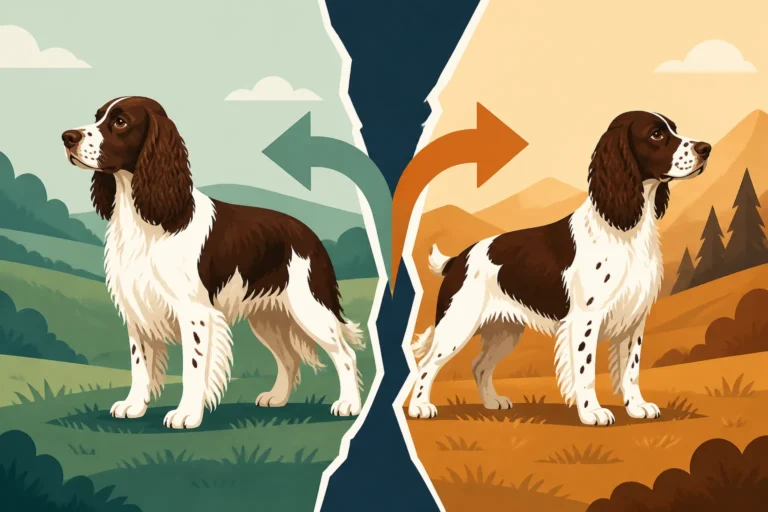
Which Springer Spaniel Type Is More Common in America
It can be incredibly confusing for someone new to the English Springer Spaniel breed to discover that there isn't just one type of Springer out there. You might have seen photos or met dogs that look quite different, and you're left wondering if they're even the same breed, let alone which version is more common in American homes. This guide aims to clear up that mystery, detailing the distinct paths these wonderful dogs have taken and revealing which type you're most likely to encounter across the United States.
The Great Divide: Understanding Field and Show Springer Spaniels
When you look at an English Springer Spaniel, you're not just seeing "a Springer." You're seeing the result of decades, sometimes even a century, of intentional breeding towards one of two very different ideals: the field-bred Springer, designed for active gundog work, and the show-bred Springer, developed for conformation in the show ring and often as a cherished family companion. It's a fascinating divergence within a single breed that shapes everything from their appearance to their temperament and, ultimately, their prevalence in different kinds of homes.
A Tale of Two Purposes, One Breed Standard
Imagine a fork in the road, taken many generations ago. Both paths started from the same place – the traditional English spaniel, bred to "spring" game from cover for hunters. For a long time, size was the main differentiator, with smaller dogs being called "Cockers" and larger ones "Springers," even from the same litter. However, with the formalization of dog breeds and the rise of both competitive field trials and conformation dog shows, breeders began to select for different traits with intense focus.
On one side, you had breeders meticulously selecting for traits that enhanced performance in the field: speed, agility, endurance, an impeccable nose, and an unshakeable desire to work alongside a hunter for hours. Their dogs needed to be lean, athletic, and tireless, with a coat that could withstand briars and cold water without becoming a burden. These were the dogs destined for the demanding world of gundog trials and real-world hunting.
On the other side, breeders focused on conformation, striving to meet a written breed standard that described the ideal physical form. This meant selecting for specific head shapes, bone structure, coat texture and length, and a balanced, elegant gait. While the standard still acknowledged the breed's working heritage, the emphasis shifted to aesthetics and a temperament suitable for handling in a show ring, often leading to a slightly mellower disposition that also suited a companion animal. This intense, parallel selection over many decades is what created The Seventy Year Gene Pool Divide Inside One Springer Spaniel Breed, resulting in two distinct populations that share a name but little else beyond a distant common ancestor.
Physical and Temperamental Differences at a Glance
These differing breeding goals naturally led to noticeable differences in both how these dogs look and how they behave. It's not just a subtle variation; it's often like looking at two different breeds, especially when you compare the extremes of each type.
The show-bred Springer Spaniel, often referred to as the "bench" or "conformation" type, typically possesses a heavier bone structure. They tend to be more robust, with a fuller, longer coat that features significant feathering on their legs, chest, and belly. Their heads are often squarer, and their ears can be quite long, contributing to a more "classic" spaniel look. Temperamentally, while still lively and affectionate, they are generally bred to be a bit calmer and more tractable indoors, making them more adaptable to a typical family pet lifestyle. They still love a good run and need plenty of exercise, but their off-switch is usually easier to find.
In stark contrast, the field-bred Springer Spaniel is built for pure athleticism and endurance. They are typically lighter-boned, with a more finely textured coat that often has less feathering, designed for practicality in dense cover, reducing the collection of burrs and debris. Their build is leaner, more agile, and their expressions are often more intense, reflecting their unwavering focus. When it comes to temperament, these dogs are powerhouse bundles of energy and drive. They possess an insatiable desire to work, to hunt, and to be constantly in motion. A Field Bred Springer Spaniel Is a Different Dog to Live With isn't just a saying; it's a fundamental truth. They require immense amounts of physical exercise and mental stimulation to be content, and without it, they can become destructive or anxious. The sheer intensity of their drive makes them unsuitable for many casual pet homes.
The American Landscape: Which Type Dominates?
So, in the vast and varied landscape of American dog ownership, which of these two distinct types of English Springer Spaniel has truly captured the public's imagination and filled more homes? While both have their dedicated adherents, the answer, for the general pet-owning public, leans heavily towards one side.
The Ascendancy of the Show-Bred Springer
In America, the show-bred English Springer Spaniel has, without a doubt, become the more widely recognized and commonly owned type among families seeking a companion dog. There are several reasons for this prevalence, deeply rooted in how dogs are marketed, perceived, and integrated into modern lifestyles.
Firstly, the show-bred type is often more readily available through general breeders who aim to place puppies in companion homes. Their appearance, with that luxurious coat and sturdy build, aligns with many people's ideal image of a purebred dog, especially one seen winning ribbons at prestigious dog shows. These visual aesthetics, honed for the conformation ring, translate into a strong appeal for those seeking a handsome family pet. When someone pictures an English Springer Spaniel, the image that usually comes to mind is that of the show-type.
Secondly, and perhaps most importantly for their widespread adoption, the show-bred Springer's temperament, while still energetic and outgoing, is generally more forgiving for the average American household. While they require consistent exercise and training, they are typically less intense in their drive compared to their field-bred cousins. This makes them a more manageable fit for families with busy schedules, suburban yards, and a desire for a loyal, affectionate companion who isn't constantly looking for game to flush. Many people find the energy level of a How Much Exercise a Show Bred Springer Spaniel Needs more aligned with their capacity. This adaptability to a pet lifestyle makes them the easier choice for breeders focusing on the companion market, leading to greater numbers available for sale in typical settings, often even from pet stores or less specialized breeders. You'll likely see food and accessory suggestions for this type of Springer readily available on platforms like Chewy, reflecting their broader appeal.
The Enduring Niche of the Field-Bred Springer
While less common in the general pet population, the field-bred English Springer Spaniel holds a deeply respected and essential place within the sporting dog community across America. These dogs are not "lesser" Springers; they are highly specialized athletes, bred for a very specific and demanding purpose.
Field-bred Springers are overwhelmingly chosen by individuals and families dedicated to hunting upland game, competing in field trials, or engaging in other high-drive canine sports like agility or dock diving. Their unparalleled drive, stamina, and instinct for quartering (systematically working a field) make them invaluable partners for hunters. They are sought after by those who truly understand and appreciate the working capabilities of a gundog. Finding a field-bred Springer often means going directly to breeders with proven lines, who may have waiting lists and who will carefully vet prospective owners to ensure the dog's needs for work and exercise can be met. This specialized market means they are simply not as widely encountered by the public.
For these owners, a field-bred Springer isn't just a pet; it's a vital member of their hunting team or competition partner. The commitment required to channel their energy and instinct is substantial. They need extensive training, often from a young age, and constant engagement. Owners in this niche understand that How Much Exercise a Field Bred Springer Spaniel Needs is not a suggestion, but a fundamental requirement for a happy, well-adjusted dog. These are not dogs you casually pick up from a local pet ad, but rather carefully selected animals from proven working lines.
Factors Influencing Popularity and Availability in the U.S.
The divergent paths of the field and show Springer Spaniel in America aren't accidental; they're shaped by a confluence of factors, including how kennel clubs operate, the nature of dog breeding, and the evolving lifestyles of dog owners. Understanding these influences helps clarify why one type has become more ubiquitous than the other.
Kennel Club Recognition and Breeding Focus
Both field-bred and show-bred English Springer Spaniels are recognized under the same umbrella by organizations like the American Kennel Club (AKC). There isn't a separate breed standard for "Field Springer Spaniel" and "Show Springer Spaniel"; they are simply English Springer Spaniels. However, within this single breed registration, the focus of breeding programs differs dramatically, and this has a profound impact on visibility and availability.
Show breeders, by the very nature of their pursuit, operate in a highly public arena. Conformation dog shows are spectacles, drawing crowds and media attention, and their champions become recognizable faces. These breeders are often keen to promote their lines and place puppies in homes that will continue to showcase the breed's beauty, sometimes even encouraging new owners to try showing. Their dogs are bred to conform to a specific aesthetic ideal, and successful show lines gain recognition that extends beyond just the purebred dog community, making them more visible to the general public.
Field breeders, on the other hand, often operate within a more specialized and insular community. Their "show ring" is the field trial, where performance, not appearance, is paramount. While highly competitive, field trials typically don't attract the same broad public audience as conformation shows. These breeders prioritize working ability, drive, and trainability above all else. Their puppies are usually destined for working homes, and their reputation is built on the success of their dogs in the field, not necessarily on a champion title displayed on a website. Consequently, the field-bred Springer is less frequently advertised to the general public and is often found through word-of-mouth within hunting circles or through breed-specific clubs dedicated to working spaniels. For a prospective owner, knowing The Household a Springer Spaniel Was Built For can guide them towards the right type.
Lifestyle Compatibility for the Average American Home
Perhaps the most significant factor in the show-bred Springer's greater prevalence is its general compatibility with the lifestyle of the average American family. Let's be realistic: most people seeking a family pet aren't looking for a tireless hunting machine. They want a loyal, affectionate, and playful companion who can integrate into their daily routines without demanding an extreme level of commitment.
The show-bred Springer, while still an active breed, typically possesses a temperament that aligns more closely with these needs. Their energy levels, though high, are generally more manageable with daily walks, playtime in the yard, and a few training sessions. They are often more content to relax indoors after exercise, making them a better fit for homes where the primary role of the dog is companion. If you're looking for Which Springer Spaniel Type Suits a Pet Home, the show-bred line often fits the bill better simply due to a slightly less intense drive. You can easily pick up a durable bed and engaging toys for them at Chewy, ensuring they have creature comforts that suit their more companion-oriented lifestyle.
Conversely, the field-bred Springer's intense drive and profound need for a "job" or extensive activity can overwhelm families unprepared for such a commitment. These dogs thrive when they have a purpose, whether it's hunting, advanced training, or participating in demanding dog sports. Without adequate outlets for their energy and intelligence, they can become destructive, anxious, or difficult to manage. Their instinct to quarter and follow scent can be a challenge for owners who simply want a dog to walk politely on a leash in a suburban neighborhood. This mismatch in lifestyle expectations means that fewer general pet owners are able or willing to take on a field-bred Springer, thus reducing their overall presence in mainstream homes.
What This Means for Prospective Owners
Understanding that there are two distinct types of English Springer Spaniels is the first, crucial step for anyone considering bringing one of these wonderful dogs into their life. It means that "doing your research" isn't just about reading a general breed description; it's about delving into the specifics of either the field or show lines to ensure you choose a dog that truly fits your lifestyle and expectations.
Finding the Right Type for Your Home
The most important takeaway here is that you shouldn't choose a Springer Spaniel based solely on its breed name or the cute puppy pictures you've seen. You must consider which type aligns with your family's activity level, living situation, and overall commitment to training and exercise.
If your ideal dog is a devoted, playful companion who loves long walks, enjoys family activities, and is generally content to settle down indoors after a good romp, a show-bred Springer is likely the more suitable choice. They will still require consistent training and plenty of physical and mental stimulation, but their intrinsic drive tends to be less all-consuming. They are often happy engaging with puzzle toys and interactive games you can find on sites like Chewy, helping to keep their intelligent minds busy.
However, if you are an avid hunter, participate in competitive dog sports, or lead an exceptionally active outdoor lifestyle and are looking for a true working partner with boundless energy and an insatiable desire to be "on the go," then a field-bred Springer might be your perfect match. Be prepared for a significant commitment to their exercise and training needs, as they are truly purpose-driven animals. For these dogs, a brisk walk around the block simply won't cut it; they need to run, sniff, and work.
Regardless of the type, remember that The Health Tests Both Springer Spaniel Parents Should Have are absolutely non-negotiable. Reputable breeders of both field and show lines will perform these screenings.
The Importance of Breeder Transparency
When you're ready to start looking for a puppy, the breeder you choose will be your most important resource. A reputable breeder will be completely transparent about whether their lines are primarily field-bred or show-bred, and they should be eager to discuss the typical temperaments and energy levels of their dogs.
A good breeder will not try to tell you their field-bred Springer is a "lazy couch potato" or that their show-bred Springer is suitable for a professional hunting career without extensive training. They understand the distinct characteristics of their lines and will want to ensure their puppies go to homes where they will thrive. They will ask you many questions about your lifestyle, your experience with dogs, and your expectations, not to be intrusive, but to make the best possible match. They should also be able to provide clear information about the health clearances of the parents, pedigree information, and references from previous puppy buyers. Be wary of any breeder who glosses over these distinctions or seems more interested in making a quick sale than in matching you with the right dog. Look for breeders who are actively involved in their chosen discipline, whether it's conformation shows or field trials, as this demonstrates a commitment to the integrity and purpose of their lines.
Debunking Myths and Misconceptions
The existence of two distinct types within the English Springer Spaniel breed has, unfortunately, led to some common misunderstandings and myths. It's important to set the record straight so that prospective owners can make informed decisions based on reality, not outdated or inaccurate information.
The Myth of the "One True" Springer
One persistent misconception is that one type of Springer Spaniel is more "authentic" or "purebred" than the other. This simply isn't true. Both field-bred and show-bred English Springer Spaniels are purebred dogs, and both descend from the same historical stock. They are merely the result of different selective breeding programs, each focusing on preserving and enhancing traits for specific purposes.
The field-bred Springer is a testament to the breed's original purpose as a gundog, with an emphasis on working ability and athleticism. The show-bred Springer, while still possessing that inherent spaniel drive and intelligence, represents a lineage carefully cultivated for conformation to a breed standard, often resulting in a dog with a more classic, elegant appearance and a temperament well-suited to family life. The debate around Whether the Springer Spaniel Should Be Split Officially into two separate breeds occasionally resurfaces precisely because the differences are so pronounced, but as of now, they remain one breed. Neither is more "Springer" than the other; they are simply different expressions of the same wonderful breed, each with its own rich heritage and dedicated following. Looking at How Different the Two Springer Spaniel Types Look makes it easy to understand how this myth might arise, but it's important to remember their shared lineage.
The "Calmer" Field Springer vs. the "Energetic" Show Springer
Another common error is to assume that all field-bred Springers are hyperactive and all show-bred Springers are sedate. While generalizations hold true on average, individual variation is always a factor, and these broad labels can be misleading.
A well-bred field Springer, given ample exercise and mental stimulation appropriate for its drive, can be a remarkably calm and focused dog indoors. They might still be "on" when outside, but with their needs met, they can settle beautifully. On the flip side, a poorly bred show Springer, or one that is not receiving enough exercise, can absolutely be high-strung, anxious, and destructive, despite its more "mellow" genetic predisposition. Energy levels are also heavily influenced by individual genetics within a line, as well as by the environment and training they receive.
It's crucial not to rely solely on these stereotypes. Instead, prospective owners should inquire specifically about the temperament of the individual puppy's parents and close relatives, regardless of whether they are field or show lines. Discussing the typical activity levels of the adult dogs in a breeder's kennel is far more valuable than making assumptions based on broad categories. Remember, even a show-bred Springer is still an active spaniel. They are not lapdogs, and they require a significant commitment to exercise and engagement to be happy and well-adjusted. No matter the type, a bored Springer Spaniel can be a destructive one!
| Feature | Field-Bred English Springer Spaniel | Show-Bred English Springer Spaniel |
|---|---|---|
| Primary Breeding Goal | Optimize working ability in hunting/field trials | Conformity to breed standard, companion suitability |
| Typical Appearance | Lighter build, finer bone, shorter/denser coat, less feathering | More robust build, heavier bone, longer/fuller coat, significant feathering |
| Energy & Drive | Very high, intense, relentless; needs a "job" daily | High, enthusiastic, but generally more amenable to pet life |
| Temperament (General) | Keen, intelligent, focused, can be sensitive, eager to please | Affectionate, outgoing, playful, generally more outwardly demonstrative |
| Grooming Needs | Moderate; regular brushing to prevent tangles/burrs, functional trims | High; daily brushing, regular professional grooming for coat health |
| Exercise Requirements | Extensive, structured, purpose-driven; hours daily | Consistent daily exercise, walks, playtime; generally 60-90 minutes+ |
| Common American Role | Hunting companion, field trial competitor, advanced sport dog | Family pet, conformation show competitor, active companion |
| Availability in US Homes | Less common, found through specialized working breeders | More common, widely available from general reputable breeders |
Disclaimer
This article is for general informational purposes only and does not constitute professional advice. Laws, prices and regulations vary by location and change over time. Consult a qualified professional for guidance on your specific situation.