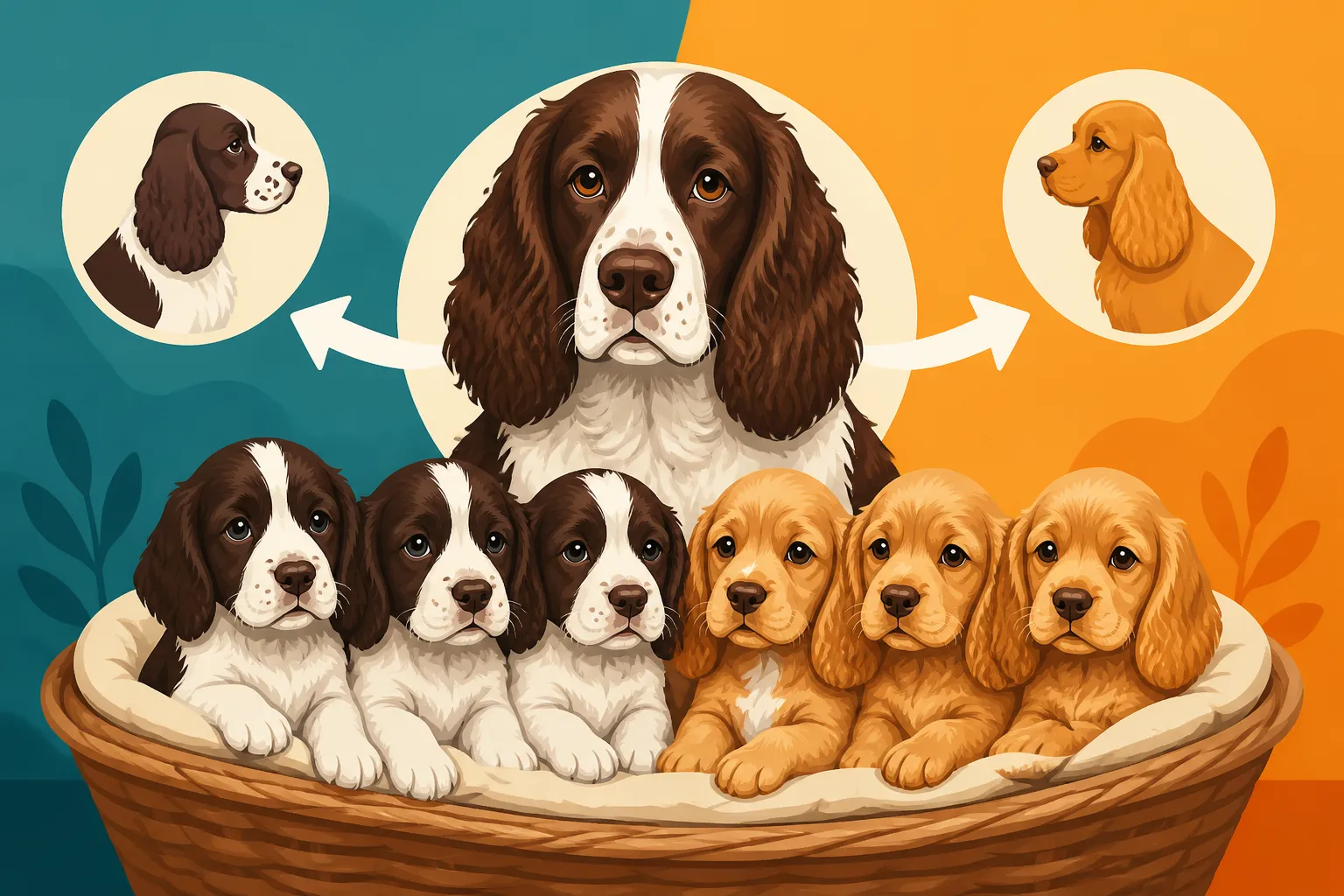
Why Springer and Cocker Puppies Once Came From One Litter
It might seem utterly baffling to imagine a time when puppies destined to become two distinct breeds – the sturdy English Springer Spaniel and the charming English Cocker Spaniel – could actually emerge from the very same litter. Today, these dogs have clear, separate breed standards and often look quite different, yet this historical reality reveals a fascinating chapter in their shared lineage and the arbitrary nature of early breed definitions. This guide will take a deep dive into how this curious phenomenon came to be, exploring their common ancestry and the pivotal moments that led to their eventual, official separation.
The Historical Roots of Spaniels in Britain
To truly understand how Springer and Cocker puppies could once share a whelping box, we first need to travel back in time, long before formal kennel clubs and detailed breed standards even existed. In those days, dogs were bred almost exclusively for their working ability, and their appearance often took a back seat to their performance in the field.
Early Spaniel Types and Their Roles
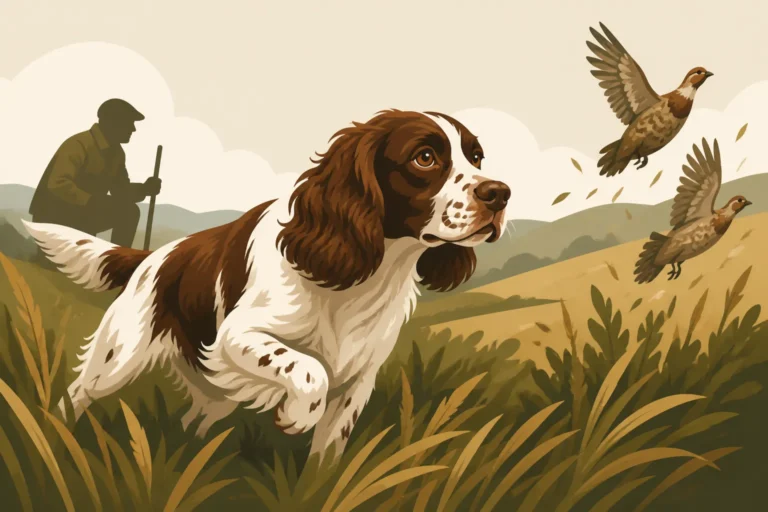
For centuries, spaniel-type dogs have been recorded in Britain, primarily used to flush game for hunters. These dogs weren't initially divided into specific breeds as we know them today; rather, they were categorized by their function and sometimes by their size or the type of game they pursued. Imagine a medieval hunt: you'd have your hounds for tracking, your pointers for locating game, and your spaniels for "springing" or "cocking" birds from dense cover. The term "spaniel" itself likely refers to their Spanish origin, as many hunting dogs were thought to have arrived in Britain from the Iberian Peninsula. These early spaniels were invaluable for locating and driving game birds like pheasant, partridge, and woodcock out from bushes and long grass, making them accessible to nets, falcons, or eventually, firearms. Each estate or region might have had its own slightly distinct "type" of spaniel, refined over generations by local hunters to best suit their specific terrain and game.
They were essentially an all-purpose flushing dog, expected to work tirelessly, often in dense, thorny undergrowth. Their deep chests and powerful legs were necessary for pushing through thickets, while their soft mouths were prized for retrieving any downed birds without damaging them. The emphasis was squarely on a dog that could get the job done, regardless of its precise measurements or the exact color of its coat. There was a general understanding of what made a "good" spaniel, but these were skills, not rigid physical characteristics.
The Lack of Formal Breed Standards
In these early days, there was no concept of a "purebred" dog in the modern sense. Breeders didn't adhere to a written standard detailing ear set, tail carriage, or acceptable markings. Instead, they selected breeding stock based on what mattered most: health, temperament, and, above all, hunting prowess. If a male dog was an exceptional flusher, and a female consistently produced pups with keen noses and boundless energy, they were bred, irrespective of their exact size or whether one was slightly taller than the other. This pragmatic approach meant that a litter could exhibit a wide range of physical characteristics. Some puppies might be larger and more powerfully built, perfectly suited for "springing" larger game or working through heavy cover for extended periods. Others might be smaller, more agile, and better suited for flushing smaller birds like woodcock from tight spaces.
This informal breeding meant that within a single litter, you could truly see the genetic diversity playing out. One pup might mature into a stockier, rangier dog, while its sibling, perhaps taking more after a different grandparent, might be smaller and more compact. Both were valuable working dogs, just suited for slightly different tasks or terrains. The idea of rigid classification simply hadn't taken hold yet, and the practical needs of the hunt dictated what constituted a "good" dog.
Before the Breed Divide: Size as the Defining Factor
Before kennel clubs started drawing lines in the sand, the primary way people distinguished between spaniel types from the same litter was remarkably simple: their adult size and, by extension, the perceived type of game they were best suited to work. It wasn't about distinct genetics as much as it was about physical dimensions.
The "Cocking Spaniel" and "Springing Spaniel" Designations
The names themselves tell a clear story. A "Cocking Spaniel" was a smaller dog, specifically deemed ideal for hunting woodcock, or "cocks," in dense, bushy areas where a larger dog might struggle to maneuver. Their compact size allowed them to dive into thickets, flush the birds, and retrieve them with ease. Think of a nimble, agile little dog perfectly suited to dart through tangled undergrowth. In contrast, a "Springing Spaniel" was a larger, more robust dog. Its job was to "spring" or flush heavier game like pheasants, partridge, and rabbits from open fields or more expansive cover. These dogs needed more power and stamina to cover greater distances and tackle tougher terrain.
It wasn't a case of two different breeds being purposefully crossed. Instead, it was more like sorting apples from oranges after they'd grown on the same tree. The puppies were born from parents who were simply "spaniels," and once they grew a bit, or even when assessing their potential as young adults, their size determined their future job title. A litter born to a pair of excellent flushing spaniels might have three smaller pups that would be called "cockers" and two larger ones that would be called "springers," all without any thought that they belonged to different breeds. It was all about utility and practicality.
How Weight and Size Determined Classification
The actual cut-off point was often a matter of weight. Historically, any spaniel puppy under 25 pounds was typically labeled a "Cocker," while those over 25 pounds were considered "Springers." This was a purely arbitrary but functional distinction. Imagine a hunter looking at a litter of puppies: "That little one will be perfect for woodcock, a real cocker. And his bigger brother? He'll be my springer for pheasant!" The genetic blueprint was shared, but the phenotypic expression of size dictated the label.
This is a stark contrast to how we understand breeds today, where specific characteristics like head shape, coat texture, and ear length are codified. Back then, if it looked like a spaniel and hunted like a spaniel, it was a spaniel, and its weight simply informed its specialization. This fluidity meant that breeders weren't trying to create separate breeds; they were simply working with the natural variations that occurred within their spaniel lines. It wasn't uncommon for a bitch to produce both "types" in different litters, or even in the same litter, if her genetics carried the potential for both larger and smaller offspring. The key takeaway here is that until relatively recently, "Cocker" and "Springer" were more like job descriptions than distinct breeds.
The Great Kennel Club Split of 1902
The dawn of formal dog shows and kennel club registrations in the late 19th and early 20th centuries marked a monumental shift in how dogs were perceived and categorized. This era brought about the formalization of breeds, moving away from purely functional definitions to specific physical standards.
The Emergence of Breed Clubs and Defined Standards
As dog showing gained popularity, enthusiasts began to organize breed clubs. These clubs had a clear mission: to refine and standardize specific types of dogs, preserving their unique characteristics and establishing criteria for what constituted a "pure" example of that type. This meant moving beyond vague descriptions like "good hunter" to precise measurements, desired coat colors, and structural conformation. For spaniels, this was a critical juncture. There was a growing desire to differentiate between the various spaniel types that had, for so long, been lumped together under a single, broad umbrella. Judges needed clear guidelines to evaluate dogs in the show ring, and breeders wanted to know exactly what they should be aiming for.
This push for standardization meant that the old, flexible system of calling a dog a "Cocker" or "Springer" based purely on its weight or the size of its game was no longer sufficient. Breed clubs began to debate and articulate what made an English Springer Spaniel distinct from an English Cocker Spaniel, leading to the creation of detailed written standards. These standards aimed to capture the ideal physical traits and temperament for each breed, solidifying their separate identities. It was a massive undertaking, and not without its controversies and passionate disagreements among breeders who had differing visions for their beloved dogs.
Formal Recognition and the Cocker/Springer Separation
The pivotal moment arrived in 1902 when the English Kennel Club officially recognized the English Springer Spaniel as a distinct breed, separate from the English Cocker Spaniel. This formal recognition drew a definitive line, ending centuries of shared ancestry and overlapping classifications. No longer could a litter contain both Springers and Cockers; once the parents were registered as one breed, their offspring were legally defined as that same breed.
This decision, though logical in the context of creating distinct breeds for showing, effectively severed a long-standing genetic connection. The breeds began to be developed along increasingly divergent lines, with breeders focusing intensely on perpetuating the traits outlined in their respective standards. For the English Springer Spaniel, this meant emphasizing its more powerful build, its characteristic "springing" gait, and a drive suited for broader sweeps of terrain. For the English Cocker Spaniel, the focus was on a more compact frame, a merry disposition, and suitability for denser cover and retrieving smaller game. While their common heritage meant they would always share some fundamental spaniel characteristics, the formal split set them on unique paths, shaping the dogs we recognize today. The 1902 Split That Separated Springer From Cocker was a landmark event.
Physical and Temperamental Divergence Since the Split
Once the official separation occurred, breeders dedicated to either the English Springer Spaniel or the English Cocker Spaniel began to selectively breed for traits that accentuated the differences, leading to distinct physical appearances and temperaments over the decades.
How Show Lines Developed Different Traits
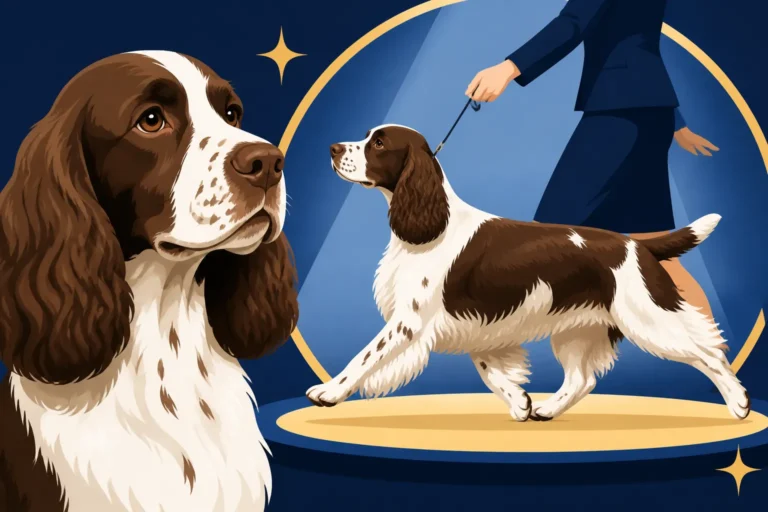
In the show ring, aesthetics became paramount. For the English Springer Spaniel, show breeders began to favor a heavier bone structure, a fuller coat with more feathering, and a somewhat more laid-back temperament suitable for a family pet and conformation ring dog. Their heads became squarer, their muzzles broader, and their overall appearance became more substantial. These dogs were bred for beauty and elegance, often with less emphasis on the intense hunting drive of their field-bred cousins. The aim was to produce a dog that conformed perfectly to the written breed standard, which gradually diverged from the functional needs of a working gundog.
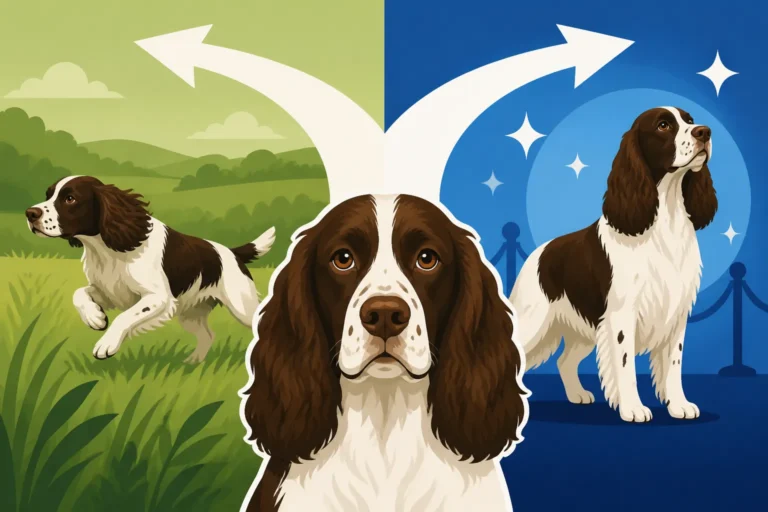
The coat, for instance, became a hallmark of the show Springer. Long, flowing feathering on the legs, chest, and tail became highly prized, requiring significant grooming to maintain. This type of coat, while stunning in the ring, would be a major hindrance in dense briars and thorny cover where a working dog needs to move freely and shed debris easily. Similarly, while still possessing a strong prey drive, the sheer intensity of that drive was often moderated to produce a more tractable companion for a domestic setting. This selective breeding gradually widened the gap not just between Springers and Cockers, but also internally, creating a clear distinction between The Field Bred Springer Spaniel Costs Less and Asks More and the show-bred Springer.
How Field Lines Specialized Even Further
Meanwhile, dedicated field breeders, often those who continued to hunt their dogs, concentrated solely on working ability. They bred for stamina, speed, intelligence, a keen nose, and an unwavering desire to flush and retrieve game. Field-bred Springers typically have lighter bone, shorter, coarser coats with minimal feathering, and a more athletic, streamlined appearance. Their heads are often narrower, their muzzles finer, and their overall build is designed for agility and endurance in demanding conditions. These dogs are truly athletes, bred for hours of vigorous work in varied terrain.
Their temperament also reflects this specialization: field Springers possess an incredible drive and an almost inexhaustible energy supply. They are intensely focused on their work and require significant mental and physical stimulation to be happy and well-adjusted. The differences in appearance between a field-bred and a show-bred Springer can be so striking that many people unfamiliar with the breed assume they are entirely different types of dogs. This divergence, while effective in producing highly specialized dogs for their respective purposes, also highlights just how far the two lines have drifted from their common, generalized "spaniel" ancestor that once produced both small and large pups in the same litter. How Different the Two Springer Spaniel Types Look is truly remarkable.
The Enduring Confusion and Shared Heritage
Even today, well over a century after their formal separation, the close relationship between English Springer Spaniels and English Cocker Spaniels can lead to confusion for new owners and casual observers alike. Their shared history continues to influence perceptions.
Modern Perceptions and Misconceptions
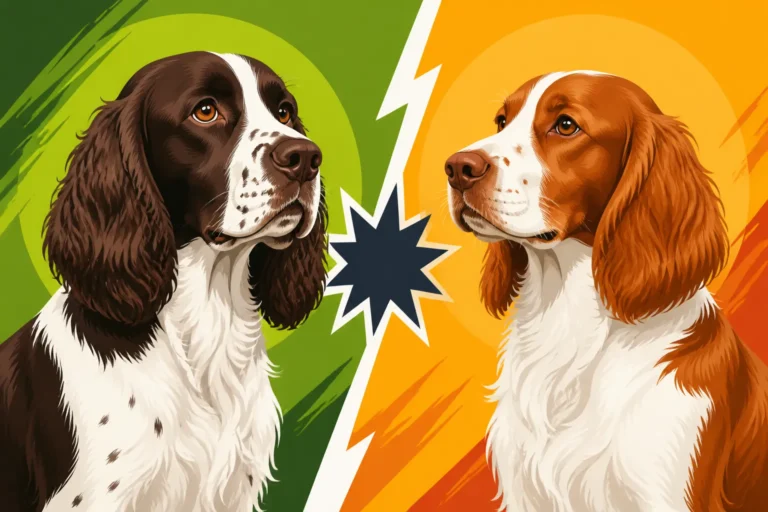
One of the most common misconceptions revolves around size. Many people mistakenly believe that an English Cocker Spaniel is simply a "miniature" English Springer Spaniel, or that a larger Cocker might actually be a small Springer. While there's an undeniable resemblance in their general appearance – both are medium-sized, long-eared, expressive spaniels – their breed standards define distinct size ranges. English Cockers are generally smaller and more compact, typically weighing less and standing shorter at the shoulder. Springers are consistently larger and more powerful. However, a particularly large Cocker from working lines might sometimes approach the size of a smaller show-bred Springer, blurring the lines for the untrained eye.
Adding to the confusion is the existence of the American Cocker Spaniel, which is a distinctly different breed from the English Cocker Spaniel, having been developed in the US and possessing a much more profusely coated and different head type. This often leads to a tangled web of identification, especially when people are trying to distinguish between an English Springer and an English Cocker. The key is to remember that while they share a lineage, they are now two established breeds with their own characteristics, meticulously defined by breed clubs and registries like the AKC. Understanding Why an English Cocker Is Not a Small Springer Spaniel is crucial.
What Their Shared History Means for Today's Owners
For prospective owners, understanding this shared history is more than just a fun historical fact; it offers valuable insight into the inherent traits these breeds carry. Both Springers and Cockers share a foundational spaniel temperament: they are typically intelligent, eager to please, loyal, and possess a strong desire to work. This means they are often highly trainable and thrive on engagement with their human companions. Their boundless energy and need for mental stimulation are direct legacies of their working origins.
However, their subsequent divergence means that an English Springer Spaniel, particularly a field-bred one, will generally require significantly more vigorous exercise and a more demanding "job" than an English Cocker Spaniel. An owner hoping for a more sedate companion might find a field Springer to be overwhelming, whereas a person seeking a high-octane sporting partner might find a show Cocker lacking in drive. Knowing that they once came from the same gene pool helps explain these similarities in core temperament while also highlighting why their paths diverged to create dogs with subtly, yet significantly, different needs. This is why it's so important to research which type of English Springer Spaniel is right for you, or if perhaps an English Cocker is a better fit.
The Legacy of Shared Genes: Health and Instincts
Despite their eventual split and subsequent development along different lines, the deep genetic connection between English Springer Spaniels and English Cocker Spaniels means they still share many fundamental characteristics, including predispositions to certain health issues and core instincts.
Common Health Concerns Across Both Breeds
Because they emerged from the same genetic pool, Springers and Cockers share some vulnerabilities that prospective owners should be aware of. Ear infections, for instance, are incredibly common in both breeds due to their pendulous, heavily feathered ears that can trap moisture and debris. This environment creates a perfect breeding ground for bacteria and yeast. Regular cleaning and vigilance are essential for both breeds. Why a Springer Spaniel's Ears Are Never Quite Healthy is a common lament among owners, and Cockers share this burden. Eye conditions, too, can sometimes overlap. While specific genetic mutations might differ, a general predisposition to various ocular issues exists across many spaniel breeds.
Both breeds can also be prone to certain orthopedic issues, such as hip and elbow dysplasia, although responsible breeders meticulously screen for these conditions. Other shared concerns might include certain types of cancers or autoimmune diseases, though the prevalence can vary between breeds and even between field and show lines. This is precisely why reputable breeders for both Springers and Cockers emphasize comprehensive health testing for breeding stock. The knowledge of their shared genetic history provides a roadmap for understanding potential health challenges, underscoring the importance of choosing a puppy from health-tested parents.
Here's a quick look at some general health comparisons between the two breeds, remembering that individual lines and genetics play a massive role:
| Condition | English Springer Spaniel (General Tendency) | English Cocker Spaniel (General Tendency) | Shared Genetic Link |
|---|---|---|---|
| Ear Infections | Very common due to ear structure | Very common due to ear structure | High |
| Hip Dysplasia | Common, screened by breeders | Common, screened by breeders | High |
| Eye Conditions | PRA, Retinal Dysplasia, Glaucoma | PRA, Cataracts, Glaucoma | High |
| PFK Deficiency | Known genetic issue in Springers | Less common, but still a spaniel trait | Moderate |
| Rage Syndrome | Known, but rare, issue in Springers | Known, but rare, issue in Cockers | Moderate |
| Allergies (Skin/Food) | Common | Common | High |
| Hypothyroidism | Possible | Possible | High |
Instinctual Traits That Remain
Beyond health, the shared genes manifest strongly in their instinctual behaviors. Both Springers and Cockers are "flushing spaniels" at heart. This means they naturally quarter—a systematic zigzag pattern of searching for game—when off-leash. They use their incredible noses to sweep an area, flushing birds from cover. This instinct is deeply ingrained and can be seen even in pet-only dogs who might enthusiastically "quarter" your backyard or a local park. Their strong prey drive and desire to retrieve are also powerful shared instincts, which is why a game of fetch or using retrieve-focused toys from Chewy can be such a satisfying activity for either breed.
They also share a "soft mouth," a trait critical for retrieving game without damaging it. This means they naturally pick up and carry objects gently, making them excellent retrieve partners whether for a tennis ball or a pheasant. Their biddable nature and eagerness to please are also strong common threads, stemming from centuries of working closely with humans. While a field Springer might display these instincts with more intensity and endurance, the underlying drive and method of work are unmistakably similar to their Cocker cousins. Understanding these shared instincts is key to providing either breed with a fulfilling life, recognizing that they need outlets for these deeply ingrained behaviors. Why a Springer Spaniel Puts Its Nose to the Ground and Vanishes is an instinct shared by Cockers too.
Appreciating the Unique Qualities of Each Breed
Today, the English Springer Spaniel and the English Cocker Spaniel stand as distinct breeds, each celebrated for its unique attributes and well-established standards. While their shared past is a fascinating tale, it’s important to appreciate why their current distinctions matter.
Why the Distinction Matters Now
The formal distinction between Springers and Cockers isn't just a bureaucratic detail; it reflects genuine differences in size, build, coat type, and, often, energy levels and working style. For breeders, these distinctions are crucial for maintaining the integrity and specific characteristics of each breed. A Springer breeder is aiming for a dog that embodies the Springer standard, while a Cocker breeder is focused on the Cocker ideal. This targeted breeding ensures that each breed continues to excel in its specific roles, whether that's flushing larger game over vast distances or navigating dense undergrowth for woodcock.
For owners, recognizing these differences is paramount to choosing the right companion. An English Springer Spaniel, especially from working lines, will be a larger, more powerful, and significantly more energetic dog than an English Cocker Spaniel. This means different exercise requirements, different grooming needs (think What a Full Groom on a Show Springer Spaniel Costs versus a field Cocker), and potentially different suitability for various living situations. The choice isn't just about aesthetics; it's about matching a dog's inherent needs and capabilities with your lifestyle and expectations. Understanding the distinct temperament and physical demands allows for a more harmonious partnership and prevents potential mismatches that could lead to frustration for both dog and owner.
Choosing Between a Springer and a Cocker Today
When faced with the choice between an English Springer Spaniel and an English Cocker Spaniel, potential owners need to honestly assess their lifestyle, living situation, and what they are looking for in a canine companion. If you're an active outdoors enthusiast, perhaps a hunter or someone who enjoys long hikes and runs, and you have the time and energy to dedicate to training and exercise, a Springer Spaniel might be a perfect match. They thrive on having a "job" and will eagerly join you on adventures, often carrying a favored toy from Chewy. Their robust build and boundless stamina make them excellent partners for vigorous activities. How Far a Springer Spaniel Can Hike is impressive.
However, if you're seeking a slightly smaller, more compact companion who still loves to be active but perhaps doesn't need quite the same intensity of daily exercise, an English Cocker Spaniel could be ideal. They are often described as "merry" and affectionate, perfectly happy with vigorous daily walks, games in the yard, and plenty of cuddle time on the sofa. While they still possess that strong spaniel drive, it often comes in a slightly smaller, more manageable package for many families. Both breeds are highly intelligent and trainable, eager to please, and make wonderful, loving pets for the right homes. The key is to avoid making assumptions based solely on their shared past and instead focus on the distinct qualities each breed has developed over the last century.
Disclaimer
This article is for general informational purposes only and does not constitute professional advice. Laws, prices and regulations vary by location and change over time. Consult a qualified professional for guidance on your specific situation.