Keeping a Springer Spaniel at a Working Weight
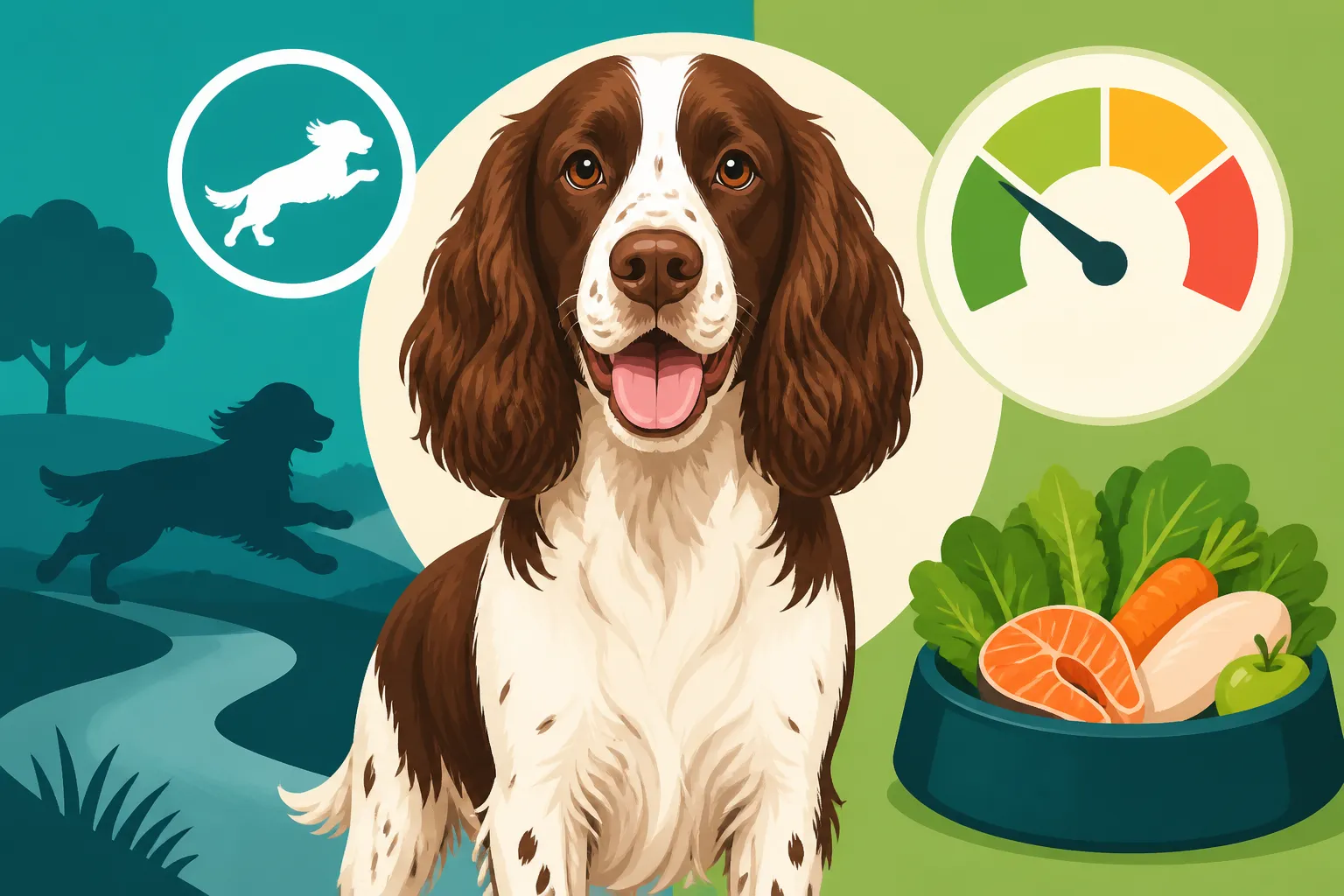
It can be incredibly frustrating to look at your beloved English Springer Spaniel and realize they're carrying a few extra pounds. We all want our dogs to be happy and healthy, but with their boundless energy and often insatiable appetites, maintaining that lean, athletic physique can feel like a constant battle. This comprehensive guide will help you understand the unique metabolic needs of the Springer Spaniel and provide practical strategies for keeping them at their optimal working weight, whether they're flushing game or simply being your incredibly active family companion.
Understanding the Springer Spaniel's Metabolism and Energy Needs
English Springer Spaniels are built for action, bred over centuries to work tirelessly in the field. This heritage gives them an incredible drive and metabolism, but it also means their bodies are finely tuned to burn a lot of calories. When that activity level isn't met, or when food intake isn't adjusted, those extra calories quickly turn into extra weight.
The Energetic Spaniel Predisposition
Let's be real, your Springer Spaniel probably doesn't have an "off" switch. These dogs were developed to "spring" game from dense cover for hunters, requiring bursts of speed, endurance, and constant alertness. This means they naturally possess a very high metabolic rate, needing a lot of fuel to power their adventures. It's in their DNA. Even if your Springer has never seen a pheasant in its life, that intrinsic wiring for activity is still very much there. They're not content with a leisurely stroll around the block; they crave purpose and intensity.
This inherent energy is one of the most endearing qualities of the breed, but it's also where many owners inadvertently run into trouble with weight management. The difference between a field-bred Springer Spaniel and a show-bred one can be quite pronounced in terms of raw drive and physical build, affecting their daily energy expenditure. How a Field Bred Springer Spaniel Differs in Drive explains this in more detail. Even show lines, while perhaps a bit more "sedate" than their field cousins, are still spaniels through and through, carrying significant energy reserves that need an outlet. If you've ever thought your Springer Spaniel just needed a "regular walk," you might be underestimating their deep-seated need to move and explore.
Why They Can Gain Weight Easily
Given their high energy, it might seem counterintuitive that Springers can gain weight easily. The truth is, it's a delicate balance. If their demanding exercise requirements aren't consistently met, or if their diet isn't precisely calibrated to their actual energy output, weight creeps on. A Springer Spaniel that's under-exercised is like a high-performance engine running on too much fuel and not enough road time—it's going to backfire, or in this case, pack on the pounds. They might look fit and trim beneath all that beautiful feathering, but a closer examination often tells a different story.
Another significant factor is their incredible enthusiasm for food and their eagerness to please. Springers are notoriously food-motivated, which makes them brilliant to train but also makes them masters of begging. A wistful look from those soulful eyes can melt even the strongest resolve, leading to extra treats, bits of table scrap, or slightly oversized meal portions. These small indulgences, compounded daily, add up to a significant caloric surplus for a dog whose active lifestyle might not be as demanding as their ancestors' was. They aren't always great at self-regulating their intake, so it's up to us to be their nutritional gatekeepers.
Assessing Your Springer Spaniel's Current Weight
Before you can make any changes, you need to honestly evaluate where your Springer Spaniel stands. It's easy to dismiss a bit of extra fluff, especially with their glorious coats, but even a few extra pounds can put undue strain on their joints and overall health.
The Visual and Manual Check
The simplest way to start is with a hands-on assessment. Stand above your Springer Spaniel and look down: do you see a distinct waist or an hourglass figure? Or do they look more like a sausage? Next, run your hands along their sides, feeling for their ribs. You should be able to feel their ribs easily, like feeling the knuckles on your hand, without having to press hard. If you have to dig your fingers in to locate them, or if you can't feel them at all, your dog is likely overweight.
Now, move your hands to their spine. You should be able to feel the bony prominences of the vertebrae, again, without seeing them overtly. Then check their tail base – if there's a significant pad of fat at the base of the tail, that's another red flag. Finally, look at your dog from the side. There should be a noticeable "tuck" up from their abdomen to their hind legs, not a straight line or, worse, a sagging belly. This simple, routine check can be done weekly and is an invaluable tool for early detection of weight gain or loss.
Body Condition Scoring for Accuracy
For a more objective measure, veterinarians often use a Body Condition Score (BCS) system. This usually ranges from 1 to 5, where 1 is emaciated and 5 is obese, or a more detailed 1 to 9 scale. An ideal working weight for a Springer Spaniel typically falls around a 4 or 5 on a 9-point scale, meaning they are lean and athletic. You want them to have defined muscle tone and minimal fat cover.
Here’s a simplified guide to help you get started with Body Condition Scoring at home:
| Score Category | Ribs | Waist (Top View) | Abdominal Tuck (Side View) | Fat Cover (Tail Base/Spine) | Overall Appearance |
|---|---|---|---|---|---|
| 1: Emaciated | Ribs, spine, pelvis easily visible | Extreme hourglass, severe tuck | Severe tuck, bony | None | Severe muscle loss, very gaunt |
| 2: Very Thin | Ribs easily visible, some muscle loss | Very pronounced hourglass | Pronounced tuck | Minimal | Ribs, hips, shoulders visible |
| 3: Ideal Weight | Ribs easily palpable, minimal fat cover | Well-proportioned hourglass | Clear abdominal tuck | Minimal, smooth | Athletic, well-muscled, energetic |
| 4: Overweight | Ribs palpable but with some fat cover | Noticeable waist, but less defined | Slight abdominal tuck | Moderate, easily pinchable | Rounder appearance, losing definition |
| 5: Obese | Ribs difficult to feel under thick fat | No waist, broad back | No tuck, sagging abdomen | Significant, thick pad | Heavy fat deposits, no visible muscle definition |
Understanding where your dog falls on this scale provides a clear benchmark. Don't be afraid to ask your vet during a routine check-up to assess your dog's BCS and discuss an ideal target. They can offer an expert perspective and help you create a plan if needed.
Common Misconceptions About a Healthy Springer Weight
One of the biggest hurdles to maintaining an ideal weight is our human perception. We often equate a slightly heavier dog with a "well-fed" or "loved" dog. Many owners believe a little extra padding is harmless, or even desirable, especially during colder months. However, for an active breed like the Springer Spaniel, excess weight can lead to a host of problems. It exacerbates joint issues like hip and elbow dysplasia, puts extra strain on their heart and lungs, and can even shorten their lifespan. Whether a Springer Spaniel's Hip Score Predicts Arthritis highlights the importance of joint health.
Their beautiful, flowing coats, particularly in show lines, can also be quite deceiving. All that wonderful feathering can hide a multitude of sins, making it hard to visually detect weight gain until it's quite advanced. You might think your dog is perfectly healthy until you give them a proper pat-down. This is why regular hands-on checks are so crucial. How to Spot a Heavy Springer Spaniel Under Feathering is a great resource if you're struggling to tell what's going on under all that fur. Don't let their fluffy appearance fool you; lean is mean and healthy when it comes to a Springer Spaniel.
Tailoring Their Diet to Activity Levels
This is where the rubber meets the road. A Springer Spaniel's diet needs to be a dynamic thing, adjusting to their activity. You wouldn't feed an Olympic athlete the same diet as someone working a desk job, and the same principle applies to your dog.
Feeding a Working Springer Spaniel
If your Springer Spaniel is actively participating in hunting, field trials, agility, or any high-intensity activity for several hours a day, they are a working athlete. Their caloric needs will be significantly higher than a pet Springer. These dogs require a diet formulated for performance, typically higher in protein and fat, to sustain their energy levels and aid in muscle recovery. Look for formulas specifically labeled "performance," "active dog," or "sporting dog."
On days when your Springer is working hard, you might need to increase their portion size or even add an extra small meal, perhaps mid-day, to keep their tank full. How Much a Working Springer Spaniel Should Eat varies greatly depending on the intensity and duration of their work. Hydration is also paramount. Ensure they have access to fresh water at all times, and consider offering water with electrolytes during or after prolonged exertion. A dog can easily become dehydrated in the field, which impacts performance and overall health. Monitoring their energy levels, coat condition, and stool quality will help you fine-tune their diet to their specific working demands.
Feeding a Pet Springer Spaniel
Even if your Springer Spaniel isn't flushing birds, they still need significant exercise, but their caloric intake won't be as high as a true working dog. For a pet Springer enjoying daily vigorous walks, runs, and play sessions, a high-quality adult maintenance formula is usually appropriate. The key here is precise portion control. Don't just "eyeball" it; use a measuring cup and, ideally, a kitchen scale to ensure you're giving them the exact amount of food recommended by your chosen brand, or as advised by your vet for their target weight.
Many owners find that splitting their Springer's daily ration into two meals helps manage their appetite and can reduce the risk of bloat, though Springers are not as prone to this as some deep-chested breeds. It also means they're not waiting as long between meals, which can curb excessive hunger. Remember that every dog is an individual; a recommended portion on a bag is just a starting point. Your dog might need slightly more or less based on their metabolism and daily activity. If your Springer seems to have a sensitive stomach or you suspect allergies might be contributing to other health issues, discussing Whether a Limited Ingredient Diet Costs a Springer Spaniel Owner More with your vet might be a good idea, as diet can impact many aspects of their well-being.
The Importance of Quality Food
The type of food you choose for your Springer Spaniel matters immensely. Not all dog foods are created equal, and cheaper brands often use fillers and lower-quality ingredients that offer less nutritional value. Look for foods where a named meat (like "chicken" or "salmon") is the first ingredient, followed by whole grains or easily digestible carbohydrates, and healthy fats. Avoid artificial colors, flavors, and preservatives.
Consider exploring options from reputable brands. Stores like Chewy offer a vast selection of high-quality kibbles, wet foods, and even fresh-frozen options. Brands like Ollie specialize in human-grade fresh dog food, which some owners find helps with weight management due to its digestibility and nutrient density. While fresh food can be a bigger investment, the visible health benefits in terms of coat, energy, and weight can be substantial. Ultimately, a nutrient-dense diet means your Springer feels fuller and more satisfied on fewer calories, supporting their working weight goals.
The Role of Exercise in Weight Management
Diet is half the equation, and exercise is the other, equally critical, half. For a Springer Spaniel, exercise isn't just about burning calories; it's about fulfilling their breed-specific needs for mental and physical stimulation.
Daily Exercise: More Than Just a Walk
A Springer Spaniel thrives on activity, and a simple leash walk around the block, while better than nothing, often won't cut it. They need opportunities to run, sprint, swim, and explore off-leash in safe, designated areas. Think about their original purpose: springing game from cover. This requires bursts of speed, quick turns, and sustained effort. Aim for at least one to two hours of vigorous exercise daily, ideally broken into multiple sessions.
Activities like retrieving a bumper in an open field, swimming in a lake or river, or joining you for a run are fantastic for their physical conditioning. How Much Exercise a Field Bred Springer Spaniel Needs will be significantly more intense than How Much Exercise a Show Bred Springer Spaniel Needs, but even the latter still requires substantial activity. Beyond pure physical exertion, mental stimulation is key. Scent work, where they use their incredible noses to find hidden treats or toys, is incredibly tiring for them. Don't underestimate the power of a good game of fetch; Whether Fetch Satisfies a Springer Spaniel can depend on the intensity and duration of the game, so make sure it's a real workout.
Structured Training as Calorie Burn
Formal training isn't just for obedience; it's a fantastic way to burn calories and build muscle. Gundog training, even if you never intend to hunt, provides immense physical and mental enrichment. Think about all the stopping, sitting, retrieving, and quartering commands – each one requires energy and focus. Agility courses are another excellent option; Whether a Springer Spaniel Can Do Agility is a resounding yes, and they often excel at it. The weaving, jumping, and tunnel work combine cardio with problem-solving, creating a truly exhausted (in a good way!) dog.
Even regular obedience classes, trick training, or engaging with puzzle toys can help. A dog that is mentally stimulated is often calmer and less prone to destructive behaviors that can stem from boredom, and the brain work itself burns calories. Consider enrolling in local classes or working with a professional trainer to introduce new sports or refine existing skills. The more varied and engaging their activities, the more likely your Springer is to maintain a healthy weight and avoid boredom-induced snacking.
Managing Treats and Extra Calories
This is where many well-intentioned owners unknowingly sabotage their Springer Spaniel's weight management efforts. Treats and extra calories add up incredibly fast, often without us even realizing it.
The Treat Conundrum
Treats are invaluable tools for training and rewarding good behavior. We love to give them, and our dogs love to get them. But they are also calorie bombs. A handful of small training treats throughout the day might seem insignificant, but for a medium-sized dog like a Springer, it can quickly account for a substantial portion of their daily caloric intake. If you're using treats frequently, you need to adjust their main meals accordingly.
The best strategy is to be mindful of both the quantity and type of treats you offer. Opt for low-calorie, healthy alternatives whenever possible. Small pieces of raw carrot, green beans, apple slices (without seeds), or even air-popped plain popcorn can be fantastic, guilt-free rewards. If you're using commercial treats, break them into tiny pieces. A small pea-sized crumb is often just as rewarding as a whole treat, especially for a highly motivated Springer. Always factor the calories from treats into their total daily intake, and if you're engaging in a heavy training session, consider reducing their dinner portion slightly.
Avoiding Table Scraps and Human Food
This is a tough one for many of us. Our dogs are part of the family, and it feels mean to deny them a morsel from our plates. However, human food, even seemingly healthy options, can be incredibly high in calories, fat, and sodium for a dog's system. A single bite of cheese or a piece of cooked meat might seem tiny to us, but relative to a dog's size and caloric needs, it can be equivalent to eating an entire dessert. Moreover, many human foods are toxic to dogs (onions, garlic, grapes, chocolate, xylitol, etc.), and even non-toxic fatty foods can cause pancreatitis.
Establishing a strict "no table scraps" rule is crucial for weight management and overall health. It also prevents begging behavior, which can be annoying for you and your guests. Instead of sharing your meal, save some of your dog's daily kibble ration to use as "treats" while you're eating, or offer them a safe, low-calorie dog chew to redirect their attention. Consistency is key here; once you start, it's hard to stop.
Measuring and Monitoring
Precision is your friend when it comes to dog nutrition. Instead of scooping kibble by sight, invest in a proper measuring cup and use it for every meal. Better yet, get a kitchen scale (Amazon has plenty of affordable options) and weigh their food. The density of kibble can vary, meaning a "cup" can actually hold different amounts depending on the brand and how it's scooped. Weighing ensures absolute accuracy.
Consider keeping a food diary for a week or two. Document every single thing your Springer Spaniel eats: every meal, every treat, every lick of peanut butter from a Kong. This exercise can be incredibly eye-opening and help you identify hidden sources of calories that might be contributing to weight gain. Once you have a clear picture, you can make informed adjustments to their diet and treat regimen. This meticulous approach, combined with regular body condition checks, creates a robust system for keeping your Springer Spaniel at their ideal working weight.
Addressing Underlying Health Issues
Sometimes, despite your best efforts with diet and exercise, a Springer Spaniel might still struggle with weight management. In these cases, it's crucial to consider whether an underlying health condition might be at play.
When Weight Gain Isn't Just Diet and Exercise
While most weight issues stem from an imbalance of calories in vs. calories out, there are medical conditions that can impact a dog's metabolism and lead to weight gain. One of the most common in Springer Spaniels is hypothyroidism, where the thyroid gland doesn't produce enough hormones. Signs a Springer Spaniel's Thyroid Has Failed can include lethargy, a dull coat, skin problems, and, yes, unexplained weight gain even on a normal diet. If your dog is packing on pounds despite diligent management, thyroid testing should be one of the first things your vet investigates.
Other conditions, though less common, can also contribute. Cushing's disease, for example, which is caused by an overproduction of cortisol, can lead to increased appetite, a pot-bellied appearance, and muscle weakness. Additionally, conditions that limit activity, such as arthritis or other joint pain, can indirectly cause weight gain. An arthritic dog moves less, burns fewer calories, and might even be put on medications that affect their metabolism or appetite. Arthritis in an Older Springer Spaniel can make exercise painful, creating a vicious cycle where weight gain worsens the arthritis, and the arthritis makes it harder to lose weight.
The Importance of Regular Vet Check-ups
This is why regular veterinary check-ups are non-negotiable. Your annual physical exam is not just about vaccinations; it's an opportunity for your vet to assess your Springer's overall health, including their weight and body condition. They can catch subtle changes before they become major problems. If you've noticed unexplained weight gain, lethargy, changes in appetite, or any other concerning symptoms, don't wait for the annual check-up – schedule an appointment promptly.
During the visit, be prepared to discuss your dog's diet, exercise routine, and any changes you've observed. Your vet might recommend blood tests, particularly for older dogs or those exhibiting other symptoms, to check thyroid function, liver and kidney values, and other metabolic indicators. What Changes in an Old Springer Spaniel's Care can be quite significant, and often includes monitoring for conditions that impact weight. Catching and treating these underlying medical conditions is paramount to getting your Springer Spaniel back to a healthy, optimal weight and ensuring they can continue to live their best, most active life.
Disclaimer
This article is for general informational purposes only and does not constitute professional advice. Laws, prices and regulations vary by location and change over time. Consult a qualified professional for guidance on your specific situation.