Settling a Rehomed Adult Springer Spaniel
Bringing a rehomed adult English Springer Spaniel into your home is an incredibly kind and selfless act, but let's be honest, it often comes with a whole cocktail of emotions – excitement, hope, and usually a healthy dose of anxiety. You want so desperately for them to settle in and thrive, but you’re also wondering if you’re doing everything right, especially when they’re displaying behaviors that feel a little confusing or even concerning. This guide is here to walk you through the often-bumpy but ultimately rewarding journey of helping your new Springer Spaniel feel safe, loved, and truly at home with you.
The Initial Days: Understanding Their World Has Just Been Flipped Upside Down
Imagine waking up one day and everything you know is gone. Your bed, your routine, your familiar faces – replaced by new smells, new people, and new rules. That’s pretty much what your rehomed Springer Spaniel is experiencing. They've landed in a completely foreign environment, and while it might be a vast improvement from their previous situation, it's still a huge shock to their system. Expecting immediate tail wags and perfect obedience is simply unrealistic and will only lead to frustration for both of you.
Expecting Fear, Confusion, and Withdrawal
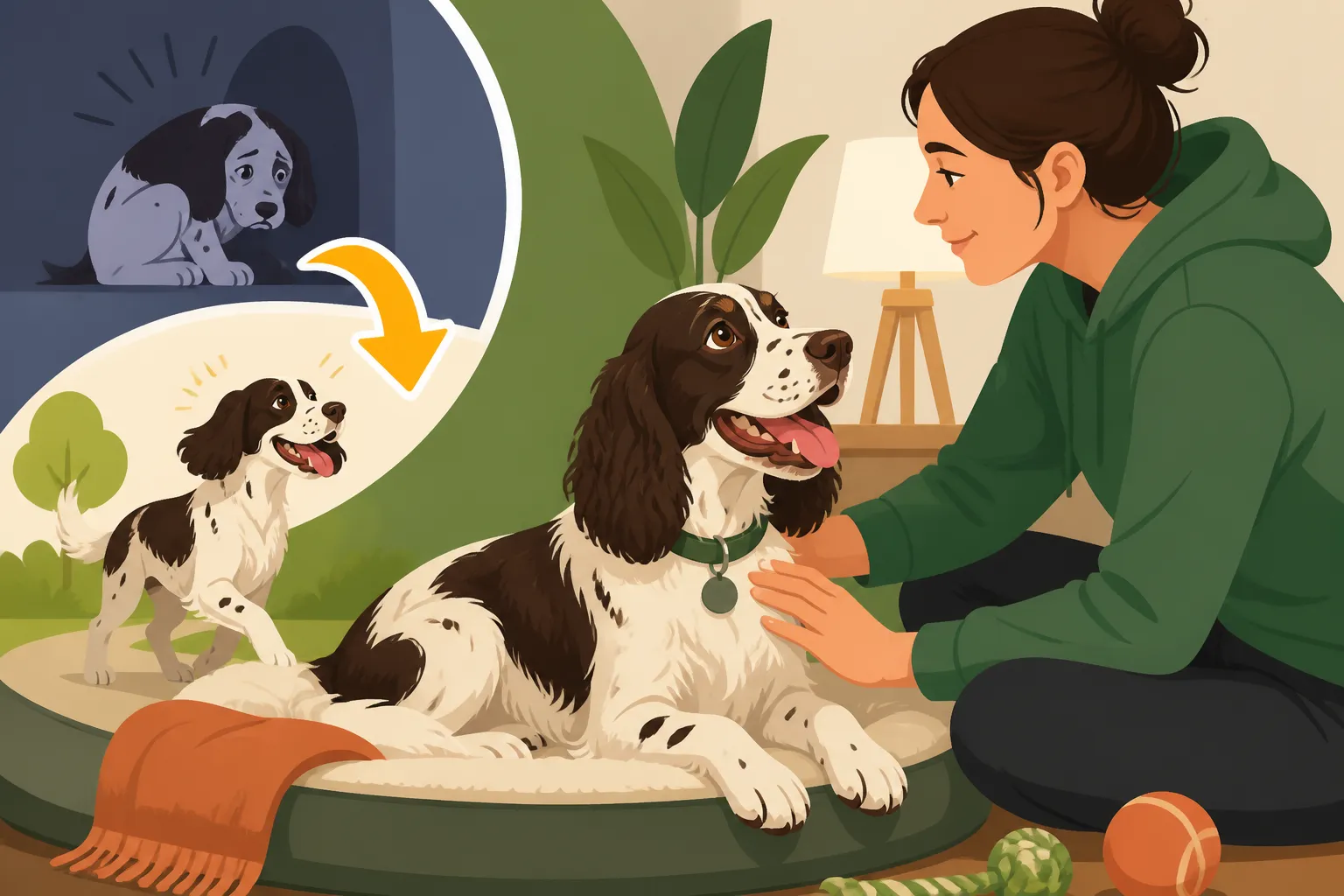
It’s completely normal for a newly rehomed Springer Spaniel to be reserved, timid, or even a bit overwhelmed for the first few days, weeks, or sometimes even longer. They might hide, refuse food, not want to play, or seem generally shut down. This isn't a reflection of you or your home; it's a natural coping mechanism. They're processing a tremendous amount of change and trying to figure out where they stand. Some might be too nervous to even eat much initially, or they might be prone to accidents indoors despite being house-trained in their previous home. This isn't naughtiness; it's stress.
Think about it from their perspective: every sound, every shadow, every new face is a potential threat or something they need to analyze for safety. They might be quiet because they're observing, trying to understand the rhythm of your household before they fully engage. Don't push them to interact more than they're comfortable with. Give them space and time, and let them come to you on their terms. This initial period of observation is crucial for them to build a mental map of their new territory. Some dogs seem to bounce back quickly, while others take weeks or even months to truly relax. Patience, above all else, is your most valuable tool during this phase. If you've adopted an older dog, you might wonder Whether an Older Springer Spaniel Is Easier to Adopt; often, they come with a settled personality but can still struggle with new environments.
The Importance of a "Honeymoon Period"
Many people talk about the "3-3-3 rule" or a "honeymoon period" when adopting a dog, and it's a really helpful concept to keep in mind for your Springer. It roughly outlines the progression you might see:
- First 3 days: Your Springer is likely in "survival mode." They might be withdrawn, scared, not eating much, or too overwhelmed to show their true personality. They're just trying to figure out if they're safe.
- First 3 weeks: They're starting to decompress. You might see more of their personality emerge, and they're learning your routine. Behavioral issues that were masked by fear might start to appear as they gain confidence, like Separation Anxiety in a Springer Spaniel or testing boundaries.
- First 3 months: By now, they should be feeling much more at home. They understand the routine, have bonded with you, and their true self is shining through. This is when you'll truly get to know your new family member.
It's not a hard and fast rule, of course. Some Springers will settle much faster, especially if they came from a stable foster home. Others, particularly those with a more traumatic past or a naturally anxious disposition, might take longer. The key is to manage your expectations and celebrate the small victories. The first time they voluntarily come for a cuddle, the first full meal they eat enthusiastically, the first time they play with a toy – these are all huge steps forward.
Setting Up Their Safe Haven
One of the most immediate and impactful things you can do for your rehomed Springer Spaniel is to provide them with a designated safe space where they can retreat and feel secure. This isn't just a luxury; it's a necessity for a dog grappling with a new world.
A crate, for example, can become their personal den. Drape a blanket over it to make it feel cozy and private. Place it in a quiet corner of a main living area, not isolated in a laundry room, so they can still feel part of the family without being directly in the fray. Furnish it with a soft bed and perhaps a chew toy. Never use the crate for punishment; it should always be a positive place. If your Springer isn't used to a crate, introduce it slowly with positive associations, tossing treats inside. Many online resources, like those offered by BAXTER & Bella, provide excellent guides on positive crate training techniques that can be really helpful.
Beyond the crate, consider areas in your home where they can simply relax without constant human interaction. A dog bed in a quiet corner, or even just a blanket on the floor under a table, can provide a sense of security. Make sure their food and water bowls are easily accessible and in a low-traffic area where they won't feel rushed or threatened. For the first few days, you might even consider feeding them in their crate if they're particularly timid. Having a familiar scent, like a blanket from their previous home or foster, can also provide comfort. You can find comfortable dog beds and crate accessories easily on Amazon.
Building a Foundation of Trust and Routine
Springers, like many dogs, thrive on predictability. A consistent routine helps them understand what to expect, which drastically reduces anxiety. Establishing trust isn't about grand gestures; it's about countless small, positive interactions over time.
Establishing Predictable Schedules
From day one, try to stick to a consistent schedule for feeding, potty breaks, walks, and quiet time. This helps your Springer learn the rhythm of your home and what is expected of them. For instance, if they know breakfast is always at 7 AM, and the first walk follows shortly after, they won’t spend their morning wondering when their basic needs will be met.
| Activity | Consistency is Key | Why it Helps |
|---|---|---|
| Feeding | Same time, same place, twice a day. | Reduces anxiety about food security; aids digestion. |
| Potty Breaks | Immediately after waking, after meals, before bed, regularly throughout the day. | Prevents accidents, builds confidence in house training, reinforces routine. |
| Walks | Daily at similar times, even if short. | Provides exercise, mental stimulation, and a predictable outlet for energy. |
| Playtime | Scheduled sessions, often after walks or potty breaks. | Builds bond, releases energy, teaches appropriate play. |
| Quiet Time | Dedicated periods for rest, often in their safe space. | Teaches self-settling, prevents overstimulation, and allows for decompression. |
A predictable routine helps them understand that you are reliable and that their needs will be met. This consistency lays the groundwork for them to start feeling truly safe and secure in your care. Without this, a Springer, known for their sensitivity, can easily become stressed. Many Springers struggle with being left alone, and a solid routine can help manage time left alone (How Long a Springer Spaniel Can Be Left Alone) by building their confidence.
Gentle Interactions and Positive Reinforcement
Springers are known for being soft dogs who genuinely want to please, but they can also be quite sensitive. Shouting or harsh corrections can be incredibly counterproductive, especially with a dog that’s already feeling vulnerable. You want to be the source of all good things, not fear.
Focus on positive reinforcement. When your Springer does something you like – even something as simple as looking at you calmly, settling in their bed, or coming when called – reward them immediately with a high-value treat, gentle praise, or a favorite toy. This builds positive associations with you and with their new home. Avoid punishment; if they have an accident indoors, simply clean it up without scolding. If they jump up, calmly turn your back. Your goal is to show them what to do, rather than constantly correcting what not to do.
Spend time just being in the same room as them, quietly, without demanding interaction. Read a book, watch TV. Let them initiate contact. When they do approach you, offer a gentle scratch behind the ears, a soft voice, and maybe a small treat. Over time, these gentle, consistent interactions build a strong bond based on trust and mutual respect. Remember, a Springer is often described as The Soft Springer Spaniel That Shuts Down If You Shout, so a gentle approach is paramount.
Reintroducing the Joy of Play and Training
Once your Springer starts to relax and show more interest in their surroundings, gently reintroduce play and basic training. Play is a fantastic way to bond and release pent-up energy in a positive way. Find out what they enjoy – is it a squeaky toy, a tug rope, or perhaps a tennis ball? Keep play sessions short, positive, and always end on a good note.
For training, start with very basic cues they likely already know, like "sit" or "stay," using positive reinforcement. This helps build their confidence and gives them a "job" to do, which Springers absolutely love. It also establishes you as a benevolent leader, providing clear guidance. Keep training sessions brief, fun, and reward-heavy. This isn't the time to push them into complex tasks. Think of it as a way to engage their minds and reinforce good behavior. You might find that once they begin to settle, their natural "velcro dog" tendencies, described in Why a Springer Spaniel Follows You Everywhere, make them even more eager to engage in training with you.
Navigating Common Challenges with a Rehomed Springer
Even with the best intentions and the most patient approach, rehomed adult Springers can present a few common behavioral hurdles. Addressing these with understanding and consistency is key.
Addressing Separation Anxiety and "Velcro Dog" Tendencies
Many Springers, whether rehomed or not, have a strong desire to be close to their people. This is often endearing, but in a rehomed dog, it can quickly escalate into true separation anxiety. They might panic when you leave, chew furniture, bark incessantly, or have accidents. They've often experienced abandonment, and being left alone can trigger those deep-seated fears.
The key is to teach them that being alone is okay and that you will come back. Start with very short absences. Leave the room for a minute, then return calmly. Gradually increase the duration. Provide them with a safe, comfortable space (like their crate) and a high-value chew toy or puzzle toy filled with peanut butter or treats right before you leave. This distracts them and creates a positive association with your departure.
Avoid making a big fuss when you leave or return. A calm "see you later" and an equally calm greeting upon your return helps to normalize your coming and going. Consider a dog camera (many affordable options are available on Amazon) to monitor their behavior when you're gone. If the anxiety is severe, professional guidance might be necessary. Resources from BAXTER & Bella can offer additional strategies for building independence and mitigating anxiety.
House Training and Crate Training Revisited
It's not uncommon for a previously house-trained Springer Spaniel to have accidents in a new home. This isn't spite; it's stress, confusion about new rules, or simply unfamiliarity with the new potty spots. Treat them like a puppy in terms of house training: frequent, scheduled potty breaks (especially after waking, eating, and playing), and lavish praise for going outside. Supervise them closely indoors, and if you can't supervise, use their crate or a contained area.
If they're not crate trained, or have had a bad experience, you'll need to reintroduce it slowly and positively. Whether a Springer Spaniel Puppy Should Be Crated outlines good principles that apply to adult dogs too: make the crate a comfortable den, never use it for punishment, and build up tolerance gradually. Feed them meals in the crate, toss treats in, and close the door for very short periods while you're still in the room. This process takes time and patience, but a well-adjusted crate can be an invaluable tool for both house training and managing separation anxiety.
Managing Resource Guarding and Other Anxieties
Rehomed dogs, especially those who may have experienced scarcity or competition in their past, sometimes develop resource guarding – protecting their food, toys, bed, or even you from others. This is rooted in insecurity and fear of losing something valuable.
If your Springer shows signs of resource guarding, it's crucial to handle it carefully to avoid escalation. Don't challenge them directly. Instead, practice "trading" – offer a higher-value treat in exchange for the item they're guarding. For instance, if they're guarding a chew toy, toss a delicious piece of chicken nearby, and while they're eating it, calmly pick up the toy. Then give the toy back. This teaches them that your approach means good things, not loss.
Other anxieties might manifest as excessive barking, fear of certain sounds, or even reactivity towards other dogs or people. Identifying the triggers is the first step. For fearful behaviors, create positive associations: if they're scared of strangers, have a friend calmly toss treats from a distance. For loud noises, pair the sound with something positive, like a favorite toy or a special chew. For deeper-seated anxiety or aggression, especially if it involves people or other animals, professional guidance is absolutely essential.
Weaving Them Into the Fabric of Your Family Life
The ultimate goal is for your Springer Spaniel to become a confident, cherished member of your family. This involves careful introductions and continued socialization.
Introductions to Existing Pets and Children
If you have other pets, especially other dogs, introductions need to be slow and carefully managed. For dogs, start with parallel walks on neutral territory, allowing them to smell each other without direct contact. Once they are calm, allow supervised, brief interactions in a neutral space, keeping them leashed initially. Never force interactions. Provide separate resources – food bowls, water bowls, beds, and toys – to prevent competition. Whether a Springer Spaniel Accepts Another Dog can sometimes depend heavily on their individual temperament and past experiences.
For children, teach them how to interact respectfully with the new dog. No teasing, no pulling ears or tail, and always supervise interactions. Teach children to give the dog space, especially when they are eating or in their bed. A rehomed dog may not have extensive experience with children, and ensuring both the dog’s and child’s safety is paramount. Never leave them unsupervised, no matter how gentle your dog seems. A Springer Spaniel in a House With Children can be wonderful, but requires careful management and education.
Socialization Beyond the Home
Once your Springer is settled and comfortable in your home, and you've addressed any major anxieties, it's time to gently expand their world. Gradual, positive socialization to new places, sights, sounds, and appropriate encounters with other dogs is important.
Start small: a quiet walk around a new block, a short trip to a pet-friendly store during off-peak hours. Always observe their body language for signs of stress or discomfort. If they seem overwhelmed, retreat to a comfortable distance. Keep experiences positive and short, rewarding calm behavior. This helps them generalize their trust in you to new environments and situations. However, if your Springer has a history of fear or reactivity, consult a professional trainer or behaviorist to ensure these experiences are managed safely and positively. For many Springers, their natural inclination is to explore and engage, so once they've overcome their initial anxiety, they often enjoy these outings.
Knowing When to Call in a Professional
Sometimes, despite your best efforts, certain behaviors or anxieties are too ingrained or severe for you to manage on your own. This is not a failure on your part. In fact, recognizing when you need help is a sign of responsible pet ownership.
Don't hesitate to seek out a certified professional dog trainer or a veterinary behaviorist. These experts can assess your dog's specific situation, identify underlying causes for problematic behaviors, and develop a tailored plan to help. They can provide invaluable guidance for issues like severe separation anxiety, aggression (resource guarding, fear-based aggression), extreme shyness, or compulsive behaviors. A good professional will use positive, humane training methods and help you understand your Springer Spaniel better. Remember, investing in professional help early can prevent small issues from becoming big problems, leading to a happier, more harmonious life for both you and your rehomed companion. If you're struggling, don't just guess; reach out for help. Many organizations, like BAXTER & Bella, also offer online courses and consultations that can provide initial support and resources for common training dilemmas.
Disclaimer
This article is for general informational purposes only and does not constitute professional advice. Laws, prices and regulations vary by location and change over time. Consult a qualified professional for guidance on your specific situation.