Whether a Springer Spaniel Suits a Family With a Baby
Bringing a new baby into the home is a whirlwind of emotions, joy, anxiety, and an endless to-do list. For families who already share their lives with an energetic English Springer Spaniel, or those considering adding one before a little bundle arrives, a crucial question often looms: "Can my spirited, often bouncy Springer really thrive alongside a delicate infant?" It's a valid concern that many dog owners grapple with, and this guide aims to offer a realistic, empathetic look at preparing your Springer Spaniel for a baby and navigating life with both, ensuring harmony and safety for everyone.
Understanding the Springer Spaniel Temperament Around Infants
Let's be honest, Springer Spaniels are known for their boundless energy, their intense love for their people, and their enthusiastic greetings. These traits, which we adore, can suddenly feel overwhelming when you're cradling a fragile newborn. It's not about them being "bad" dogs; it's about understanding their instincts and energy in a completely new context.
The Springer's Innate Drive and Energy Levels
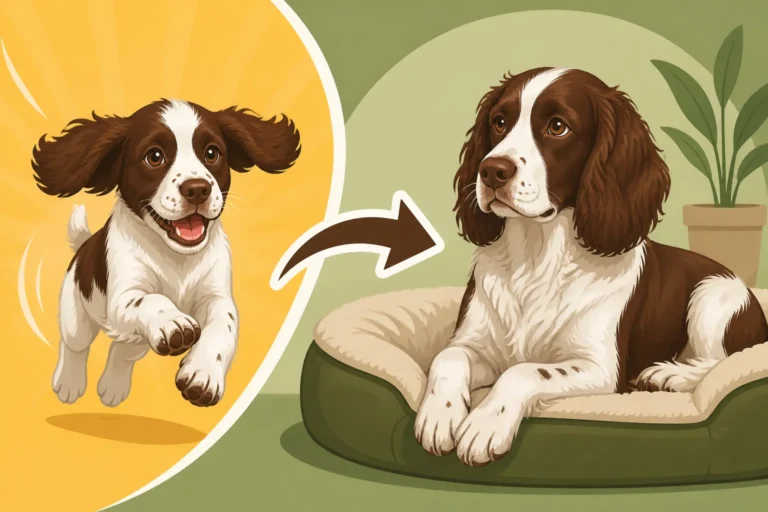
Anyone who has lived with a Springer Spaniel knows they aren't content to be couch potatoes. These dogs were bred for working, for covering ground, for "springing" game into action. This means they come hard-wired with a drive for activity, a need to move, and an inherent curiosity that can be truly relentless. When you're a new parent, sleep-deprived and navigating a completely new routine, finding the time and energy to meet that drive can feel utterly impossible. Your once manageable hour-long walk might now feel like a monumental task, and a bored Springer can quickly become a destructive or demanding one, compounding the stress. They truly are a dog that needs to be busy, whether it's How Much Exercise a Field Bred Springer Spaniel Needs or even a [Show Springer Spaniel's Needs].
Picture this: You’ve just gotten the baby down for a nap, and you finally sit for a moment, only for your Springer to drop a slobbery ball at your feet, tail wagging furiously, begging for a game of fetch. Or maybe they start pacing, whining, and nudging your hand with their wet nose, indicating they’ve been waiting patiently for their walk, and now seems like the perfect time. This isn't them being naughty; it's simply their nature. They don't understand the new constraints on your time and energy, and their instinct is to seek the activity they crave. This can lead to frustration for both dog and owner if not proactively managed.
It's also worth noting that some Springers, particularly those from strong working lines, can have a surprisingly high prey drive. While they might never consider a baby "prey," their instinct to chase, herd, or mouth moving objects can be triggered by a crawling infant or even a quickly moving toddler. This isn't a sign of aggression, but rather an innate behavioral pattern that needs careful monitoring and redirection to ensure everyone's safety, especially as your baby grows and becomes more mobile.
Their Affectionate and People-Oriented Nature
One of the most endearing qualities of a Springer Spaniel is their absolute devotion to their family. They are, without a doubt, "Velcro dogs" who thrive on companionship and want to be involved in everything you do. They'll follow you from room to room, curl up at your feet, and generally consider themselves an integral part of the family unit. This intense bond is wonderful, but it can present challenges with a baby.
When a new baby arrives, suddenly a lot of your attention shifts to this tiny human. Your Springer, who is used to being at the center of your world, might struggle with this change. They don't mean to be intrusive, but their desire to be close, to nudge your hand while you're feeding, or to try and squeeze onto the sofa next to you and the baby, can be overwhelming. They want to be part of the "pack" and part of the new experience, and their method of showing this might be a little too boisterous or pushy for a fragile infant.
Think about a typical evening. You're trying to feed the baby, perhaps the last feeding before you attempt to get some much-needed sleep. Your Springer, seeing you sitting down, approaches for some head scratches, tail wagging, maybe even doing a little happy dance. While sweet, this can be disruptive and even startling for a sleeping or feeding baby. This isn't aggression; it’s an overabundance of love and a lack of understanding personal space boundaries, especially in a new and sensitive situation. Their strong desire to always be near you, famously known as Why a Springer Spaniel Follows You Everywhere, might mean they're constantly underfoot, which can be a tripping hazard when you're carrying a baby.
Potential for "Springing" and Mouthiness
The very name "Springer" comes from their historical job: to "spring" game from cover. This often involves a sudden burst of energy, a powerful jump, and an assertive presence. While they are usually quite gentle, this innate "springing" action can be problematic around a baby. A Springer might jump up to greet you, accidentally knocking into a bassinet, or jump on the sofa where you're holding the baby. Their excitement can easily override their awareness of a small, vulnerable infant.
Furthermore, many Springers are naturally mouthy. They might gently mouth your hand during play, or carry objects around in their mouths constantly. This is part of their retrieving instinct. While they have a reputation for having a "soft mouth" in the field, meaning they retrieve game without damaging it, this instinct needs to be carefully managed around a baby's delicate skin and tiny fingers. A playful nip that would be harmless to an adult hand could accidentally injure a baby.
Imagine your Springer greeting a visitor at the door with excited jumps, then turning their attention to you as you walk past with the baby. A sudden, unexpected jump could easily cause a mishap. Or perhaps your baby starts to crawl, and the Springer, seeing this novel movement, might approach with a playful nip or an excited bark. These are not malicious acts, but they highlight the crucial need for constant supervision and proactive training to prevent any unintended harm. Understanding The Soft Springer Spaniel That Shuts Down If You Shout is also important, as harsh corrections might not be the best approach for managing these instinctual behaviors.
Preparing Your Springer Spaniel for the Baby's Arrival
The good news is that Springers are incredibly intelligent and trainable. With thoughtful preparation and consistent effort, you can set your dog up for success and help them adjust to the huge life change a baby brings. The key is to start early and be proactive, making gradual changes rather than sudden, jarring ones.
Gradual Introduction to Baby Sights, Sounds, and Smells
Before the baby even makes their grand entrance, you can begin a comprehensive desensitization program for your Springer. This isn't about rushing; it's about slow, positive introductions that allow your dog to associate baby-related items with calm and rewards, rather than anxiety or punishment. Start by setting up the nursery. Let your Springer explore the room calmly, sniffing the crib, changing table, and other furniture. Don't let them jump in the crib, but allow supervised, relaxed curiosity.
Next, introduce baby smells. Get some baby lotion, powder, or even a used baby blanket from a friend. Let your dog sniff these items, offering treats and praise for calm investigation. You can also start playing recordings of baby sounds—crying, cooing, babbling—at low volumes, gradually increasing them over time. The goal is for these sounds to become background noise, not startling alarms. A great way to acquire these sounds and smells if you don't have friends with babies is to check online marketplaces like Amazon for sample sizes of baby products.
It's really about making the baby's presence feel normal before they even arrive. If your Springer gets used to the smell of baby wipes and the sound of a baby crying long before the actual baby is there, they are less likely to be overwhelmed when the real deal arrives. Remember to keep all these experiences positive. If your dog seems stressed, dial back the intensity and try again later, always rewarding calmness with treats or gentle praise. This is not a race; it's a marathon of gentle introductions.
Establishing New Routines and Boundaries Early
This is perhaps one of the most critical steps. Your Springer thrives on routine, and the arrival of a baby will inevitably disrupt their established schedule. The worst thing you can do is wait until the baby is home to make all the changes. Your dog will then associate the baby with all these negative shifts – shorter walks, less attention, new rules. Instead, begin implementing new routines and boundaries weeks, or even months, before the due date.
For instance, if you anticipate your dog's walks might be shorter or at different times, start adjusting that now. If your dog currently sleeps in your bed but you plan for them to sleep in a dog bed once the baby arrives, transition them well in advance. Introduce baby gates in areas where you want to restrict your dog's access. Practice having your dog spend time alone in a designated "safe space," like a crate or a specific room, so they don't develop Separation Anxiety in a Springer Spaniel when you're busy with the baby.
This early adjustment period allows your Springer to adapt to the new normal without feeling like the baby "stole" their old life. For example, if you plan for your dog to no longer be allowed on the sofa when you're holding the baby, start enforcing that rule now, using a command like "off" and rewarding them for settling on a dog bed nearby. Consistency is key here. Every family member needs to be on board with these new rules to avoid confusing your intelligent but sensitive Springer.
Reinforcing Basic Obedience and Impulse Control
A well-trained Springer is a safer Springer, especially around a baby. Commands like "sit," "stay," "down," "leave it," and a reliable "come" are no longer just polite manners; they become essential safety tools. Spend dedicated time brushing up on these basics, making them rock-solid. Practice in various environments and with increasing distractions.
Focus heavily on impulse control. Teach your Springer to wait patiently for their food, to not rush out the door, and to remain calm when new people or exciting things enter the environment. These skills are invaluable when you need them to stay put while you change a diaper, or not to jump excitedly when a friend comes over to see the baby. For many owners, an online training program like BAXTER & Bella offers excellent resources for preparing a dog for a new baby, providing structured lessons and support. They often cover crucial skills like polite greetings, staying on their mat, and managing excitement, all essential for a multi-species household.
A strong "leave it" command is paramount. This can be used to prevent your Springer from picking up dropped pacifiers, baby toys, or even just from investigating the baby too closely when you need them to back off. Practice with various items, starting with low-value objects and gradually moving to more tempting ones. Remember, positive reinforcement works wonders with Springers; they thrive on praise and treats, and shouting often causes them to sulk after a correction. Make training fun and rewarding, and you'll build a cooperative, calm companion ready for their new family member.
Managing Life with Both a Springer Spaniel and a Baby
Once the baby arrives, the real work begins. It’s about integration, management, and ensuring both your precious infant and your beloved Springer feel secure and loved. It takes effort, patience, and a dash of creativity, but it is absolutely achievable.
Supervising Interactions and Creating Safe Spaces
This is non-negotiable: never, ever leave your Springer Spaniel unsupervised with your baby, not even for a second. Accidents can happen in the blink of an eye, no matter how well-behaved or gentle you believe your dog to be. This rule applies whether the baby is awake, asleep, in a crib, or on the floor.
Actively supervise all interactions. This means you are physically present, engaged, and ready to intervene. When you can't actively supervise, use baby gates or a crate to separate your dog and baby. Create designated "safe zones" for both. This might be a gated-off nursery for the baby, or a comfortable crate in a quiet room for your Springer to retreat to when they need a break from the baby's cries or commotion. Platforms like Amazon offer a wide range of sturdy baby gates and comfortable dog crates that can facilitate these safe zones effectively. These tools are not punitive; they are essential safety measures that allow everyone to feel secure and prevent stressful situations.
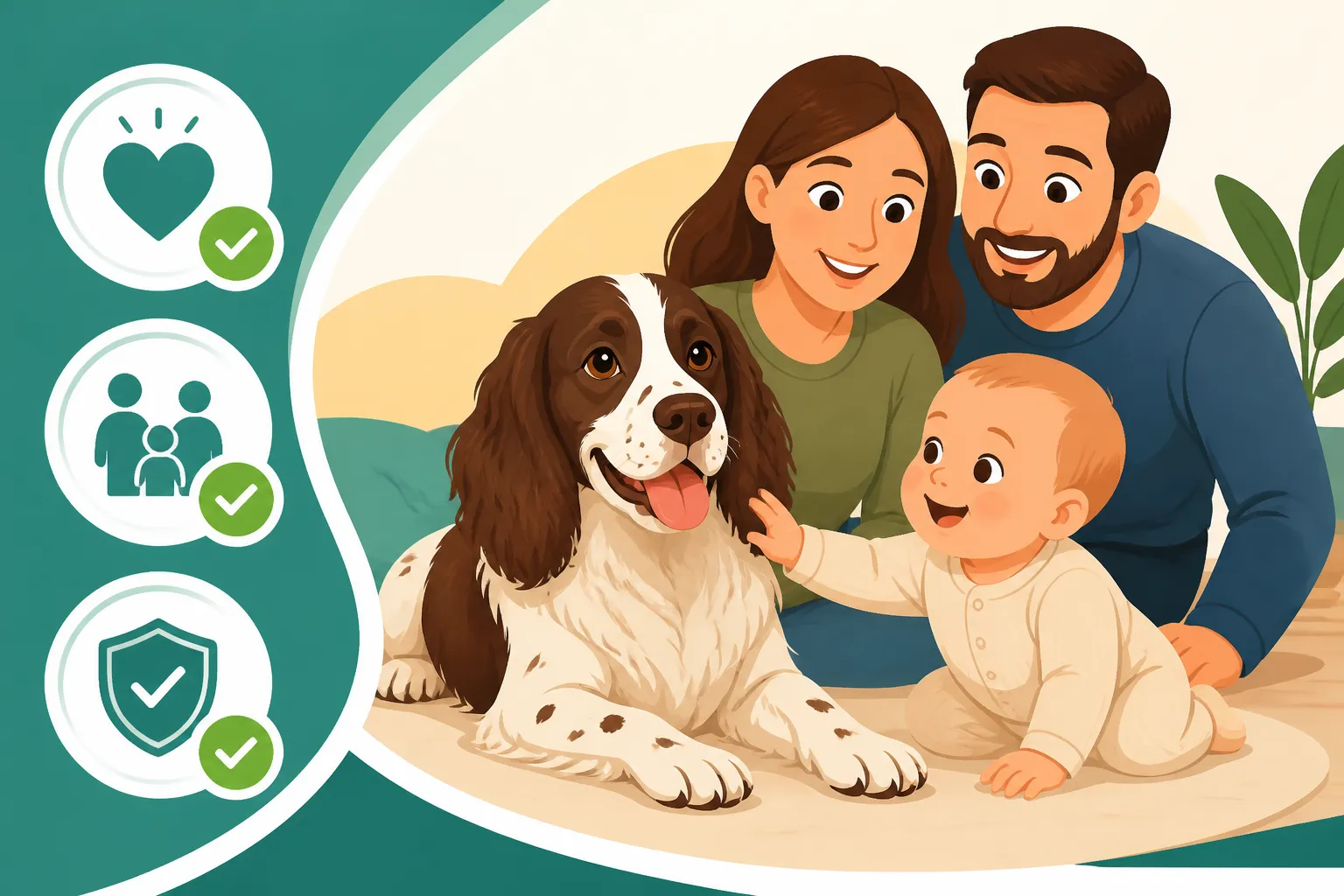
When your Springer is interacting with the baby, keep interactions short, calm, and positive. Reward your dog for calm behavior, such as lying quietly near you while you hold the baby, or for ignoring a baby cry. Avoid forcing interactions or creating situations where your dog feels jealous or anxious. Allowing them to sniff the baby's foot gently under your close guidance, followed by praise and a treat, can build positive associations.
Ensuring Adequate Exercise and Mental Stimulation
Meeting your Springer's significant exercise needs becomes a unique challenge with a newborn. It’s easy to let it slide when you’re utterly exhausted, but a bored and under-exercised Springer is a recipe for chaos. This is where teamwork comes in. Can your partner take the dog for their morning run? Is there a responsible teenager in the neighborhood who could walk the dog for a fee? Or perhaps a trusted friend or family member who can help out?
Beyond physical exercise, mental stimulation is crucial. Interactive puzzle toys, like those found on Amazon, where your Springer has to work to get treats, can provide valuable mental exercise indoors when you can’t get out for a long walk. Scent games, where you hide treats around the house for them to find, can also tire out a busy Springer’s mind. Remember, Scent Games Tire a Springer Spaniel almost as much as physical activity. Short training sessions throughout the day, reinforcing basic commands or teaching a new trick, also count as mental enrichment.
Consider a dog walker for a few hours a week if your budget allows. Even a quick game of fetch in the backyard can burn off some steam. The goal isn't necessarily to replicate their pre-baby exercise routine perfectly, but to ensure they are getting enough physical and mental outlets to remain calm and happy members of the household. A well-exercised Springer is less likely to be restless, destructive, or seek attention in inappropriate ways, which ultimately makes your life with a baby much smoother.
Dealing with Common Challenges: Jumping, Nipping, and Resource Guarding
Even with the best preparation, challenges might arise. Springer Spaniels are excitable, and their "springing" instinct means jumping is a common behavior. To manage this around a baby, consistently redirect jumping with a firm "off" command, rewarding all four paws on the floor. If your Springer jumps when you approach the crib, put them on a leash, have them sit, and reward calmness. For mouthiness, ensure they always have appropriate chew toys available. If they try to mouth your hand or the baby's clothing, redirect immediately to a toy.
Resource guarding is another important consideration. While not all Springers guard, some may develop protective instincts over their toys, food, or even their space. With a baby in the home, you need to ensure your dog never perceives the baby as a resource to guard, or yourself as a resource being taken away. Prevent potential issues by always feeding your dog in a quiet, undisturbed area. Ensure they have their own safe space where they can retreat with their toys without interruption. When the baby is present, make sure your dog still receives attention and positive interactions, associating the baby's presence with good things, not deprivation.
If you observe any signs of growling, stiff body language, or snapping when the baby is near your dog's food or toys, seek professional help immediately. A certified professional dog trainer or veterinary behaviorist can assess the situation and provide tailored guidance. It’s much easier to address these behaviors early and proactively rather than waiting for them to escalate. Many online resources, including programs like BAXTER & Bella, offer guidance on managing common behavioral issues in a family setting, which can be invaluable for busy parents.
| Preparation Step | Why It Matters | How to Implement (Before Baby Arrives) |
|---|---|---|
| Desensitize to Baby Sounds | Prevents startling/anxiety from sudden cries. | Play baby crying/cooing sounds at low volume, gradually increase. Reward calm behavior. |
| Introduce Baby Smells | Makes new scents familiar, less alarming. | Let dog sniff baby lotions, diapers, blankets. Reward calmness. |
| Set Up Baby Zones | Familiarizes dog with physical barriers and restricted areas. | Install baby gates, allow supervised sniffing, define "off-limits" areas. |
| Adjust Routines | Prevents dog from associating baby with negative routine changes. | Gradually shift walk times, feeding schedules, attention patterns. |
| Reinforce Obedience | Ensures critical commands are reliable for safety. | Practice "sit," "stay," "leave it," "down" daily, with distractions. |
| Practice Impulse Control | Teaches patience and calm around exciting stimuli. | Practice waiting for food, not rushing out doors, staying on a mat. |
| Establish Safe Retreat Space | Gives dog a place to de-stress and feel secure away from baby. | Ensure crate or dog bed is comfortable and accessible; practice "go to bed." |
Long-Term Considerations and Maintaining Harmony
The first few months are intense, but the journey of integrating your Springer Spaniel and your child is a long one. As your baby grows into a toddler and then a child, their interactions will evolve, and your role as their guide remains constant.
Continuing Training and Socialization
The training doesn't stop once the baby arrives and you’ve managed the initial integration. In fact, it needs to be ongoing. As your baby starts crawling and then walking, their interactions with your Springer will change dramatically. What was once a static, swaddled bundle will become a moving, unpredictable, and sometimes grabby small human. Your Springer needs to be continually reinforced on good manners around children. Consider refresher classes or working with a trainer on specific skills as your child grows, especially if you find your Springer showing signs of being overwhelmed.
Socialization is also a lifelong process. Continue to expose your Springer to a variety of people, places, and experiences, ensuring these are always positive. This helps them remain confident and adaptable. If your Springer is a field-bred dog, you might also be keen for them to maintain their working instincts, which can provide excellent mental and physical exercise. Opportunities for activities like Whether a Springer Spaniel Can Do Agility or Whether a Springer Spaniel Competes in Obedience can provide positive outlets and strengthen your bond.
It's also crucial to teach your child, as they grow, how to respectfully interact with your dog. Children need to learn to be gentle, to respect the dog's space, and to recognize when the dog needs a break. This dual education—training the dog and teaching the child—is the cornerstone of a safe and harmonious household. As children grow, their curiosity can sometimes be too much for a dog. A child pulling ears or tails, or attempting to climb on the dog, needs to be gently but firmly corrected, and the dog given space.
Recognizing Stress Signals in Your Springer
Your Springer Spaniel might not tell you in words that they are uncomfortable, but their body language speaks volumes. Learning to read these subtle cues is paramount to preventing potential issues and ensuring your dog feels safe. Signs of stress or discomfort can include:
- Lip licking or yawning when not tired or hungry.
- Turning their head away or averting their gaze.
- Low tail carriage (not wagging) or tucked tail.
- Stiff body posture or freezing in place.
- Whites of the eyes showing (often called "whale eye").
- Trembling or panting when not hot or exercising.
- Repeatedly moving away from the baby or leaving the room.
- Growling or snapping (these are clear warning signs that should never be ignored).
If you see these signals, it means your dog is feeling stressed or anxious. It's not necessarily a sign of aggression, but it's a clear indication that they need space or that the interaction should stop. Intervene immediately by calmly separating your dog and the baby, giving your Springer a safe space to decompress. Punishing your dog for these signals can backfire, teaching them to suppress the warnings and potentially escalate to a bite without warning in the future. Instead, acknowledge their communication and manage the environment to reduce their stress.
The Importance of a Strong Human-Canine Bond
Amidst the chaos of new parenthood, it's easy for your Springer Spaniel to feel overlooked. They’ve gone from being a primary focus to, at times, feeling like a secondary thought. It’s absolutely vital to make time, even small pockets of it, to reaffirm your bond with your dog. This doesn't mean neglecting your baby, but it means intentionally carving out moments for your Springer.
This could be a few minutes of dedicated belly rubs while the baby naps, a short game of fetch in the yard, or simply sitting together and petting them while you drink your coffee. Even just talking to them, making eye contact, and including them verbally in daily activities can make a huge difference. A well-adjusted Springer, who feels loved and secure in their place within the family, is far more likely to be tolerant and happy around a new baby. Remember, your Springer is part of your family, and their emotional well-being matters too. Maintaining that bond will not only make your dog happier but will also foster a more harmonious home environment for everyone, including your growing child. They really are part of the family, and understanding The Twelve to Fourteen Years a Springer Spaniel Lives means they are with you for a significant part of your child's upbringing.
Disclaimer
This article is for general informational purposes only and does not constitute professional advice. Laws, prices and regulations vary by location and change over time. Consult a qualified professional for guidance on your specific situation.