Whether a Springer Spaniel Is Safe With Chickens
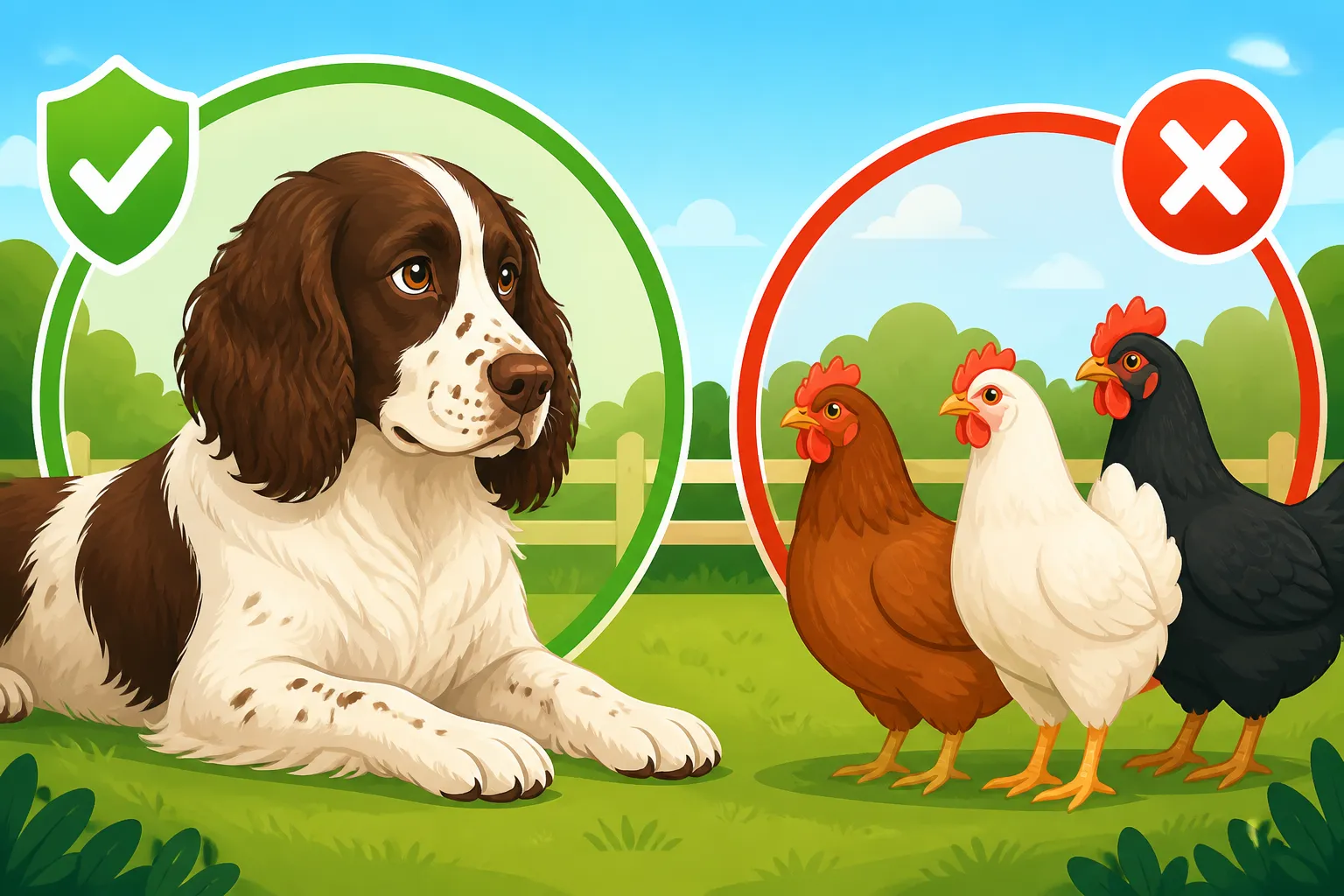
It's a common dilemma for many of us who love both our energetic English Springer Spaniels and the idea of fresh eggs from backyard chickens: can these two beloved parts of our lives actually coexist peacefully? The truth is, it's not a simple yes or no answer, and it's a question that brings up a lot of worry for good reason. Springer Spaniels are wonderful, eager dogs, but they come with a strong history of hunting, and chickens are, well, very tempting prey. This guide will walk you through understanding your Springer's instincts, the challenges involved, and practical strategies to help your feathered and furry family members live together, or at least safely apart.
Understanding Your Springer Spaniel's Natural Instincts
Before you even think about introducing your Springer to a flock of chickens, it's crucial to acknowledge the deep-seated instincts that define this breed. English Springer Spaniels were literally bred for centuries to find, flush, and sometimes retrieve game birds. This isn't just a quirky personality trait; it's hardwired into their DNA, making the prospect of a chicken-friendly Springer a significant undertaking.
The Breed's Purpose: Flushing and Retrieving
Imagine a bustling field, birds hidden in thick cover. The Springer Spaniel's job was to work closely with the hunter, quartering back and forth, using their incredible nose to locate and "spring" the game from its hiding spot. Once the bird was in the air, the dog might be asked to sit, or sometimes to retrieve the fallen bird gently. This means they are inherently curious about birds, driven to find them, and instinctively respond to their movement. A flapping chicken isn't just a chicken to a Springer; it's a small, noisy, exciting bird that triggers those ancient hunting drives. It doesn't matter how well-fed or loved your dog is; a sudden flutter can switch on that prey drive in an instant.
There's also a distinction between the two types of Springer Spaniels that's vital here. A Field Bred Springer Spaniel Is a Different Dog to Live With entirely, typically possessing a far more intense prey drive and higher energy levels than their show-bred counterparts. A field-bred Springer lives to hunt, and that instinct is often much closer to the surface. Even a show-bred Springer, while generally calmer, still carries the breed's genetic blueprint. You might think your beloved pet is too sweet to ever harm a fly, let alone a chicken, but those instincts can surprise even the most experienced owner when presented with live, flapping, squawking "game."
Identifying a High Prey Drive
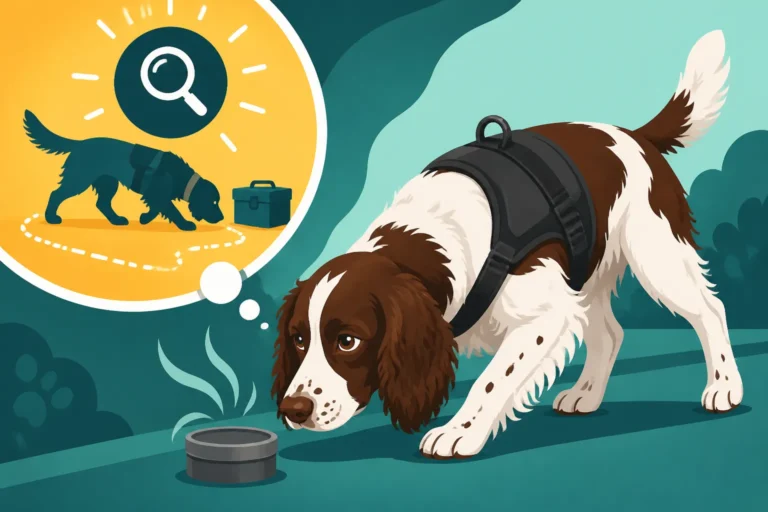
So, how do you know if your Springer has a high prey drive? It's usually pretty obvious, even without chickens in the picture. Does your dog go absolutely bananas when they see squirrels, rabbits, or even birds in the park? Do they strain at the leash, whine, fixate, and try to chase? Do they dig furiously if they smell something interesting underground? These are all tell-tale signs. My own Springer, Willow, can be the most obedient dog in the world until a rabbit darts across her path. Then, it's like she forgets every command she ever knew, driven purely by the thrill of the chase. This isn't disobedience as much as it is instinct taking over.
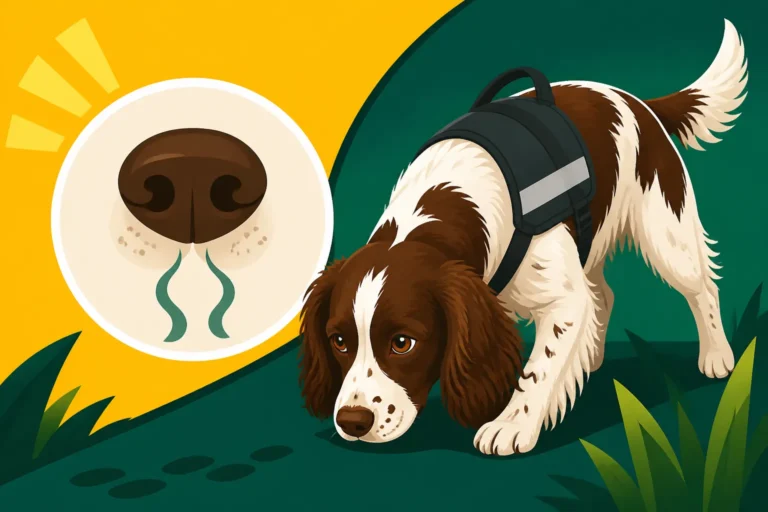
A strong prey drive means that your dog sees small, fast-moving animals as something to pursue. Chickens, with their erratic movements, clucking, and flapping wings, are essentially giant, slow-motion, highly accessible versions of the game your Springer was designed to pursue. It’s also worth considering that a Springer Spaniel's nose is incredibly powerful, and the way it overrides its ears (Whether a Springer Spaniel's Nose Overrides Its Ears) can be a major challenge when trying to call them off a scent. They might ignore even the most urgent whistle command if they're locked onto a scent or sight of a bird.
Training and Management Strategies for Coexistence
Given their strong instincts, making a Springer Spaniel "safe" with chickens is less about eliminating their prey drive (which is impossible) and more about rigorous management, careful training, and realistic expectations. This isn't a quick fix; it's a long-term commitment.
Early Socialization and Exposure
The earlier you start, the better, but even then, there are no guarantees. If you're bringing a Springer Spaniel puppy into a home that already has chickens, you have a slight advantage because the chickens are already part of the established "pack" and environment. Puppyhood is a critical time for shaping behavior, and programs like BAXTER & Bella offer excellent online resources to guide new puppy owners through crucial socialization steps. They teach you how to introduce your puppy to various sights, sounds, and experiences in a positive way.
However, "socialization" with chickens doesn't mean letting a tiny puppy loose in the coop. It means controlled, supervised exposure from behind a barrier, always ensuring the chickens are safe and the puppy is calm. You want the puppy to see the chickens as a normal, non-exciting part of the landscape, not as something to chase. This might involve holding the puppy on a leash while walking past the coop, rewarding calm behavior, and redirecting any interest or fixation. The goal is to teach them that chickens are "off-limits" from day one. It's a foundational part of The First Year With a Springer Spaniel Puppy and vital for shaping their future behavior.
Consistent Obedience Training and Desensitization
This is where the rubber meets the road. Your Springer absolutely must have rock-solid obedience, especially a bomb-proof "leave it" and recall. They need to understand that when you say "leave it," they are to disengage immediately, regardless of how tempting the distraction. And their recall needs to be instant, even if they're in mid-chase. This level of training requires immense patience and consistency.
Here are some key training points:
- "Leave It" Command: Start this in low-distraction environments and gradually introduce higher distractions. Practice with toys, treats, and then move on to things like a remote-controlled car or even another pet (like a cat, if you have one and they're safe together). The ultimate test will be with the chickens themselves, always from a distance and with maximum control.
- Reliable Recall: This is non-negotiable for any dog, but especially one with a high prey drive. Practice recall in various environments, using high-value rewards. Consider using a whistle for recall, as it cuts through distractions better than your voice and can be heard from a greater distance. How Many Whistle Cues a Springer Spaniel Learns can be impressive, and a specific recall whistle cue can become a powerful tool. Never let your Springer off-leash near chickens or in an unfenced area where chickens might roam unless you are absolutely, 100% confident in their recall. Even then, know that a strong instinct can sometimes override training. Whether a Springer Spaniel Can Be Trusted Off Leash is a serious consideration.
- Desensitization: This involves controlled exposure to the chickens without allowing the dog to engage in chasing behavior. Keep your Springer on a long line, perhaps 30 feet, and walk them calmly around the perimeter of the chicken run. Reward calm behavior, eye contact with you, and ignoring the chickens. If they start to fixate, gently redirect them. If they try to pull or chase, use the long line to prevent them, and immediately redirect to an obedience command, rewarding success. It’s a slow, painstaking process.
Secure Enclosures and Constant Supervision
No matter how well-trained your Springer Spaniel is, management is the ultimate key to safety. You simply cannot rely solely on training when instincts are involved, especially when chickens' lives are at stake.
Here’s what you need to consider:
- Fort Knox for Chickens: Your chicken coop and run need to be absolutely escape-proof and predator-proof, not just from your dog, but from foxes, raccoons, and other wildlife. This means sturdy wire mesh, buried hardware cloth to prevent digging, and secure latches. Think like a predator and a determined Springer. Many sturdy options for fencing and coop reinforcements can be found on platforms like Amazon.
- Separate Spaces: The ideal scenario is that your Springer Spaniel and chickens never have unsupervised access to each other. This might mean having a completely fenced yard for your dog and a separate, securely fenced run for your chickens. Or, perhaps your dog is only outside on a leash or in a separate, secure kennel when the chickens are out free-ranging.
- Active Supervision is Non-Negotiable: If your Springer is in the same area as the chickens, even if they appear calm, your eyes must be on them constantly. Even a moment of inattention can lead to tragedy. This means no quick runs inside for a coffee refill, no scrolling on your phone, and no letting the kids supervise. This level of vigilance is demanding and a big part of why many owners find it easier to simply keep them completely separate. Remember, Whether a Springer Spaniel Chases Squirrels is an indication of their natural drive, and chickens are just larger, slower squirrels in their eyes.
Assessing Risk and Making an Informed Decision
Ultimately, the decision of whether your Springer Spaniel can safely coexist with chickens rests on a realistic assessment of your dog, your training capabilities, and your commitment to management. It’s a significant responsibility, and it’s okay to decide it’s not the right path for your household.
Factors Influencing Success
Several factors can increase your chances of success, but none are a guarantee:
- Temperament of the Individual Dog: Some Springers are naturally softer and less driven than others. A very biddable, calm Springer with a lower prey drive will have a better chance than a high-drive, intense field-bred dog.
- Early and Consistent Training: Starting young and maintaining rigorous, positive reinforcement-based training is paramount. The stronger your bond and your dog's obedience, the better.
- Adequate Exercise and Mental Stimulation: A bored, under-exercised Springer is a recipe for trouble. These dogs need a lot of physical activity and mental engagement. How Much Exercise a Field Bred Springer Spaniel Needs can be substantial, and if they're not getting it, they'll find their own "job," which might involve chasing chickens. Provide plenty of walks, retrieves, scent work, and puzzle toys to keep their minds and bodies busy. Whether a Springer Spaniel Needs a Job is a resounding yes; if you don't provide one, they'll invent their own, and it might not be what you want.
- Chicken Personalities: Believe it or not, the chickens themselves play a role. Calm, unflappable chickens are less likely to trigger a chase response than flighty, easily startled birds. However, even the calmest hen can panic if a dog rushes it, and that panic can ignite a Springer's chase instinct.
| Factor | Lower Risk (Higher Chance of Success) | Higher Risk (Lower Chance of Success) |
|---|---|---|
| Dog's Prey Drive | Low to moderate, easily redirected | High, intense fixation on small animals |
| Dog's Temperament | Calm, biddable, eager to please, soft to correction | High-strung, easily overstimulated, stubborn |
| Training History | Excellent "leave it" and recall, consistent | Inconsistent or lacking fundamental obedience |
| Socialization History | Early, positive exposure to various animals (behind barriers) | Limited exposure, tendency to chase small animals |
| Supervision Level | Constant, vigilant, never unsupervised access | Occasional, trusting dog "to be good" |
| Chicken Enclosure | Fortified, escape-proof, completely separate run | Flimsy, easily breached, free-ranging without barriers |
| Owner Commitment | Dedicated to ongoing training & management | Hopes for a quick fix or expects dog to figure it out |
When Coexistence Isn't Possible
It's vital to recognize that sometimes, despite your best efforts, your Springer Spaniel and your chickens simply cannot live safely together. This is not a failure on your part, nor is it a sign of a "bad" dog. It's simply acknowledging the strength of natural instincts and prioritizing the safety and well-being of all your animals.
If you observe any of the following, it’s a strong indicator that keeping them separate is the only safe option:
- Persistent Fixation: Your Springer cannot take its eyes off the chickens, even after extensive training and desensitization.
- Aggressive Pursuits: Despite your commands, your Springer consistently attempts to break through barriers or actively chase when given the slightest opportunity.
- Any Incident of Harm: Even if it was "just a scare" or a "nip," one incident is often a predictor of future, potentially fatal, events. It only takes one moment for a Springer to kill a chicken, even if they don't mean to. Their mouths are designed to carry game.
- Your Own Stress Levels: If managing the situation causes you constant anxiety, it's not sustainable. Pet ownership should bring joy, not perpetual worry.
In these cases, creating completely separate living areas for your dog and your chickens is the most responsible choice. This might mean having a completely fenced-off yard for your dog, with the chicken coop and run located in another part of the property, inaccessible to the dog. Or, your dog may need to be crated or indoors when the chickens are free-ranging. It might feel like a compromise, but it's a small price to pay for the safety and peace of mind for everyone involved. Sometimes, realizing that a particular environment or living situation isn't suitable for a dog's inherent nature is the most empathetic choice you can make for them and for your other animals.
Disclaimer
This article is for general informational purposes only and does not constitute professional advice. Laws, prices and regulations vary by location and change over time. Consult a qualified professional for guidance on your specific situation.