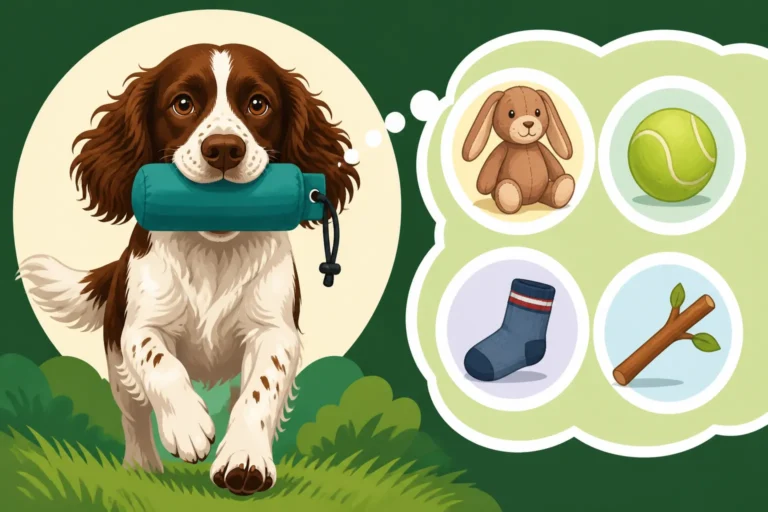
How Fast a Springer Spaniel Learns
One of the most common questions I hear from new Springer Spaniel owners, especially those navigating puppyhood for the first time, is about training progress. Many people are genuinely surprised by how quickly these eager, intelligent dogs pick up new commands, while others might feel a little frustrated if their specific pup isn't a canine Einstein right out of the gate. This guide will dive deep into what makes Springer Spaniels such adept learners, what factors can influence their learning curve, and how you can optimize your training approach to bring out the best in your furry companion, celebrating their successes and understanding where a little extra patience might be needed.
Understanding the Springer Spaniel's Learning Aptitude
Springer Spaniels are renowned for their intelligence and biddability, which generally translates into a rapid learning curve. They aren't just pretty faces; they were bred for a specific, complex job, and that requires a brain that can think, adapt, and remember.
Their Innate Intelligence and Working Drive
From the moment they open their eyes, Springer Spaniels are wired to observe, interact, and solve problems. Their history as flushing and retrieving gundogs means they possess a high degree of innate intelligence geared towards understanding tasks and executing them efficiently. They need to quickly learn patterns, understand cues, and make decisions in dynamic environments, often far from the handler. This isn't just about simple "sit" and "stay"; it's about processing information on the fly, remembering where a bird fell, or understanding intricate hand signals over distances. You might notice your Springer Spaniel figuring out how to open a cupboard or retrieve a toy from an impossible spot with surprising speed – that's their working intelligence at play. This drive to do something, to have a purpose, fuels their willingness to learn. They thrive on engagement and mental stimulation, which makes training a highly rewarding activity for them, not just a chore. In fact, many people often ask Whether a Springer Spaniel Ranks High for Intelligence precisely because they display such impressive cognitive abilities in day-to-day life.
Eagerness to Please and Handler Focus
Beyond their raw intelligence, Springer Spaniels possess a wonderful trait that makes them highly trainable: an intense desire to please their human companions. They thrive on positive interaction and praise. This "eagerness to please" isn't a passive trait; it's an active ingredient in their learning speed. When a Springer Spaniel understands what you want, they will genuinely try to do it, and they'll remember the satisfaction of your approval. This means that positive reinforcement methods, which rely heavily on rewards and praise, work exceptionally well with this breed. They form strong bonds with their handlers and are highly attentive, often maintaining eye contact and monitoring your body language for cues. This focus makes them very receptive in training sessions, cutting down the time it takes for them to associate a command with an action. Imagine trying to teach a dog who couldn't care less about your opinion – it would be an uphill battle! With a Springer, that desire to connect and cooperate is a powerful training tool in itself.
The Double-Edged Sword of Their High Energy
While their intelligence and eagerness are huge assets, the Springer Spaniel's boundless energy can sometimes feel like a hurdle, especially to inexperienced owners. This isn't to say they're difficult to train, but rather that their enthusiasm needs to be channeled correctly. A tired Springer Spaniel is a focused Springer Spaniel; an under-exercised one is often too buzzy to concentrate effectively. They can be prone to "zoomies" or getting distracted by every scent and sound if their physical and mental needs aren't met. So, while they learn quickly, you might find that initial bursts of training are most effective after a good walk or play session. Their high drive means they pick up both good and bad habits with equal speed. If you're inconsistent, they'll learn the inconsistency just as fast as they learn a "sit." It’s a bit like a highly intelligent child who, if not challenged, might find inventive ways to get into mischief. Managing this energy is key to unlocking their full learning potential.
Factors That Influence Learning Speed
It's tempting to think all Springer Spaniels are carbon copies when it comes to learning, but just like people, each dog is an individual. Several factors beyond breed generalities play a significant role in how quickly a Springer Spaniel absorbs new information.
Individual Temperament and Genetics
Even within the same litter, you'll find puppies with varying temperaments. Some might be bold and confident, eager to try new things, while others could be more reserved or easily distracted. A puppy with a naturally calmer disposition or a higher innate biddability often appears to learn faster in structured settings. Genetics also play a part, not just in their general intelligence as a breed, but in the specific lines they come from. Dogs bred for generations for field work, for instance, often have an intensified drive and focus on tasks, which can translate into quicker learning for specific gundog commands. Conversely, a The Soft Springer Spaniel That Shuts Down If You Shout might learn more slowly in a harsh training environment, needing a different approach. A good breeder will often be able to give you insights into the general temperament of a puppy's parents and siblings, offering clues as to what to expect. This isn't about blaming genetics for slow progress, but acknowledging that some dogs naturally have a head start or require a more tailored approach to bring out their best.
The Critical Role of Early Socialization and Exposure
A well-socialized Springer Spaniel puppy is a confident, adaptable learner. Early exposure to a wide variety of sights, sounds, people, and other dogs during their critical developmental window (roughly 3 to 16 weeks) lays a crucial foundation. A puppy that has experienced many novel situations in a positive way is less likely to be fearful or anxious in new training environments. Fear or over-excitement can severely impede learning, as the dog's brain is too busy processing perceived threats or novel stimuli to focus on commands. Conversely, a confident, well-adjusted Springer Spaniel can concentrate better, making associations more quickly. Think of it like a child starting school: one who has had positive preschool experiences and is comfortable in new settings will likely integrate and learn faster than one who is overwhelmed by the novelty and crowds. For this reason, enrolling your puppy in classes or joining programs like those offered by BAXTER & Bella early on can be invaluable, providing structured socialization and initial training guidance that primes them for future learning. Remember, the world can be a big, scary place for a small puppy, and it's our job to introduce it gradually and positively.
Impact of Training Methods and Consistency
This is perhaps the biggest variable in how fast a Springer Spaniel learns. Effective training methods, particularly those rooted in positive reinforcement, drastically accelerate the learning process. Springers respond beautifully to praise, treats, and toys. If you're consistent with your cues, expectations, and rewards, your Springer will quickly understand what you want. Inconsistency, on the other hand, is the enemy of learning. If "sit" sometimes means sit, sometimes means jump up, and sometimes means nothing at all, your dog will naturally take longer to grasp the command, if they ever do. Training should be clear, fair, and fun. Short, frequent training sessions are far more effective than long, infrequent ones. How Many Repetitions a Springer Spaniel Needs will vary, but consistent daily practice, even for just a few minutes, reinforces learning much better than a marathon session once a week. Moreover, using the same cues and expectations across all family members is vital. Imagine your pup hearing "sit" from one person, "down" from another, and "bum" from a third, all meaning the same thing – it's just confusing!
Areas Where Springer Spaniels Shine and Where They Need Patience
Springer Spaniels truly excel in specific domains, a testament to their breeding, but like any dog, they have areas where they might require a bit more understanding and repetition.
Rapid Mastery of Scent Work and Retrieving
If there's one area where a Springer Spaniel will astound you with their learning speed, it's anything involving their nose and retrieving instinct. These dogs were quite literally made for it. Put them on a scent trail, and they'll pick up the concept of following it almost intuitively. When it comes to retrieving, whether it's a dummy, a ball, or a fallen bird, their natural drive to pick things up and bring them back is incredibly strong. They understand the "game" of fetch and retrieve almost instantly. Commands related to these activities, like "fetch," "find," or "hold," are often learned with remarkable speed and enthusiasm. You'll see them light up, their tails wagging furiously, their entire body language screaming "Yes! This is what I was born to do!" This is because these tasks tap directly into their genetic blueprint. It's not just about repetition; it's about activating an inherent desire. If you're looking for a quick win in training that will boost your confidence and your dog's, lean into these natural strengths. You'll be amazed at What a Springer Spaniel Will Work For when it comes to scent and retrieve.
Foundational Obedience and Whistle Commands
For most foundational obedience commands like "sit," "stay," "down," and "come," Springer Spaniels are generally very quick studies. Their intelligence and eagerness to please make them highly receptive. They tend to make the connection between a verbal cue or hand signal and the desired action with relatively few repetitions, especially when positive reinforcement is consistently applied. However, where they truly shine, and where their learning curve can accelerate even further, is with whistle commands. Due to their history as gundogs, they are often incredibly responsive to whistles. A whistle carries further, cuts through environmental noise, and is less emotionally charged than a human voice. Teaching a Springer Spaniel to "sit" or "turn" on a specific whistle blast is something they often pick up with impressive speed. This isn't just a party trick; it's a vital communication tool for a breed designed to work at a distance. If you're wondering about this, check out Teaching a Springer Spaniel Whistle Commands for a deeper dive. The clarity and consistency of whistle cues often simplify the learning process for them, leading to faster mastery than sometimes seen with verbal commands alone.
Challenges with Impulse Control and Self-Regulation
While Springers are quick to learn commands, the application of those commands, especially when excitement is high or tempting distractions are present, can take longer to master. This is particularly true for impulse control. A Springer Spaniel's high drive and enthusiasm mean they can be easily over-stimulated. Waiting patiently, ignoring a squirrel, or resisting the urge to chase that leaf blowing past – these are skills that require significant self-regulation, which doesn't always come as naturally as retrieving. They might know "stay" perfectly in your living room, but that command can crumble the moment they see a rabbit dart across the park. This isn't a sign they haven't "learned" the command; it's a sign they're still learning to apply it under pressure. Therefore, training impulse control requires more structured practice in increasingly distracting environments. It takes patience and a gradual increase in difficulty. Don't get discouraged if this takes longer; it's a common area for most high-drive breeds, and it's less about intelligence and more about maturity and consistent boundary setting.
Optimizing the Learning Environment
The environment in which you train your Springer Spaniel plays a crucial role in how quickly and effectively they learn. It's not just about what you teach, but where and how you teach it.
Structured Training Sessions vs. Real-World Application
When you first introduce a new command, a quiet, distraction-free environment is your best friend. This could be your living room, a quiet hallway, or a securely fenced yard during a calm time of day. In these structured sessions, your Springer can focus entirely on you and the task at hand, making the initial association between command and action much faster. Think of it as a classroom setting – minimal distractions allow for maximum absorption.
However, true mastery isn't achieved until that command can be reliably executed in the real world, amidst all its glorious chaos. This means gradually introducing distractions and different environments. Start with mild distractions, like a family member walking by, then move to the backyard with some ambient noise, eventually progressing to a busy park or a trial ground. This process of generalizing commands takes time and patience, but it's vital for a working breed like the Springer. They need to learn that "come" means "come" regardless of whether there's a squirrel, another dog, or a captivating scent nearby. This is why Whether a Springer Spaniel's Nose Overrides Its Ears is a real consideration when training outdoors; their powerful sense of smell can easily draw their focus away from you. This staged approach, gradually increasing complexity, is key to solidifying their learning and ensuring reliability.
The Importance of a Calm and Consistent Home Environment
Beyond specific training sessions, the overall atmosphere in your home significantly impacts your Springer Spaniel's ability to learn and thrive. A calm, predictable household provides a sense of security, which in turn fosters confidence and focus. If your home is chaotic, with constantly changing rules or unpredictable schedules, your Springer Spaniel might struggle to understand expectations and could become anxious or over-stimulated. Consistency in routines – feeding times, potty breaks, exercise, and quiet time – helps them feel secure and allows their brains to be free to learn rather than constantly trying to interpret an unstable environment.
Moreover, consistency from all family members regarding rules and commands is paramount. If one person allows jumping on guests but another strictly enforces a "four on the floor" rule, your Springer will take much longer to grasp the correct behavior, if they ever do. Everyone needs to be on the same page, using the same cues and rewarding desired behaviors uniformly. This unified front ensures your Springer Spaniel receives clear, unambiguous messages, accelerating their understanding and making their learning journey smoother and less confusing.
Utilizing Training Aids and Resources
The right tools and resources can certainly speed up the learning process for both you and your Springer Spaniel. Basic training aids like a sturdy leash and collar, a comfortable harness, and a variety of high-value treats are essential. Clickers can be incredibly effective for clear communication during positive reinforcement training, marking the exact moment your dog performs the desired action. You can easily find these at stores like Amazon.
Beyond physical tools, access to quality training knowledge is invaluable. Online courses, reputable books, and local dog trainers can provide structure, tips, and problem-solving strategies. For instance, platforms like BAXTER & Bella offer comprehensive online puppy training programs that can guide new owners through the crucial first year, teaching them how to effectively communicate with their Springer Spaniel and fostering rapid learning. These resources can help you understand breed-specific traits, refine your technique, and address any challenges you encounter, ensuring you're always using the most effective methods to help your Springer Spaniel learn quickly and correctly.
| Training Environment | Advantages for Learning | Considerations |
|---|---|---|
| Quiet Indoor Space | Minimal distractions, easy focus, ideal for introducing new commands. | Lacks real-world challenges, can lead to commands not generalizing. |
| Fenced Backyard | Controlled outdoor exposure, more space for movement, introduction to minor distractions. | May still lack significant distractions, can become overly familiar. |
| Local Park (Quiet Time) | Introduces moderate distractions (other people, dogs at a distance), builds focus in new settings. | Risk of overwhelming your dog if not ready for the level of distraction. |
| Trial Ground/Busy Area | High-level distractions, crucial for proofing commands and building reliability under pressure. | Only attempt after strong foundation, can be counterproductive if dog is not prepared. |
| Everyday Life | Integrating commands into daily routines, reinforces consistency and practical application. | Easy to become inconsistent or let behaviors slide if not mindful. |
Common Pitfalls That Slow Down Learning
While Springer Spaniels are generally quick learners, certain common mistakes made by owners can inadvertently hinder their progress, turning what should be a smooth learning curve into a frustrating plateau.
Inconsistent Expectations and Mixed Signals
This is probably the biggest culprit when it comes to slowing down a Springer Spaniel's learning. Dogs thrive on predictability and clear communication. If your expectations are constantly shifting, or if different family members are giving conflicting signals, your Springer Spaniel will get confused, and learning will grind to a halt. For example, if "off" sometimes means "get off the couch" and other times it's ignored, or if pulling on the leash is tolerated one day but corrected the next, your dog simply won't know what the rule is. They aren't trying to be defiant; they're genuinely trying to figure out the complex human rulebook! This inconsistency makes it incredibly difficult for them to form strong associations between commands and actions. It essentially teaches them that sometimes the command matters, and sometimes it doesn't, making them less likely to respond reliably. This is why How Many Repetitions a Springer Spaniel Needs can increase exponentially if the training isn't consistent across the board.
Overwhelm and Burnout from Too Much Pressure
Just like human children, puppies and dogs can get overwhelmed or burned out if training sessions are too long, too intense, or too frequent without adequate breaks. Springer Spaniels are eager, and they'll often keep trying even when they're mentally fatigued, but their learning efficiency drops drastically. Pushing them too hard or constantly correcting them without enough positive reinforcement can lead to frustration, disengagement, or even fear. A Springer Spaniel who feels constantly pressured may start to shut down, becoming less enthusiastic about training altogether. This can be particularly true for The Soft Springer Spaniel That Shuts Down If You Shout. The goal is to keep training fun and engaging, ending sessions on a positive note before your dog gets tired or discouraged. Short, positive bursts of training are far more effective for long-term retention and enthusiasm.
Lack of Adequate Mental and Physical Stimulation
A bored or under-exercised Springer Spaniel is often a chaotic learner. These dogs have high energy levels and sharp minds that need an outlet. If they're not getting enough physical activity, they'll be too restless to focus during training sessions. They might fidget, mouth, bark, or simply be unable to settle and concentrate on your cues. Similarly, if their minds aren't challenged with puzzles, scent games, or interactive play, they can become destructive or develop undesirable behaviors born out of boredom. This isn't naughtiness; it's often a desperate plea for engagement. When a dog's fundamental needs for exercise and mental stimulation aren't met, their capacity to learn new commands effectively is severely hampered. Addressing these needs first often makes all the difference in training progress. This is an integral part of The Daily Routine a Springer Spaniel Actually Needs to thrive.
Maximizing Your Springer Spaniel's Learning Potential
You've got an intelligent, enthusiastic dog, so let's make the most of that potential! Tailoring your approach and building a strong relationship will yield incredible results.
Tailoring Training to Their Natural Instincts
The fastest way to teach a Springer Spaniel something new is to tap into what they were born to do. Their natural instincts for scent work, flushing, and retrieving are incredibly powerful motivators and excellent foundations for training. Instead of fighting these instincts, incorporate them! For example, if you're teaching recall, instead of just calling them back for a treat, you could hide their favorite toy and call them to "find" it. This turns a basic obedience command into a fun game that utilizes their strong nose.
Scent games, even simple ones like hiding treats around the house, can engage their minds profoundly and build confidence. Practicing retrieves, even just with a tennis ball, reinforces the concept of bringing things back to you, which is crucial for their working heritage. When you structure training around these innate drives, your Springer Spaniel will not only learn faster but will also be more engaged, enthusiastic, and fulfilled. It’s like teaching a fish to swim – you're working with their natural abilities, not against them. You might even find that a simple game of fetch, using a durable retrieving dummy, can teach them a lot more than endless repetitions of "sit."
Building a Strong Partnership Through Positive Reinforcement
The bond you share with your Springer Spaniel is the bedrock of all effective training. A strong, trusting partnership, built on mutual respect and positive experiences, will make your dog eager to learn and work with you. Positive reinforcement is the cornerstone of building this kind of relationship. Instead of punishing mistakes, you're rewarding success, creating a positive association with training and with you. Whether Positive Training Alone Works on a Springer Spaniel is a topic many people discuss, but for this breed, it's undeniably the most effective and humane method.
This means using high-value treats, enthusiastic praise, and favorite toys to reward desired behaviors. When your Springer Spaniel performs correctly, they should feel like they've won the lottery! This positive feedback loop makes them more likely to repeat the behavior and look to you for guidance. It builds their confidence and strengthens their desire to please. Over time, your presence and praise become powerful rewards in themselves. Remember, every interaction is a training opportunity, and by being patient, fair, and positive, you'll foster a happy, eager learner who views you as their most trusted companion and teacher.
Continuing Education Throughout Their Lives
Learning isn't just for puppies; it's a lifelong journey for a Springer Spaniel. These intelligent dogs thrive on continued mental stimulation and benefit immensely from ongoing education. Just like humans, if they're not using their brains, they can get bored, and skills can atrophy. Enrolling in advanced obedience classes, trying out dog sports like agility or scent work, or even just regularly learning new tricks keeps their minds sharp and reinforces your bond.
Continuing education can also help maintain good behavior, especially during challenging adolescent phases or as they age. An adult Springer Spaniel who is regularly challenged mentally is less likely to develop behavioral issues born from boredom or lack of engagement. It’s not just about "training" in the traditional sense; it's about providing opportunities for them to think, problem-solve, and interact with the world in a structured and fulfilling way. This commitment to lifelong learning ensures your Springer Spaniel remains a happy, well-adjusted, and highly responsive companion for all of their The Twelve to Fourteen Years a Springer Spaniel Lives.
Disclaimer
This article is for general informational purposes only and does not constitute professional advice. Laws, prices and regulations vary by location and change over time. Consult a qualified professional for guidance on your specific situation.