What a Springer Spaniel’s Working Vest and Kit Cost
If you've ever watched a keen English Springer Spaniel quartering a field, nose to the ground, you know they're built for action. But owning a working Springer Spaniel isn't just about their incredible drive and trainability; it also comes with a real investment in specialized gear to keep them safe, comfortable, and performing at their best. This guide will walk you through the various components of a working Springer Spaniel's kit, detailing what you need, why it's important, and the kinds of costs you can expect.
Why a Working Springer Spaniel Needs Specialized Gear in the First Place
When we talk about a "working" Springer Spaniel, we're not just referring to a dog that enjoys a good walk. We're talking about a dog bred and trained to perform specific tasks, often in challenging outdoor conditions. This could mean hunting upland birds in thorny cover, retrieving waterfowl from icy lakes, or even engaging in detection work that requires navigating varied terrain. These activities demand more than a simple leash and collar.
Navigating Harsh Environments and Protecting Delicate Coats
Imagine your Springer Spaniel crashing through a thicket of blackberry bushes, or retrieving a duck from a freezing marsh. Their beautiful, often feathered coat, while somewhat protective, isn't impervious to thorns, sharp branches, or the biting cold. Without the right gear, they're susceptible to cuts, scrapes, hypothermia, and general discomfort that can quickly turn a productive day into a vet visit. The gear we invest in for these dogs is about mitigating these risks, ensuring they can do their job without suffering preventable injuries. It’s about being proactive rather than reactive, especially when you consider how quickly a minor injury in the field can escalate.
Their eyes, ears, and paws are particularly vulnerable. A sharp stubble field can abrade paw pads, thick cover can scratch eyes, and those lovely long ears, while excellent for scent work, are prone to collecting burrs, seeds, and debris that can lead to irritation or infection. A well-chosen working vest and complementary kit items act as a second skin, providing crucial defense against these environmental hazards. It’s a bit like a hunter needing durable boots and a brush-proof jacket – the dog needs its own version of personal protective equipment.
Enhancing Performance and Communication in the Field
Beyond protection, specialized gear plays a vital role in enhancing your Springer Spaniel's performance and facilitating clear communication. A well-fitting vest, for example, can offer warmth in cold water without restricting movement, allowing your dog to swim strongly and retrieve efficiently. High-visibility elements on a vest ensure you can keep track of your dog in dense cover or at a distance, a critical safety feature when working near other hunters or in areas with limited visibility. This kind of thoughtful equipment isn't just about preventing harm; it's about enabling your dog to do its best work, every time.
Precise communication is another cornerstone of working with a Springer. A quality whistle, for instance, cuts through wind and foliage far more effectively than your voice, allowing you to direct your dog with specific, consistent commands. Similarly, an e-collar, when used correctly and humanely as a communication tool, can reinforce commands at a distance, ensuring your dog stays within appropriate working range and responds reliably, even when distracted by tempting scents. The entire kit is designed to build a seamless partnership between handler and dog, optimizing both safety and effectiveness in the field.
Deconstructing the Working Vest: More Than Just a Pretty Cover
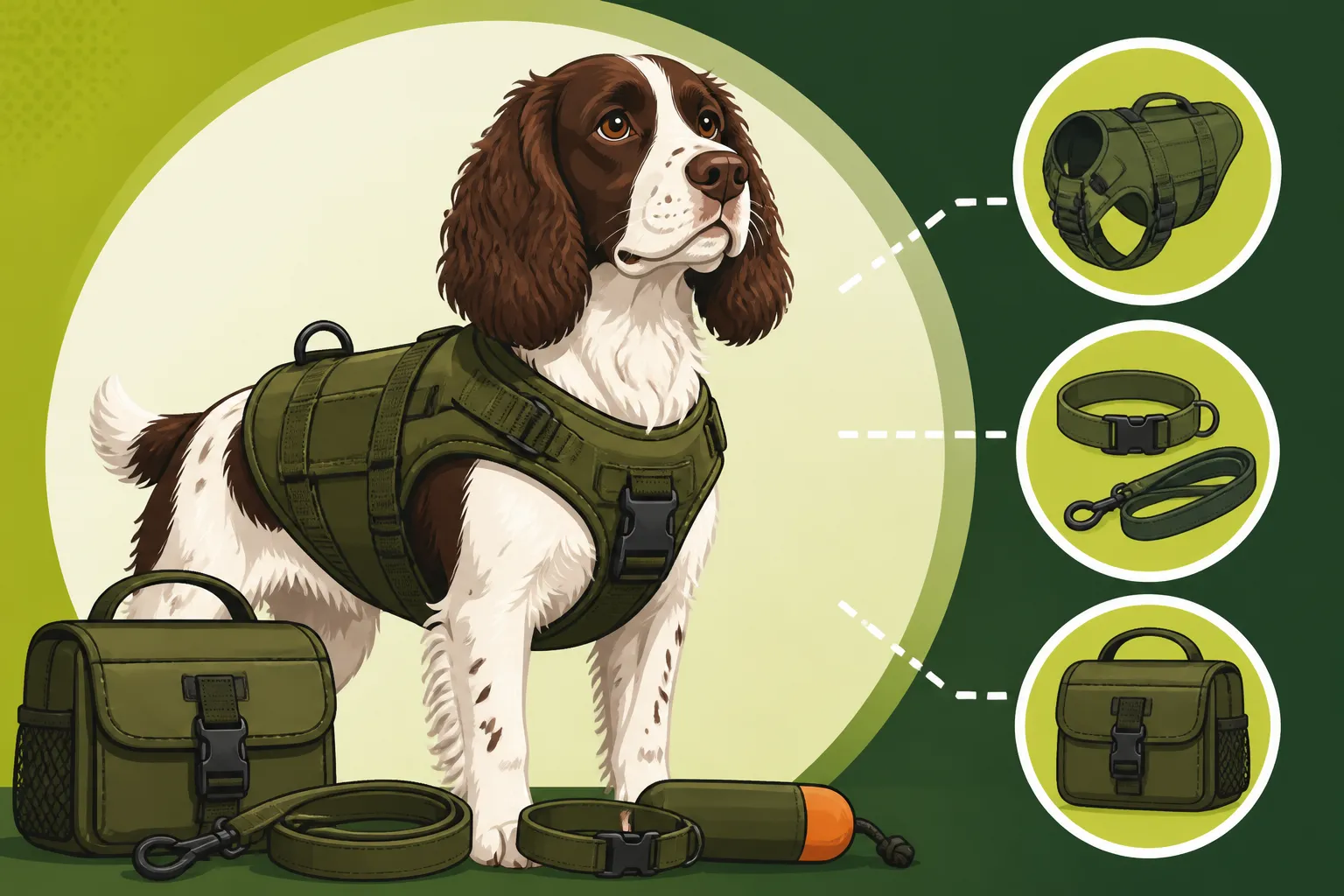
The working vest is often the cornerstone of a Springer Spaniel's field kit, and for good reason. It’s the primary piece of equipment designed to protect their body from the rigors of their work. But not all vests are created equal, and understanding the differences is key to making the right investment.
Understanding Different Vest Materials and Their Applications
Working vests come in a variety of materials, each suited to different conditions and tasks. For a Springer Spaniel working in icy water retrieving ducks, a neoprene vest is almost non-negotiable. Neoprene offers excellent insulation, helping to maintain core body temperature, and also provides buoyancy, which can be a lifesaver for a dog that’s spent hours swimming in frigid conditions. If you're wondering Whether a Springer Spaniel Needs a Neoprene Vest for Water, the answer for a waterfowl dog is a resounding yes. These vests are durable and snug-fitting, designed to move with the dog without chafing.
For upland hunting, where your Springer Spaniel is pushing through briars, sharp stubble, and dense brush, you'll want a vest made from tough, puncture-resistant materials like Cordura or heavy-duty canvas. These vests focus more on abrasion resistance and shielding against thorns and sharp sticks. They often feature reinforced chest and belly panels, which are crucial areas for protection. Some vests even incorporate high-visibility orange or yellow panels, ensuring your dog stands out to you and other hunters, a paramount safety feature in heavy cover. Different tasks demand different levels of protection, and choosing the wrong material can leave your dog vulnerable. For a more direct cost breakdown, you might also look at What a Springer Spaniel's Vest for Cover Costs.
Cost Considerations and Finding the Right Fit
The cost of a working vest can vary significantly based on material, brand, features, and durability. You'll find entry-level vests that offer basic protection, typically in simpler materials, and then there are mid-range options that provide a good balance of durability and specialized features. At the higher end, you'll see premium vests made from advanced technical fabrics, offering superior insulation, extreme puncture resistance, or integrated GPS pockets. These top-tier vests often come from specialized gundog equipment manufacturers known for their quality and field-testing.
Beyond the initial purchase price, remember that a vest is an investment in your dog's safety and comfort, and ultimately, its longevity in the field. A poorly fitting vest can cause chafing, restrict movement, or fail to provide adequate protection, making it a wasted expense and a potential hazard. Always measure your Springer Spaniel carefully, following the manufacturer's guidelines, and consider checking reviews from other working dog owners. It's often worth paying a little more for a vest that fits perfectly and is built to withstand the abuse of a demanding season, rather than buying something cheap that falls apart after a few outings.
Essential Training and Control Kit Items for the Active Springer
Beyond the vest, a working Springer Spaniel requires an array of tools for training, control, and effective communication. These items are fundamental to developing a well-mannered, responsive gundog, ensuring both safety and success in the field.
Collars, Leads, and Whistles for Precision Handling
Your average house collar and leash simply won't cut it for a working Springer. You'll likely need several specialized collars. A durable, waterproof field collar is essential, often made of biothane or similar synthetic material that resists moisture and odors, and can be easily cleaned. Many working dog owners also utilize e-collars for advanced training and reliable long-distance communication. When used correctly and with positive reinforcement, an e-collar can be an invaluable tool for reinforcing commands like recall or 'whoa' in high-distraction environments. However, they are a significant investment, and understanding An Electronic Collar for a Springer Spaniel Costs and proper usage is crucial before acquiring one.
For leads, you'll need everything from a short, sturdy slip lead for quick, hands-free control, to a long line for teaching steadiness and recall in open areas. A quality whistle is perhaps one of the most iconic and effective communication tools for a Springer Spaniel. Different tones and sequences can be taught to mean specific actions – 'sit,' 'come,' 'turn,' or 'hup' (flush). Having a lanyard to keep your whistle secure and readily accessible is a small but important detail. These aren't just accessories; they are extensions of your communication, forming the language you share with your working partner, especially when distance or noise is a factor.
Training Dummies, Retrieving Aids, and Bird Scent
Training a Springer Spaniel involves a lot of retrieving, and for that, you'll need an arsenal of training dummies and bumpers. These come in various sizes, weights, and materials (plastic, canvas, foam) to simulate different game birds. Some are designed to float for water retrieves, while others are heavier for long-distance throws. The beauty of bumpers is that they're consistent in scent and feel, allowing for controlled training sessions. You can learn more about What a Springer Spaniel's Training Bumpers and Whistle Cost to help budget for these consumables.
To really get your Springer Spaniel's nose working and simulate real hunting conditions, bird scent can be applied to dummies or even introduced through feathers or actual game birds (when appropriate and ethical). For serious gundog training, you might even consider purchasing live birds for controlled flushes and retrieves, though this comes with its own set of logistical and ethical considerations and additional costs for housing and care. These aids help bridge the gap between backyard practice and the unpredictable realities of the field, building confidence and refining those innate hunting instincts.
Ensuring Safety and Well-being: Field First Aid and Protection
A working Springer Spaniel is going to encounter bumps, scrapes, and sometimes more serious injuries in the field. Being prepared for these eventualities is not just responsible ownership; it's absolutely essential.
Preventing Injuries with Paw Protection and Reflective Gear
Prevention is always better than cure, and this applies directly to protecting your Springer Spaniel's paws. Running over sharp rocks, frozen ground, stubble fields, or through abrasive cover can take a toll on paw pads, leading to cuts, abrasions, or cracks. Paw balms or waxes can help condition and protect pads, creating a barrier against harsh elements. For more intense protection, some handlers utilize dog boots or paw wraps. While some dogs take time to adjust to wearing them, they can be invaluable for preventing injuries in particularly challenging terrain, or protecting an already injured paw.
Visibility is another key preventative measure, especially during hunting season or when working near roads. High-visibility elements on vests, collars, or even leashes, often in bright oranges or yellows, ensure your dog is seen by you, fellow hunters, and any nearby motorists. Many vests incorporate reflective strips for low-light conditions. Remember, you're not just thinking about your dog's ability to see; you're thinking about everyone else's ability to see them. When working with a keen Springer Spaniel, especially one that tends to put its nose down and vanish, clear visibility can prevent serious accidents.
The Critical Role of a Field First Aid Kit
Despite all preventative measures, injuries can and do happen. This is why a well-stocked field first aid kit is absolutely non-negotiable for any working Springer Spaniel owner. This isn't your average human first aid kit; it needs to be tailored for common canine injuries encountered in the field. Think about items like: self-adhesive bandages, antiseptic wipes, sterile saline solution for flushing wounds or eyes, blunt-tipped scissors, tweezers for thorn removal, a muzzle (even the gentlest dog can bite when in pain), and a small bottle of super glue or liquid bandage for minor cuts. Pain relief specifically for dogs, prescribed by your vet, can also be a valuable addition.
Knowing how to use these items is just as important as having them. Familiarize yourself with basic canine first aid techniques, like how to apply a pressure bandage or safely remove a foreign object from an ear. After any strenuous day in the field, always perform a thorough check on your dog from nose to tail, as detailed in articles like After the Hunt: Checking a Springer Spaniel Over Nose to Tail. Being prepared to address minor injuries immediately can prevent them from becoming severe, potentially saving you a trip to the emergency vet or mitigating a much larger problem. Just as you Setting Money Aside for a Springer Spaniel's Vet Bills, consider that a good first aid kit is an investment in reducing those emergency bills.
Transport and Logistics: Making Every Journey Safe and Comfortable
Working Springer Spaniels are often traveling to training grounds, hunt tests, or actual hunting locations. The journey itself can be a source of stress or danger if not properly managed. Investing in appropriate transport and on-the-go comfort items ensures your dog arrives ready to work and returns home safely.
Secure Crating and Dog Boxes for Vehicle Safety
For many working dog owners, a secure crate or dog box isn't just a convenience; it's a fundamental safety requirement for vehicle transport. In the event of an accident, an unsecured dog can become a projectile, injuring itself or human passengers. Purpose-built dog boxes for trucks offer superior protection, often constructed from aluminum or heavy-duty plastic, designed to withstand impacts and provide ventilation. They also keep your dog contained and comfortable, protecting your vehicle's interior from mud, burrs, and wet dog smell. The cost of these can vary widely, from basic travel crates to elaborate, insulated truck boxes with multiple compartments, as discussed in What a Truck Dog Box for a Springer Spaniel Costs.
Even for shorter trips or in a car, a robust, crash-tested kennel or crate is a worthwhile investment. It creates a safe, familiar den for your dog, reducing anxiety during travel. Look for crates that are well-ventilated, easy to clean, and appropriately sized for your Springer Spaniel, allowing them to stand, turn around, and lie down comfortably. Some working dog owners prefer wire crates for better airflow, while others opt for solid-sided plastic for increased containment and a den-like feel. Ultimately, the goal is to provide a safe, secure, and stress-free travel environment for your working partner.
Hydration, Nutrition, and Comfort on the Go
Working dogs expend a tremendous amount of energy, making proper hydration and nutrition crucial, even when away from home. A portable water bowl and an ample supply of fresh water are essential. Consider insulated water bottles or jugs to keep water cool on warm days. Dehydration can quickly compromise a dog's performance and health. For feeding, travel-friendly food storage containers keep kibble fresh and prevent spills. If your Springer Spaniel is on a specialized diet, perhaps a performance formula from a brand like Chewy or Ollie, ensuring consistent access to their food is vital. You'll also want to consider How Much a Working Springer Spaniel Should Eat to plan your rations.
Beyond the basics, think about comfort items. A travel bed or mat can provide a familiar resting spot, whether in the truck, at a training seminar, or during breaks in the field. Cooling vests or mats can be beneficial in hot weather, while a cozy blanket offers warmth in colder conditions. These small additions contribute significantly to your dog's overall well-being, helping them recover faster and maintain optimal physical condition for their demanding work. A hydrated, well-fed, and comfortable dog is a happy and effective working partner.
Budgeting for the Long Haul: The Ongoing Investment in Your Working Partner
Owning a working Springer Spaniel is a commitment, and that commitment extends to budgeting for their specialized gear, which isn't a one-time purchase. It’s an ongoing investment that evolves with your dog’s training, activities, and the inevitable wear and tear of active use.
Initial Outlay Versus Long-Term Replacements and Upgrades
When you first acquire a working Springer Spaniel, the initial outlay for their essential kit can feel substantial. You're buying a vest, multiple collars, leads, training dummies, a good whistle, and a secure travel crate all at once. This initial investment sets the foundation for their training and safety. However, it’s crucial to understand that this isn’t where the spending ends. Gear gets lost, damaged, or simply wears out over time. Collars fray, whistles get dropped in swamps, dummies get chewed beyond recognition, and even the toughest vest will eventually succumb to briars and barbed wire.
Therefore, budgeting for a working Springer Spaniel's gear must include funds for replacements and upgrades. As your dog progresses in its training, you might need more advanced equipment, such as a different type of e-collar, more specialized retrieving dummies, or a heavier-duty vest for specific hunting conditions. Consider this a revolving budget item, perhaps setting aside a small amount regularly. Quality equipment, while more expensive upfront, often lasts longer, reducing the frequency of replacements. Think of it like maintaining a specialized vehicle; regular upkeep and part replacement are simply part of the operational cost.
Making Smart Choices for Quality and Durability
When faced with a myriad of options, it's tempting to opt for the cheapest gear, but for a working Springer Spaniel, this can be a false economy. Investing in quality and durability from reputable brands often pays off in the long run. A well-constructed vest from a known gundog supplier, for example, might cost more initially, but it will likely provide superior protection and last for many seasons, whereas a cheaper alternative might need replacing within a year. The same goes for e-collars; while many options exist, opting for a reliable, well-reviewed unit can prevent malfunctions in the field that could compromise safety or training.
Consider the cost not just in terms of dollars, but in terms of peace of mind and your dog's well-being. A high-quality vest that genuinely protects your dog from injuries could save you far more in vet bills down the line. (Speaking of vet bills, having pet insurance from providers like Healthy Paws can also offer a safety net for those unexpected mishaps in the field.) Furthermore, durable gear can withstand the rigors of frequent use, maintaining its functionality and allowing you to focus on the task at hand rather than worrying about equipment failure. When you invest in a working Springer Spaniel, you're investing in a partner, and equipping them properly is a critical part of that partnership.
| Gear Category | Purpose | General Cost Shape (Relative) | Durability / Replacement Frequency |
|---|---|---|---|
| Working Vests | Body protection, insulation, visibility | Mid to High | Moderate to High (seasonal repair) |
| Field Collars & Leads | Control, identification, tracking | Low to Mid | Moderate |
| E-Collars | Long-distance communication, training | High | High (electronics) |
| Whistles & Lanyards | Auditory commands, handler convenience | Low | Low (whistles get lost) |
| Training Dummies | Retrieve practice, scent work | Low to Mid (consumable) | Low to Moderate (chewing) |
| Field First Aid Kit | Emergency injury treatment | Mid (initial build) | Low (individual items replaced) |
| Paw Protection | Prevent pad injuries, conditioning | Low | High (daily application) |
| Vehicle Crates/Boxes | Safe transport, containment | Mid to High | High |
| Portable Water/Food | On-the-go hydration & nutrition | Low | Moderate |
Disclaimer
This article is for general informational purposes only and does not constitute professional advice. Laws, prices and regulations vary by location and change over time. Consult a qualified professional for guidance on your specific situation.