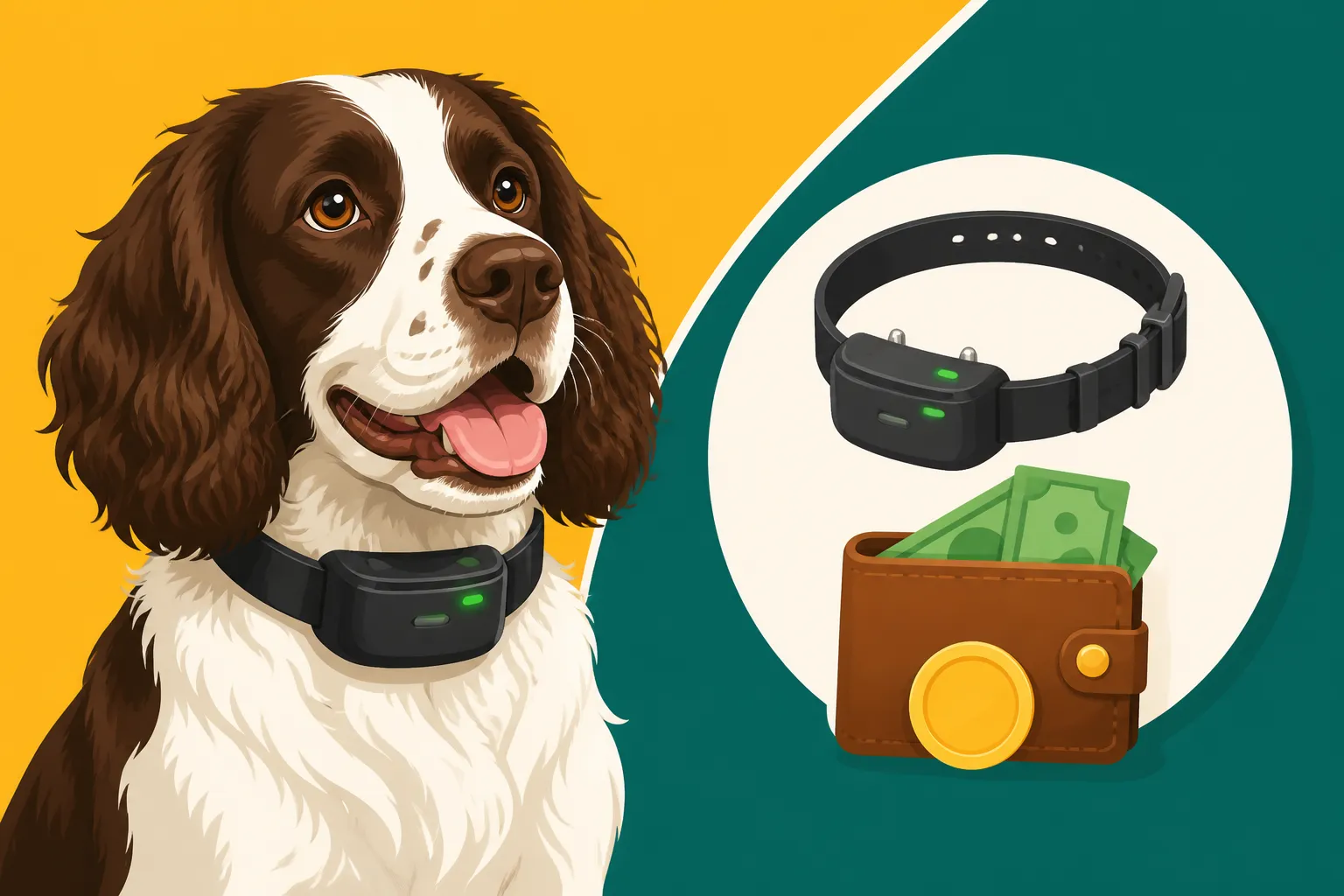
What an Electronic Collar for a Springer Spaniel Costs
It's completely normal to feel a bit overwhelmed when you start looking into specialized training tools for your beloved Springer Spaniel. You just want what's best for them, whether it's giving them more freedom or ensuring their safety, but the world of electronic collars can be confusing, not to mention the varying costs involved. This guide is here to break down what you can expect to pay for an electronic collar, and more importantly, the often-overlooked associated costs that truly make a difference in its effectiveness and humane use for your spirited Springer.
Understanding the Different Types of Electronic Collars and Their Price Points
When you first hear "electronic collar," your mind might jump to one specific image, but the truth is, there's a whole spectrum of these devices on the market, each designed for different purposes and, consequently, coming with different price tags. For a dog as intelligent and active as an English Springer Spaniel, understanding these distinctions is key to making an informed decision.
Basic Remote Training Collars
These are typically what most people envision when they think of an e-collar for training. They consist of a collar receiver worn by your dog and a remote transmitter you hold. Their primary function is to provide a mild, consistent stimulus (often referred to as a "tap" or "pressure") to communicate with your dog over a distance. This stimulus can be a vibration, a tone, or a static correction, with adjustable levels.
For a Springer Spaniel, known for their boundless energy and sometimes selective hearing when a fascinating scent is involved, these collars can be appealing for reinforcing recall or boundaries. Imagine you're out on a hike, and your Springer suddenly catches the scent of a rabbit and starts to bolt, ignoring your calls. A well-introduced and properly used basic remote training collar can provide that immediate, consistent communication to interrupt the behavior and redirect them back to you. The cost of these entry-level collars is generally on the more accessible side. They often have a decent, but not extreme, range and might not be fully submersible, though they're usually water-resistant enough for splashes or light rain. You might find a good selection of these readily available on sites like Chewy, offering various brands and features to choose from.
Advanced Multi-Dog Systems and Professional-Grade Collars
Stepping up from the basics, you'll find electronic collars designed for more demanding situations, often favored by professional trainers, hunters, or individuals with multiple working dogs. These systems boast features that are particularly beneficial for a breed like the Springer Spaniel, especially if they're involved in gundog work or extensive outdoor adventures. We're talking about much longer ranges, sometimes up to a mile or more, crucial for dogs that quarter large fields or thick cover. They are almost always fully waterproof and often submersible, a non-negotiable feature for a Springer who loves to plunge into water after a retrieve.
These advanced collars also offer a wider array of stimulation levels, sometimes hundreds, allowing for incredibly precise adjustments tailored to your dog's specific temperament. Many also include GPS tracking, which is invaluable for a scent-driven Springer that might put its nose to the ground and vanish, allowing you to locate them quickly and safely. Some systems even come with multi-dog capabilities, allowing you to control several collars from a single remote, which is a game-changer if you have a brace of Springers. The cost of these professional-grade systems reflects their enhanced durability, sophisticated technology, and comprehensive feature sets. They represent a more significant initial investment, but for some owners, the added peace of mind and training capabilities are well worth it. You're essentially paying for reliability, robustness, and expanded functionality that can truly make a difference in managing a highly driven dog like a Springer in challenging environments.
Bark Collars and Containment Systems
It's important to differentiate these from the remote training collars, as they serve entirely different purposes, though they also fall under the umbrella of "electronic collars." Bark collars are designed to address excessive barking, typically activating automatically when your dog barks. They come in various forms, from simple vibration models to those offering static correction. For a Springer Spaniel, who can certainly be vocal, particularly if bored or anxious, a bark collar might be a consideration, but it's crucial to understand the root cause of the barking first. The cost for these can vary widely, with basic models being quite inexpensive and more advanced, programmable ones being more of an outlay.
Electronic containment systems, often called "invisible fences," create a perimeter using a buried wire or wireless signal. When your dog approaches the boundary, their receiver collar delivers a warning tone, followed by a static correction if they proceed further. These are designed to keep your dog within a specific area without a physical fence. For a Springer with a strong prey drive and a tendency to roam, this might seem like an attractive option. However, it's a significant financial investment, often involving installation costs beyond just the hardware. While they can be effective for some dogs, they don't prevent external animals from entering your yard, nor do they offer the same level of off-leash communication as a remote training collar. It’s also worth noting that proper training with these systems is paramount, as a dog not understanding the boundary can experience fear or confusion, which can lead to behavioral problems down the line.
Here's a quick overview of the general cost categories:
| Collar Type | General Price Shape (Collar Only) | Typical Features | Best For A Springer Spaniel If… |
|---|---|---|---|
| Basic Remote Training Collar | Entry-level to Moderate | Standard range, water-resistant, basic stimulation levels (tone, vibration, static) | You need help with recall in a controlled environment or reinforcing basic obedience cues. |
| Advanced/Professional E-Collar | Significant Investment | Long range, fully waterproof/submersible, many stimulation levels, GPS (often optional), multi-dog capable | Your Springer works cover, swims regularly, requires extensive off-leash work, or has high prey drive. |
| Automatic Bark Collar | Low to Moderate | Sound-activated, vibration/static correction, some adjustable sensitivity | Excessive barking is a primary concern, but always consider underlying causes first. |
| Electronic Containment System | High Initial Outlay | Perimeter wire or wireless signal, warning tone/static correction, boundary training required | You need to keep your Springer within a specific unfenced yard and are committed to thorough training. |
Beyond the Collar: Associated Costs of Using an Electronic Collar Effectively
It's easy to focus solely on the price tag of the collar itself, but that's just one piece of the puzzle. For an electronic collar to be a humane and effective tool, especially with a sensitive and intelligent breed like the Springer Spaniel, there are several other investments you simply can't afford to skip. These often-overlooked costs are crucial for successful integration into your training regimen.
Professional Training and Consultation
This is, without a doubt, the most important "cost" associated with an electronic collar. An e-collar is not a magic wand; it's a communication tool. Without proper guidance, it can easily be misused, causing fear, confusion, or even aggression in your dog. Imagine giving a powerful piece of machinery to someone who's never read the instruction manual. The potential for harm is significant. A Springer Spaniel, while resilient, is also a soft dog that can shut down if you shout or if corrections are harsh or poorly timed. This is why professional training is non-negotiable.
Hiring a qualified trainer who specializes in and advocates for balanced training methods, including the ethical use of e-collars, is a critical investment. These trainers will teach you how to properly introduce the collar, find your dog's "working level" (the lowest level of stimulation they perceive), and integrate it seamlessly into your existing commands. They'll help you teach your Teaching a Springer Spaniel to Stay in Range and ensure your dog understands what the stimulation means, preventing fear and promoting clear communication. The shape of these costs can vary widely. Some trainers offer hourly sessions, while others have multi-session packages or even board-and-train programs where your dog stays with the trainer for an extended period. While the upfront expense might seem considerable, typically ranging from hundreds to well over a thousand dollars depending on the program's intensity and length, it is an investment in your dog's safety, confidence, and your relationship with them. This is especially true for an energetic breed prone to wandering off on a scent, so ensuring Whether a Springer Spaniel's Recall Can Be Trusted is paramount. Think of it as investing in an education for both you and your dog, saving you from potential behavioral issues and veterinary bills down the line that might arise from improper use.
Accessories and Maintenance
Once you have the collar and the training plan, there are still smaller, ongoing costs to consider. Electronic collars aren't "set it and forget it" devices; they require regular care and sometimes replacement parts.
Firstly, you'll need to think about replacement components. Contact points, which are the small metal probes that touch your dog's skin, come in different lengths for different coat types. For a Springer Spaniel with a thicker coat, you might need longer points, and these can wear down or get lost. Batteries, if not rechargeable (though most modern units are), will need replacing. Even with rechargeable units, the charging cables can get misplaced or damaged. Some owners also invest in protective skins or covers for their remote transmitters and receiver collars, especially if their Springer is crashing through thick cover or swimming frequently. These smaller items usually don't break the bank individually, but they add up over time.
Secondly, maintenance is key, particularly for a dog like a Springer Spaniel with their propensity for water work and rolling in everything imaginable. Regularly cleaning the contact points and the collar strap is essential for hygiene and to prevent skin irritation. Sweat, dirt, and debris can build up, and in the case of a wet Springer, can create an environment ripe for skin issues under the collar. You might need specific cleaning solutions or simply good old soap and water. These recurring minor expenses contribute to the overall lifespan and effectiveness of your electronic collar system.
The Hidden Cost of Misuse (and Why Training Prevents It)
This might not be a direct financial cost in the same way as buying a collar or paying a trainer, but it's perhaps the most significant "cost" to consider: the potential for psychological damage and behavioral fallout from improper use. If an e-collar is introduced incorrectly, used at too high a level, or applied without proper foundational training, it can lead to a host of problems.
A Springer Spaniel, known for its biddable nature, can become fearful, anxious, or even aggressive if they associate the collar with pain or confusion rather than clear communication. This can manifest as shying away from your touch, becoming leash reactive, or developing generalized anxiety. Fixing these behavioral issues can then become another substantial cost, requiring further professional intervention from certified behaviorists, potentially long-term medication, and immense emotional strain on both you and your dog. You might find yourself needing a behaviorist to address issues that could have been avoided with a proper initial investment in training.
The "cost" here is not just monetary; it's the cost to your bond with your Springer, their confidence, and their overall well-being. Investing in a qualified trainer to help you use the tool correctly is, in effect, a preventative measure against these far more damaging and costly outcomes. It's about ensuring that the tool enhances your relationship and your dog's safety, rather than inadvertently causing harm. Understanding The Soft Springer Spaniel That Shuts Down If You Shout is crucial here; a positive and careful approach is always best.
Weighing the Investment: Is an Electronic Collar Right for Your Springer Spaniel?
Deciding whether to use an electronic collar for your Springer Spaniel is a personal choice, and one that many owners wrestle with. It's not a decision to be taken lightly, and it's certainly not about finding the cheapest option. It’s about understanding the full picture of the investment and whether it aligns with your training philosophy and your dog's needs.
Pros and Cons of Electronic Collar Use for Springers
Let's look at the upsides first, particularly for a breed like the Springer Spaniel. One of the biggest advantages is enhanced off-leash reliability and safety. Springers are naturally driven dogs, often with a strong prey drive and an incredible nose that can lead them astray. If your Springer catches a scent of a deer or pheasant, their natural instinct to quarter and hunt can override even the best verbal recall. An e-collar, when used correctly, provides a way to communicate effectively at a distance, ensuring your dog's safety from roads, other animals, or dangerous situations. This can mean more freedom for your Springer to explore safely in appropriate areas. For owners who enjoy gundog work, an e-collar is often an indispensable tool for advanced training, such as steadying a dog to flush or ensuring precise retrieves.
However, there are significant considerations on the "con" side. The potential for misuse is high if the owner isn't properly educated. As we discussed, a sensitive Springer can be easily intimidated or confused, leading to behavioral setbacks rather than progress. There's also the initial learning curve for the owner; you have to learn how to time corrections perfectly, how to read your dog's reactions, and how to integrate the collar into positive reinforcement. Furthermore, the perception of e-collars in public can be negative, and you might face judgment from others who don't understand their proper, humane application. It’s a tool that requires commitment and understanding from the owner, and not just a purchase. If you're wondering Whether an Electronic Collar Belongs on a Springer Spaniel, it truly depends on your dedication to learning proper technique.
Exploring Alternatives and Their Costs
For those who decide an electronic collar isn't the right path, or who want to explore all options, there are indeed alternatives for managing and training your Springer Spaniel, each with its own "costs" – sometimes monetary, sometimes in terms of time and effort.
- Long Lines: A long line (a very long leash, often 15-50 feet) is an excellent tool for practicing recall and teaching boundaries in a safe, open space. Your Springer gets the feeling of off-leash freedom while you maintain control. The cost of a good quality long line is minimal, but the "cost" in terms of training time and consistency is higher, as you physically have to manage the line and be present to reinforce.
- Positive Reinforcement Training Alone: Many owners achieve incredible results with their Springers using purely positive reinforcement methods, focusing on rewarding desired behaviors and managing the environment to prevent undesirable ones. This often involves high-value treats, toys, and praise. The monetary cost might be less in terms of tools, but the time commitment to shaping behaviors and the need for creativity in reinforcement can be substantial. You might still invest in a Whether a Springer Spaniel Needs a Gundog Trainer who uses only positive methods. This approach can be incredibly effective for many aspects of training.
- Specialized Group Classes or Private Sessions without E-collars: Investing in structured obedience classes, agility, or scent work can provide your Springer with the mental and physical stimulation they need while strengthening your bond. These classes typically involve a fee per session or for a multi-week course. The methods taught usually focus on positive reinforcement, leash work, and impulse control. For example, learning What Gundog Training Costs a Springer Spaniel Owner can give you an idea of the investment for specialized instruction using traditional methods.
- GPS Collars without Stimulation: If your primary concern is tracking a wandering Springer, a GPS collar that only provides location data (without stimulation functions) is an option. These can be particularly useful for Why a Springer Spaniel Puts Its Nose to the Ground and Vanishes. They typically involve an upfront cost for the device and often a monthly subscription fee for the tracking service.
Ultimately, the best approach for your Springer Spaniel is one that you are committed to, understand thoroughly, and can implement consistently and humanely. Whether you choose an electronic collar or an alternative, remember that time, patience, and clear communication are the most valuable investments you can make in your dog.
Disclaimer
This article is for general informational purposes only and does not constitute professional advice. Laws, prices and regulations vary by location and change over time. Consult a qualified professional for guidance on your specific situation.