Whether a Springer Spaniel Breeder Picks Your Puppy
Finding the perfect English Springer Spaniel puppy for your family is an exciting journey, often filled with dreams of fluffy bundles and wagging tails. But a common point of anxiety for many prospective owners is the question of puppy selection: will you get to pick your own puppy, or will the breeder make that crucial decision for you? This guide will dive deep into the nuanced world of puppy placement, explaining why reputable breeders often take the lead, how your input is invaluable, and what to expect when welcoming your new furry family member.
The Breeder's Perspective: Why They Often Take the Reins
It can feel a little disheartening, can't it? You've imagined strolling into a litter of adorable Springer Spaniel puppies, instantly connecting with "the one," and making that joyful decision yourself. However, many experienced and ethical breeders choose to assign puppies to their new homes rather than allowing families free rein. This isn't about being controlling; it's rooted in a deep understanding of their puppies, the breed, and the paramount importance of a successful, lifelong match. They've spent weeks, sometimes months, observing these little personalities unfold, and they know their bloodlines intimately. Think of them as expert matchmakers, looking beyond just cuteness to ensure harmony.
Temperament Matching: More Than Just a Pretty Face
From the moment they're born, and even more so as they grow, each puppy in a litter develops a distinct personality. Some are bold and adventurous, the first to explore a new toy or venture away from their siblings. Others are more reserved, preferring to observe before joining in, or are content to snuggle quietly. A breeder sees these subtle cues every single day, hour after hour. They notice which puppy is the 'go-getter,' which is the 'gentle soul,' and which one has endless reserves of energy.
For instance, a bold, high-drive puppy might thrive in a very active home with an experienced owner who plans to engage in competitive dog sports or field work, like those who dream of a dedicated hunting partner. A Field Bred Springer Spaniel Is a Different Dog to Live With is a great read to understand these energy levels. Conversely, placing that same high-drive puppy in a quieter home with an elderly couple might lead to frustration for both the dog and the owners. The puppy would be constantly under-stimulated, potentially developing undesirable behaviors like excessive chewing or barking, and the owners might feel overwhelmed.
On the other hand, a more laid-back, biddable puppy might be a perfect fit for a family with young children or a first-time dog owner who's looking for a loving companion without the intense demands of a working line. The breeder's goal is to set both the puppy and the new family up for success, preventing heartbreaking situations where a dog is rehomed because its personality clashes with its environment. This deep knowledge of individual puppy temperaments is something no casual visitor, no matter how well-intentioned, can glean in a short visit.
Understanding the "Ideal" Springer Spaniel
Beyond individual temperaments, breeders are also keenly aware of the English Springer Spaniel breed standard and the specific goals of their breeding program. Whether they breed for the show ring or the field, they have an ideal in mind for conformation, health, and working ability. They want to ensure that the puppies they place are not just good pets, but good representatives of the breed, capable of fulfilling the roles they were bred for.
For a breeder focused on field lines, they'll be looking for puppies exhibiting strong retrieving drive, a keen nose, and an eagerness to work. They'll assess how well each puppy "quarters" or hunts a field, how they react to different stimuli, and their overall courage and resilience. This is crucial for matching a puppy with a future working home. For a show breeder, they might be looking at subtle structural details, coat quality, and overall "type" that aligns with the breed standard for conformation.
Reputable breeders invest heavily in the health of their lines, performing comprehensive health clearances on parent dogs, including DNA tests for conditions like Fucosidosis and PFK Deficiency. The DNA Test That Should Precede Every Springer Spaniel Purchase highlights just how critical these steps are. They understand that a good match contributes to the overall health and well-being of the breed, as well as the longevity of the individual dog. They want their puppies to thrive, and part of that thriving comes from being in the right environment, with owners who understand and can meet their specific needs.
Your Role in the Puppy Selection Process
Even if the breeder ultimately makes the final decision on which puppy joins your family, your input is absolutely essential. Think of it as a collaborative effort. The more honest, detailed, and open you are with the breeder, the better they can understand your needs and make the best possible match. This isn't a passive process; it requires active engagement from you.
Communicating Your Lifestyle and Expectations
When you first inquire about a litter, a good breeder will ask you a lot of questions. Don't view this as an interrogation! They want to know everything about your home environment, your daily routine, your experience with dogs, and what you envision life with your Springer Spaniel will look like. Are you an avid hiker or a couch potato? Do you have young children or other pets? Are you looking for a hunting partner, an agility star, or simply a loving companion?
Be as specific as possible. For example, instead of just saying "we're an active family," describe what that means: "We hike 5 miles every Saturday, go to the dog park twice a week, and I work from home so the dog won't be alone for long stretches." If you have small children, mention their ages and your plan for integrating a puppy safely. If you live in an apartment, be clear about how you plan to meet the significant exercise needs of a Springer Spaniel. How Much Exercise a Field Bred Springer Spaniel Needs will give you an idea of the commitment. The more information you provide, the clearer a picture the breeder has of your family's dynamics and capacity to care for a particular temperament. This transparency is crucial for a successful placement.
Visiting the Litter: What You Can Observe (and What You Can't)
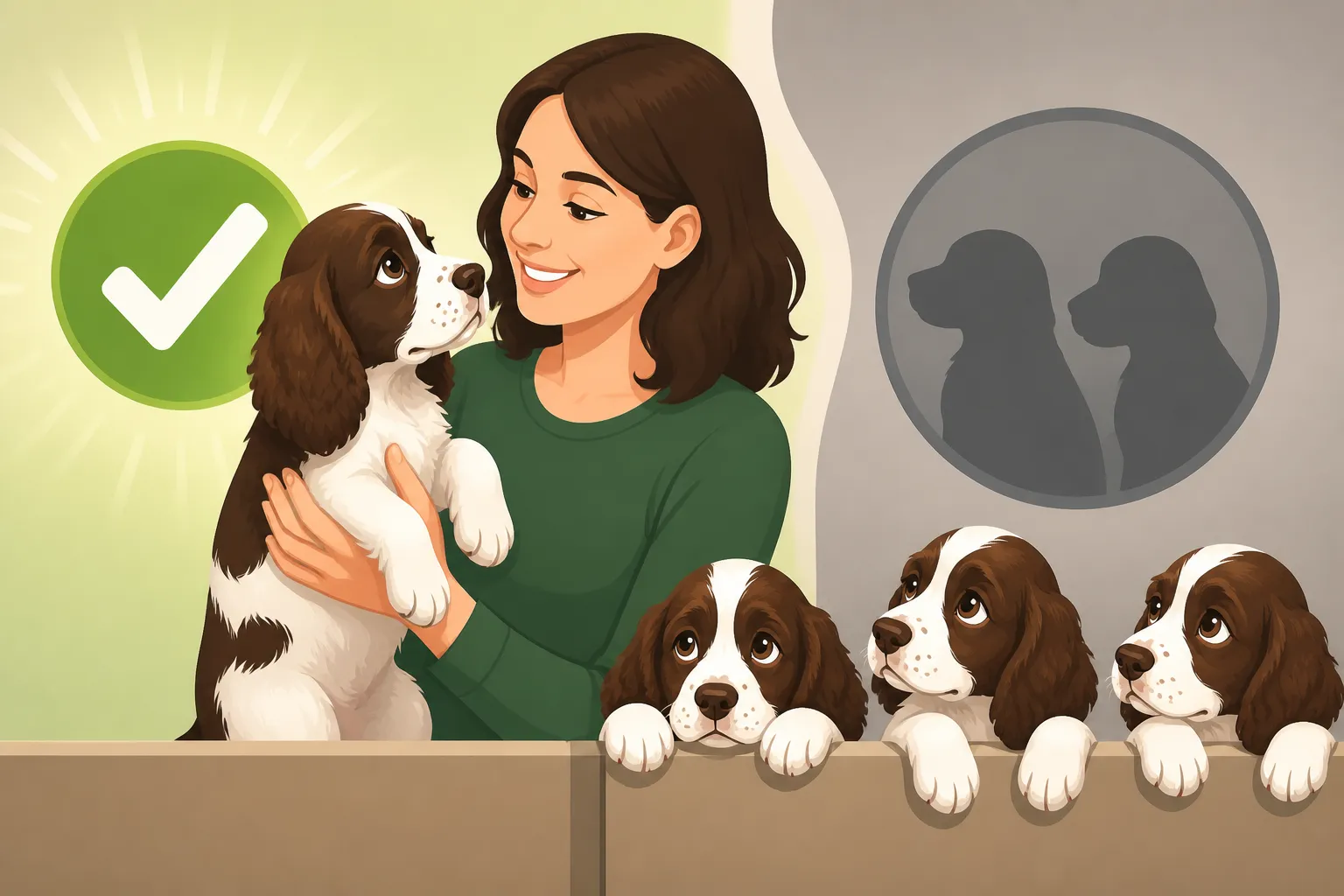
Most breeders welcome visits once the puppies are old enough (usually after their first vaccinations). This is your chance to meet the puppies, observe them, and interact with them and their mother. While you won't be "picking" in the traditional sense, your observations are still valuable. You might notice certain puppies gravitate towards you, or perhaps one that is particularly playful or independent. Share these observations with the breeder.
During your visit, pay attention to the overall environment. Are the puppies clean, well-socialized, and confident? Does the dam (mother dog) have a good temperament? Ask the breeder questions about their daily routine, how they're socializing the puppies, and what training they've already started. You can also get a feel for the breeder's philosophy and whether it aligns with your own. This visit is not just for you to see the puppies; it's also for the breeder to see you interact with the puppies and observe how you fit into their environment. It helps them confirm their assessment of your suitability for one of their pups.
Remember, though, that a puppy's behavior during a short visit can be influenced by many factors – recent playtime, nap time, who they've just interacted with, or even just what caught their attention at that moment. A quick cuddle doesn't necessarily reveal a lifetime temperament. Trust the breeder's extensive daily observation over your brief interaction.
The Pros and Cons of Breeder Selection
It's natural to have mixed feelings about a breeder choosing your puppy. On one hand, you want that personal connection. On the other, you want what's truly best for your future companion. Let's weigh this out realistically.
Benefits for Both Puppy and Owner
When a breeder carefully matches a puppy to a home, the benefits are far-reaching for everyone involved.
For the Puppy:
- Reduced Stress: A puppy that fits its environment is less likely to be overwhelmed, bored, or anxious. It will thrive when its energy levels and personality are understood and met.
- Better Training Success: A puppy whose temperament aligns with its owner's training style and goals will generally be easier to train and more receptive to learning. For instance, a "soft" Springer might shut down with harsh corrections, while a bolder one might need clearer boundaries. The Soft Springer Spaniel That Shuts Down If You Shout delves into this.
- Forever Home Security: The primary goal is to ensure this puppy finds its forever home. Good matches mean fewer rehomings, fewer dogs ending up in shelters, and a more stable, happy life for the dog. If things don't work out, many ethical breeders have clauses in their contracts about the dog being returned to them, reducing the burden on shelters.
For the Owner:
- Smoother Transition: A well-matched puppy is more likely to settle in quickly and adapt to its new home without significant behavioral challenges rooted in a mismatch of needs.
- Fewer Behavioral Problems: Many common behavioral issues, like destructive chewing, excessive barking, or separation anxiety, can be exacerbated by a mismatch in temperament and environment. A calm puppy in a quiet home is less likely to be stressed, and an active puppy in an engaging home is less likely to be bored and destructive. If you're pondering Whether a Springer Spaniel Needs a Job to Be Happy, this matching is even more vital.
- Expert Guidance: You're benefiting from the breeder's years of experience and intimate knowledge of their dogs. They're essentially giving you their professional recommendation, increasing the likelihood of a harmonious relationship. Many owners find peace of mind knowing an expert made this critical choice.
- Long-Term Support: A good breeder often becomes a lifelong resource. They want to know how their puppies are doing and are usually available to offer advice and support. This relationship starts with trust, built on their commitment to making the best matches.
Addressing the Desire for Personal Choice
It’s completely understandable to feel a pang of disappointment if you can't pick your own puppy. The idea of forming that instant bond, picking the one that "speaks" to you, is deeply ingrained in how many of us imagine bringing a new pet home. We project our hopes and dreams onto these tiny creatures, and the thought of someone else making that choice can feel like a loss of control, or even a diminishment of that unique bond.
However, it's important to reframe this. While you might not choose which puppy, you are choosing a reputable breeder who prioritizes the well-being of their dogs and the success of their placements. You're choosing a litter whose parents have undergone significant health testing, like those you can read about in The Health Tests Both Springer Spaniel Parents Should Have. You're choosing to trust an expert.
Many breeders understand this desire for connection. They might involve you in the process by sending regular updates, photos, and videos of the litter, allowing you to watch the puppies grow and develop. Some will give you a "top few" to choose from based on your stated preferences, once they've narrowed down the best matches. This way, you still get a sense of agency and connection, even if the initial pool of candidates has been expertly curated. When you consider the cost of ownership that comes with a new puppy, ensuring the best possible start is truly invaluable.
When You Might Get to Choose Your Puppy
While breeder selection is common, there are scenarios where owners might have more input, though it's usually within parameters set by the breeder. It's rarely a free-for-all pick-of-the-litter situation, especially with highly sought-after breeds like the English Springer Spaniel.
Understanding the "Pick Order" System
In some cases, breeders will assign a "pick order" based on when deposits were received. For example, if you were the first to place a deposit, you might get "first pick." However, even in these situations, it's crucial to understand what "pick" truly means. It doesn't typically mean you get to walk in and grab any puppy you want, regardless of its suitability.
Instead, a responsible breeder will first assess all the puppies and all the families on their waiting list. They'll then present each family with the puppies they believe are the best matches for their lifestyle, experience, and goals. If you have "first pick," you might get to choose from the two or three puppies that the breeder has deemed excellent fits for your specific situation. This ensures that while you still get a choice, it's a choice within a group of puppies already vetted for suitability. The initial What a Springer Spaniel Deposit Runs often secures this place on the waiting list.
It's worth asking a breeder early in your conversations how they handle puppy selection and if a pick order applies. Be wary of any breeder who promises "first pick" without first asking extensive questions about your home and lifestyle. That can be a red flag that they prioritize sales over responsible placement.
The Ethical Breeder's Approach to Choice
Ethical breeders are masters of communication. They will keep you informed throughout the puppy's early weeks, sharing observations about each puppy's developing personality. They might use a puppy aptitude test (like the Volhard Puppy Aptitude Test) or their own extensive observations to provide you with insights into each puppy's potential.
When it comes time for selection, they'll typically present you with their top recommendations, explaining why they believe a certain puppy would be a great fit for you. They'll discuss the puppy's energy level, its social nature, its biddability, and how these traits align with the information you've provided. They might even encourage you to interact with a few of their recommended puppies to see if you feel a connection, offering that crucial emotional component. Brands like Chewy, with their vast array of puppy products, are ready to ship whatever you need for the specifically chosen pup, whether it's a calm or boisterous one.
This collaborative approach allows you to feel involved and respected, while still benefiting from the breeder's expertise. It demonstrates a true commitment to the welfare of their dogs and the happiness of their clients. They want you to be thrilled with your new family member, and they know that the right match is the best way to achieve that. Sometimes, they even highlight specific traits that might make a puppy better suited for certain activities, which is why resources like The Seventy Year Gene Pool Divide Inside One Springer Spaniel Breed are so important for understanding breed differences.
Here's a quick summary of the common approaches to puppy selection:
| Selection Method | Description | Pros | Cons |
|---|---|---|---|
| Breeder Selects | Breeder observes puppies and matches them to prospective owners based on detailed applications and observations. | Best chance for a harmonious, lifelong match; leverages breeder's expertise; reduces chances of rehoming due to temperament mismatch. | Owners may feel a lack of personal choice; emotional connection might be slower to form without an "initial pick." |
| Pick Order (Curated) | Owners choose from a small, pre-selected group of suitable puppies, based on their position on the waiting list and breeder's assessment. | Offers a sense of choice within a safe, expert-vetted framework; still benefits from breeder's knowledge; allows for personal connection. | Choice is still limited to breeder's recommendations; may still feel less like a "true" pick if the desired puppy isn't in the curated group. |
| Owner Selects (Rare) | Owners freely choose any available puppy from the litter. Often seen with less reputable breeders. | Immediate gratification for owners; strong initial emotional connection. | High risk of temperament mismatch; potential for future behavioral issues; breeder may not understand puppy needs; can lead to higher rehoming rates. |
Ultimately, while the thought of "picking your own puppy" is a romantic one, entrusting an ethical English Springer Spaniel breeder with this crucial decision is often the wisest path. They have the knowledge, experience, and deep understanding of their breed to ensure that your new family member is not just adorable, but truly the right fit for your home, ensuring a lifetime of joy and companionship. And when it comes to supporting that new addition, consider looking into pet insurance options from providers like Healthy Paws early on, especially with active breeds that might encounter mishaps, or explore specialized food options from Ollie if your chosen puppy has particular dietary needs. Getting your First Year With a Springer Spaniel Puppy off to the best possible start means investing in every aspect of their well-being, from careful selection to ongoing care.
Disclaimer
This article is for general informational purposes only and does not constitute professional advice. Laws, prices and regulations vary by location and change over time. Consult a qualified professional for guidance on your specific situation.