Whether Separation Anxiety Is Why Springer Spaniels Reach Rescue
It's a heartbreaking reality that many wonderful dogs find themselves in rescue shelters, and for English Springer Spaniels, one of the most common and misunderstood reasons is often separation anxiety. Owners, overwhelmed by destructive behaviors, incessant barking, or inappropriate urination when left alone, can feel like they're at their wit's end, leading them to believe rehoming is the only solution. This guide aims to shed light on what separation anxiety looks like in a Springer Spaniel, why it can become such a profound issue, and most importantly, how to manage and prevent it, helping more of these fantastic dogs stay in their forever homes.
Understanding Separation Anxiety in Springer Spaniels
Springer Spaniels are renowned for their loving, eager-to-please nature and their deep bond with their human families. They are companion dogs through and through, originally bred to work closely with hunters, relying on constant interaction and direction. This innate desire for connection, while incredibly endearing, can sometimes manifest as profound distress when they find themselves alone. It's not about being "naughty" or "stubborn"; it's a genuine panic response that's utterly debilitating for the dog.
The Springer Spaniel's Velcro Nature
Anyone who has lived with a Springer Spaniel knows they are truly "Velcro dogs." They often follow you from room to room, settling at your feet the moment you stop. This isn't just a cute quirk; it's a deep-seated need for companionship that stems from their working heritage. They thrive on being part of the action, whether that's hunting in the field or simply snoozing on the sofa while you watch TV. This constant desire to be near their people means that sudden or prolonged solitude can feel like an existential threat to them. It's like their entire world has been pulled out from under them. This intense attachment is beautiful, but it's also the root cause of why some Springer Spaniels develop severe anxiety when left alone. For a deeper dive, check out Why a Springer Spaniel Follows You Everywhere.
Signs Beyond Just Chewing
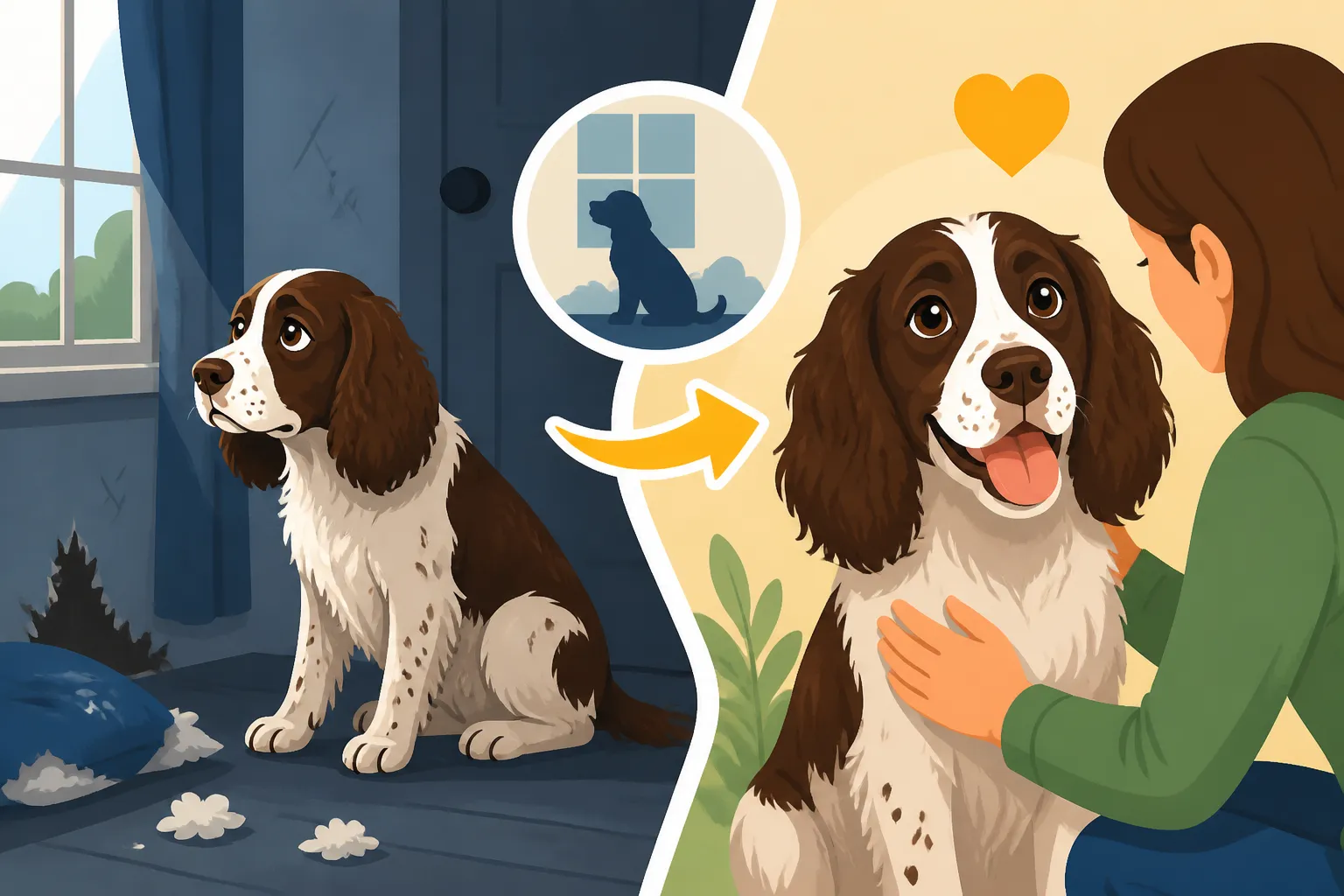
When people think of separation anxiety, they often picture chewed-up furniture or scratched doors. And while those are certainly common symptoms, separation anxiety in a Springer Spaniel can show up in many other, sometimes more subtle, ways. You might notice excessive drooling, even when it's not hot. Some dogs will try to escape, scratching at windows, digging at doors, or even attempting to chew through crates, which can lead to serious injury. Incessant barking, howling, or whining is a very typical sign, and if you have neighbors, you'll certainly hear about it. Then there are the "accidents" – urination or defecation indoors, even if your dog is perfectly house-trained when you're home. This isn't defiance; it's a loss of bladder or bowel control due to extreme stress. Some dogs become obsessive groomers, licking their paws raw, or pace relentlessly. It's a spectrum, and every dog expresses their panic differently. Understanding Separation Anxiety in a Springer Spaniel is crucial for any owner.
Why Separation Anxiety Can Lead to Rescue
The symptoms of separation anxiety, while born of distress for the dog, can be incredibly challenging and frustrating for human owners. It’s not hard to see how a loving home can reach a breaking point, leading to the difficult decision of surrendering a cherished pet to a rescue organization. It’s a sad situation where both dog and owner are suffering, often due to a lack of understanding or resources.
The Unbearable Damage and Noise
Imagine coming home day after day to a scene of destruction. Your furniture is shredded, doors are gnawed, and there are puddles or worse on the floor. Beyond the sheer financial cost of repairs and replacements, there's the emotional toll. Owners often feel angry, defeated, and helpless. If you live in an apartment or close quarters, the constant barking and howling will inevitably lead to complaints from neighbors, potentially threatening your housing situation. The pressure to keep the dog quiet and non-destructive can become immense, making every departure a source of dread. This constant stress on the living environment and neighbor relations is a major factor in why these dogs end up in rescue. People simply cannot live with the chaos, and finding solutions can feel overwhelming.
Owner Burnout and Frustration
Dealing with a dog that suffers from severe separation anxiety is emotionally exhausting. Owners often find their lives severely restricted, unable to leave their home for more than short periods, foregoing social events, work commitments, or even simple errands. The guilt of leaving their dog, combined with the dread of what they might come home to, creates a cycle of stress. They might try various solutions – special toys from Chewy, different crating strategies, or leaving the radio on – but when nothing seems to work, the sense of failure can be immense. This burnout often leads to owners questioning if they are truly the right home for their dog, eventually leading them to seek help from a rescue, hoping for a home that can better manage the issue. It's a tough place to be in, and it's important to remember that this isn't a reflection of the owner's love, but often a cry for help for both human and canine.
Misunderstanding the Breed's Needs
Many people fall in love with the charming, intelligent, and affectionate nature of a Springer Spaniel, without fully appreciating their intense need for companionship and mental stimulation. They are not a breed content to be left alone for eight or nine hours a day with just a short walk. They need interaction, training, and a sense of purpose. When these needs aren't met, destructive behaviors and anxiety can flourish. Owners might mistake the anxiety for spite or "being bad," when in reality, the dog is desperately crying out for help. A lack of understanding about what The Daily Routine a Springer Spaniel Actually Needs can exacerbate these issues. Without recognizing the underlying cause, owners often feel trapped and overwhelmed, viewing the dog's behavior as untrainable or malicious, when it's simply a miscommunication of needs.
Distinguishing Separation Anxiety from Other Issues
It's easy to label any destructive behavior or vocalization when you're away as "separation anxiety," but that's not always the case. There are other common reasons a Springer Spaniel might act out, and it's critical to identify the root cause to address it effectively. Misdiagnosis can lead to ineffective training methods and prolonged frustration for both you and your dog.
Boredom and Lack of Exercise
Springer Spaniels are intelligent, energetic dogs. A bored Springer Spaniel is a destructive Springer Spaniel, plain and simple. If your dog isn't getting enough physical exercise or mental stimulation, they will find their own "job," and that job often involves chewing, digging, or vocalizing. This isn't separation anxiety; it's simply a natural outlet for pent-up energy. A dog left alone for hours with nothing to do and no way to burn off steam will inevitably create its own entertainment. This is especially true for the more energetic field-bred lines. Think about How Much Exercise a Field Bred Springer Spaniel Needs – it's a lot more than a quick walk around the block. If your dog is calm and quiet when you're home but destructive when you leave, and you suspect they're not getting enough activity, boredom is a strong contender. Providing puzzle toys, interactive feeders, or even enrolling in dog daycare can help immensely.
Lack of Training and Structure
Sometimes, what appears to be separation anxiety is actually a lack of basic training and consistent boundaries. A dog that hasn't learned appropriate house manners, impulse control, or the importance of settling might struggle when left to their own devices. For instance, a puppy who hasn't been properly crate trained might vocalize excessively when confined, which isn't anxiety about being alone, but rather frustration with confinement itself. A dog that has never learned to entertain itself quietly might simply be expressing a lack of self-regulation. It's about building a foundation of good behavior, not necessarily addressing an emotional panic. Establishing clear rules and routines, alongside consistent positive reinforcement training, can make a world of difference. Consider resources on The First Year With a Springer Spaniel Puppy to ensure a strong start.
Addressing and Managing Separation Anxiety
Once you've determined that your Springer Spaniel is truly suffering from separation anxiety, it's time to take a compassionate and structured approach. This isn't a quick fix; it requires patience, consistency, and often, a willingness to adjust your own routine. But with the right strategies, many Springer Spaniels can learn to cope, and even thrive, when left alone.
Building Independence Gradually
The key to overcoming separation anxiety is to gradually desensitize your dog to your departures. This means starting small. Begin by leaving your dog alone for just a few seconds, then returning before they show any signs of distress. Gradually increase the duration, but always stay below their threshold for anxiety. This might mean starting with simply stepping out of sight into another room, then out the back door for a minute, then two, and so on. It's about teaching them that your departures are temporary and that you always come back. Distraction toys, like a Kong stuffed with frozen peanut butter, can be excellent tools during these short absences. You can find many enrichment toys on platforms like Chewy to help with this.
Avoid making a big fuss when you leave or return. Casual departures and greetings help normalize the process and prevent associating your leaving with high emotional drama. Practice "fake" departures frequently: grab your keys, put on your coat, even open the door, then sit back down. This helps desensitize them to the cues that typically trigger their anxiety. It's a slow process, but it builds confidence. For those struggling, resources like Whether a Camera Helps a Springer Spaniel Owner can be invaluable to monitor progress and avoid pushing too far, too fast.
Professional Help and Support
Sometimes, separation anxiety is so severe that it requires more than just home-based efforts. Don't hesitate to reach out to professionals. A certified professional dog trainer or a veterinary behaviorist can provide a tailored plan, offering invaluable guidance and support. They can help you accurately assess the severity of the anxiety, identify triggers, and develop a comprehensive behavior modification protocol. In some cases, medication might be a necessary component of the treatment plan, especially for dogs experiencing extreme panic. This isn't a "magic pill" but can help reduce anxiety to a level where behavioral training can be more effective. Your vet can discuss options like Whether Medication Helps a Springer Spaniel's Separation Anxiety. Investing in professional help, though it has a cost, can be the difference between success and a heartbreaking surrender. Check out What a Behaviorist Costs a Springer Spaniel Owner to understand the financial commitment.
Creating a Calming Environment
While you're working on the behavioral aspects, it's also important to create an environment that promotes calmness and comfort for your Springer Spaniel. This might involve setting up a "safe space" for them, such as a cozy crate (if they are comfortable with it) or a small, dog-proofed room where they feel secure. Many owners find success using classical music or specific dog-calming playlists to mask outside noises. Pheromone diffusers can also help some dogs feel more at ease.
Consider what you leave them with. Durable chew toys are essential – think Nylabones or KONG toys. For some dogs, a comfort item like an old t-shirt with your scent on it can provide a sense of security. Providing their meal in an enrichment toy, like a puzzle feeder, can keep them occupied mentally as you leave. Products from reputable brands like Ollie, which focus on quality ingredients, can be used in these puzzle feeders for a positive association. The goal is to make their alone time as low-stress and enriching as possible, diverting their focus from your absence to something positive.
Prevention is Key: Setting Up for Success
The best way to deal with separation anxiety is to prevent it from developing in the first place. For new or prospective Springer Spaniel owners, understanding the breed's predispositions and implementing proactive strategies from day one can save a lot of heartache down the road. It's about being realistic about what you can offer a Springer Spaniel and setting clear expectations for their independence.
Choosing the Right Springer Spaniel Type for Your Lifestyle
Many people don't realize there are two distinct types of English Springer Spaniels: field-bred and show-bred. While both are affectionate, their energy levels and drive can differ significantly. Field-bred Springers are often much higher energy, more intensely driven, and require substantial physical and mental exercise. A show-bred Springer might be a bit more laid-back in the home, though still requiring plenty of activity. Understanding How a Field Bred Springer Spaniel Differs in Drive is paramount. If you're a full-time worker who can't provide extensive daily exercise or mental challenges, a field-bred Springer might be more prone to developing anxiety or destructive behaviors simply out of boredom and unmet needs, which can mimic separation anxiety. Being honest about your lifestyle and choosing the type that best fits your capacity for exercise and engagement can go a long way in preventing issues. Whether a Springer Spaniel Suits a Full Time Worker is a question that needs careful consideration.
Early Socialization and Crate Training
From the moment you bring a Springer Spaniel puppy home, focus on building their confidence and comfort with being alone for short periods. Introduce them to a crate positively, making it a comfortable, safe den rather than a punishment. Feed meals in the crate, and offer high-value treats and toys when they are inside. Gradually increase the time they spend in the crate while you are home, then slowly begin to leave them for very short intervals when you step out. This teaches them that the crate is a safe place, and being alone isn't scary.
Early socialization, exposing your puppy to a variety of sights, sounds, people, and experiences in a positive way, also builds overall confidence. A confident dog is generally less prone to anxiety. Enroll in puppy classes, take them on car rides, and introduce them to different environments. This helps them become a well-adjusted dog capable of handling various situations, including your temporary absence. Remember, positive reinforcement is always the key. Consider setting up a good pet insurance plan like Healthy Paws early on, especially if you anticipate behavioral vet visits or potential accidents related to anxiety, though check their policy details on behavioral coverage.
Providing Enrichment and Predictable Routines
A well-exercised and mentally stimulated Springer Spaniel is a happy Springer Spaniel, and less likely to suffer from anxiety. Ensure they get ample physical activity every day – long walks, fetch sessions, or even swimming if they enjoy it. Beyond physical exercise, engage their intelligent minds with training sessions, puzzle toys, and scent work games. A dog tired in both body and mind has less energy for anxious behaviors. Whether Scent Games Tire a Springer Spaniel is a good question to explore, as they are fantastic for engaging their natural instincts.
Establishing a predictable daily routine also provides comfort and security. Dogs thrive on routine. Knowing when to expect meals, walks, playtime, and quiet time helps them feel secure and reduces uncertainty, which can be a significant trigger for anxiety. Consistency in your schedule, even when you're away, can reduce stress for your dog. For those days you absolutely cannot be home, consider a trusted dog walker or even doggie daycare to break up the long hours alone, ensuring their needs are met even in your absence.
Conclusion
The journey of dog ownership is filled with immense joy, but it also comes with its challenges. Separation anxiety in English Springer Spaniels is one such significant hurdle, often leading to heart-wrenching decisions for families. It's clear that while a Springer Spaniel's affectionate nature is one of its most charming qualities, it's also the very thing that can make them prone to distress when left alone. The destructive behaviors, incessant vocalizations, and house-soiling that stem from this genuine panic can push even the most dedicated owners to their limits, tragically contributing to Why Springer Spaniels Are Surrendered or Whether Energy Is Why Springer Spaniels Are Rehomed.
However, by understanding the roots of this anxiety, recognizing its various manifestations, and committing to proactive prevention and thoughtful management strategies, many Springer Spaniels can learn to cope and even thrive in their owners' absence. It requires patience, consistency, and sometimes, the wisdom to seek professional guidance. With a deeper appreciation for their needs for companionship, mental stimulation, and a structured routine, we can work towards ensuring more of these wonderful dogs remain cherished members of their families, rather than becoming statistics in rescue shelters.
Disclaimer
This article is for general informational purposes only and does not constitute professional advice. Laws, prices and regulations vary by location and change over time. Consult a qualified professional for guidance on your specific situation.