Whether Springer Spaniel PRA Has a DNA Test
It’s truly heartbreaking to watch your vibrant English Springer Spaniel start bumping into furniture or hesitate in familiar surroundings, knowing something is amiss with their precious eyesight. The fear of them losing their vision completely is a heavy burden, and the thought of a genetic condition like Progressive Retinal Atrophy (PRA) can feel overwhelming. This comprehensive guide will walk you through whether a DNA test exists for PRA in Springer Spaniels, what it can tell you, and how to best support your beloved companion.
Understanding Progressive Retinal Atrophy in Your Springer Spaniel
Progressive Retinal Atrophy (PRA) is a cruel and often silent thief of sight, a group of genetic eye disorders that gradually lead to blindness in dogs. For English Springer Spaniel owners, the thought of their active, keen-eyed companion losing the ability to see the world around them is deeply distressing. It's not just about bumping into things; it's about losing their joy in fetching, exploring, and engaging with their family.
What PRA Actually Does to Your Dog's Vision
Imagine living in a world where the lights slowly dim, never to brighten again. That's essentially what PRA does. It's not one single disease but a blanket term for several different genetic conditions that cause the photoreceptor cells in the retina (the light-sensitive tissue at the back of the eye) to degenerate. Initially, your Springer might struggle with night vision, becoming hesitant to go out in the dark or find their toys in dimly lit rooms. This is often the first, subtle sign that something is wrong, and it can be easy to dismiss at first. Perhaps they seem a little clumsy, or they're not quite as eager to play after sunset.
As the disease progresses, their daytime vision also deteriorates. They might start bumping into objects, especially in unfamiliar environments, or seem startled by sudden movements from the side. Their pupils might appear more dilated, and you might even notice a reflective 'eye shine' in their eyes, even in normal light, as the tapetum lucidum (a reflective layer behind the retina) becomes more prominent. Eventually, most dogs affected by PRA will become completely blind. It's a progressive journey, varying in speed depending on the specific type of PRA, but the outcome is, unfortunately, usually the same. It can be incredibly difficult to witness, especially in a breed as active and observant as a Springer Spaniel. You can read more about specific effects in our guide, Progressive Retinal Atrophy in a Springer Spaniel.
The Different Types of PRA Affecting Springers
The world of PRA can feel a bit like alphabet soup, with different abbreviations for various genetic mutations. This distinction is incredibly important because a DNA test for one type of PRA won't necessarily tell you about another. For English Springer Spaniels, two main forms of PRA have historically been of concern, though genetic screening has significantly reduced their prevalence in responsible breeding lines.
One notable type is often referred to as prcd-PRA (Progressive Rod-Cone Degeneration PRA). This form is common across many breeds, including Springer Spaniels, and is characterized by the degeneration of rod cells (responsible for night vision) first, followed by cone cells (responsible for day vision and color perception). The onset can vary, but typically, night blindness appears first, with full blindness developing over several years. Another form to be aware of is cord1-PRA (Cone-Rod Dystrophy 1) or rcd4 (Rod-Cone Dysplasia 4), which has also been identified in Springer Spaniels and other breeds. This variant often presents with a slightly earlier onset and a different pattern of retinal degeneration. It's crucial for breeders and owners to understand which specific types of PRA are relevant to their breed so they can utilize the correct diagnostic tools.
Unlocking Answers with DNA Testing for Springer Spaniel PRA
The good news for worried Springer Spaniel owners and dedicated breeders is that science has provided a powerful tool in the fight against PRA: DNA testing. This isn't just a shot in the dark; these tests are highly specific and can identify the presence of the genetic mutations responsible for the most common forms of PRA in our beloved Springers.
Yes, Specific DNA Tests Are Available
Indeed, specific DNA tests are available for Progressive Retinal Atrophy in English Springer Spaniels! This is a massive leap forward for the breed, offering a clear path for responsible breeding practices and giving pet owners peace of mind or an early warning. Instead of waiting for clinical signs to appear, which often means significant vision loss has already occurred, a simple cheek swab or blood sample can reveal your dog's genetic status regarding certain types of PRA.
For English Springer Spaniels, the most widely recognized and utilized DNA tests target the specific genetic mutations linked to prcd-PRA and sometimes cord1/rcd4. These tests have been instrumental in allowing breeders to make informed decisions, helping to reduce the incidence of these devastating conditions over generations. Knowing your dog's genetic status can help you anticipate potential health issues, allowing for proactive planning. It's a proactive step that every responsible breeder should take, and every prospective puppy owner should inquire about. In fact, it's one of the critical screenings, alongside tests for conditions like Fucosidosis and PFK Deficiency, that make up The DNA Test That Should Precede Every Springer Spaniel Purchase.
How These DNA Tests Work and What They Reveal
A PRA DNA test is incredibly straightforward for the owner, even if the science behind it is complex. You typically provide a cheek swab or a small blood sample from your Springer Spaniel to a specialized veterinary genetics laboratory. The lab then analyzes this sample to detect specific genetic markers associated with PRA. What you get back are clear, unambiguous results that fall into one of three categories:
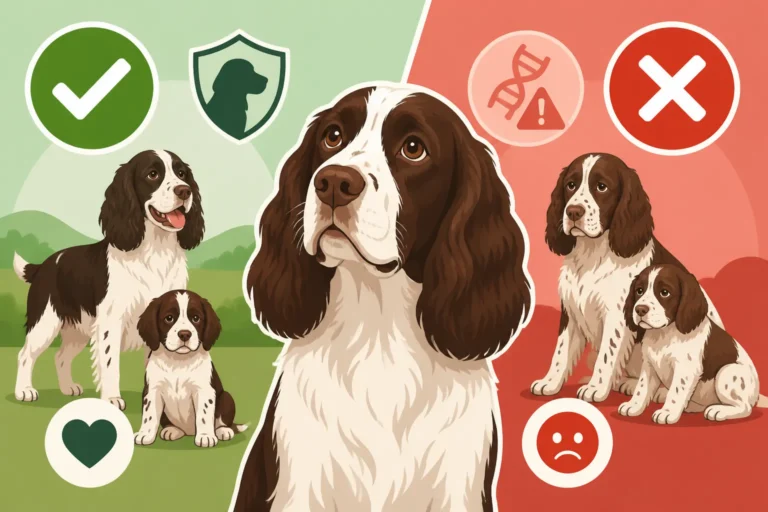
- Clear: This means your Springer Spaniel does not carry the specific genetic mutation for the form of PRA tested. They are highly unlikely to develop that particular form of PRA, and they cannot pass it on to their offspring. This is the ideal result for both pet owners and breeders.
- Carrier: A carrier Springer Spaniel has one copy of the gene mutation but usually does not develop the disease itself. They are "silent carriers." However, if bred with another carrier, some of their puppies could inherit two copies of the faulty gene and thus be affected. Carriers are vital for maintaining genetic diversity in a breed, but responsible breeding practices dictate they should only be bred with a "clear" mate.
- Affected: An affected Springer Spaniel has two copies of the specific gene mutation for PRA. This means they will develop the disease at some point in their life, with varying ages of onset and progression depending on the specific mutation and individual factors. For a pet owner, this provides an invaluable heads-up to prepare for eventual vision loss. For a breeder, an affected dog should never be used for breeding.
Understanding these results is foundational for sound breeding programs, allowing for strategic pairings that prevent affected puppies from being born. It shifts the paradigm from reaction to prevention, a huge win for the breed's overall health.
Choosing the Right Lab for Your Springer's PRA Test
When it comes to DNA testing for your English Springer Spaniel, selecting a reputable and reliable laboratory is paramount. You want results you can trust, backed by scientific rigor. Thankfully, there are several well-established veterinary genetic testing labs that offer specific PRA panels for Springer Spaniels.
Leading laboratories such as Embark Veterinary and Paw Print Genetics are popular choices among breeders and pet owners. These companies often offer comprehensive genetic health panels that include PRA alongside many other breed-specific conditions like Fucosidosis or PFK Deficiency. The Canine Genetic Diseases Network (CGDN) is another resource that can help guide you to appropriate testing facilities. When choosing a lab, consider the following:
- Breed-Specific Panels: Ensure the lab offers tests specifically validated for English Springer Spaniels and covers the PRA variants known to affect the breed (e.g., prcd-PRA, cord1/rcd4).
- Accreditation and Reputation: Look for labs with a strong scientific reputation and good customer service. Reading reviews from other breeders or consulting your veterinarian can be helpful.
- Clear Reporting: The results should be easy to understand, clearly indicating "Clear," "Carrier," or "Affected" status for each tested mutation.
- Cost and Turnaround Time: While cost shouldn't be the only factor, it's certainly a consideration. Also, inquire about the typical turnaround time for results, especially if you're a breeder making decisions.
Many of these labs offer convenient at-home cheek swab kits, making the process simple for owners. You collect the sample yourself, mail it in, and await the results. For breeders, this ease of access means that Whether a Springer Spaniel Litter Is Tested Before Breeding is now a more accessible and routine part of responsible practice.
Beyond the Test: Managing PRA and Supporting Your Springer's Eye Health
While DNA tests are invaluable, they are one piece of a larger puzzle. Understanding and managing PRA, whether your dog is a carrier or affected, involves a holistic approach to eye health and supportive care. Even with insurance from providers like Healthy Paws, which can help with unexpected vet bills, proactive management is always the best path.
Interpreting Your Springer's PRA DNA Results
Once those lab results arrive, it's natural to feel a mix of anticipation and perhaps anxiety. Understanding what they truly mean for your individual Springer Spaniel is the next crucial step.
- If your Springer is "Clear": Celebrate! This means they do not carry the specific gene mutation tested for, and it's highly improbable they will develop that particular form of PRA. This is fantastic news for their future eye health regarding this specific condition. However, remember that "clear" for one form of PRA doesn't mean clear for all possible eye conditions or even rarer, untested forms of PRA. Regular veterinary eye exams are still important.
- If your Springer is "Carrier": Your dog carries one copy of the gene. They are not expected to develop the disease themselves, but they can pass the gene on. For pet owners, this simply means you're aware they carry the gene. For breeders, this requires careful thought. A carrier dog can be bred, but only with a mate that is "Clear" for the same PRA mutation to ensure no affected puppies are produced. This helps maintain genetic diversity while preventing the disease.
- If your Springer is "Affected": This means your Springer Spaniel has two copies of the faulty gene and will develop PRA. This news can be devastating, but it also provides a crucial opportunity. You now have the knowledge to prepare for the inevitable vision loss. This means consulting with your veterinarian or a veterinary ophthalmologist, discussing potential timelines for progression, and starting to implement strategies at home to help your dog adapt. This early warning allows you to maximize their sighted life and make the transition to blindness as smooth as possible. You might want to review Whether a Springer Spaniel Goes Fully Blind From PRA for more information on adapting.
The Importance of Regular Veterinary Eye Exams
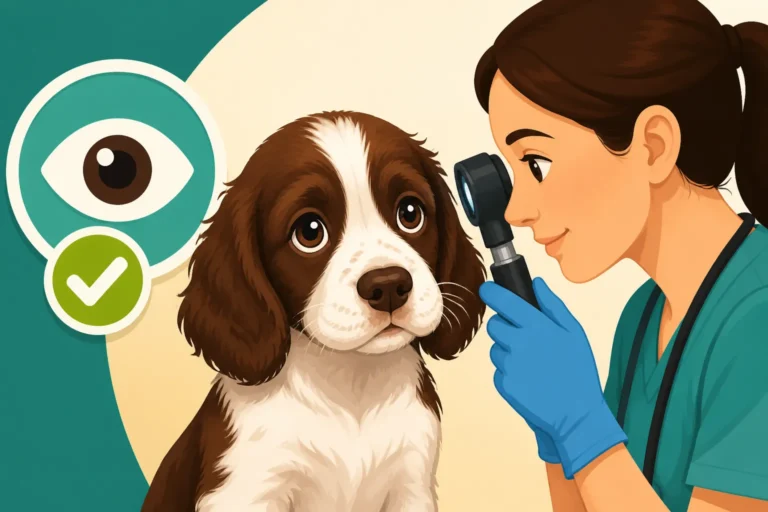
Even with the advancements in DNA testing, routine veterinary eye examinations remain an indispensable part of your Springer Spaniel's overall health care. DNA tests are powerful for identifying genetic predispositions, but they don't tell the whole story. They don't detect every single eye condition, nor do they predict the exact timing or severity of disease progression.
A comprehensive eye exam by your regular veterinarian, or better yet, a board-certified veterinary ophthalmologist, can identify a host of other issues. This includes early signs of cataracts, glaucoma (which can be incredibly painful and cause sudden blindness, as discussed in How Primary Glaucoma Blinds a Springer Spaniel), corneal ulcers, or other retinal problems not covered by specific DNA tests. For older Springers, eye exams become even more critical, monitoring for age-related changes. A good ophthalmologist can perform specialized tests, such as gonioscopy to check for glaucoma risk, or electroretinography (ERG) to assess retinal function, which is particularly useful for diagnosing PRA even before visible changes occur. For detailed information on routine care, check out Whether a Springer Spaniel Needs a Yearly Eye Exam.
Regular exams also allow your vet to monitor for any secondary complications that might arise from PRA, such as cataracts, which can sometimes form in later stages of the disease. Early detection of any eye problem, whether genetic or acquired, often leads to better management and preservation of comfort and function for your dog.
Preparing for Life with a Vision-Impaired Springer
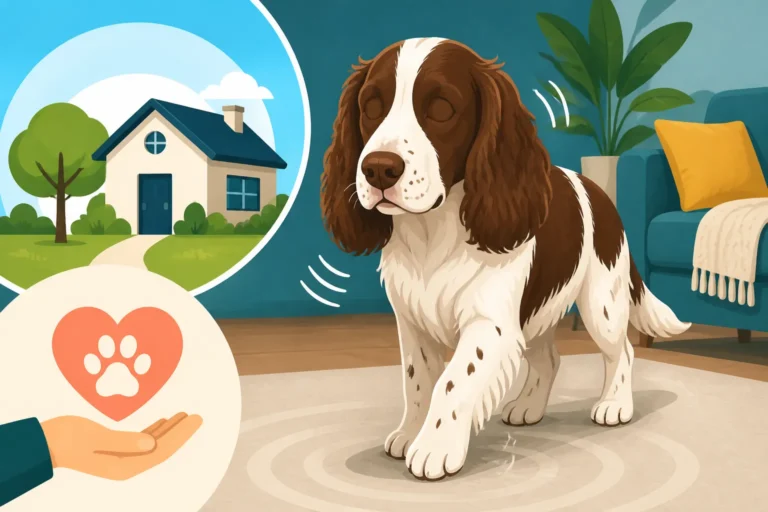
Receiving an "affected" diagnosis for PRA, or even just noticing the first signs of vision loss, is incredibly tough. However, it's important to remember that dogs are incredibly adaptable, and a Springer Spaniel can still live a full, happy life even without perfect vision. Your role shifts from preventing to supporting, and there are many practical steps you can take.
Creating a Safe and Consistent Environment:
- Don't rearrange: Keep furniture and familiar objects in the same place. Your Springer will create a mental map of your home, and consistency is key.
- Clear pathways: Remove clutter from floors and hallways to prevent bumps and trips.
- Safety gates: Use baby gates to block off stairs or unsafe areas, especially if your dog's vision is severely compromised.
- Outdoor security: Ensure your yard is securely fenced, and supervise outdoor excursions closely. Consider a GPS collar for added peace of mind, especially on walks.
Aiding Navigation and Communication:
- Scent markers: Use essential oils (diluted and applied to non-toxic items) or distinctive textures on the floor to mark important areas like water bowls, doors, or steps.
- Auditory cues: Talk to your dog frequently as you move around the house so they know where you are. Use consistent verbal cues ("step up," "watch out," "this way") to guide them.
- Bells on other pets: If you have other pets, a small bell on their collar can help your blind Springer locate them and avoid collisions.
- "Blind Dog" vest: Consider a vest that alerts others that your dog has vision impairment, particularly during walks in public spaces.
Enrichment and Comfort:
- Scent work and toys: Since their nose is already a powerful tool, engage your Springer with scent games, treat-dispensing toys, and puzzle toys that rely on smell and hearing rather than sight. Brands like KONG or Nina Ottosson make excellent puzzle toys.
- Consistent routine: A predictable daily schedule for feeding, walks, and playtime will reduce anxiety.
- Touch and praise: Rely more on touch and verbal praise for reassurance and affection.
- Pet insurance considerations: While it won't prevent PRA, having pet insurance from companies like Healthy Paws can be incredibly helpful for covering the costs of specialized vet visits, diagnostic tests, or any related care as your dog ages. Knowing you have that safety net allows you to focus more on their comfort.
Remember, your Springer Spaniel relies on you for guidance and reassurance. Your calm, patient approach will be their greatest comfort as they learn to navigate the world through their other incredible senses.
| PRA Type | Affected Breeds | Typical Onset Age | Primary DNA Test Available | Prognosis |
|---|---|---|---|---|
| prcd-PRA | English Springer Spaniel, Labradors, Poodles, etc. | Mid-to-late adulthood (3-6 years) | Yes (e.g., prcd-PRA specific test) | Leads to eventual blindness, variable progression |
| cord1/rcd4 | English Springer Spaniel, Dachshunds, etc. | Early adulthood (1-3 years) | Yes (e.g., cord1/rcd4 specific test) | Leads to eventual blindness, often earlier onset |
| Other PRA forms | Various breeds | Varies | May or may not have specific tests | Varies |
It's important to keep up with the latest scientific research, as new forms of PRA or more comprehensive tests can emerge over time. Always consult with your veterinarian for the most up-to-date information and guidance specific to your dog's needs.
Disclaimer
The information provided in this guide is intended for educational purposes only and should not be considered a substitute for professional veterinary advice. Always consult with a qualified veterinarian or veterinary ophthalmologist for any health concerns or before making any decisions related to your English Springer Spaniel's health and treatment.