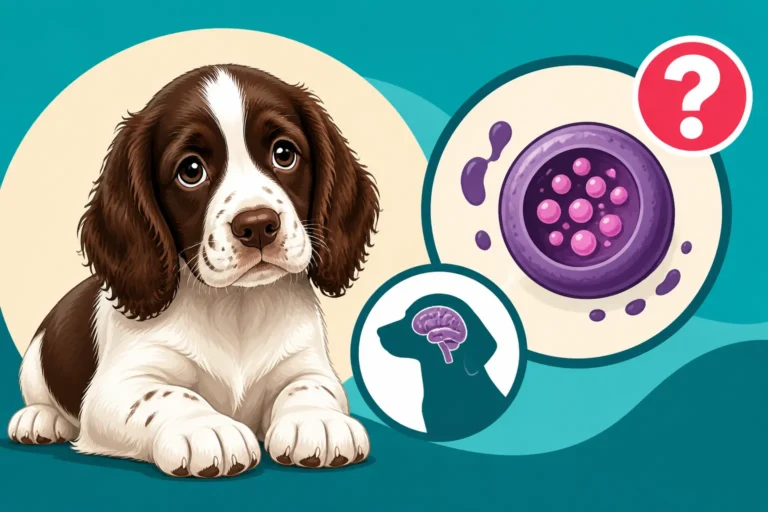
Whether a PFK Carrier Springer Spaniel Shows Signs
It’s a truly frightening moment when you learn your beloved English Springer Spaniel, or a puppy you’re considering, might carry a genetic disease. The worry about what that means for their health, their quality of life, and even your peace of mind can be overwhelming. Today, we're diving deep into Phosphofructokinase (PFK) deficiency in Springer Spaniels, specifically addressing a common question that keeps many owners up at night: whether a PFK carrier Springer Spaniel shows any signs of the disease. This guide will help clarify the nuances of carrier status, explain why understanding it is crucial, and reassure you about what it means for your furry family member.
Understanding PFK Deficiency in Springer Spaniels
Before we delve into what it means to be a PFK carrier, let's first get a handle on what PFK deficiency actually is. This condition is a metabolic disorder that affects a dog's red blood cells and muscle cells, preventing them from properly breaking down glucose for energy. It sounds technical, but what it boils down to is a problem with energy production, particularly during strenuous activity or stress.
The Role of Phosphofructokinase in Your Dog's Body
Imagine your Springer Spaniel as a finely tuned athlete, always ready to spring into action, whether it's chasing a ball, flushing game, or simply doing zoomies in the living room. For all that boundless energy, their body needs a constant supply of fuel. Phosphofructokinase is a crucial enzyme, a tiny worker bee in the complex machinery of glucose metabolism, which is how your dog converts sugar into usable energy. Without enough functional PFK, this process stalls, leading to a host of problems when the body needs that energy most.
Think of it like a car engine. PFK is a vital spark plug. If that spark plug isn't firing correctly, the engine can sputter, stall, or fail to deliver power when you hit the gas. For a Springer Spaniel with PFK deficiency, their "engine" struggles to generate power for their muscles and their red blood cells, which are responsible for carrying oxygen throughout the body.
What PFK Deficiency Does to an Affected Dog
When a Springer Spaniel is actually affected by PFK deficiency (meaning they have two copies of the faulty gene), the symptoms can be quite serious and concerning. Owners might notice their dog collapsing after even moderate exercise, a condition that can be truly alarming to witness. You might find yourself searching for answers about PFK Deficiency and the Springer Spaniel That Collapses After Exercise. Beyond exercise intolerance, affected dogs often experience episodes of anemia because their red blood cells are fragile and break down easily. This breakdown releases hemoglobin into their bloodstream, which can then be excreted in their urine, leading to a dark, cola-colored appearance. Discovering Why a PFK Springer Spaniel Passes Dark Urine is often a key indicator for owners. Other potential signs include weakness, pale gums due to anemia, and sometimes even jaundice. These symptoms can wax and wane, often exacerbated by excitement, stress, or overheating, which can make diagnosis tricky for veterinarians unfamiliar with the condition.
The Genetics of PFK: Understanding Carrier Status
The good news, and the direct answer to your burning question, is this: A PFK carrier Springer Spaniel will not show any signs or symptoms of the disease. They are perfectly healthy dogs living normal, active lives. The key to understanding this lies in the genetics behind PFK deficiency, which is an autosomal recessive inherited disorder.
Decoding Autosomal Recessive Inheritance
Let's break down "autosomal recessive." "Autosomal" simply means the gene responsible for PFK deficiency is located on one of the non-sex chromosomes, so it affects males and females equally. "Recessive" is the crucial part. It means that a dog needs two copies of the faulty gene – one from its mother and one from its father – to actually develop the disease.
Here's a simple way to visualize it:
- Clear (Normal): A dog has two healthy copies of the gene. Let's call them "N" for normal. So, a clear dog is "NN."
- Carrier: A dog has one healthy copy ("N") and one faulty copy ("p" for PFK). So, a carrier dog is "Np."
- Affected: A dog has two faulty copies ("p" and "p"). So, an affected dog is "pp."
A carrier dog (Np) has enough of the healthy gene ("N") to produce sufficient functional PFK enzyme. That one good copy is more than enough to compensate for the faulty one, so their body works just as it should. They are, in every measurable way, a healthy dog, with no impact on their daily life or lifespan. This is why you'll never see a carrier Springer Spaniel collapsing after a run or passing dark urine because of PFK deficiency – their system is robust enough to handle it.
Why Carriers Don't Exhibit Symptoms
The reason PFK carriers remain asymptomatic boils down to genetic redundancy and threshold effects. Most biological processes in the body have built-in safeguards, and producing essential enzymes is one of them. Even with only one functional copy of the PFK gene, a carrier dog's cells are capable of producing enough active PFK enzyme to maintain normal metabolic function. There's no critical deficit in enzyme activity that would lead to clinical signs of the disease. Their red blood cells are stable, their muscles have adequate energy supply, and their overall health is completely unaffected by their carrier status. It’s truly a relief for owners to know this, because while the term "carrier" can sound ominous, in this case, it means no discernible health impact whatsoever.
The Importance of Genetic Testing and Responsible Breeding
Given that carriers don't show symptoms, you might wonder why it even matters to know if your Springer Spaniel is a carrier. The answer lies squarely in responsible breeding practices and preventing the birth of affected puppies.
Preventing Affected Puppies Through Testing
Since PFK deficiency is a recessive disorder, two carrier dogs (Np x Np) can produce affected puppies (pp). Each puppy in such a litter has a 25% chance of being affected, a 50% chance of being a carrier, and a 25% chance of being clear. This is why pre-breeding genetic testing is so incredibly important. Reputable breeders will always test their breeding stock for genetic conditions like PFK deficiency. If you are considering purchasing a puppy, you should absolutely insist on seeing the parents' health clearances, including their PFK status. Learning The DNA Test That Should Precede Every Springer Spaniel Purchase is critical for ensuring you bring home a healthy puppy.
Many laboratories, such as those that provide comprehensive genetic panels like Embark or Optigen, include PFK deficiency testing. These tests typically involve a simple cheek swab or blood sample, which is then analyzed for the presence of the faulty gene. Knowing Whether the PFK Test Comes in a Springer Spaniel Panel can help you choose the right genetic screening for your dog. A breeder with a clear understanding of their dogs' genetic profiles makes informed decisions, thereby avoiding mating two carriers, which is the only way an affected puppy can be born.
Responsible Breeding Decisions for PFK Carriers
If a Springer Spaniel is identified as a PFK carrier, it doesn't mean they can't be bred at all. It simply means they need to be bred carefully. A PFK carrier can be safely bred to a dog that has been tested and confirmed as "clear" (NN). In such a pairing, none of the puppies will be affected by the disease, though approximately 50% will be carriers themselves (Np) and 50% will be clear (NN). All puppies from such a mating should ideally be tested before being placed in new homes, or at least before they are considered for future breeding. This strategy allows valuable genes from carrier dogs to remain in the gene pool without producing affected offspring. For more on this, you might find information on Whether a PFK Springer Spaniel Should Be Bred helpful.
The long-term goal for the breed is to reduce the prevalence of the faulty gene, but eliminating carriers entirely can sometimes inadvertently shrink the gene pool too much, potentially leading to other health issues. Thus, carefully managed breeding of carriers with clear mates is a responsible approach endorsed by many breed clubs and geneticists.
Living with a PFK Carrier Springer Spaniel
The bottom line for owners of a PFK carrier Springer Spaniel is this: your dog will lead a completely normal, healthy, and happy life, just like any other Springer. There are no special care requirements, dietary restrictions, or limitations on their activities.
No Impact on Daily Life or Activity Levels
Your PFK carrier Springer Spaniel can run, swim, hunt, compete in dog sports, or simply lounge on the couch with you without any concern related to their carrier status. They have all the energy and vitality characteristic of the breed. You won't need to Manage a Springer Spaniel With PFK Deficiency because they don't have the deficiency. They can enjoy a full life, often reaching The Twelve to Fourteen Years a Springer Spaniel Lives without any PFK-related health complications.
This understanding can bring immense peace of mind. Instead of worrying about an invisible threat, you can focus on providing the best possible life for your active companion, engaging them in all the activities they love. Whether it's a long hike in the woods or an enthusiastic game of fetch, their PFK carrier status will not hold them back.
Proactive Health and Financial Planning
While a PFK carrier won't develop the disease, understanding their genetic profile is still a testament to responsible pet ownership. It highlights the importance of comprehensive health strategies. For instance, many responsible owners consider pet insurance early on to cover unexpected illnesses or accidents. Knowing your dog’s genetic predispositions can be part of a broader discussion about preventative care and future planning with your vet. Companies like Healthy Paws offer policies that can help manage veterinary costs for a wide range of health issues throughout your Springer Spaniel's life, from routine check-ups to more serious conditions that might arise unrelated to PFK.
Even though PFK carrier status itself doesn't warrant medical intervention, having a robust pet insurance plan, such as those from Healthy Paws, ensures that you're financially prepared for any other health challenges that could impact your energetic companion. This proactive mindset applies to all aspects of your dog's well-being, from regular vet visits to a balanced diet and plenty of exercise. For example, knowing The Health Tests Both Springer Spaniel Parents Should Have before you even bring a puppy home demonstrates this kind of forward-thinking care.
Table: PFK Carrier vs. Affected Springer Spaniel Comparison
| Feature | PFK Carrier Springer Spaniel | PFK Affected Springer Spaniel |
|---|---|---|
| Genetic Makeup | One normal gene, one faulty gene (Np) | Two faulty genes (pp) |
| Clinical Symptoms | Absolutely none; completely healthy and normal | Exhibits symptoms, especially with exercise or stress |
| Enzyme Production | Sufficient functional PFK enzyme | Insufficient functional PFK enzyme |
| Exercise Tolerance | Normal; no limitations | Poor; collapses, weakness, exercise intolerance |
| Red Blood Cell Health | Normal; stable | Fragile; prone to breakdown (hemolysis) |
| Urine Color | Normal | Often dark, cola-colored due to hemoglobinuria |
| Lifespan | Normal lifespan, no reduction due to PFK status | Potentially reduced lifespan without careful management |
| Breeding Considerations | Can be bred responsibly with a clear mate | Should not be bred |
| Management | No special management or care needed | Requires careful management, avoiding triggers, vet care |
In conclusion, while the term "carrier" can initially cause concern, a PFK carrier Springer Spaniel is a perfectly healthy dog. Their genetic status means they carry one copy of the gene, but it does not affect their health, vitality, or lifespan in any way. The true importance of identifying carriers lies in empowering breeders to make informed decisions that safeguard the health of future generations, preventing the painful experience of owning an affected dog.
Disclaimer
This article provides general information and is not a substitute for professional veterinary advice. Always consult with a qualified veterinarian regarding your dog's specific health concerns, diagnosis, and treatment options. Genetic testing results should always be interpreted in consultation with a veterinary geneticist or your primary veterinarian.