Whether a Springer Spaniel Suits a Hunter Who Shoots Twice a Year
A hunter who shoots only a couple of times a year may worry that an English Springer Spaniel will be too much dog between outings—or that an occasional season will not give the dog enough to do. The answer depends less on how often you hunt than on the dog’s breeding, your daily routine, and whether you enjoy training and exercising a lively companion year-round.
Can a Springer Spaniel suit an occasional hunter
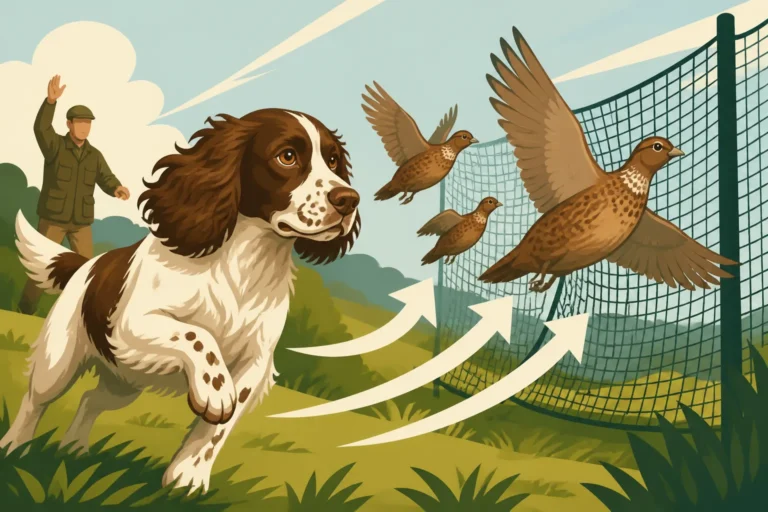
Yes, an English Springer Spaniel can suit someone who hunts twice a year, but hunting cannot be the whole plan for the dog’s physical and mental needs. Springers were bred to work closely with a handler, search cover, and flush game. Those instincts do not switch on only during hunting season. A dog may be just as interested in scent trails, birds in the park, and movement in the hedgerow on an ordinary Tuesday.
That doesn’t mean you need to hunt every weekend or turn your home into a training kennel. It does mean you should be comfortable giving the dog regular exercise, teaching reliable everyday manners, and offering activities that engage its nose and brain. For more on the different needs of working and companion-oriented dogs, see Two Breeds Registered as One: the Field and Show Springer Spaniel.
Hunting twice a year is not the same as needing exercise twice a year
A Springer who gets two exciting days in the field and little to do the rest of the year is unlikely to feel satisfied. Without enough outlets, a dog may invent its own: tracking a rabbit through a flower bed, barking at birds from the window, carrying socks around the house, or racing laps when visitors arrive.
The alternative is not necessarily a long run every day. A mix of walks, sniffing opportunities, short training sessions, play, and rest can suit many dogs better than simply trying to tire them out. A slow woodland walk where the dog can investigate scents can be more mentally satisfying than throwing a ball repeatedly in a small yard. A few minutes of recall practice or finding treats hidden around the house can also turn an ordinary day into an engaging one.
Think about what your normal week would look like in January, not just what the dog might do on a pheasant or grouse outing. If you already enjoy walking, spending time outdoors, or teaching a dog new skills, a Springer may fit naturally. If you want a dog that is content with brief potty breaks and a quiet evening most days, this breed could feel demanding even if you love the idea of taking it hunting.
The field or show background changes the practical picture
Field-bred Springers are often selected for working ability and drive. A particular dog may be keen, quick to range, and strongly motivated by birds and scent. That can be exciting in a hunting partner, but it may also mean more management and training outside the field. “Field-bred” does not automatically mean unmanageable, and individual temperaments vary, but it is worth asking the breeder how the parents behave at home as well as how they work.
Show-bred Springers are generally bred with a different emphasis, including appearance and conformation. Some may be less intense than a high-drive working dog, but show breeding does not guarantee a low-energy pet. A show-bred dog may still love exploring, retrieving, and chasing wildlife. If you are considering a more companion-oriented dog, ask about the actual parents and close relatives rather than relying on the label alone. How Different the Two Springer Spaniel Types Look explains some of the visible differences, while Which Springer Spaniel Type Suits a Pet Home looks at the home-life question more directly.
Neither type should be chosen just because it sounds like the easier option. Be candid with breeders about how rarely you hunt, what exercise you can provide, and whether you want the dog to work in the field or mainly share everyday life. A good match is about the individual dog and your routine, not the prestige of a pedigree.
What the dog needs between hunting outings
A Springer does not need to hunt to have a satisfying life, but it does need regular outlets suited to a sporting dog. This is where prospective owners sometimes underestimate the commitment. The dog’s need for attention and activity continues after the season ends, and it may need help learning how to settle rather than being kept in a constant state of excitement.
Build a year-round routine that includes rest
A useful routine can include daily walks, opportunities to sniff and explore, basic obedience practice, and play. The exact amount depends on the dog’s age, health, temperament, and conditioning. A young puppy should not be pushed into strenuous, repetitive exercise; an adult working dog may need more than a short stroll. Your veterinarian can help you adapt activity as the dog grows or if health issues arise.
Mental work matters, too. Teach a reliable recall, practice walking calmly on leash, and introduce simple scent games. You can hide a toy or a few pieces of the dog’s regular food and invite it to search. Retrieving can be enjoyable, but it should not become the only activity or an endless game that leaves the dog overstimulated. Alternate lively play with calm decompression, such as resting on a mat after a walk.
A dog that has learned to settle is easier to live with than one whose schedule is built around nonstop activity. Reward calm behavior at home, provide a quiet resting place, and avoid assuming that every burst of energy means the dog needs harder exercise. Sometimes a dog is overtired, overexcited, or unsure what is expected. Whether a Springer Spaniel Ever Settles Indoors and How Much Exercise a Field Bred Springer Spaniel Needs offer useful context for evaluating what daily life may involve.
Use hunting skills in modest, safe ways
If you want your Springer to join you on occasional shoots, begin training well before the first outing. A dog that has never practiced recall around distractions, waited calmly, or learned to work near its handler should not be expected to manage a busy day in cover simply because it has hunting instinct. Work gradually, with a qualified trainer if you need help, and follow local laws and the instructions of the shoot or landowner.
You can build useful foundations without hunting often. Practice recall on a long line in appropriate places, teach a whistle cue in quiet surroundings before adding distractions, and work on calm behavior around birds and other dogs. Short, positive sessions are usually more productive than trying to cram months of preparation into the week before a shoot. For specific field foundations, see Teaching a Springer Spaniel to Stay in Range and Teaching a Springer Spaniel Whistle Commands.
Hunting is also physically demanding. A dog that has been sedentary for months should not suddenly be asked to work hard for hours. Build fitness gradually, check the dog for cuts, burrs, ticks, and grass awns after time in cover, and provide water and rest. The practical aftercare matters even when the outing is occasional; What to Check on a Springer Spaniel After a Day in Cover covers the kind of post-field inspection owners should learn.
Choosing a Springer for your hunting schedule
The central question is not whether you hunt often enough to “justify” owning a Springer. It is whether you want to live with this kind of dog throughout the year. A Springer can be a wonderful companion for an occasional hunter who enjoys an active routine and treats field work as one part of the relationship. It may be a poor fit for someone who expects a dog to remain quiet and inactive until the next outing.
| Your situation | What to consider | Likely fit |
|---|---|---|
| You walk regularly and enjoy training between shoots | The dog can have a full life outside hunting season | Often a good fit |
| You want a dog mainly for two hunting days a year | The dog still needs regular activity and companionship | Possible, but plan other outlets |
| You prefer a low-energy home companion | Many Springers may be more active than you want | Consider another breed or an individual adult with a known temperament |
| You can provide field training but little daily engagement | Hunting days alone will not meet year-round needs | Poor fit unless the routine changes |
| You want to work with a trainer and build skills gradually | Preparation can make occasional outings safer and more enjoyable | Promising fit |
Ask breeders and rescues questions about real behavior
When speaking with a breeder, describe your actual schedule rather than saying only that you are a hunter. Explain how often you walk, how long the dog may be alone, whether it will live indoors, and what you hope it will do in the field. Ask how the parents behave when they are not working. Do they settle at home? Are they highly interested in wildlife? How do they respond to unfamiliar people, dogs, and busy environments?
If you are considering an adult Springer, ask the rescue or previous owner about leash behavior, recall, comfort around birds, energy level, and ability to rest indoors. An adult dog’s known habits may make it easier to judge whether your routine is a match. That does not mean every rescue comes with a complete history, so plan for a transition period and be ready to work at the dog’s pace.
Be wary of choosing a puppy based on color, sex, or one impressive story about a relative. Those details tell you less about everyday compatibility than temperament, socialization, health, and the breeder’s understanding of the lines. What Springer Spaniel Owners Wish They Had Known is also worth reading before making a decision.
Budget for ordinary care as well as field gear
Hunting equipment is only a small part of owning a dog. You will also need to plan for food, routine veterinary care, grooming, training, safe transport, and unexpected health needs. Field dogs may need particular attention after working in dense cover or water, while any Springer can need regular ear and coat care. Check that you have time and a practical plan for those everyday responsibilities before bringing a dog home.
A starter kit might include a well-fitted collar or harness, leash, identification, safe travel crate, grooming tools, and appropriate training equipment. If you shop online, retailers such as Chewy may be one place to compare basic supplies, but ask your veterinarian or trainer whether a particular item suits your dog and how you intend to use it. For field work, choose equipment for safety and fit rather than assuming that every product marketed to hunting dogs is necessary.
Making the decision honestly
A Springer Spaniel can be a sensible choice for a hunter who shoots twice a year if the dog will also be a valued companion the other 363 days. The owner should enjoy movement, training, outdoor time, and the everyday management of an alert, people-oriented sporting dog. The occasional shoot can be a rewarding shared activity, but it should not be the only reason the dog has to use its energy and instincts.
Before committing, picture a wet weekday walk, a dog carrying a toy through the kitchen, a training session after work, and the months when there is no hunting at all. If that life sounds appealing, meet dogs from suitable lines and be frank about your experience and routine. If you mainly want a dog for a few field days and prefer a quiet, low-maintenance household companion the rest of the year, it may be kinder to choose a different breed or an adult dog whose needs are already well understood.
A practical readiness check
Ask yourself whether you can offer regular exercise and companionship, teach basic manners patiently, and provide mental activity when hunting season is over. Consider whether you can manage a dog around wildlife and keep it safely under control. Think, too, about whether you are willing to adjust plans if the dog’s health, confidence, or temperament means it should not work in the field.
If most answers are yes, an English Springer Spaniel may suit your life even if you hunt only occasionally. If the answer is no, that is not a failure; it is useful information before a dog depends on you. A good match protects both your enjoyment of hunting and the dog’s quality of life.
Disclaimer
This article is for general informational purposes only and does not constitute professional advice. Laws, prices and regulations vary by location and change over time. Consult a qualified professional for guidance on your specific situation.