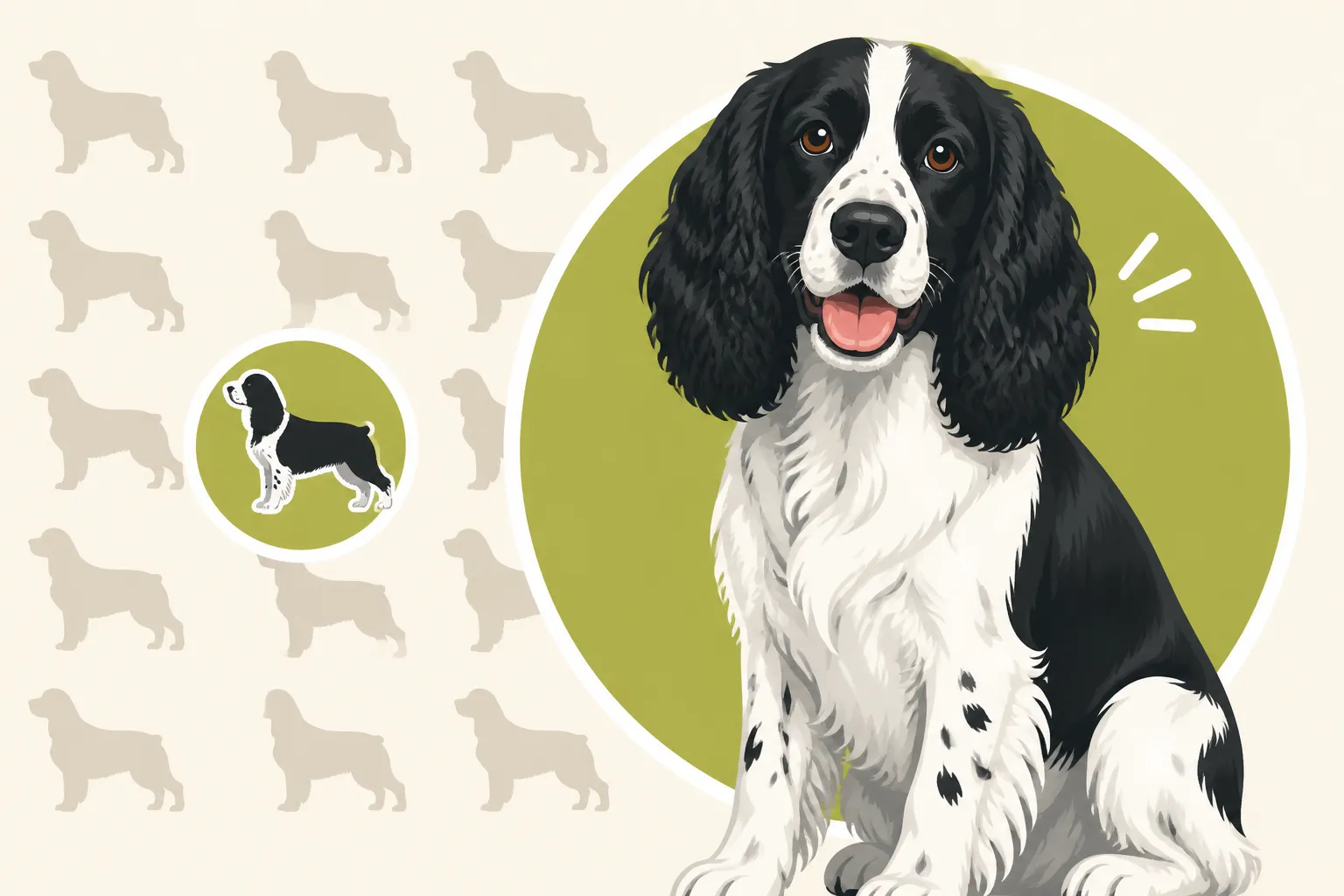
How Common a Black and White Springer Spaniel Is
A black and white English Springer Spaniel is a familiar sight, but it is not the only common color in the breed. Black and white and liver and white are both established, widely seen combinations; which one seems more common can depend on the country and the kind of Springer you encounter. This guide explains the pattern, what is considered standard, and what color does—and does not—tell you about a dog.
How common is a black and white Springer Spaniel
Black and white is a typical Springer Spaniel color
Black and white is one of the classic English Springer Spaniel color combinations. You may see a mostly black dog with a white chest, blaze, legs, or tail tip, or a dog with larger areas of white broken up by black patches. Both can be black and white Springer Spaniels; the amount and placement of color varies from dog to dog.
The combination is common enough that many people picture it when they imagine the breed. Still, there is no single reliable percentage that describes how many English Springer Spaniels are black and white across all countries, registries, and breeding communities. A local impression can be shaped by the dogs someone sees at a show, in a working field, or on neighborhood walks.
Black and white is not a separate variety of Springer Spaniel, nor is it a sign that a dog is more or less purebred. The breed includes several accepted color patterns. If you are comparing puppies, it helps to look beyond coat color and ask about health screening, temperament, and the type of home the breeder is trying to produce.
How it compares with liver and white
Liver and white is another familiar Springer Spaniel combination. It has a brown or liver-colored coat in place of black, paired with white markings. Both combinations are normal examples of the breed, and one is not inherently healthier, calmer, or more suitable as a family companion than the other.
People sometimes assume a color is rare simply because they see fewer dogs with it where they live. That can happen if local breeders tend to favor a particular appearance, or if someone’s experience comes mostly from one show or working line. A search for black and white dogs may also turn up many examples because the pattern is visually striking and easy to recognize.
The breed’s range of appearance is described in more detail in The Colors a Springer Spaniel Comes In. That broader view is useful if you are trying to distinguish a recognized coat pattern from a color that is unusual, or if you are looking at photos where lighting makes black, liver, and dark ticking harder to tell apart.
What the black and white pattern can look like
Patches, ticking, and roan are different things
A black and white Springer Spaniel can have large, clearly defined patches of black and white. Some dogs have more black across the body, while others have broad white areas with dark patches. White markings may appear on the face, chest, feet, and tail, but the pattern is not identical from one puppy to another—even within the same litter.
Small colored flecks in white areas are called ticking. A roan appearance is made up of a close mixture of colored and white hairs, so it can look different from a dog with separate, crisp patches. These details can be difficult to judge from a young puppy’s coat or a photograph, especially when the lighting is poor.
Puppy markings can also become more noticeable as the coat develops. A puppy that looks mostly white at first may show more ticking as it matures. For more on how this develops, see How Ticking Develops on a Springer Spaniel Puppy and How a Springer Spaniel's Markings Change With Age. Neither ticking nor roan makes a dog less of a Springer Spaniel.
Tricolor and solid-colored dogs
Some English Springer Spaniels are tricolor: they have black and white or liver and white coloring with tan markings, often above the eyes, on the cheeks, or on the legs. Tan points add another detail to the overall pattern, but they do not mean the dog belongs to a different breed.
Solid-colored Springer Spaniels are a separate question from black and white dogs. A mostly dark-looking dog may still have small white markings, and furnishings or coat length can make those markings less obvious. If you are uncertain about a dog’s color, ask the breeder how it is recorded and check the applicable breed standard or registry guidance rather than relying on a casual label.
| Appearance | What you may notice | What it means |
|---|---|---|
| Black and white | Black patches or larger black areas paired with white markings | A common, recognized Springer Spaniel combination |
| Liver and white | Brown or liver-colored areas paired with white | Another familiar color combination |
| Tricolor | Black and white or liver and white with tan points | A pattern with additional tan markings |
| Ticked or roan | Small colored flecks or a close mixture of white and colored hairs | A variation in how the coat pattern appears |
Color descriptions can be confusing when breeders, registries, or casual listings use terms differently. If a puppy’s exact pattern matters to you, ask for a clear description and current photographs rather than trying to infer it from a short advertisement.
Does coat color affect health or temperament
Color alone is not a health test
A black and white coat does not, by itself, tell you whether a Springer Spaniel is healthy. It does not replace veterinary checks, relevant health testing, or a careful look at the puppy’s parents and family history. The same principle applies to liver and white, tricolor, and other coat patterns.
When speaking with a breeder, ask what health screening has been completed and request the actual results where appropriate. Responsible puppy research should also include questions about the parents’ behavior, the breeder’s socialization practices, and the support available if concerns arise after the puppy comes home. The guide The Health Tests Both Springer Spaniel Parents Should Have can help you prepare those questions.
It is also worth remembering that a coat color is not a reliable shortcut for predicting how energetic, easy to train, or affectionate a particular dog will be. Individual temperament is shaped by inherited traits, early experiences, training, and daily life. The distinction between working and show-bred dogs, for example, is more meaningful to many prospective owners than whether a dog is black and white or liver and white.
Why buyers should look past the photographs
It is easy to become attached to one puppy in a litter because its markings stand out in a photo. That is understandable; a distinctive blaze or unusual patch can make a puppy feel instantly recognizable. But photographs reveal very little about health, confidence, energy level, or whether the puppy will suit your household.
Ask the breeder how they match puppies with homes. A thoughtful breeder may consider each puppy’s temperament and your lifestyle rather than letting buyers choose solely by color or markings. If you are deciding between different types of Springer, Two Breeds Registered as One: the Field and Show Springer Spaniel explains why working and show lines can differ in appearance and day-to-day needs.
Try to meet the puppies and, when possible, their mother. Notice whether the dogs seem comfortable with ordinary handling and household activity, and ask what experiences they have had so far. A healthy, well-matched black and white Springer Spaniel is a much better choice than a puppy selected only because its coat pattern looks especially striking.
Caring for a black and white Springer Spaniel coat
White areas may show dirt more readily
A black and white coat can make mud, grass stains, and burrs especially noticeable on the white parts. That is mostly a practical nuisance, not a special medical problem. After a walk through wet grass or woodland, check the feathering, feet, and areas behind the ears for tangles and debris, regardless of the dog’s color.
A regular brushing routine helps prevent small tangles from becoming tight mats. Pay attention to the ears, armpits, and feathering, where friction and moisture can make knots more likely. If you are putting together basic grooming supplies, a suitable comb or brush and dog-safe shampoo are easier to choose when you know the dog’s coat and skin needs; Chewy is one place owners may browse for those everyday items. Follow your groomer’s or veterinarian’s advice if your dog has sensitive skin or recurring irritation.
Avoid bathing simply to keep white fur looking bright. Frequent or harsh washing can irritate some dogs’ skin, and whitening products are not necessary for ordinary pet care. Rinse off dirt when needed, dry the coat thoroughly, and use products intended for dogs. For a fuller routine, see Two Coats, Two Routines: Field and Show Springer Spaniel Grooming.
Keep grooming practical, not color-focused
A Springer Spaniel’s grooming needs depend more on coat texture, feathering, activity, and the individual dog than on whether its patches are black or liver. A dog that swims, runs through cover, or spends time in muddy parks may need more frequent checks and rinsing than a mostly indoor companion. In either case, gentle, consistent care is easier than waiting until tangles or debris have built up.
Keep a basic kit where you can reach it after walks: a brush or comb that suits the coat, a towel, and any grooming products your veterinarian recommends. Chewy can be convenient for browsing routine supplies, but choose products for their suitability for your dog rather than a promise to make white markings look brighter. If your Springer has persistent itching, redness, or odor, ask a veterinarian instead of trying to solve the problem with a new shampoo.
Regular ear checks matter for Springer Spaniels of every color. Their drop ears can hold warmth and moisture, particularly after swimming or bathing. Check for discomfort, unusual discharge, or a strong odor, and seek veterinary advice if something seems wrong. A black and white coat may be memorable, but everyday care depends on the dog’s health and habits—not its markings.
Disclaimer
This article is for general informational purposes only and does not constitute professional advice. Laws, prices and regulations vary by location and change over time. Consult a qualified professional for guidance on your specific situation.