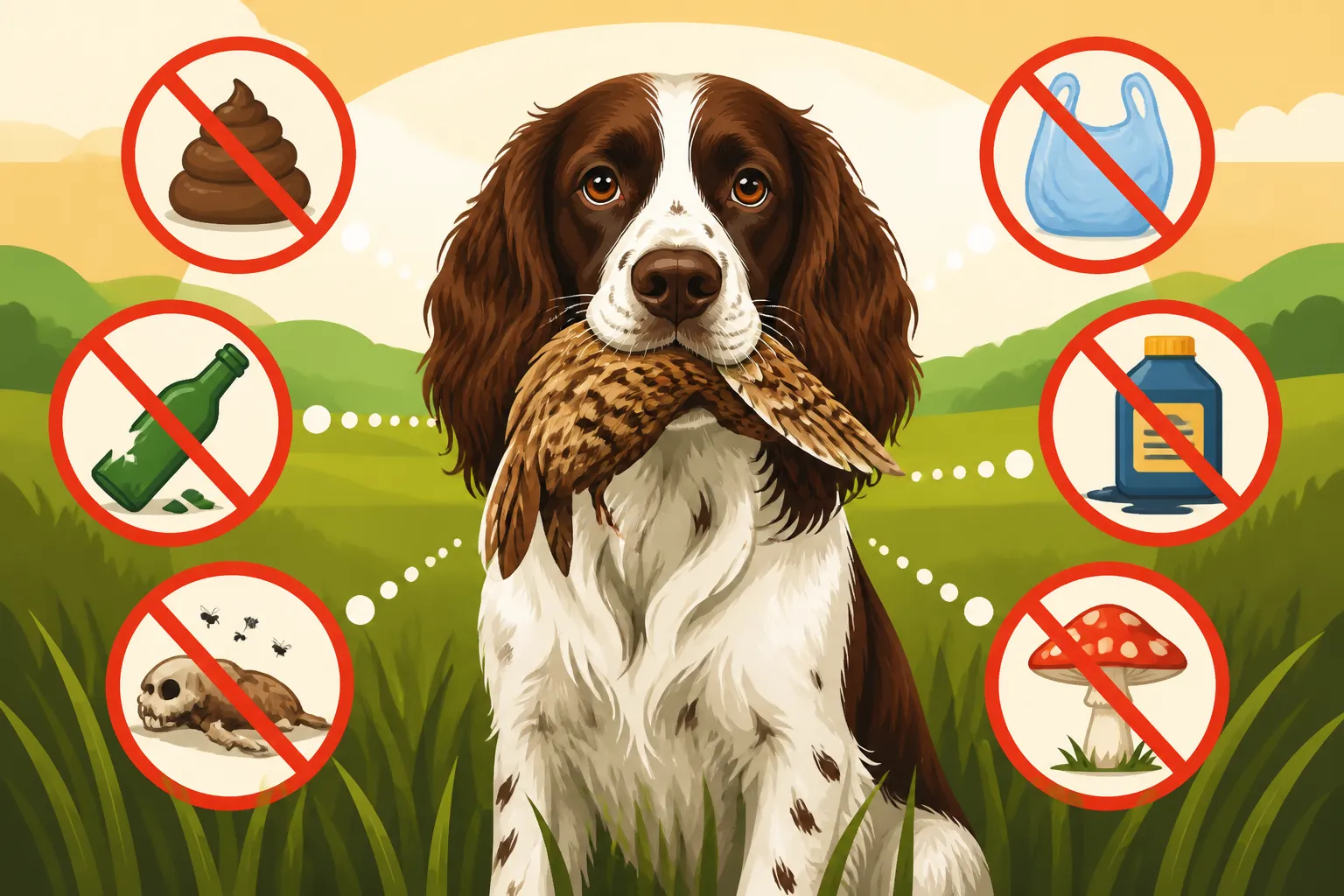
What a Springer Spaniel Picks Up in the Field and Should Not Eat
Oh, the sheer joy of watching your Springer Spaniel bounding through a field, nose to the ground, tail wagging like a metronome gone wild! It’s what they live for, isn't it? But then that heart-stopping moment happens: you see them sniff, mouth, and maybe even swallow something questionable before you can even shout "Leave it!" This guide is here to help you navigate those nerve-wracking moments, understand why your beloved Springer seems determined to taste test everything Mother Nature and careless humans leave behind, and equip you with the knowledge to keep them safe.
The Instinct Behind the "Snack"
If you own a Springer Spaniel, you know that their nose is their superpower, and their mouth is its eager accomplice. They are, at their very core, enthusiastic working dogs bred to find, flush, and often retrieve game. This means they are driven by scent, and anything that smells interesting is fair game for investigation – often with their mouths. It's not naughtiness; it's instinct.
A Nose Knows, and a Mouth Follows
A Springer Spaniel's sense of smell is legendary. They can pick up a faint scent trail that humans can't even dream of detecting. When they're out in the field, whether it's tall grass, dense brush, or even just a grassy park, their world is a vibrant tapestry of odors. Every leaf, every patch of soil, every discarded item tells a story, and your Springer is eager to read it. And for a dog, reading often involves mouthing. They use their mouths not just for eating, but for exploring, carrying, and understanding their environment. A fascinating smell often leads to a quick scoop-and-taste, especially if it resembles something that might have once been alive or edible. This is why having a rock-solid "leave it" command is so vital, a topic we touch on in Whether a Springer Spaniel's Recall Can Be Trusted.
They’re not just looking for birds or rabbits; they're investigating every intriguing aroma. That strong prey drive, coupled with their natural curiosity, means they're constantly on the hunt for something to engage with. Sometimes, that engagement turns into consumption, much to our dismay as owners. A dead bird, a forgotten sandwich, or even something as innocuous as a fallen acorn can become an object of intense interest, quickly transitioning from "find" to "ingest" in a blink of an eye. This is especially true for working lines, where their drive to interact with their environment is even more pronounced.
The Allure of the Outdoors
The great outdoors, while a haven for our active Springers, is also a minefield of potential hazards. Think about all the things that are naturally present: decaying plant matter, wild animal droppings, fungi, and the occasional unlucky creature that didn't make it. Then, add in the human element: discarded fast-food containers, dropped picnic scraps, forgotten fishing lines, and even more sinister items like broken glass or chemical spills. For a dog that lives to explore with its nose and mouth, the environment is full of temptation.
It's a constant battle, isn't it? You want them to enjoy their freedom, to quarter the field like they were born to do, but you also know that every sniff could lead to trouble. The beauty of a sweeping meadow hides fox scat, deer droppings, and mysterious toadstools. The edge of a woodland path might conceal rodenticide bait or spilled antifreeze. It's enough to make a dedicated Springer owner want to wrap their dog in bubble wrap, but that's just not practical for a breed that thrives on activity. Understanding these temptations is the first step in mitigating the risks.
Common and Dangerous Finds in the Field
Knowing what your Springer Spaniel is likely to encounter (and attempt to eat) in the great outdoors is crucial for prevention and quick action. The dangers can broadly be categorized into natural hazards and human-introduced hazards. Both present unique risks and require your vigilant attention.
Natural Hazards
Our Springers are natural foragers, and the wild offers a buffet of potentially harmful items. One of the most common, and often overlooked, dangers is wild mushrooms. While many fungi are harmless, distinguishing edible from toxic ones on the fly is nearly impossible for an owner, and even a small amount of a poisonous mushroom can be deadly. Symptoms can range from gastrointestinal upset to liver failure and neurological issues.
Then there's animal droppings. While often just disgusting, things like rabbit or deer pellets can sometimes harbor parasites. Fox and coyote scat, though, are a bigger concern as they can carry diseases like giardia, coccidia, or even tapeworms. Furthermore, your Springer might stumble upon carrion – dead animals like birds, rodents, or even larger wildlife. These decaying carcasses are breeding grounds for bacteria like Salmonella or E. coli, and they can also contain toxins if the animal was poisoned. Ingesting them can lead to severe gastrointestinal illness. Be particularly wary of slugs and snails, as they can carry lungworm, a serious parasitic infection. Your vet can advise on suitable worming protocols if your Springer is prone to eating these.
Lastly, be mindful of toxic plants. Many common plants are harmful if ingested. Things like daffodil bulbs, rhododendron, azalea, sago palm, oleander, and even some common garden weeds can cause mild to severe toxicity. It's worth familiarizing yourself with plants common in your walking areas. A quick search on resources like the ASPCA's plant list can be helpful, but when in doubt, assume it's dangerous. Your Springer’s health and happiness after a romp in the woods depends on your keen eye and quick intervention.
Human-Introduced Dangers
Unfortunately, humans often leave behind a trail of trouble for curious dogs. Discarded food is a huge culprit. Imagine a half-eaten chicken bone from a picnic, a dropped chocolate bar, or a moldy sandwich. Bones, especially cooked ones, can splinter and cause internal damage or blockages. Chocolate is toxic. Moldy food can contain mycotoxins, leading to neurological issues. Even seemingly harmless items like corn cobs can cause life-threatening obstructions.
Beyond food, there are more insidious items. Fishing tackle – hooks, lines, and sinkers – can cause severe internal injury, especially if a hook gets lodged in the throat or digestive tract. Broken glass and sharp metal objects are an obvious laceration hazard, both internally and externally. Think about old cans, bottle caps, or even shards of ceramic. Then there are chemicals and household waste: antifreeze (which tastes sweet but is deadly), rat poison, pesticides, batteries, cleaning products, or even discarded drug paraphernalia. These are all extremely dangerous and can lead to rapid, severe illness or death. It's a sad reality that we have to contend with other people's carelessness, but it’s part of owning an adventurous breed like a Springer Spaniel. Always remember to check your dog carefully once you get home, as advised in After the Hunt: Checking a Springer Spaniel Over Nose to Tail.
Plastic bags, wrappers, and other non-food trash can also pose a serious risk. While not inherently toxic, they can cause intestinal blockages if swallowed. A small plastic toy, a piece of fabric, or even a child's forgotten pacifier can become a foreign body that requires expensive and invasive surgery to remove. It's a reminder that a simple walk in the park requires constant vigilance, especially with a dog so keen on using their mouth to explore their world.
How to Prevent and Manage Field Snacking
Keeping your Springer Spaniel safe from eating undesirable (and dangerous) items in the field is an ongoing commitment. It's a combination of solid training, attentive supervision, and smart preparedness. There's no magic bullet, but a consistent approach can drastically reduce the risks.
Proactive Training and Supervision
The absolute cornerstone of prevention is excellent training. Your Springer must have a reliable "leave it" command. This means they will immediately stop investigating or drop whatever is in their mouth on command. Start practicing this in a controlled environment with low-value items, gradually increasing the distractions and the value of the object until they can reliably perform it even when something truly tempting is nearby. A strong "drop it" command is also vital, allowing you to ask them to release an item they've already picked up. These commands are lifesaving for a breed as mouthy as the Springer. They need to be ingrained to the point of being automatic, especially when out in varied environments.
Beyond specific commands, consistent supervision is non-negotiable. This isn't just about watching them; it's about actively monitoring their behavior. Keep an eye on where their nose is going and what they're investigating. If you see them zeroing in on something suspicious, be ready with your "leave it" or to quickly divert their attention with a high-value treat or toy. For some dogs, a long line can be an invaluable tool, giving them freedom to roam but keeping them within your control for quick intervention. You can find excellent long lines and training tools on platforms like Amazon or Chewy, which cater to a wide range of dog owners, from beginners to seasoned gundog enthusiasts. Remember, a Springer Spaniel is often engrossed in its scent work, and they might not hear you the first time you call, especially if they are a working line. Teaching a Springer Spaniel to Stay in Range and Whether a Springer Spaniel Needs a GPS Collar are great resources for managing their natural wanderlust.
Gear and Preparedness
Having the right gear and being prepared for emergencies can make a huge difference. A sturdy, comfortable leash and collar (or harness) are essential for keeping them close in high-risk areas. For Springers who are particularly prone to scavenging or who have a history of eating dangerous items, a basket muzzle might be a temporary solution. A basket muzzle allows them to pant, drink, and even take treats, but prevents them from picking up undesirable things. It's not a punishment, but a safety tool, and proper introduction is key so your dog associates it with positive experiences.
Always carry a first-aid kit for dogs when out in the field. This should include antiseptic wipes, sterile gauze, self-adhesive wrap, tweezers (for splinters or ticks – see Burrs, Ticks and Grass Awns in a Working Springer Spaniel), and an emergency contact list for your vet. Knowing the nearest 24-hour veterinary emergency clinic is also crucial, especially if you explore new areas. Finally, consider durable, protective gear for your Springer if they regularly work in heavy cover. A robust vest can protect them from thorns and sharp debris, reducing the chance of injury that might lead them to lick or mouth an open wound unnecessarily. You can find specialized vests and other working dog gear on websites like Amazon, often with reviews from other owners who work their dogs in similar conditions.
Post-Excursion Checks
Your vigilance shouldn't end when you leave the field. A thorough post-excursion check is vital. As soon as you get home, before they settle down for a nap, do a full body inspection. Look for any cuts, scrapes, or punctures on their paws, legs, and belly. Check their ears for grass awns or signs of irritation, as Springers are prone to ear issues due to their long, floppy ears – The Springer Spaniel Ear That Never Fully Dries offers more insight into this.
Pay particular attention to their mouth. Gently open it and check their gums, tongue, and between their teeth for any lodged debris, cuts, or unusual odors. Sometimes, a piece of stick, a thorn, or even a small fish hook can get stuck, causing discomfort or infection. Observe their behavior over the next 24-48 hours. Any changes in appetite, lethargy, vomiting, diarrhea, or straining could be signs that they ingested something harmful. Documenting these observations and relaying them to your vet will be invaluable if an issue arises. This diligent follow-up is an extension of responsible ownership, ensuring that what was meant to be a fun adventure doesn't turn into a medical crisis.
When to Worry and What to Do
Despite all your best efforts, sometimes things happen. Your Springer Spaniel might still manage to grab and ingest something dangerous. Knowing the signs of a problem and acting quickly can be critical to their recovery.
Signs of Ingestion
If you suspect your Springer has eaten something they shouldn't have, or if you simply find them displaying unusual symptoms after a walk, it's time to be concerned. The signs can vary widely depending on what they ate and how much, but common indicators include:
- Gastrointestinal Distress: This is often the first and most obvious sign. Look for repeated vomiting (especially if it contains blood or unusual material), persistent diarrhea, straining to defecate, or a loss of appetite. They might also show signs of abdominal pain, such as guarding their belly, whimpering when touched, or a hunched posture.
- Lethargy and Weakness: A sudden decrease in energy, appearing unusually tired or weak, or being reluctant to move. This can indicate pain, toxicity, or a systemic issue.
- Behavioral Changes: This could manifest as excessive drooling, restlessness, pacing, trembling, disorientation, or even seizures in severe cases of poisoning. They might seem "off" or withdrawn, not wanting to play or interact as usual.
- Physical Changes: Check their gums – pale gums can indicate internal bleeding or shock. Rapid breathing or a racing heart rate are also red flags. Some ingested items, like fishing line, might be seen protruding from their mouth or anus (though never pull on these!).
If you notice any of these signs, don't delay. Time is often of the essence, especially with certain toxins or foreign body ingestions. Your vet will need as much information as possible to make a quick and accurate diagnosis.
Emergency Steps
Your immediate response to a suspected ingestion can significantly impact the outcome. Here's what you should do:
- Contact Your Veterinarian Immediately: This is the most crucial step. Don't wait to see if symptoms improve. Call your regular vet or the nearest emergency animal hospital right away. Describe what you saw (or suspect) your dog ate, the approximate quantity, and any symptoms they are currently exhibiting. Be prepared to head to the clinic at once.
- Do NOT Induce Vomiting Without Professional Advice: While inducing vomiting might seem like a logical first step, it can be incredibly dangerous depending on what was ingested. Some substances (like caustic chemicals or sharp objects) can cause more harm coming back up. Also, inducing vomiting incorrectly can lead to aspiration pneumonia. Your vet will advise if and how to induce vomiting safely, often with specific guidance on agents to use (like hydrogen peroxide, but only under their direction!).
- Gather Information and Samples (Safely): If you know what your Springer ate, try to collect a sample of the substance, its packaging, or a photo of the plant/mushroom. If they have vomited, collect a sample of the vomit if possible, as this can help your vet identify the toxin. This information is invaluable for your vet to determine the best course of treatment. Remember, only do this if it's safe for you to do so, especially if the substance is hazardous.
- Stay Calm and Follow Instructions: Your dog will pick up on your stress, so try to remain as calm as possible. Listen carefully to your vet's instructions and follow them precisely. They are the experts and will guide you through the next steps, whether it's monitoring at home or heading straight to the clinic for diagnostics and treatment.
Being prepared for these situations is part of owning an active, curious Springer Spaniel. It means having your vet's number handy, knowing where your emergency clinic is, and keeping a watchful eye on your adventurous companion during every outing.
| Potential Field Danger | Why It's Harmful | Immediate Action |
|---|---|---|
| Wild Mushrooms | Many are highly toxic, causing organ failure or death. | Contact vet immediately. Do NOT induce vomiting without instruction. Bring a sample if safe. |
| Animal Droppings/Carrion | Can carry parasites, bacteria (Salmonella, E. coli), or toxins. | Monitor for GI upset, lethargy. Contact vet if symptoms appear. Discuss worming with vet. |
| Toxic Plants | Cause various toxicities (GI, neurological, cardiac). | Identify the plant if possible. Contact vet immediately with plant name. |
| Cooked Bones/Meat Scraps | Bones can splinter, cause blockages. Fat/grease cause pancreatitis. | Monitor for choking, vomiting, abdominal pain. Contact vet if symptoms. |
| Chocolate/Candy | Chocolate is toxic (theobromine). Xylitol (in sugar-free) is deadly. | Contact vet immediately. Induce vomiting only if instructed by vet. |
| Fishing Hooks/Line | Can cause internal punctures, lacerations, or blockages. | Do NOT pull line. Contact vet immediately. Emergency surgery may be needed. |
| Broken Glass/Sharp Metal | Risk of internal and external lacerations, perforations. | Monitor for mouth/paw injuries, vomiting blood, abdominal pain. Vet immediately. |
| Antifreeze/Chemicals | Highly toxic, often with sweet taste. Causes kidney failure. | Emergency vet visit is critical. Symptoms may be delayed. |
| Plastic/Non-Food Trash | Risk of intestinal blockage, choking. | Monitor for vomiting, lethargy, lack of appetite, straining. Vet if suspected. |
Disclaimer
This article is for general informational purposes only and does not constitute professional advice. Laws, prices and regulations vary by location and change over time. Consult a qualified professional for guidance on your specific situation.