Whether a Springer Spaniel’s Ear Hematoma Needs Surgery
Finding your beloved Springer Spaniel with a swollen, puffy ear, looking like a little pillow has suddenly appeared on their head, is incredibly alarming for any dog owner. It's often painful for them, and it certainly looks distressing to us, leading to a flurry of "what happened?" and "what do we do now?" questions. This guide is here to walk you through what an ear hematoma is in your Springer Spaniel, how it happens, the signs to look for, and most importantly, whether surgery is truly necessary for their comfort and long-term ear health.
What Exactly Is a Springer Spaniel Ear Hematoma?
An aural hematoma, or ear hematoma, is essentially a blood blister that forms on the ear flap (known as the pinna). It occurs when a blood vessel within the cartilage of the ear ruptures, leaking blood between the cartilage and the skin layers of the ear. Because the blood has nowhere else to go, it collects and causes that characteristic puffy, fluid-filled swelling you see.
The Anatomy of the Springer's Ear and Why It's Prone
Think about your Springer Spaniel's ears. They're long, often heavy, and covered in that lovely feathering that makes them so endearing. This very design, while beautiful, is also a major reason why our Springers are so prone to ear hematomas. Their ear flaps are relatively thin, yet they contain a network of small blood vessels and cartilage. When these ears get vigorously shaken or scratched, the force can be enough to cause one of those delicate blood vessels to break.
Imagine your Springer Spaniel, tail wagging, sniffing excitedly through tall grass, then suddenly shaking their head with such force that their long ears flap and hit against their skull or neck. Or perhaps they're having an intense scratch with a hind paw because of an itch. That repetitive, sometimes violent motion can cause a shear force on the ear's internal structures. Because Springers have those wonderful, pendulous ears, they're like natural pendulums, gathering momentum when shaken, increasing the likelihood of vessel rupture. It's a sad irony that the very feature we adore can sometimes lead to such discomfort for them. You can read more about why these wonderful ears can be a challenge in Why a Springer Spaniel's Ears Are Never Quite Healthy.
Common Causes: It's Not Always What You Think
While a sudden bump or rough play can cause an ear hematoma, the vast majority stem from something much deeper: an underlying irritation that causes your Springer to shake their head or scratch their ears excessively. It's rarely a standalone event.
The most frequent culprits are ear infections. Whether it's bacterial, yeast, or a combination, an infection makes their ears itchy, painful, and generally uncomfortable. Your Springer's natural response is to shake their head to try and dislodge the irritant or scratch fiercely with a back paw to alleviate the itching. This is a common story among Springer owners, as their breed type is particularly susceptible to ear issues. You'd be surprised how many dogs develop a hematoma because of an ear infection that might have been brewing unnoticed for a short while. Signs a Springer Spaniel Has an Ear Infection goes into more detail about how to spot trouble.
Allergies are another huge factor. Just like humans, dogs can suffer from environmental allergies (pollen, dust mites) or food allergies, and often, one of the primary ways these manifest is through itchy skin, including the ears. Constant itching leads to constant scratching and shaking, which then puts those ear vessels at risk. Even ear mites, though less common in well-cared-for adult dogs, can cause intense irritation, particularly in puppies or dogs from unknown backgrounds. Foreign bodies, like a grass awn or a seed, can also work their way into the ear canal, causing sudden and frantic head shaking. It's like having a persistent tickle or pain you can't quite get rid of, and your Springer's attempts to relieve it can be self-damaging.
Recognizing the Signs and Getting a Diagnosis
Spotting an ear hematoma is usually quite straightforward because the visual signs are so dramatic. However, understanding the subtle clues that might precede it, or the pain your dog is experiencing, is equally important.
What a Hematoma Looks and Feels Like
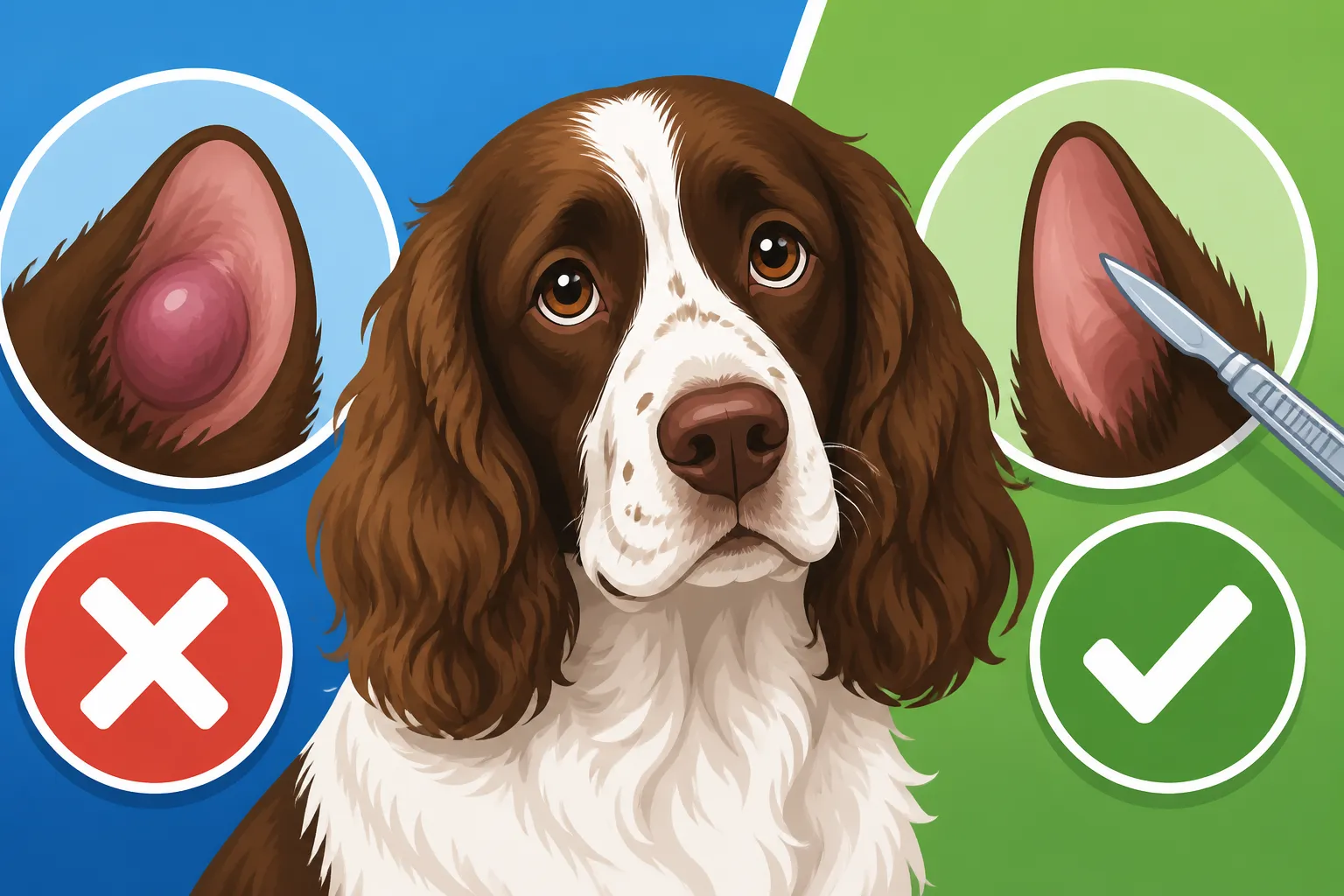
The most obvious sign is the sudden, noticeable swelling on the ear flap. It will often look like a puffy, fluid-filled balloon or a soft, squishy pillow has formed on either the inner or outer surface of the ear. This swelling can range from a small, pea-sized lump to engulfing almost the entire ear flap, making the ear feel thick and heavy. When you gently touch it, it will often feel warm to the touch and can be quite painful for your Springer. They might flinch or even vocalize when you try to examine it.
Beyond the visible swelling, you'll likely notice changes in your Springer's behavior. They might hold the affected ear lower than the other, or at an odd angle. Head tilting is common, as is increased pawing at the ear. They may frequently shake their head, even after the hematoma has formed, which can actually worsen the condition or prevent it from healing. Many owners report their dog becoming quieter, less playful, or even a bit irritable due to the discomfort. If the swelling is severe, it can even affect their balance or make it difficult for them to hear clearly from that ear. You might find your Springer shaking their head constantly, which is a major red flag that something is wrong and could be contributing to or exacerbating the hematoma.
Why a Vet Visit is Crucial (and What to Expect)
As soon as you notice any signs of an ear hematoma, a trip to the veterinarian is non-negotiable. While you might be able to identify the swelling, a vet's expertise is crucial for several reasons. First, they'll confirm that it is indeed a hematoma and not something else more serious, like an abscess (a pocket of pus), a cyst, or even a tumor, which can sometimes present with similar swelling.
Secondly, and perhaps most importantly, your vet will work to identify and address the underlying cause of the hematoma. Remember, the hematoma itself is often a symptom of another problem, usually an ear infection or allergies. The vet will perform a thorough physical examination, paying close attention to both ears. This will likely include looking deep into the ear canal with an otoscope to check for infection, foreign bodies, or mites. Often, they will take a swab from the ear canal for an ear cytology – a microscopic examination to determine if bacteria, yeast, or mites are present, which helps them prescribe the correct medication. What a Springer Spaniel's Ear Cytology Costs can give you an idea of what to expect for this diagnostic step.
Delaying treatment for an ear hematoma can lead to permanent disfigurement of the ear, often referred to as "cauliflower ear." This happens when the blood clot scarifies and contracts, causing the ear cartilage to thicken and warp. Not only does this look unsightly, but it can also make future ear infections even more difficult to treat because the ear canal might become narrowed or blocked by scar tissue. Early and proper intervention is key to ensuring your Springer's ear heals functionally and aesthetically.
Surgical vs. Non-Surgical Approaches: Weighing the Options
When it comes to treating an ear hematoma, there are two main paths: surgical intervention or non-surgical management. The best choice depends on several factors, including the size and location of the hematoma, its duration, your dog's overall health, and your veterinarian's recommendation.
When Surgery Is Often the Best Route
For most significant ear hematomas, surgery is widely considered the most effective and often the fastest way to resolve the issue with the best long-term outcome. The primary goal of surgery is not just to drain the accumulated blood, but to prevent it from refilling and to encourage the ear flap to heal flat, preserving its natural shape and function.
The typical surgical procedure involves making a small incision in the ear flap to drain the blood and clot. Once drained, the magic happens: the vet places sutures (stitches) through and through the ear flap, often in a mattress pattern, securing the skin to the underlying cartilage. These sutures act like tiny internal splints, obliterating the space where the blood collected and allowing the layers to reattach properly as they heal. These sutures also help with drainage and prevent fluid from building up again. The incision is then often left open to allow for continued drainage as the ear heals.
The benefits of surgery are substantial:
- Faster Resolution: The hematoma is addressed immediately, and healing often progresses more predictably.
- Better Cosmetic Outcome: By stitching the ear flat, surgery significantly reduces the risk of "cauliflower ear" and helps maintain the natural appearance of your Springer's ear.
- Lower Recurrence Rate: Because the space for fluid to re-accumulate is eliminated by the sutures, the chance of the hematoma returning is much lower compared to non-surgical methods.
- Improved Comfort: Draining the painful swelling provides immediate relief for your dog.
While surgery involves anesthesia and a recovery period, many owners find the investment worthwhile for their dog's comfort and to avoid potential long-term complications. If you're weighing the financial aspect, it's a good idea to research What Ear Surgery Costs on a Springer Spaniel and Whether Insurance Covers a Springer Spaniel's Ears.
Exploring Non-Surgical Alternatives
For very small hematomas, or those in dogs who might not be good candidates for anesthesia due to age or other health conditions, non-surgical options might be considered. However, it's crucial to understand their limitations and higher recurrence rates.
- Aspiration: This involves using a needle and syringe to drain the fluid from the hematoma. While it offers immediate relief, the problem is that the space where the blood accumulated is still there, and the blood vessels are still prone to leaking. As a result, hematomas often refill within hours or days. Multiple aspirations might be needed, which can be stressful for your dog and sometimes introduces infection.
- Steroid Injections: Sometimes, veterinarians might inject corticosteroids into the hematoma after aspiration to try and reduce inflammation and prevent refilling. This can work for very small, fresh hematomas, but it's not a guaranteed solution.
- Conservative Management: For extremely minor cases, a vet might suggest simply applying pressure wraps, cold compresses, and managing pain. However, this method is rarely effective for anything but the tiniest hematomas and carries the highest risk of "cauliflower ear."
- Placement of a Drain: In some cases, a small indwelling drain might be placed after aspiration to allow continuous drainage, rather than relying on repeated aspirations. This is less invasive than full surgery but still doesn't offer the internal stabilization that sutures provide.
The main drawbacks of non-surgical approaches are the much higher chance of recurrence and the increased likelihood of permanent scarring and disfigurement of the ear flap. The healing process can also be much longer and more frustrating for both you and your Springer. Regardless of the method chosen, it is absolutely imperative that the underlying cause of the hematoma (e.g., an ear infection or allergies) is diagnosed and treated concurrently. Otherwise, your Springer will simply continue shaking and scratching, making any treatment for the hematoma futile.
The Recovery Road: What to Expect Post-Treatment
Regardless of whether your Springer Spaniel undergoes surgery or a non-surgical treatment, the recovery period requires patience, diligent care, and close monitoring.
Post-surgery, your Springer's ear will likely be bandaged to protect the sutures and apply gentle pressure. They will also need to wear an Elizabethan collar (often called a "cone of shame") to prevent them from scratching or shaking their head and dislodging the bandage or stitches. This cone is vital, even if your dog hates it! You can find a variety of comfortable cones on Chewy or Amazon to make this period a bit easier. Your vet will prescribe pain medication to keep your Springer comfortable and possibly antibiotics, especially if an underlying ear infection was treated. Follow-up appointments will be necessary to check on healing, remove the bandage, and eventually remove the sutures, usually within a few weeks.
During recovery, keep your Springer calm and limit strenuous activity that might cause excessive head shaking. Monitor the treated ear for any signs of swelling (which could indicate a recurrence), redness, discharge, or foul odor. Maintaining good ear hygiene is also critical to prevent future issues. Your vet might recommend a specific ear cleaner for regular use after the healing is complete.
Proper nutrition can also play a supporting role in healing. A good quality diet, whether it's traditional kibble or fresh food options like Ollie, provides the necessary nutrients for tissue repair and overall well-being. Keeping up with parasite prevention, especially for ear mites, and addressing any underlying allergies will be key to preventing future episodes. This might involve long-term management of allergies or consistent preventative ear care. Learning How Often a Springer Spaniel Gets Ear Infections and adopting a routine to check their ears weekly can help catch issues early. Prevention is always better than cure, especially when it comes to those beautiful, yet vulnerable, Springer ears!
| Feature | Surgical Treatment | Non-Surgical Treatment |
|---|---|---|
| Method | Incision, drainage, sutures to reattach ear layers | Aspiration (needle drainage), possibly steroids/drain |
| Effectiveness | High success rate, low recurrence | Lower success, high recurrence |
| Cosmetic Outcome | Excellent, preserves ear shape, prevents cauliflower ear | Higher risk of cauliflower ear, ear disfigurement |
| Healing Time | Typically 2-4 weeks (sutures in, then removal) | Can be weeks to months, often slower and less predictable |
| Pain Relief | Immediate after drainage, managed with medication | Temporary after aspiration, can remain uncomfortable |
| Anesthesia | Required | Generally not required (unless sedated for drain placement) |
| Cost | Higher upfront due to procedure and aftercare | Lower initial cost, but potential for repeat treatments |
| Underlying Cause | Must be treated concurrently | Must be treated concurrently |
Disclaimer
This article is for general informational purposes only and does not constitute professional advice. Laws, prices and regulations vary by location and change over time. Consult a qualified professional for guidance on your specific situation.