Whether a Springer Spaniel Is Safe With a Toddler
Bringing a new baby or having a toddler in the house while owning a lively English Springer Spaniel can feel like trying to mix oil and water, or at least a highly energetic canine with a very wobbly human. It's a common worry for parents: how do you ensure the safety of your precious little one while also maintaining a happy, comfortable life for your beloved dog? This guide will walk you through the realities of Springer Spaniels and toddlers, offering practical advice and setting realistic expectations for creating a harmonious home.
The Springer Spaniel Temperament: A Family Dog at Heart (But Not Without Nuances)
English Springer Spaniels are renowned for their cheerful, eager-to-please dispositions, and their deep devotion to their families. They thrive on companionship and want nothing more than to be a part of every activity. This innate friendliness is a huge plus when considering interactions with children, as most Springers are naturally gentle and tolerant. However, their boundless energy and enthusiasm, while endearing, can pose unique challenges when introduced to the unpredictable world of a toddler.
The Springer's Innate Affection and Energy
Picture your Springer Spaniel's tail wagging a mile a minute, their whole body wiggling with excitement when you walk through the door. This incredible joy and exuberance is part of their charm, and it means they generally adore people, including little ones. They want to be close, to play, and to be involved. Many Springers see children as smaller, equally exciting playmates, which can be lovely in theory. They often form strong bonds with the children in their family, becoming loyal companions and watchful, if sometimes overzealous, protectors.
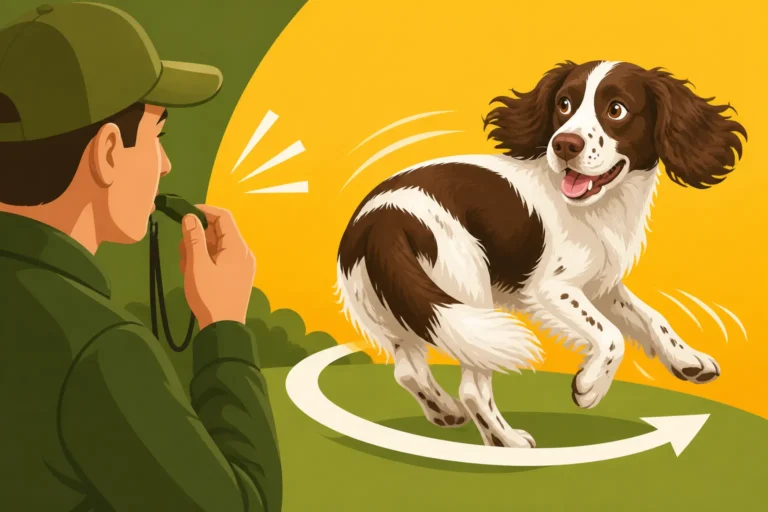
However, this affection often comes bundled with a significant amount of energy. A Springer Spaniel, especially a younger one or one from a strong working line, is built to be active for hours on end. They're quick, agile, and can cover ground at an impressive pace. This means a sudden burst of excitement from your dog could easily bowl over a small child, not out of malice, but pure exuberance. They might jump up to greet, or weave around legs in anticipation of a game, totally unaware of how precarious a toddler's balance truly is. This is why understanding How a Field Bred Springer Spaniel Differs in Drive is so important, as their energy levels can be even higher.
Potential Triggers and Overstimulation
Even the most good-natured Springer Spaniel has a breaking point, especially when faced with prolonged or intense toddler behavior. Imagine constant poking, ear pulling, tail grabbing, or sudden loud squeals and cries. While an adult might understand a dog's subtle cues of discomfort – a lip lick, a yawn, turning their head away – a toddler simply doesn't. They operate on instinct and curiosity, which can inadvertently become provocative. A Springer who normally adores attention might become overwhelmed.
This isn't to say your Springer will suddenly become aggressive, but repeated overstimulation or perceived threats to their personal space can lead to stress. A stressed dog might retreat, hide, or, in rare cases when retreat isn't possible, feel cornered and resort to snapping as a last resort to communicate their discomfort. It's crucial for us as owners to recognize these subtle signals of stress and intervene before things escalate, ensuring both your Springer and your toddler feel safe and respected. This is particularly true for The Soft Springer Spaniel That Shuts Down If You Shout, who might withdraw entirely.
Toddler Behavior: Unpredictable and Unintentionally Provocative
Toddlers are tiny, wonderful bundles of chaos. They are learning about the world through touch, sound, and relentless experimentation. While this stage is vital for their development, it can be a minefield for even the most patient dog. Their actions are not malicious, but they are often loud, sudden, and entirely lacking in the understanding of a dog's boundaries.
The Tugging, Poking, and Loud Noises
Think about a toddler exploring. They grab, pull, prod, and sometimes even bite. To them, a Springer Spaniel's long, silky ears are just another interesting texture to investigate. A soft tail is a perfect handle to steady themselves, or an exciting thing to yank. Their shrieks of delight or frustration are high-pitched and sudden, totally different from the calmer tones of adult human speech that dogs are accustomed to. All of these behaviors, while natural for a toddler, can be incredibly startling, painful, or irritating for a dog.
A Springer Spaniel, with their sensitive hearing and often bouncy demeanor, can easily be startled by an unexpected shout or knocked off balance by a curious shove. They might interpret a toddler's clumsy advances as a threat or simply an annoyance they can't escape. It's also worth remembering that Whether a Springer Spaniel Knocks Children Over is a real concern due to their sheer enthusiasm and size, making careful management even more important. It’s not about blame, but about understanding the inherent clash between two very different beings who don't speak the same language.
The Importance of Supervision
This brings us to the golden rule of dogs and toddlers: never leave them unsupervised, not even for a second. Accidents happen in a blink, and it's simply not fair to either the dog or the child to put them in a situation where something could go wrong without an adult immediately present to intervene. Even if your Springer has been wonderful with kids for years, a single moment of miscommunication or frustration could lead to an unfortunate incident.
Active supervision means you are not just in the same room, but you are actively watching their interactions, ready to redirect the toddler, calm the dog, or create space. It means being proactive, not reactive. This isn't just about preventing bites; it's about teaching both your dog and your child how to interact respectfully and safely. It also ensures that if your dog exhibits signs of stress or fear, you're there to manage the situation and prevent future problems. For new owners, this continuous vigilance is part of The First Year With a Springer Spaniel Puppy and beyond, evolving as your child grows.
Strategies for a Harmonious Home: Setting Everyone Up for Success
Creating a safe and happy environment for both your Springer Spaniel and your toddler requires thoughtful planning and consistent effort. It's about proactive management and clear communication, teaching both species the rules of engagement.
Creating Safe Spaces for Both Dog and Child
One of the most effective strategies is to establish designated safe zones where each can retreat and relax undisturbed. For your Springer Spaniel, this might be a crate in a quiet room, a dog bed behind a baby gate, or even just a specific corner of a room that is off-limits to the toddler. Make this space a positive one, associated with treats, toys, and calm. Brands like Amazon offer a wide selection of robust baby gates and crates that can help you implement these physical barriers effectively.
| Safe Zone Component | Purpose for Dog | Purpose for Child |
|---|---|---|
| Crate | Sanctuary, rest, safety from toddler | Keeps dog separate, prevents accidental encounters |
| Baby Gate | Creates physical barrier, allows visual connection | Designates child-free zones for dog |
| Dog Bed | Designated resting spot, personal space | Teaches child boundaries for dog's space |
| Playpen/Child Gate | Keeps child contained and safe | Allows dog free movement in other areas |
For your toddler, a playpen or gated area in the living room can offer a safe zone where they can play freely without the dog accidentally knocking them over or getting too close for comfort. This also gives you peace of mind knowing your child is secure while you attend to other tasks, even if for a moment. These physical barriers are not punishments; they are tools for management that prevent undesirable interactions and build a foundation of safety.
Training Your Springer Spaniel for Toddler Interactions
Training is paramount. Your Springer needs to understand solid obedience commands, especially "stay," "leave it," and a reliable recall. These commands are critical for managing interactions. For instance, "leave it" can be used if your Springer shows too much interest in a dropped toy or food, or if they're getting too close to the toddler's face. Knowing what a Springer works for can help you understand the best motivators for training.
Consider enrolling in a family dog training program or seeking guidance from a certified professional dog trainer. Online platforms like BAXTER & Bella offer comprehensive puppy and family dog training programs that can guide you through these crucial steps, even with specific modules for integrating dogs and children. Teaching your Springer to settle on a mat or bed on command, and to maintain a polite distance from the toddler, are invaluable skills. Reinforce calm behavior around your child with high-value treats and praise. Remember, How Fast a Springer Spaniel Learns can be impressive with consistent, positive reinforcement.
Educating Your Toddler About Dog Etiquette
Just as important as training your dog is teaching your toddler how to behave around the dog. This is an ongoing process that will evolve as your child grows, but it needs to start early. Teach gentle touches by demonstrating how to pet softly on the back or shoulder, away from the face or tail. Use simple, clear language like "gentle hands" or "nice doggy."
Teach them not to approach the dog when it's eating, sleeping, or playing with a toy. Show them that the dog's crate or bed is a "no-go" zone for children. Empower your child by teaching them how to safely call the dog to them if they want to interact, rather than chasing or cornering them. If your child is prone to loud outbursts, work on managing those separately, perhaps through distraction or quiet play in their designated safe space, to prevent frightening your dog. This creates a foundation for respectful interaction that benefits everyone.
Recognizing Warning Signs and When to Seek Professional Help
Even with the best intentions and management, it's vital to be vigilant for any signs of stress or discomfort in your Springer Spaniel. Dogs communicate through subtle body language, and understanding these cues can prevent escalation and keep everyone safe.
Subtle Cues of Discomfort in Your Springer
Dogs rarely bite without warning. They offer a cascade of signals, often called "calming signals" or "stress signals," before resorting to more overt displays of fear or aggression. Learning to read these can be a lifesaver.
Common Canine Stress Signals:
- Lip Licking: A quick flick of the tongue over the nose.
- Yawning: Not necessarily tired, but often a sign of stress.
- Turning Head/Body Away: Trying to avoid interaction.
- Whale Eye: The whites of their eyes are visible as they try to look away.
- Stiff Body Posture: Tense muscles, tucked tail, lowered head.
- Growling: A clear, audible warning. This is a good thing – it's communication, not aggression.
- Cowering/Hiding: Seeking an escape.
If you observe any of these signs, especially growling, it is an immediate signal to create space between your dog and your toddler. This isn't aggression; it's communication. Thank your dog for communicating, then calmly separate them. Ignoring these subtle cues forces the dog to escalate their warnings, and that's when problems arise.
When to Consult a Professional Dog Trainer or Behaviorist
If you're consistently seeing stress signals from your Springer Spaniel, if your dog is actively avoiding your child, or if you've witnessed any snapping or growling that you're unsure how to manage, it's time to call in a professional. A certified professional dog trainer or a veterinary behaviorist can assess the situation in your home, help you understand your dog's specific body language, and develop a tailored plan to improve interactions. They can also advise on Whether Positive Training Alone Works on a Springer Spaniel for your specific situation.
Don't wait until an incident occurs to seek help. Early intervention is key. A behaviorist can distinguish between normal dog-child interactions that need management and genuine behavioral issues that require more intensive modification. Their expertise can provide invaluable peace of mind and ensure the long-term safety and happiness of every member of your family, paws and all. Remember that managing The Springer Spaniel That Cannot Be Left Alone or Separation Anxiety in a Springer Spaniel might also need professional guidance, as these underlying anxieties can affect their tolerance levels.
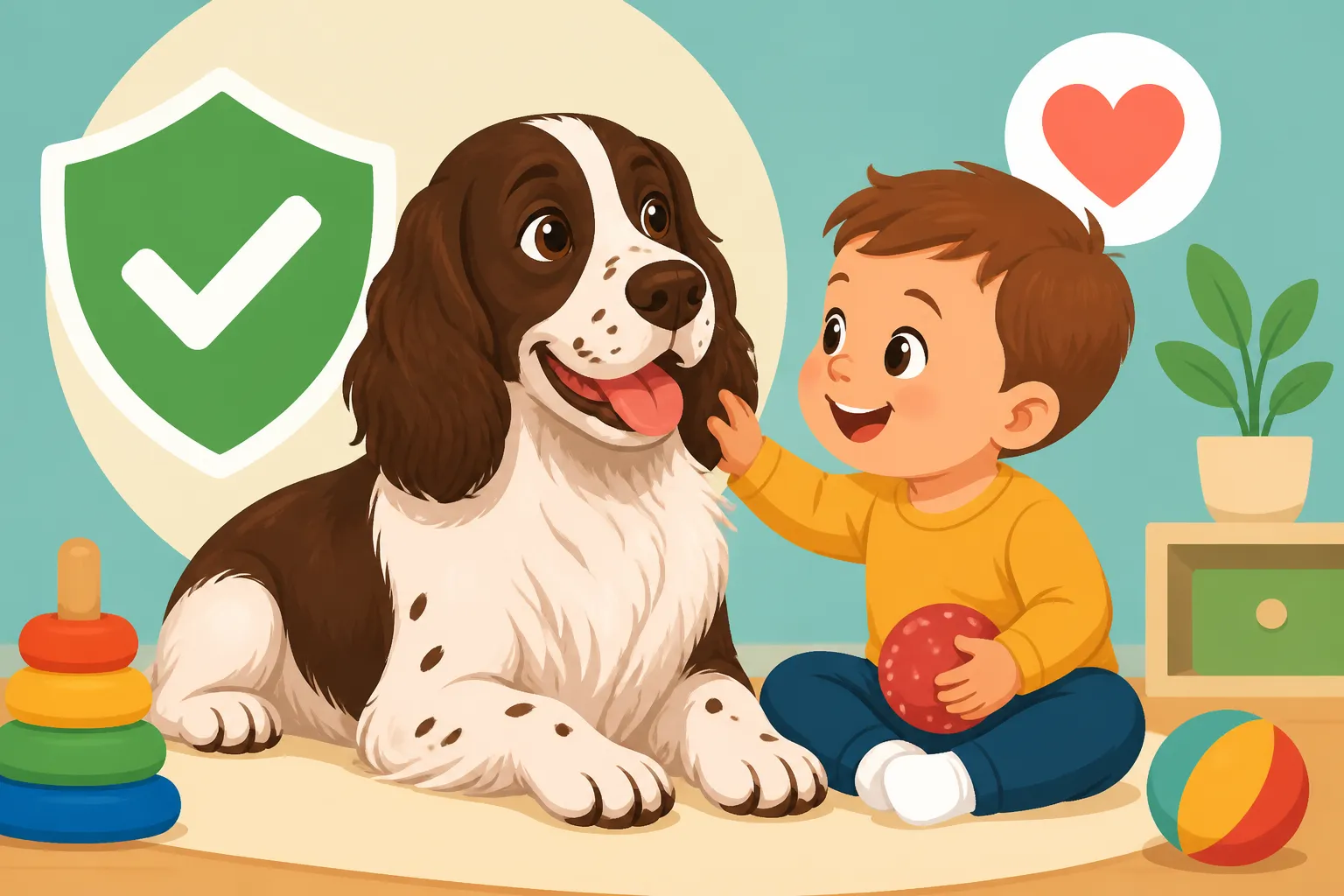
Ultimately, a Springer Spaniel can absolutely be safe with a toddler, but it requires diligent supervision, consistent training for both dog and child, and a deep understanding of canine body language. It's a journey, not a destination, but one that can lead to a truly rewarding bond between your beloved Springer and your growing family.
Disclaimer
This article is for general informational purposes only and does not constitute professional advice. Laws, prices and regulations vary by location and change over time. Consult a qualified professional for guidance on your specific situation.