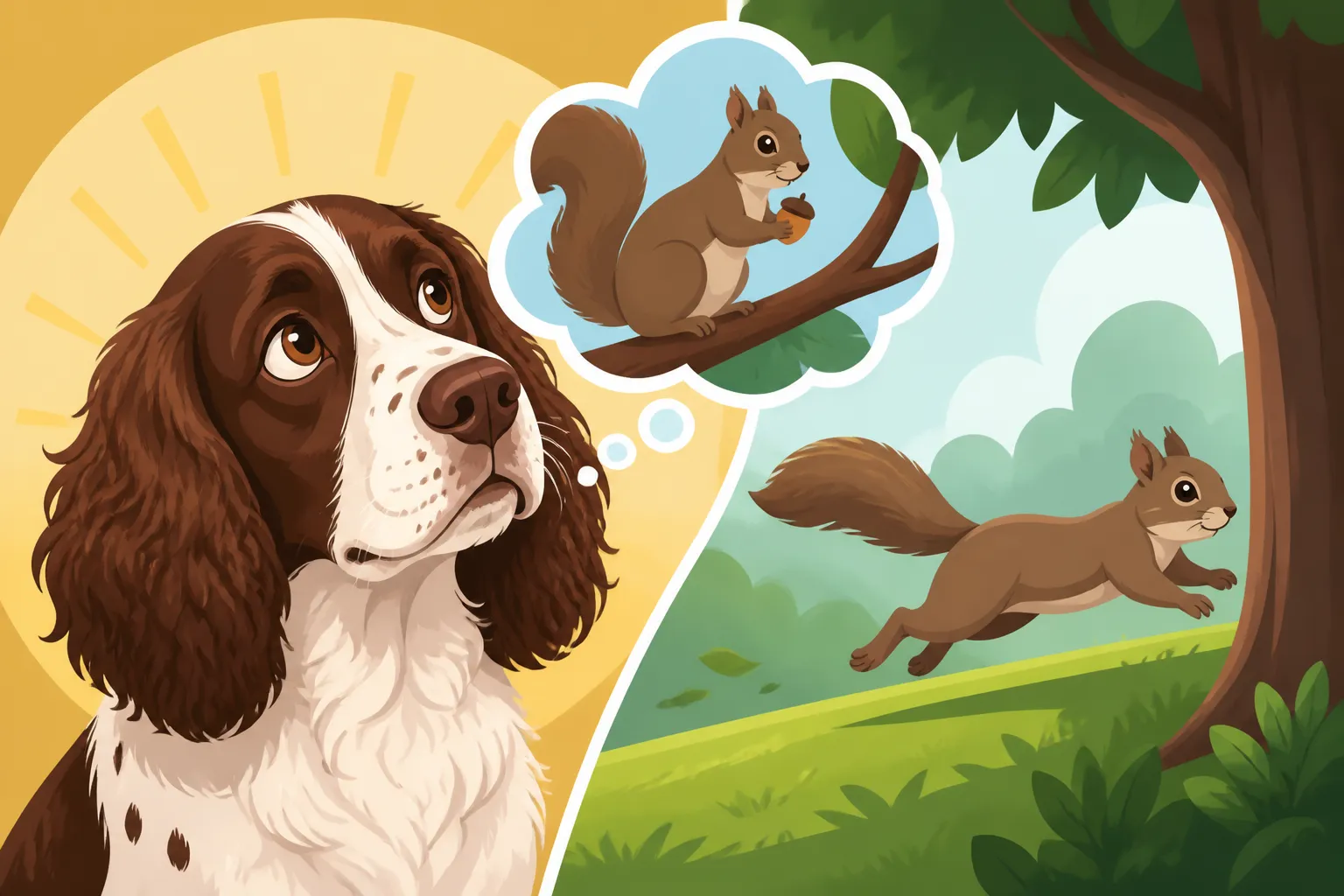
Whether a Springer Spaniel Chases Squirrels
Oh, the eternal dance between a Springer Spaniel and a squirrel! If you've ever found yourself calling "Come!" with increasing desperation as your beloved dog launches himself across the park, ears flying, eyes locked on a bushy tail, then you know the unique frustration. It's not just a cute quirk; it's a deeply ingrained instinct that can make walks stressful and off-leash adventures feel like a gamble. This guide will delve into why your Springer Spaniel is so utterly captivated by these furry tree-dwellers and, more importantly, what realistic steps you can take to manage this powerful prey drive.
The Deep-Seated Instinct Behind the Chase
Let's be honest, it’s not really your fault that your Springer Spaniel suddenly develops selective hearing when a squirrel appears. These dogs were bred for centuries to hunt, to find game, flush it out, and sometimes even retrieve it. That little twitch of a squirrel's tail isn't just a critter; it's a prime target for instincts that have been honed over generations.
The Springer's Predatory Drive
English Springer Spaniels are sporting dogs, through and through. Their entire genetic makeup screams "find and pursue." This isn't aggression; it's a predatory sequence that's built into their DNA. When they see a squirrel, they're not thinking about your meticulously planned training schedule or the expensive treats in your pocket. They're seeing movement, scent, and a potential "game" that needs to be chased. This drive is what makes them such incredible working dogs, able to quarter a field for hours, but it's also what makes them rocket-powered squirrel-seeking missiles in your local park. It's important to understand that this isn't disobedience in the human sense; it's instinct taking over. Trying to scold it out of them often just dampens their spirit without addressing the root cause. For more on their natural inclinations, you might find Whether a Springer Spaniel Puts Its Nose to the Ground and Vanishes an interesting read.
Why Squirrels Are Such Irresistible Targets
Think about it from your Springer's perspective. Squirrels are the perfect package: they're fast, they make erratic movements, they often chatter provocatively, and they carry a fascinating scent that practically screams "chase me!" They're constantly challenging your dog, running up trees, across fences, and then pausing just long enough to make your Springer think they might actually catch them. This creates a relentless, self-rewarding cycle. Every time your dog gets to chase, even if they don't "catch" the squirrel, the thrill of the pursuit is a huge reward in itself. This intense engagement overshadows almost any other incentive you can offer, which is why a mere "Come!" often falls on deaf ears. They're experiencing pure, unadulterated joy in that moment, and it's hard to compete with that.
The Challenges of a Squirrel-Chasing Springer Spaniel
While it might seem endearing at times, a strong squirrel-chasing instinct can lead to significant headaches and even dangers for a Springer Spaniel owner. It's more than just a minor inconvenience; it can truly impact your dog's safety and your peace of mind.
Off-Leash Reliability and Safety Concerns
The biggest hurdle for many owners of squirrel-chasing Springers is the dream of reliable off-leash walks. We all want our dogs to be able to roam freely and enjoy themselves, but when a squirrel darts across the path, that dream often shatters. Your dog's prey drive can instantly override all prior training, sending them hurtling into traffic, across busy roads, or deep into unfamiliar woods. This isn't just a risk for your dog, but potentially for others too if your dog startles a cyclist or another person. The fear of your dog getting hurt or lost can turn what should be a relaxing outing into a constant state of vigilance and anxiety. You might start avoiding places where squirrels are prevalent, which significantly limits where you can exercise your dog. Building a trustworthy recall, especially in high-distraction environments, is paramount for their safety. You'll definitely want to explore Whether a Springer Spaniel's Recall Can Be Trusted for more insights on this critical skill.
The Frustration of the Disappearing Act
It's not just the safety aspect; it's the sheer frustration of being ignored. You've spent hours on training, you've used high-value treats, you've practiced in less distracting environments. Then, BAM! A squirrel appears, and suddenly you're invisible. This can feel incredibly disheartening, making you question your training methods or even your bond with your dog. You shout, you plead, you whistle, and your Springer is already three fields away, nose to the ground, utterly absorbed. This "disappearing act" isn't malicious, but it certainly feels that way when you're standing alone, calling into the void. It can lead to you keeping your dog on a leash much more often than you'd like, denying them some of the freedom and exploration that Springers thrive on. The deep focus they develop when on a scent trail is incredible, but also incredibly challenging for us humans. Why a Springer Spaniel Ignores You on a Scent perfectly captures this particular struggle.
Strategies for Managing and Training Squirrel Chasing
So, what can you actually do when faced with this furry little nemesis? While you can't erase instinct, you can certainly equip yourself and your Springer Spaniel with tools and strategies to manage it effectively. It’s a journey, not a sprint, and consistency is your best friend.
Building a Rock-Solid Recall
A strong recall is your absolute superpower against the squirrel menace. This isn't just about your dog knowing the word "come"; it's about them choosing to disengage from a high-value distraction and return to you. Start training recall in a low-distraction environment, like your backyard, using incredibly high-value rewards (think cooked chicken, cheese, or even small pieces of hot dog). Practice many, many times a day, making it a fun game. Gradually introduce mild distractions, always setting your dog up for success.
A long line can be an invaluable tool here. It allows your Springer to have some freedom and practice recall from a distance, but you retain control if they decide to bolt after a squirrel. You can find excellent long lines on platforms like Amazon. The key is to prevent them from succeeding in the chase while simultaneously making returning to you the most rewarding thing possible. Every time they ignore a squirrel and come back, it's a massive win. You might also want to explore How Many Whistle Cues a Springer Spaniel Learns as a whistle can cut through distractions better than your voice.
Redirection and Impulse Control
Instead of waiting for the chase to happen, work on redirection and impulse control before the squirrel becomes a flying target. This involves teaching your Springer to focus on you even when distractions are present. "Leave It" is a command that can be life-changing. Practice it with lower-value items first, then gradually introduce higher-value distractions, like a thrown toy, and eventually, the sight of a squirrel (from a safe distance, of course). The goal is for your dog to look at the squirrel, then look back at you for direction or a reward, rather than immediately initiating the chase.
Another approach is to engage them in a different, highly rewarding activity. If you see a squirrel before your dog does, immediately get their attention with a treat or a favorite toy, or start a quick game of "find it" with scattered kibble. The idea is to interrupt their focus on the squirrel and redirect it towards you and a positive interaction. This takes practice and vigilance on your part, but it's incredibly effective. The BAXTER & Bella online puppy school, for example, offers modules focused on impulse control and managing distractions, which can be incredibly helpful for owners struggling with this very issue.
Using Tools and Aids Wisely
There are several tools that can help manage a squirrel-chasing Springer, but it's important to use them responsibly and as part of a comprehensive training plan, not as a quick fix.
| Tool Type | Description | Best Use Case | Considerations |
|---|---|---|---|
| Long Line | A very long leash (15-50+ feet) that allows freedom while maintaining physical control. | Practicing recall in distracting environments, supervised exploration. | Can tangle easily; requires owner vigilance; choose appropriate length for the environment. |
| GPS Collar | A device that attaches to your dog's collar and tracks their location via satellite. | Peace of mind for off-leash walks in larger, open areas; finding a lost dog. | Not a substitute for training; needs battery charging; can be an investment. |
| High-Value Treats | Exceptionally appealing food rewards (e.g., cheese, hot dogs, cooked meat). | Reinforcing recall and desired behaviors in high-distraction settings. | Only use for challenging situations to maintain "high value"; can lead to weight gain if overused. |
| Electronic Collar | A training collar that delivers a mild, remote-controlled stimulation (not shock). | Advanced recall training and breaking fixation at a distance, only with professional guidance. | Requires expert instruction to prevent misuse; can be detrimental if used incorrectly or punitively. |
For many, a GPS collar can provide significant peace of mind. While it won't stop the chase, it can help you locate your Springer if they do get away, which is crucial for their safety. You can find various GPS trackers on Amazon. However, remember, these are aids, not solutions to the underlying behavior. Training, especially positive reinforcement methods, should always be the foundation. Some Springers are very sensitive, and The Soft Springer Spaniel That Shuts Down If You Shout highlights why a gentle approach is often more effective than harsh corrections. Always aim to train with compassion and understanding.
Living with a Squirrel Enthusiast: Realistic Expectations
It’s crucial to acknowledge that you might never completely extinguish your Springer Spaniel's desire to chase squirrels. It's woven into their very being! The goal isn't to create a robot, but to teach them to make better choices and to manage their environment so they can live safely and happily.
Accepting Their Natural Wiring
Part of being a Springer Spaniel owner is embracing their incredible energy, their relentless enthusiasm, and yes, their powerful prey drive. Instead of fighting it, understand it. Your dog isn't being "bad" when they chase a squirrel; they're being a Springer Spaniel. Accepting this fundamental truth can reduce your frustration and help you approach training with more patience and empathy. Think of it as a part of their charm, albeit one that requires careful management.
This acceptance also means being realistic about their exercise needs. A bored Springer with pent-up energy is much more likely to create their own "fun" by chasing everything that moves. Providing ample physical exercise and mental stimulation, like scent work or retrieving games, can help channel some of that natural drive into acceptable outlets. A tired Springer is often a well-behaved Springer. Don't forget that How Much Exercise a Field Bred Springer Spaniel Needs will give you a good idea of their requirements.
Ongoing Training and Management
Managing a squirrel-chasing Springer is an ongoing commitment. It's not a "one and done" training session. You'll need to continuously reinforce your recall, practice impulse control, and remain vigilant in different environments. This might mean:
- Leash Management: Using a shorter leash in high-squirrel areas, or a longer, stronger lead like those found on Amazon, when you want to give them more room to explore safely.
- Environmental Awareness: Constantly scanning your surroundings for potential squirrel sightings and acting before your dog sees them.
- Enrichment: Providing plenty of structured play and training at home to satisfy their mental and physical needs. Whether a Springer Spaniel Needs a Job really emphasizes this point – they thrive on having a purpose!
- Proofing: Gradually increasing the difficulty of your training by practicing recall and "leave it" around increasingly distracting scenarios.
Remember, every time you successfully redirect your dog or they choose to return to you despite the temptation, you're reinforcing a positive habit. It’s about building a strong enough relationship and a clear enough communication system that your dog consistently chooses you over the fleeting thrill of the chase. And sometimes, it's about making sure you have a good grip on the leash and a sense of humor.
Disclaimer
This article is for general informational purposes only and does not constitute professional advice. Laws, prices and regulations vary by location and change over time. Consult a qualified professional for guidance on your specific situation.