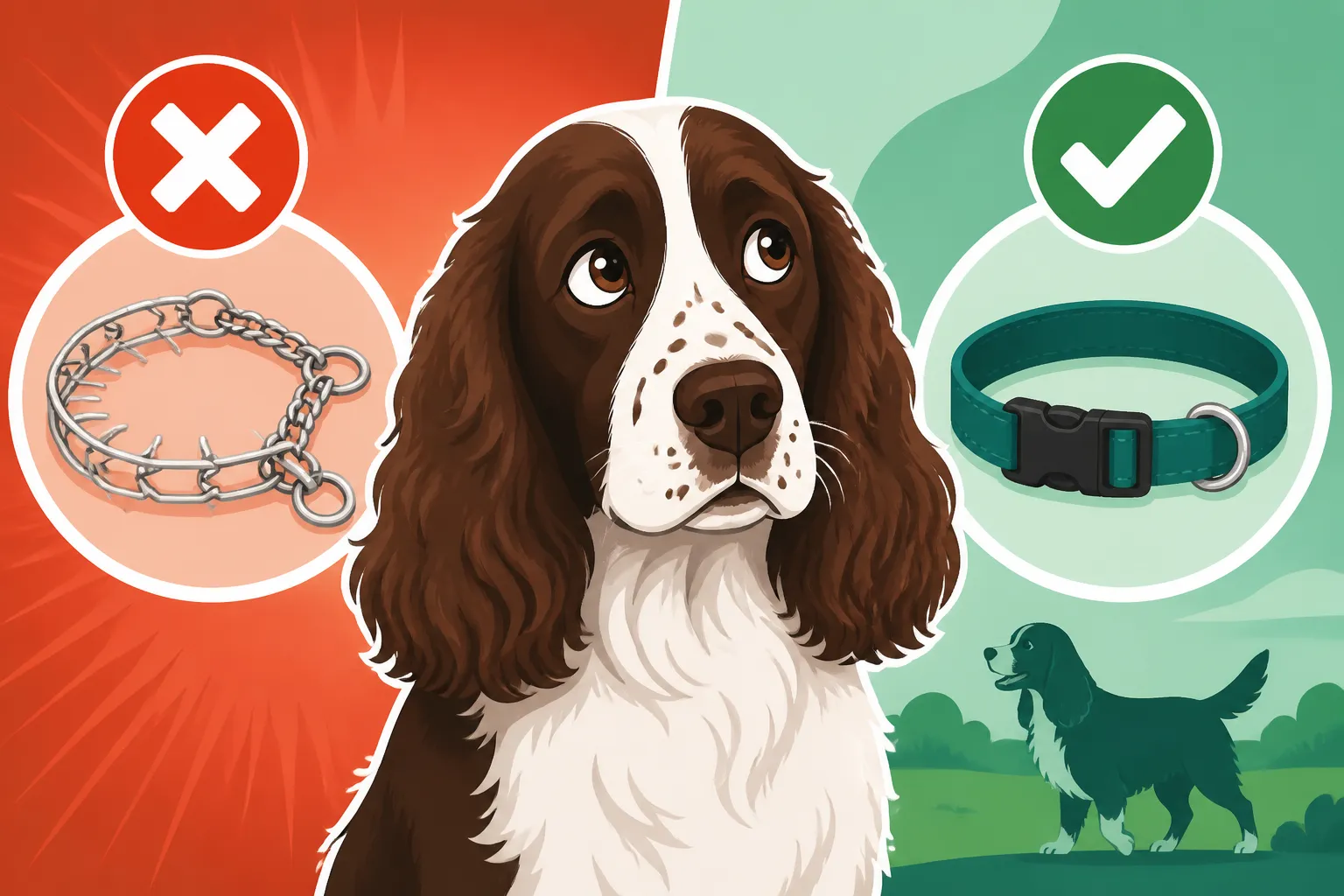
Whether a Prong Collar Belongs on a Springer Spaniel
One of the most common frustrations I hear from fellow English Springer Spaniel owners is the battle against pulling on the leash. Our Springers are energetic, intelligent, and often incredibly strong-willed, especially when a tantalizing scent hits their nose or they spot a squirrel. Many of us find ourselves at our wits' end, contemplating various training tools, and often, the prong collar comes up in conversation. It's a tool that sparks a lot of debate, and you might be wondering if it's the right choice for your beloved Springer. This guide will delve deep into the world of prong collars, exploring how they work, their potential impact on your Springer, and effective alternatives, helping you make a truly informed decision.
Understanding Why Springer Spaniels Pull and What a Prong Collar Does
Let's be honest, walking a Springer Spaniel on a leash can sometimes feel less like a leisurely stroll and more like a competitive tug-of-war. Understanding why they pull is the first step toward finding a solution. It's not usually out of malice or defiance; it's often rooted in their very nature.
The Springer Spaniel's Innate Drive and Energy
English Springer Spaniels were bred for a job: to hunt, flush game from cover, and retrieve it. This means they possess an incredible drive, keen sense of smell, and an abundance of energy. When you take your Springer out, their world explodes with interesting smells, sights, and sounds, each one a potential "task" for their highly engaged brain. A strong pull isn't them being naughty; it's them trying to get to that fascinating scent trail, that fluttering leaf, or just move forward with the boundless enthusiasm that defines the breed.
Field-bred Springers, in particular, are often incredibly driven, bred for stamina and an unwavering focus on scent. For these dogs, a walk is an opportunity to explore, and their natural instinct is to be out in front, quartering the ground, much like they would in a field. Even a show-bred Springer, while often having a slightly less intense drive, still possesses that inherent desire to move and explore. You might find yourself exhausted after a walk, your shoulder aching, wondering if you'll ever enjoy a calm stroll. This isn't a reflection of your training failures; it's a testament to the powerful instincts within your dog. Trying to manage this instinct with a flat collar often results in a dog choking, gagging, and still pulling, which is neither pleasant nor safe for them.
How a Prong Collar Works Mechanically
A prong collar, sometimes called a pinch collar, is designed with a series of blunt, evenly spaced metal links that fit around the dog's neck. Unlike a choke chain that applies pressure only at a single point, a prong collar distributes pressure uniformly around the entire circumference of the neck when the leash is tightened. This pressure is intended to mimic the corrective nip a mother dog might give her puppies or the sensation of a dog's teeth on another dog's scruff during play or correction.
The crucial difference from other collars is that the prongs apply a controlled, even pressure. When the dog pulls, the prongs tighten, creating an uncomfortable sensation that encourages them to stop pulling. When they stop pulling, the pressure immediately releases, providing clear feedback. It's not designed to "stab" or "puncture" the skin; if fitted and used correctly, the prongs simply tighten, causing a pinching sensation. The goal is discomfort, not pain or injury, to interrupt the pulling behavior.
Immediate Versus Long-Term Effects on Behavior
Many owners who try prong collars report almost immediate results. The constant pulling often lessens dramatically on the very first walk. This can be a huge relief, especially for those with powerful, energetic Springers who have made walks miserable or even dangerous. The immediate feedback system of the prong collar is very clear to a dog: pull, feel pressure; stop pulling, pressure releases. This clarity can be highly effective in changing behavior quickly.
However, the long-term effects are where the debate often lies. While the pulling might stop, what else is happening? Some critics argue that prong collars suppress natural behaviors, potentially leading to a dog that walks quietly but is stressed, fearful, or disengaged. Instead of teaching the dog how to walk nicely, it teaches them to avoid the uncomfortable sensation. There's a concern that the dog learns to fear the correction rather than developing an understanding of loose-leash walking or a desire to work cooperatively with their handler. The dog might associate the discomfort with everything in the environment – other dogs, people, exciting smells – rather than just the act of pulling itself. This can potentially lead to anxiety or reactivity in the long run.
The Ethical and Training Considerations of Using a Prong Collar
Deciding whether to use a prong collar involves weighing the potential benefits against the ethical and practical considerations. It's rarely a black-and-white issue, and what works for one dog or owner might not be suitable for another.
When Trainers Recommend Them and Why
You'll often find prong collars recommended by balanced dog trainers, particularly for strong, persistent pullers, or for dogs whose pulling creates a safety hazard. Perhaps your Springer is so powerful that you're afraid of being pulled into traffic, or you've fallen multiple times. In these situations, a trainer might see the prong collar as a necessary management tool to regain control and ensure safety, both for the dog and the handler. The immediate efficacy can be a huge advantage for owners who feel completely overwhelmed and need a quick way to manage their dog's strength.
Some trainers also view the prong collar as a tool for clear communication. They argue that the pressure and release provide immediate, unambiguous feedback that dogs understand instinctively. When used correctly, with swift, gentle corrections rather than constant tension, it can teach a dog to pay attention and yield to leash pressure. For some high-drive working breeds like Springers, who are accustomed to clear, direct communication in their training, this method can be very effective in getting their attention amidst strong distractions.
Potential Downsides and Risks
While proponents emphasize proper use, there are undeniable downsides and risks. For one, if a prong collar is not fitted correctly – too loose, too tight, or positioned incorrectly on the neck – it can be ineffective or even cause injury. There's a learning curve to using one properly, and incorrect application can lead to undue pain or fear. Imagine a sensitive Springer Spaniel, known for being rather soft to correction, receiving harsh or continuous pressure. A dog like this might easily shut down, become withdrawn, or develop fear-based aggression rather than learning to walk politely. The Soft Springer Spaniel That Shuts Down If You Shout
Beyond the physical, there are psychological risks. A dog that consistently experiences discomfort on a walk might start to dread walks altogether. The joy of exploration, the very essence of a Springer Spaniel's being, could be diminished. Instead of building a positive association with outdoor adventures and cooperative walking, the dog might learn that walks are something to be endured, fraught with unpleasant sensations. Furthermore, a reliance on the prong collar means that without it, the pulling behavior may return, as the underlying desire to pull hasn't been re-trained, only suppressed by the tool.
The Importance of Proper Fit and Use
If you do decide to explore a prong collar, seeking professional guidance on fitting and use is non-negotiable. This isn't a tool to just put on and figure out yourself. A properly fitted prong collar should sit high on the dog's neck, directly behind the ears, not lower on the throat where it could press on the trachea. It should be snug enough that it doesn't slip down or spin, but not so tight that it pinches constantly. You should be able to fit one or two fingers between the collar and the dog's neck, but no more. Many come with removable links, allowing you to customize the fit for your individual Springer.
Proper use involves quick, gentle tugs and immediate release, not sustained pulling or jerking. The goal is to interrupt the pulling, not to drag the dog around. This is why working with a certified professional dog trainer who has experience with balanced methods is crucial. They can demonstrate the correct technique, help you achieve the right fit, and guide you through the initial training steps to ensure your Springer understands what you're asking of them in a fair and effective manner. Without this professional input, the risks of misuse and negative outcomes increase significantly. Whether a Springer Spaniel Needs a Gundog Trainer
Alternatives to Prong Collars for Leash Training a Springer Spaniel
The good news is that prong collars are certainly not the only option available to address leash pulling. Many effective tools and training techniques can help your Springer Spaniel learn to walk politely, often with less stress and a stronger bond between you.
Head Halters and Front-Clip Harnesses
These are two of the most popular and effective alternatives to prong collars, and for good reason.
- Head Halters (e.g., Halti, Gentle Leader): These collars fit around your dog's muzzle and behind their ears, giving you steering control over their head. Where the head goes, the body follows. When your Springer tries to pull, their head is gently turned to the side, making it uncomfortable to move forward with force. This redirecting action is very effective. Most dogs adjust to them quickly, though some might initially try to paw them off. Introduce it slowly with positive associations, like treats. You can find a wide variety of head halters on Amazon, making it easy to compare styles and sizes for your Springer.
- Front-Clip Harnesses (e.g., Easy Walk, Freedom No-Pull Harness): Unlike traditional back-clip harnesses that actually encourage pulling (think sled dogs!), front-clip harnesses have the leash attachment point on the dog's chest. When your Springer pulls, the leash redirects them to the side, turning them back towards you. This makes it much harder for them to gain traction and pull you forward. They're generally comfortable and distribute pressure across the chest and shoulders, away from the throat. Again, Amazon is a great resource for exploring different brands and finding the perfect fit for your active Springer.
Both head halters and front-clip harnesses offer control without causing discomfort to the neck, making them a gentler alternative that many owners prefer. They empower you to manage your Springer's strength while you work on long-term training.
Positive Reinforcement and Engagement Training
At the heart of any successful loose-leash walking journey should be positive reinforcement and building engagement. This means rewarding your Springer for doing what you want, rather than just correcting them for what you don't want.
Start by making yourself the most interesting thing on the walk. High-value treats (think cooked chicken, cheese, or hot dogs) are your best friends here. Practice walking in a low-distraction environment. Every time your Springer walks with a loose leash, even for just a step or two, mark that behavior with a verbal cue like "Yes!" or a clicker, and immediately reward them. If they start to pull, simply stop moving. Wait for the leash to slacken, then reward and continue. This teaches them that pulling gets them nowhere, but a loose leash gets them delicious rewards and forward momentum. What a Springer Spaniel Will Work For
Building engagement also means playing games on walks, changing direction frequently, and incorporating training exercises. Call your Springer's name and reward them when they look at you. Teach them a "watch me" cue. Make yourself more exciting than the environment. This takes patience and consistency, especially with a dog whose nose is constantly seeking new adventures. However, it builds a stronger, more trusting relationship, and the skills learned are much more likely to generalize to different environments and last a lifetime. For comprehensive guidance on positive reinforcement techniques and building engagement, online training platforms like BAXTER & Bella offer structured programs that can be incredibly helpful for Springer Spaniel owners.
Professional Guidance and Training Classes
No matter which tools or methods you choose, professional guidance can be invaluable. A certified professional dog trainer can assess your Springer's individual temperament, your walking environment, and your personal handling style to recommend the most appropriate approach. They can teach you the nuances of leash handling, timing corrections or rewards, and how to effectively communicate with your dog.
Group classes for loose-leash walking or even private sessions can provide structured learning environments and help you troubleshoot specific challenges. A trainer can observe your Springer's body language and help you understand what might be causing their pulling – is it excitement, anxiety, or simply a lack of understanding? They can also guide you on how to gradually phase out management tools as your Springer develops better leash manners. Remember, the goal is not to rely on a tool forever, but to teach your dog the skills they need to walk politely regardless of the equipment. The First Year With a Springer Spaniel Puppy
Management Strategies for High-Drive Dogs
For particularly high-drive Springers, integrating management strategies into your routine can make a world of difference. Before a structured loose-leash training walk, consider a "decompression walk" on a long line (15-30 feet) in a safe, open area like a park or field. This allows your Springer to sniff, explore, and run freely without the constraint of a tight leash. Satisfying their innate desire to Why a Springer Spaniel Puts Its Nose to the Ground and Vanishes and expend energy can make them more receptive to focused training later. How Much Exercise a Field Bred Springer Spaniel Needs
Scent games, fetch in a secure yard, or even working on basic obedience cues indoors before a walk can help burn off some of that initial energy and focus their minds. Remember that for a Springer Spaniel, mental exercise can be just as tiring as physical exercise. A tired dog, both physically and mentally, is often a much better student. Being proactive in meeting your Springer's needs can set you both up for success on your walks.
Making an Informed Decision for Your Springer Spaniel
Ultimately, the decision of whether a prong collar belongs on your Springer Spaniel rests with you, the owner. It's a personal choice that should be made after careful consideration of your dog's individual needs, your training philosophy, and your commitment to proper application.
Assessing Your Dog's Temperament
Consider your Springer Spaniel's unique personality. Are they a bold, resilient dog who takes corrections in stride and bounces back quickly? Or are they on the more sensitive side, easily discouraged or fearful when faced with strong pressure? Many Springer Spaniels are known for their sensitive nature, and a harsh correction can set them back significantly, potentially causing them to shut down or lose trust. Whether a Springer Spaniel Sulks After a Correction A sensitive dog might benefit far more from gentle, positive-reinforcement based methods that build confidence and cooperation.
Think about how your Springer reacts to new experiences or mild discomfort. Do they bravely investigate, or do they retreat? If your dog tends to be anxious or prone to fear, a prong collar could exacerbate these issues. Conversely, a highly distractible, incredibly persistent puller might learn more quickly from the clear communication a prong collar can provide, if used correctly and judiciously. There's no one-size-fits-all answer, and understanding your specific dog is key.
Evaluating Your Training Goals and Patience
What are your long-term goals for your Springer's leash manners? Are you looking for a quick fix to an immediate safety concern, or are you aiming for a deep, cooperative relationship where your dog chooses to walk nicely because they understand and trust you? Prong collars can be very effective for immediate cessation of pulling, but they might not address the underlying reasons why your dog pulls or teach them true loose-leash walking skills that generalize without the tool.
True loose-leash walking, where your dog happily walks beside you with a slack leash, takes time, consistency, and patience. It involves teaching, not just correcting. If you're willing to invest the time in positive reinforcement, consistency, and building engagement, you might find that gentler tools and methods yield more robust and lasting results. However, if safety is paramount and other methods have repeatedly failed, a prong collar, used under expert supervision, might offer the necessary control to start building those foundational skills. Be honest about your own patience and ability to commit to consistent, nuanced training.
Prioritizing Safety and Well-being
Above all, your Springer Spaniel's physical and emotional well-being should be the priority. Any tool or method you choose should be safe, humane, and used in a way that minimizes stress and pain. While a prong collar can provide control, misuse or reliance on it without addressing the root cause of pulling can lead to negative consequences.
Consider consulting with multiple trainers who use different methodologies. Gather information from various sources. Then, make a decision that feels right for you and your specific Springer. Remember, training is an ongoing journey, and flexibility is key. What works for one phase of your dog's life might need adjustment in another. The goal is a happy, well-adjusted Springer Spaniel who enjoys walks with you, regardless of the equipment used. A Field Bred Springer Spaniel Is a Different Dog to Live With
| Training Tool | How it Works | Pros | Cons | Best For |
|---|---|---|---|---|
| Flat Collar | Attaches around the neck. | Standard, simple, generally comfortable. | Little to no control over pulling for strong dogs; can cause tracheal damage. | Dogs with good leash manners, identification. |
| Prong Collar | Blunt prongs apply even pressure around the neck. | Immediate cessation of pulling; clear communication. | Potential for misuse, pain, fear; can damage trust; requires expert fitting/use. | Strong pullers where safety is a concern; with professional guidance. |
| Front-Clip Harness | Leash attaches to the chest, redirects dog sideways. | Reduces pulling without neck pressure; comfortable. | Some dogs can still pull, may restrict shoulder movement for some. | General loose-leash training; comfortable management for pullers. |
| Head Halter | Fits over muzzle and behind ears, steers the head. | Excellent control; no neck pressure; good for strong dogs. | Some dogs dislike the muzzle restraint initially; requires desensitization. | Strong pullers; reactive dogs; those needing maximum control. |
Disclaimer
This article is for general informational purposes only and does not constitute professional advice. Laws, prices and regulations vary by location and change over time. Consult a qualified professional for guidance on your specific situation.