Whether a Springer Spaniel Is Safe With Children
One of the biggest worries for any family considering bringing a new dog home, especially a lively breed like an English Springer Spaniel, is how they'll get along with the children. It’s a completely valid concern, as the safety and well-being of both your kids and your canine companion are paramount. This comprehensive guide will walk you through the nuances of a Springer Spaniel's temperament with children, how to foster positive interactions, and what proactive steps you can take to ensure a harmonious household for everyone.
Understanding the Springer Spaniel Temperament Around Kids
Springer Spaniels are renowned for their effervescent personalities, boundless energy, and deep devotion to their families. These traits, while wonderful, require careful management and understanding when they share a home with children. It's not just about the dog; it's about teaching both species how to respectfully coexist.
The Springer's Innate Energy and Enthusiasm
Let's be real: a Springer Spaniel is a powerhouse of energy. These dogs were bred to work all day in the field, flushing game with tireless enthusiasm. This means they're not content with a leisurely stroll around the block; they need significant physical and mental exercise every single day. When that energy isn't channeled appropriately, it can manifest as boisterous behavior indoors, which can be overwhelming or even accidentally intimidating for small children. Imagine a happy, wiggly, 50-pound dog trying to "play" by leaping and nudging—what seems like playful exuberance to the dog can easily send a toddler sprawling.
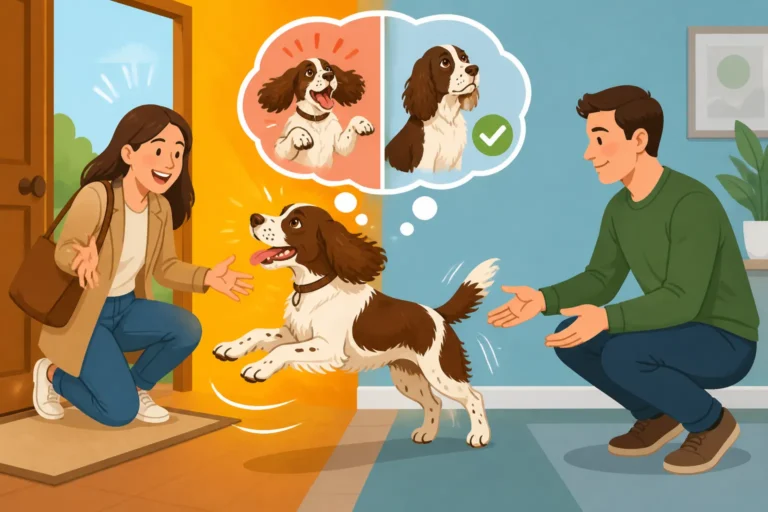
Their innate enthusiasm extends to everything they do, including greeting people. A Springer often expresses joy with full-body wiggles, enthusiastic jumps, and sometimes even a mouthy greeting. While this is rarely malicious, a child might interpret it as scary or rough. It's crucial for owners to understand this fundamental aspect of the breed and be prepared to manage it from day one. Without proper outlets, that cheerful energy can become a source of stress rather than joy in a busy family home.
The Breed's Affectionate and Loyal Nature
Despite their energetic drive, Springer Spaniels are incredibly affectionate and bond very closely with their families. They thrive on companionship and love being involved in all family activities. This loyalty often extends readily to children, making them willing playmates and loving protectors. Many Springer owners will tell you their dog acts like a shadow, following them from room to room, just wanting to be near. This desire for closeness often includes the younger members of the family.
This deep affection means they often tolerate a lot from their human "pack members" – sometimes even more than they should, which is why supervision is always key. They typically want to please and are highly trainable, which is a huge advantage when shaping their interactions with kids. A well-socialized and well-trained Springer often becomes a child's best friend, a constant source of comfort and fun. Their loving nature is truly one of the most endearing qualities, making them a fantastic family dog when their needs are met and boundaries are clear.
Potential for "Springer Zoomies" and Bounding
Ah, the infamous "Springer Zoomies"! If you've never witnessed them, prepare yourself for an unbridled burst of energy where your dog races around the house or yard at top speed, often with wild abandon. These episodes are usually harmless and a way for dogs to release pent-up energy, but they can be a chaotic force field in a home with children. A dog suddenly tearing through the living room, sliding on rugs, and bouncing off furniture can easily knock over a small child, or even an unsuspecting adult.
Beyond the full-on zoomies, Springers have a natural bounding gait. They jump, they pounce, and they can be quite heavy-footed. A dog constantly trying to "help" a child by pouncing on a dropped toy or enthusiastically jumping to lick their face can lead to accidental scrapes or frights. It's not aggression, but pure, unadulterated excitement that can be difficult for a child to navigate. Teaching your Springer an "off" command and making sure they get plenty of outdoor exercise, as discussed in How Much Exercise a Field Bred Springer Spaniel Needs, are vital steps in managing this bouncy behavior indoors.
Socialization and Training: Laying the Groundwork
Making sure your Springer Spaniel is a safe and joyful part of your family, especially with children, hinges heavily on early and consistent socialization and training. You can't just expect a dog to instinctively know how to behave around tiny, unpredictable humans. It's a skill that needs to be taught and reinforced.
Early Puppy Socialization with Children
Bringing home a Springer Spaniel puppy is an exciting time, and it's the absolute best window for setting them up for success with children. From the moment they arrive, expose your puppy to a variety of positive experiences with kids of all ages, under strict supervision. This isn't about letting kids run wild with the puppy; it's about controlled, calm introductions. Have children calmly interact, offering treats, gentle petting (supervised by an adult hand), and quiet play. Teach the puppy that children mean good things – treats, praise, and gentle attention.
Avoid overwhelming the puppy or allowing children to be rough. One bad experience can set a puppy back significantly. If you don't have children of your own, invite friends or family with well-behaved kids over. Enroll in a puppy class, like those offered by BAXTER & Bella, that emphasizes positive socialization in a structured environment. The goal is for your Springer to view children as a normal, positive part of their world, not as strange, noisy creatures to be feared or overly excited by. Remember, early positive experiences are foundational for a confident, well-adjusted adult dog. For more on their crucial first few months, check out The First Year With a Springer Spaniel Puppy.
Teaching Impulse Control and Manners
A well-mannered Springer Spaniel is a safer Springer Spaniel, especially around children. Impulse control is absolutely key. This means teaching commands like "sit," "stay," "leave it," and a solid "off" or "four on the floor." When your dog can calmly wait for an invitation to greet someone, or resist the urge to snatch a dropped crumb, you've made huge strides. Practice these commands frequently, using positive reinforcement. If your Springer tends to jump up excitedly, consistently ask for a "sit" before any attention is given. If they mouth hands, immediately redirect them to an appropriate chew toy.
Consistency is the name of the game here. Everyone in the household, including older children, needs to be on the same page with training and commands. If one person allows jumping and another doesn't, you're sending mixed signals that will confuse your dog. Using treats as rewards (many available on Amazon) and clear verbal cues will help your Springer quickly grasp what's expected of them. A dog that understands and respects boundaries is far less likely to have accidental, rough interactions with children.
The Importance of Supervision and Safe Interactions
I cannot stress this enough: never leave a dog and child unattended. Not even for a second. This isn't about distrusting your dog or your child; it's about recognizing that both are still learning appropriate boundaries and reactions. A child might inadvertently hurt a dog, or a dog might react unpredictably to a sudden movement or loud noise. Accidents happen in a flash, and even the most well-behaved dog can react poorly if startled or in pain.
Supervision means actively watching and being ready to intervene. This allows you to teach children how to gently interact (e.g., "gentle hands," "pet the back") and to teach your dog appropriate responses. If your Springer needs a break, or if the children are getting too rambunctious, it's your job to step in. Create "safe zones" for your dog, perhaps a crate or a bed in a quiet room, where they can retreat and be undisturbed. This safe space should be respected by all family members. This active supervision creates a learning environment where both dog and child can build positive associations and trust.
Navigating Different Age Groups: Toddlers to Teens
The dynamic between a Springer Spaniel and a child isn't static; it changes dramatically as the child grows. What works for a toddler won't necessarily work for a school-aged child, and teenagers present yet another set of considerations. Understanding these differences is vital for fostering a positive and safe relationship.
The Challenges with Toddlers and Young Children
Toddlers are, bless their hearts, unpredictable, loud, and often lack fine motor control. They might grab ears, pull tails, or try to "ride" the dog – behaviors that can cause pain or fear, even if unintentional. From the dog's perspective, a toddler can seem like a bouncy, grabby, squealing alien. This is where the risk of an accidental bite or snap increases, not out of malice, but out of a dog's natural instinct to protect itself when hurt or scared. It's not about your Springer being "bad"; it's about a dog communicating, often subtly at first, that they are uncomfortable.
For this age group, physical barriers are your best friend. Playpens, baby gates, and leashes can help manage interactions and prevent unsupervised contact. Teach your toddler "gentle hands" from day one, supervising every single touch. Make sure they understand that the dog's crate or bed is a "no-go" zone, a safe haven where the dog can retreat. For more on puppy behavior that might need managing, see Whether a Springer Spaniel Puppy Bites Hard. It's your responsibility to be the buffer and translator between your very young child and your Springer Spaniel, ensuring neither feels threatened or overwhelmed.
Older Children and Respectful Play
As children grow older, their ability to understand and respect boundaries increases. This is a wonderful opportunity to build a deeper, more active relationship between your Springer and your kids. School-aged children can be taught how to responsibly interact, including how to read a dog's body language – recognizing signs of stress like lip licking, yawning, or turning away. They can also learn appropriate ways to play, like throwing a ball for fetch or engaging in scent games.
However, even older children can get overexcited or accidentally rough. They might not realize how strong their play can be, or they might try to physically dominate the dog. Continue to emphasize that the dog is a living creature, not a toy. Teach them to ask for the dog to "sit" or "stay" before offering a treat or initiating play. This fosters mutual respect and helps build the child's confidence in handling the dog. Involving older children in training sessions, supervised by an adult, can be a fantastic bonding experience and reinforces the dog's manners.
Teenagers and Shared Responsibilities
Teenagers can become invaluable partners in caring for and training your Springer Spaniel. Their understanding of responsibility and their ability to follow through with training regimens make them great companions for walks, training practice, and even advanced activities like agility or scent work. This can be incredibly beneficial for a high-energy breed like a Springer, ensuring they get the mental and physical stimulation they need.
The key is to transition responsibilities gradually and ensure the teenager genuinely wants to participate. Don't simply delegate dog care as a chore, but rather as an opportunity for them to bond and learn. They can help with feeding, grooming (especially for a show-bred Springer's feathering), and reinforcing training cues. This shared responsibility deepens their connection with the dog and instills a sense of purpose for the Springer. Just be sure to regularly check in and ensure that all interactions remain positive and respectful, and that they understand the limits of their role.
Establishing Boundaries and Respect: For Both Dog and Child
Creating a safe and happy home for both your Springer Spaniel and your children means establishing clear, consistent boundaries. This isn't just about controlling the dog; it's equally about teaching children how to behave appropriately around their canine companion. Respect is a two-way street, and it needs to be fostered in both directions.
Teaching Children How to Interact with Dogs
It's paramount to teach children how to properly interact with a dog. This includes gentle petting (no pulling, poking, or climbing), understanding the concept of a dog's personal space, and recognizing when a dog wants to be left alone. A good rule of thumb is "petting trees" – patting the chest, shoulders, or back, rather than the face or tail. Show them how to offer a flat hand for sniffing before petting. Teach them to avoid disturbing a dog when it's eating, sleeping, or playing with a prized toy.
Practice "be a tree" if the dog gets too bouncy or excited: stand still, hands to your chest, and look away. This teaches the dog that calm behavior gets attention, while rambunctious behavior does not. Many excellent children's books and online resources (look for them on Amazon) are available to help kids learn about dog behavior and safety. This proactive education empowers children to be respectful and safe dog owners, rather than just passive recipients of dog attention. It also gives them confidence, knowing what to do in different scenarios.
Creating a Safe Space for Your Springer
Every dog, especially one in a busy family home, needs its own sanctuary. For a Springer Spaniel, this might be a cozy crate in a quiet corner of the living room, a dog bed tucked away in a den, or even a designated spot in your bedroom. This "safe space" should be inviolable. Children must be taught that when the dog is in its space, it is absolutely off-limits for interaction. No petting, no teasing, no approaching. This allows your Springer to decompress, nap, or simply get away from the hustle and bustle of family life without feeling trapped or overwhelmed.
The crate is particularly effective for this, as it provides a clear physical boundary. Use positive reinforcement to make the crate a happy place, filled with comfortable bedding and chew toys. This personal haven helps prevent overstimulation and gives your dog an essential outlet for stress reduction. A dog that feels secure in its ability to retreat is generally a more confident and less anxious dog, which translates to safer interactions with children.
Recognizing and Responding to Stress Signals
One of the most critical skills for any dog owner, especially those with children, is the ability to read canine body language. Dogs communicate constantly, but often in subtle ways that we, as humans, can easily miss. Before a dog growls or snaps, there are usually a multitude of preceding stress signals: lip licking, yawning (when not tired), turning the head away, freezing, showing the whites of their eyes (half-moon eye), tail tucked, ears back, or a stiff posture.
If you observe these signals, it's an immediate cue to intervene. Separate the dog and child gently and give the dog space. This isn't about blaming the dog; it's about understanding that the dog is uncomfortable and needs help. By recognizing and respecting these signals, you can de-escalate potential issues before they escalate into something more serious. Teaching older children to spot some of these basic signals, too, can be incredibly empowering and contribute to a safer environment for everyone. Understanding What Sudden Onset Aggression Looks Like in a Springer Spaniel is important for any owner, though these subtler signals usually precede an overt outburst.
Common Scenarios and Proactive Solutions
Living with a high-energy, intelligent breed like a Springer Spaniel alongside children inevitably brings up common behavioral scenarios that require a proactive approach. Addressing these head-on, with consistent training and management, is key to preventing issues before they become ingrained habits.
Preventing Resource Guarding and Nipping
Resource guarding – where a dog protects its food, toys, or even a preferred resting spot – is a natural canine behavior, but one that needs careful management in a home with children. A child innocently reaching for a dog's bone or toy can be met with a growl or snap if the dog feels threatened. To prevent this, teach your Springer a solid "leave it" command. Practice trading games, where you offer a higher-value treat in exchange for a toy, teaching your dog that letting go of items leads to good things. Never let children take things directly from the dog's mouth or bowl.
Nipping, especially from puppies, is another common concern. Puppy nipping is often a form of play, but those sharp little teeth can hurt! Teach your puppy bite inhibition by yelping loudly if they nip too hard, then ignoring them for a few seconds. This mimics how littermates teach each other. Redirect nipping behavior onto appropriate chew toys. Make sure children understand they should not use their hands as toys for the dog. For a detailed look at how to handle this, refer to The Age a Springer Spaniel Puppy Stops Mouthing. Consistent redirection and teaching "gentle mouth" are crucial for preventing this behavior from carrying into adulthood.
Managing Over-Excitement During Play
A Springer Spaniel's enthusiasm for play can be overwhelming, especially for smaller children. They might jump, mouth, or get so hyped up they lose control. The key here is proactive management and teaching alternative behaviors. Instead of letting play escalate into a frenzy, interrupt it. If your dog starts jumping, calmly turn your back or walk away. When they have "four on the floor," then reward them with praise or a treat. Teach them to retrieve toys rather than pounce on children.
Channel that energy into structured play like fetch or flirt pole games. Puzzle toys (many good options available on Amazon) can also help to engage their minds without over-exciting their bodies. Teach an "all done" command to signal that play is ending, and practice calm-down exercises. After a vigorous play session, a quiet chew or a snuggle on the couch can help your Springer transition back to a calmer state. This teaches them that calm behavior is also rewarding and prevents accidental injuries or frights.
Dealing with Accidental Bumps and Scratches
Given a Springer Spaniel's energy and propensity for bounding, accidental bumps and scratches are almost inevitable, especially with young, unsteady children. A dog might zoom past, accidentally tripping a child, or a happy paw might inadvertently scratch during an enthusiastic greeting. While rarely malicious, these incidents can be painful and lead to fear in children or frustration in parents.
The best defense is a good offense: proactive training and management. Ensure your Springer has ample opportunity to burn off energy in appropriate ways, as discussed in Whether a Springer Spaniel Needs a Job. Teach a strong "settle" or "place" command, so your dog can be sent to a designated spot when activity levels are high. Keep nails trimmed short to minimize the severity of accidental scratches. If an incident does occur, address the child's injury calmly, then quietly put the dog in its safe space for a cool-down period. Avoid punishment, which can create fear and resentment. Instead, focus on reinforcing calm behavior and managing the environment to prevent recurrence.
| Age Group | Child's Needs | Dog's Needs | Interaction Guidelines |
|---|---|---|---|
| Infants | Quiet, safe environment | Calm, predictable home | Keep separate; no direct interaction; ensure dog has undisturbed safe space. |
| Toddlers (1-3 yrs) | Supervised, gentle interaction | Space, gentle handling | Never leave unattended. Teach "gentle hands." Physical barriers (gates, leashes). Dog's crate is off-limits. |
| Preschool (3-5 yrs) | Understanding basic rules | Consistent boundaries | Teach respectful petting. Introduce "be a tree." Supervise all interactions. |
| School Age (6-12 yrs) | Active, responsible involvement | Mental & physical stimulation | Teach dog body language. Involve in training (supervised). Encourage appropriate games (fetch). |
| Teenagers (13+ yrs) | Opportunities for responsibility | Consistent engagement, partnership | Delegate care (walks, feeding, training) as desired. Foster mutual respect. |
When to Seek Professional Help and Continued Learning
Even with the best intentions and consistent effort, sometimes challenges arise that are beyond what a typical owner can manage alone. Knowing when to seek professional help is a sign of responsible pet ownership, not failure. Furthermore, the journey of living with a Springer Spaniel and children is one of continuous learning.
Identifying Persistent Behavioral Challenges
While puppy nipping and enthusiastic jumping are common and often manageable, some behaviors might signal a deeper issue requiring expert intervention. If your Springer Spaniel exhibits persistent resource guarding (growling or snapping over food, toys, or even space), overt aggression towards children (not just accidental bumps but deliberate nips or bites), unmanageable fear or anxiety around children, or an inability to calm down despite adequate exercise and training, these are red flags. Don't ignore these signs hoping they will improve with age; they rarely do without targeted intervention.
Another concerning behavior could be extreme reactivity to sudden movements or loud noises from children, beyond what's typical. If your Springer consistently retreats, shakes, or shows other significant fear-based behaviors around kids, it indicates a level of stress that needs professional support. Similarly, if your dog's separation anxiety is so severe that it's causing distress to both the dog and your family, especially if children are impacted, it's time to reach out. For more on this, you can look into Separation Anxiety in a Springer Spaniel. These behaviors are not usually something you can "fix" with basic obedience alone.
Consulting a Certified Professional Dog Trainer
If you're noticing persistent or escalating challenges, the best course of action is to consult a Certified Professional Dog Trainer (CPDT-KA) or a Veterinary Behaviorist. These professionals have specialized knowledge and experience to assess your specific situation, identify the root cause of the behavior, and develop a tailored training plan. They can observe interactions in your home environment, something a general vet might not be able to do.
Look for trainers who use positive reinforcement methods and who have experience with family dogs and children. Avoid anyone who suggests harsh punishment or outdated alpha-dog dominance theories, as these can exacerbate fear and aggression. A good trainer will work with your entire family, including older children, teaching everyone how to interact safely and consistently. Services like those offered by BAXTER & Bella can be a great starting point for foundational training and addressing common issues, often offering online resources and personalized guidance. They can provide tools and strategies to help reshape behaviors and rebuild trust between your Springer and your children.
Ongoing Education for the Whole Family
The world of dog behavior and training is constantly evolving, and a responsible owner is always learning. This isn't just about the dog; it's about the entire family continuing to educate themselves on canine communication, positive reinforcement techniques, and responsible pet ownership. Read books on dog behavior, attend seminars, or follow reputable online resources. Share this knowledge with your children in age-appropriate ways.
Understanding your Springer Spaniel's breed-specific traits, such as their strong drive and sensitivity (as highlighted in The Soft Springer Spaniel That Shuts Down If You Shout), will help you anticipate and manage their needs. The more you learn, the better equipped you'll be to prevent problems, address new challenges, and strengthen the bond between your dog and your children. Ultimately, a Springer Spaniel can be an absolutely wonderful, devoted, and safe family member for a home with children, provided that commitment to ongoing training, supervision, and mutual respect is consistently maintained.
Disclaimer
This article is for general informational purposes only and does not constitute professional advice. Laws, prices and regulations vary by location and change over time. Consult a qualified professional for guidance on your specific situation.