Whether the Show Springer Spaniel Still Has a Nose
A show-bred English Springer Spaniel may not spend its weekends flushing birds, but that does not mean it has lost its sense of smell. The nose is still a powerful part of the breed’s equipment. What can differ is how consistently a particular dog uses scent, how much training it has had, and whether its breeder prioritized practical hunting ability alongside show-ring traits.
Do show Springer Spaniels still have a strong sense of smell
Yes. Show Springer Spaniels still have a canine nose and can follow scent, investigate tracks, and locate hidden food or toys. A show-ring background does not switch off those abilities. The more useful question is not whether a show Springer can smell, but how its instincts and training translate into the sort of scent work you have in mind.
A dog’s natural ability to detect odor is only one part of working performance. Finding a scent in a controlled game, following it through cover, searching with persistence, and responding to a handler are separate skills. A dog can be excellent at one and inexperienced at another.
The differences between field and show types have developed over generations, with selection priorities shaping appearance, drive, and working style. That history helps explain why individual show Springers may vary, but it does not make every show dog scent-blind or every field dog automatically skilled. How the Field and Show Springer Spaniel Diverged
Smell, instinct, and trained hunting ability are different things
A Springer’s nose is its ability to detect and interpret odor. Hunting ability also involves motivation, confidence in cover, stamina, responsiveness, and learning to search in a useful pattern. A dog that sniffs every hedge on a neighborhood walk is demonstrating scent interest; it is not necessarily showing that it can work a field methodically.
Imagine a show Springer that finds a treat hidden under a towel in the kitchen. That is a real example of scent detection. Now picture a bird moving through wet grass, leaving a changing scent trail while the dog works through dense cover and the handler asks it to stay within range. That task demands more than a good nose. It requires training, experience, and the right combination of drive and control.
This distinction can ease a common worry among owners: if their show Springer does not immediately search like a trained gundog, it does not mean the dog lacks scenting ability. It may simply have had little reason to develop that behavior. A dog that has spent its life on paths and in gardens has not had the same practice as one regularly working in cover.
What people mean when they say a dog has “a nose”
In everyday conversation, “having a nose” can mean anything from eagerly sniffing the ground to locating game and tracking it with purpose. Those descriptions are not interchangeable. A Springer may enjoy using its nose in scent games while being less naturally persistent or less practiced in a hunting setting.
Handlers also notice different things. One owner might call a dog “nosey” because it investigates every fallen leaf. A trainer may be looking for the dog’s ability to pick up a scent, stay focused despite distractions, and search an area efficiently. Neither observation alone tells the whole story.
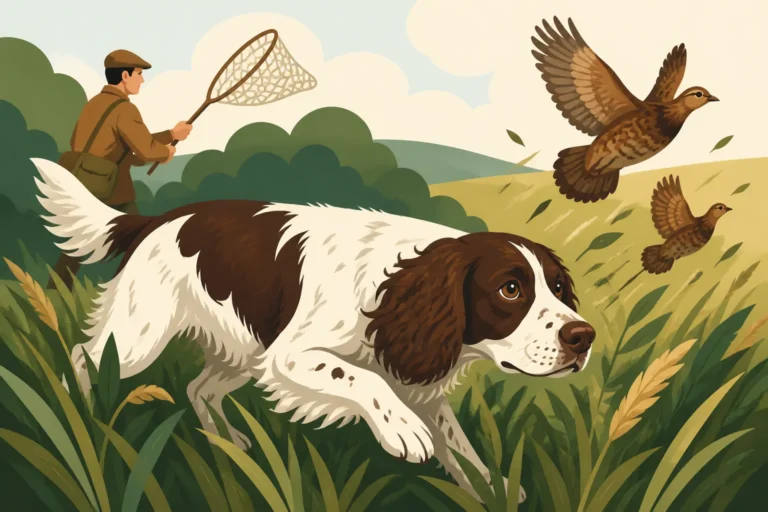
The breed’s historic flushing role helps explain why scent remains relevant. Springers were developed to find and flush game within working range, not simply to look attractive or retrieve objects. For background on that role, see What a Springer Spaniel Did for a Gun Before Retrievers. Even so, inherited tendencies are not a guarantee of a particular level of performance in any one dog.
Why show and field Springers can use scent differently
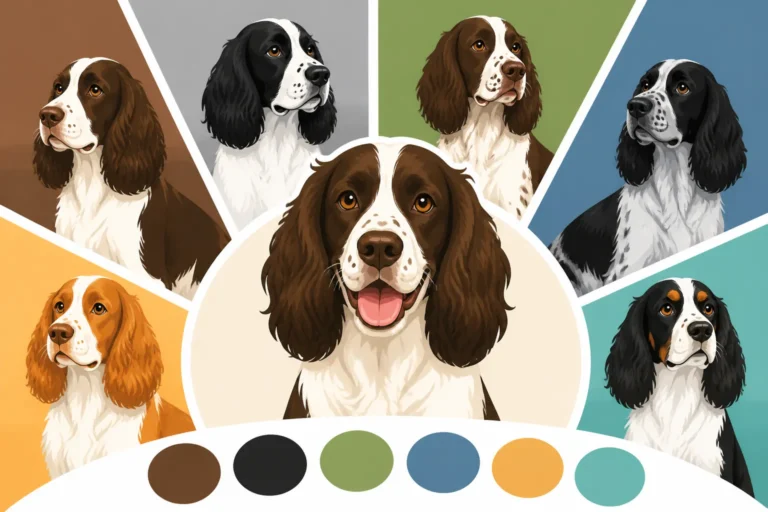
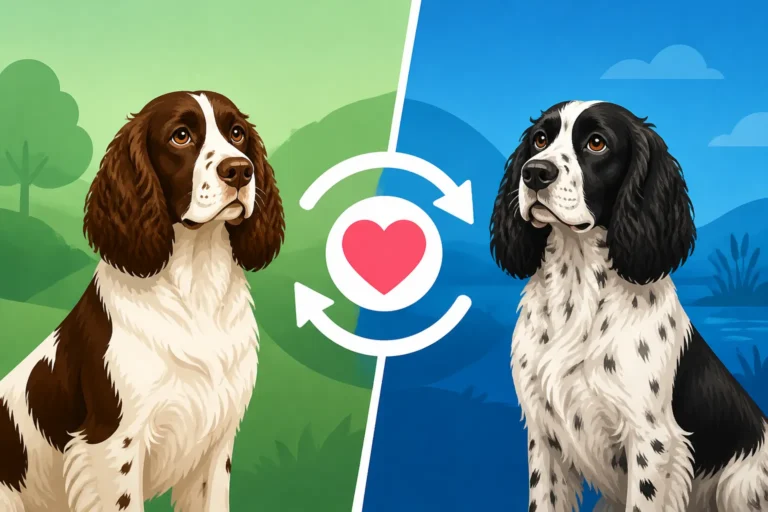
Show and field Springers belong to the same breed, but breeding goals can influence the dogs people encounter. Field-bred dogs are generally selected with working tasks in mind. Show-bred dogs are selected with conformation and other desired qualities in mind. These are broad patterns, not rules that predict exactly what an individual dog will do.
A show Springer can be keen, athletic, and highly interested in birds. Another may prefer a comfortable walk and a food puzzle to a long search through brambles. Both can have a capable nose. Their day-to-day behavior reflects individual temperament, inherited traits, opportunities, health, and learning.
Selection affects more than coat or outline
People often notice the visible differences first: coat, build, and overall appearance. Working style is less obvious, but selection for field work can favor dogs that are persistent, energetic, responsive in cover, and eager to search. A show-bred dog may still have some or all of those qualities, but they may not have been the main reason its line was bred.
That means it is better to ask about the dog and its relatives than to rely on the label alone. If scent work or hunting matters to you, ask a breeder how the parents behave around birds and in unfamiliar terrain. Ask whether the dogs have taken part in any field activities, and what their energy and focus are like at home. A breeder’s honest description of strengths and limitations is more useful than a broad promise that every Springer is naturally good at everything.
For prospective owners weighing expectations, Whether a Show Bred Springer Spaniel Still Hunts and How a Show Springer Spaniel Fares in a Hunt Test offer useful related context. A show dog may enjoy hunting or test work, but performance depends on the dog’s drive, training, fitness, and exposure. An untrained dog should not be judged against a seasoned working dog after one outing.
Individual dogs do not read the breed label
A show Springer from working-minded parents may show strong interest in birds and cover. A field-bred dog may be less focused than expected, particularly if it has not been trained or is distracted, tired, uncomfortable, or uncertain. Genetics influence tendencies; they do not provide a finished skill set.
A practical example: two littermates might both have a keen interest in scent. One repeatedly searches the garden and learns quickly to locate a hidden toy. The other is more interested in following people around and needs a gentler introduction to searching. Neither example proves that one has a “better nose.” Motivation and experience affect what an owner sees.
Health and comfort matter too. A dog that seems reluctant to explore may be dealing with discomfort, stress, or an environment that feels overwhelming. If a dog’s interest in scent or activity changes suddenly, or it seems unwell, talk with a veterinarian rather than assuming it is a breed-type issue.
| What you observe | What it may suggest | What it does not prove |
|---|---|---|
| Sniffing persistently on walks | Interest in environmental scents | That the dog is ready for hunting work |
| Finding hidden food at home | Ability and motivation to search for food odor | That it can follow game scent in cover |
| Searching enthusiastically outdoors | Confidence and curiosity in that setting | That it has reliable range or steadiness |
| Little interest in a scent game | Low motivation, unfamiliarity, distraction, or a poor fit for the game | That the dog has a weak sense of smell |
| Strong bird interest | Potential hunting enthusiasm | That the dog is trained to hunt safely or effectively |
How to encourage scent use in a show Springer Spaniel
You do not need birds, a large field, or a formal hunting setup to let a Springer use its nose. Simple, low-pressure games can help you learn what your dog enjoys and give it a satisfying activity. Start with familiar food or a favorite toy, keep the first searches easy, and make success clear.
If you hope to pursue hunting or organized field work, find an experienced trainer who understands spaniels and uses humane, progressive methods. Early sessions should build confidence and cooperation rather than overwhelm the dog with difficult cover or demands it does not yet understand.
Start with easy scent games at home
Begin by letting your dog watch you place a treat in an obvious location, then cue it to find the treat. Once it understands the game, hide the reward behind a chair leg or under a loosely placed towel. Keep the search short enough that your dog stays interested, and finish while it is still having fun.
When the basic game is easy, make it slightly harder by using a few safe hiding places or moving the search to another room. Use one simple cue, such as “find it,” and give your dog time to work. Avoid repeatedly pointing, moving the treat, or guiding its nose to the answer; the point is to let the dog solve the search.
Food rewards can be useful, but they are not the only option. Some dogs prefer a favorite toy or a brief game with their person. If you need basic enrichment supplies such as treats, food puzzles, or a search mat, Chewy is one place owners may look for general pet products. Choose items suited to your dog’s size and chewing habits, and supervise anything it might tear apart or swallow.
Build outdoor searches gradually
Once your Springer understands an easy indoor search, try a quiet outdoor space with familiar ground. Hide a toy or a few treats in short grass, then let the dog search on a long line if needed. A line can help prevent an enthusiastic dog from running off while still allowing room to explore. Keep it loose and avoid using it to jerk or steer the dog.
Outdoor distractions can make a simple game much harder. Wind, other dogs, birds, people, and unfamiliar smells all compete for attention. If your dog loses focus, make the next search easier instead of repeating the cue more loudly. A successful, calm search teaches more than a string of frustrating attempts.
Some owners build a small routine around scent games: a few minutes of searching before a walk, or a handful of easy finds after dinner. Chewy may be a convenient place to browse for treat-dispensing toys or other enrichment basics, but the best game is the one your dog can enjoy safely. You do not need special equipment to begin; treats, a toy, and patience are enough.
Keep hunting goals realistic and safe
If your goal is to hunt with your dog, scent games are a useful introduction, not a substitute for proper field training. Hunting involves more than finding odor. A dog needs reliable recall, safe behavior around wildlife and people, and skills appropriate to the setting. Work with a knowledgeable trainer before introducing firearms, live birds, or demanding field conditions.
A show Springer may enjoy the work, but it may also have less stamina or drive for sustained field activity than a dog bred specifically for that purpose. Start with the dog in front of you. Notice whether it returns to the search willingly, handles new environments comfortably, and can settle after excitement. Those everyday clues help you decide what to build on.
For a dog whose interests are primarily recreational, scent games can still be a meaningful outlet. They let the dog use natural behavior without requiring an owner to become a hunter. If you are choosing an activity for a companion dog, Whether a Springer Spaniel Needs a Job to Be Happy explains why purposeful mental engagement can matter even when the dog is not working in the field.
How to tell whether your Springer enjoys scent work
Look for more than a fast search. Some dogs work carefully and slowly; others rush in, then need time to sort out the scent. Notice whether your Springer keeps trying when the first hiding place is empty, returns to the task after a distraction, and seems pleased when it finds the reward. A dog that enjoys the activity often asks to play again or stays engaged when the next search begins.
Do not compare your dog’s pace with videos of trained field dogs. Those dogs may have years of experience, and the environment, handler, and task are different. A relaxed household game is not a hunt test, and an enthusiastic sniff on a walk is not a reliable measure of field skill.
Watch for interest, confidence, and recovery
Interest can look like a nose close to the ground, careful investigation of a hiding place, or a dog circling back to check an area. Confidence shows up when the dog is willing to explore without becoming distressed. Recovery matters too: after a sudden noise or a moment of uncertainty, can the dog return to the game once it feels safe?
If your dog walks away, that is information, not a failure. The reward may not be appealing, the search may be too difficult, or the setting may be too busy. Try again another time with an easier hide and a quieter space. If the dog repeatedly avoids the game, choose another enrichment activity rather than insisting that every Springer must love scent work.
Use the dog’s response to set the next challenge
Increase difficulty in small steps. You might move from a treat visible on the floor to one partly hidden, then to a search in another room. If your dog succeeds quickly and remains engaged, make the next search a little more challenging. If it becomes frantic, starts guessing, or gives up, make the task simpler.
A show Springer that enjoys short searches may never become a field dog, and that is perfectly fine. The activity can still provide mental stimulation and a chance to express natural behavior. If your goal is specifically hunting, talk with a trainer about whether your dog’s interest, fitness, and temperament are a good match for the work. For broader context about how the two types differ, see Whether a Show Springer Spaniel Is Calmer and Whether a Springer Spaniel Suits a Hunter Who Shoots Twice a Year.
What a show Springer Spaniel’s nose can and cannot tell you
A show Springer Spaniel can certainly use its nose. Its show background does not remove scenting ability, though breeding priorities, personality, practice, and training can influence how much interest or working drive you see. A dog that has never hunted may need patient teaching before it can search productively in the field.
For most owners, the simplest way to find out what their dog enjoys is to offer easy scent games and observe the response. Let the dog progress at its own pace, keep the experience positive, and seek qualified help if you want to move into hunting or formal field work. A capable nose is part of the Springer Spaniel story; what each dog does with it depends on the individual.
Disclaimer
This article is for general informational purposes only and does not constitute professional advice. Laws, prices and regulations vary by location and change over time. Consult a qualified professional for guidance on your specific situation.