Springer Spaniel or Labrador for Rough Shooting
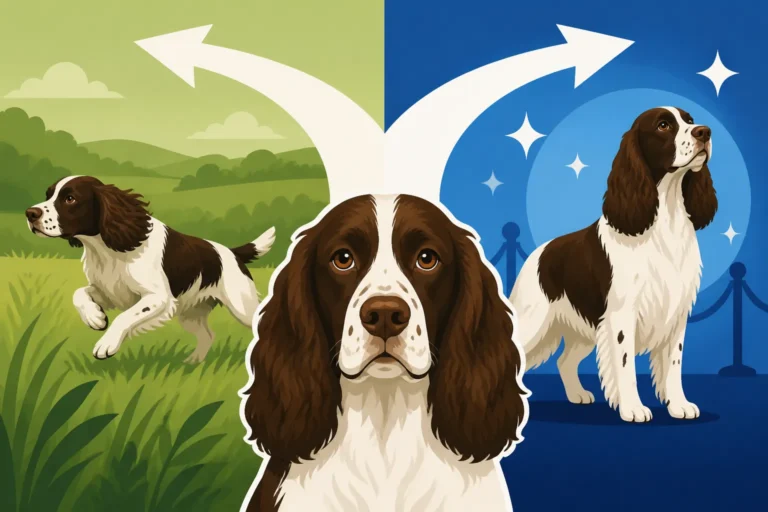
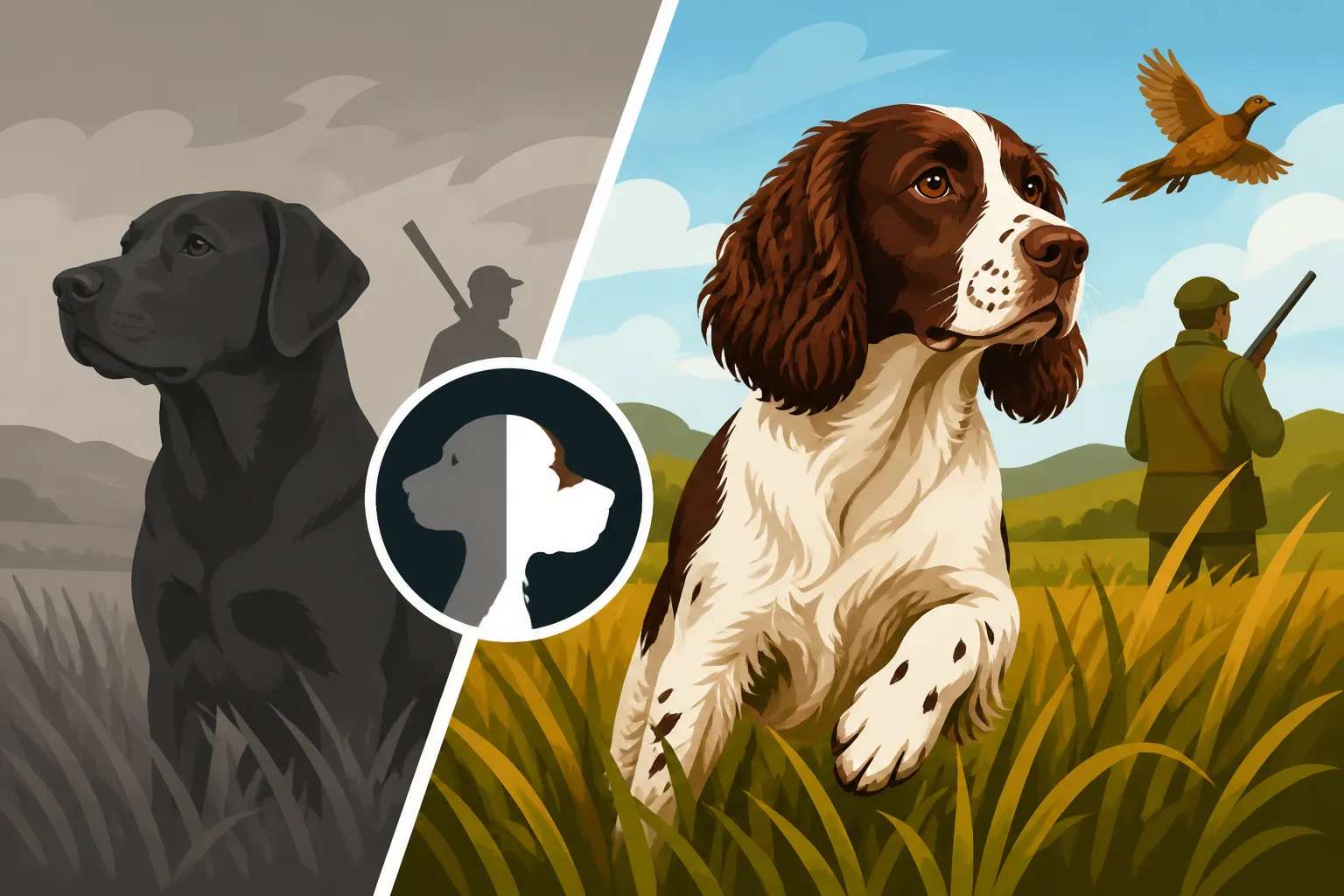
Choosing between an English Springer Spaniel and a Labrador for rough shooting is less about which breed is “better” and more about how you want the dog to work beside you. A Springer searches close cover; a Labrador is built to retrieve and often excels at steadier, longer-distance marking. This guide compares their jobs, handling needs, and day-to-day realities so you can match a dog to your ground and shooting style.
The jobs each breed is built to do
Springers search close cover and flush game
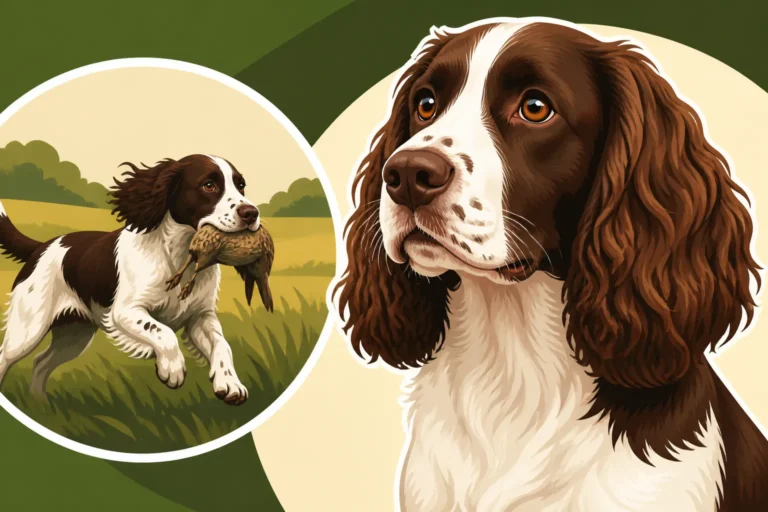
An English Springer Spaniel is a flushing dog. In rough shooting, that usually means working in front of you through cover, finding game, and pushing it into flight within a distance where you can make a safe, considered shot. A good Springer does not simply charge off in every direction: training teaches it to quarter the ground, respond to changes of direction, and stay within a useful range.
That close-searching style can be a real advantage in hedgerows, rough grass, bramble, and woodland edges. Picture a walk along a Devon hedge bottom where birds may be tucked into the cover just a few yards ahead. A Springer can work those pockets actively, using its nose and movement to find and flush game that a handler might otherwise walk past. The dog’s pace and enthusiasm make it especially suited to ground where the cover needs to be worked thoroughly.
The trade-off is that all that drive needs direction. Without consistent training, a Springer may widen its pattern, chase scent, or continue hunting when you want it to turn back. A dog that is “busy” is not automatically a useful shooting partner. You need to build a dependable recall and a clear working pattern before trusting it in open or challenging ground. For a closer look at the role itself, see Whether the Springer Spaniel Was Bred to Flush or Retrieve and Teaching a Springer Spaniel to Hunt Within Gun Range.
Labradors are often chosen for retrieving
The Labrador’s traditional strength is retrieving game, particularly after the shot. A trained Labrador can sit or stay steady, mark where a bird falls, and retrieve it when sent. That can be especially useful on ground where a bird may fall at a distance, in water, or in cover that is awkward for the shooter to reach.
A Labrador can also hunt and find game. It is not simply a dog that waits around until something falls. But many rough-shooting handlers value a Labrador’s ability to remain steady while the guns are active and then take direction on a retrieve. If your days involve several guns, changing positions, and birds falling beyond the immediate area, that steadiness and retrieving focus may suit your routine.
As with Springers, breed tendencies are not guarantees. Some Labradors are highly energetic and need careful training to remain composed; some are naturally calmer but still need practice to retrieve reliably. A dog’s breeding, temperament, early experiences, and training all matter. The difference between the breeds is best thought of as a typical emphasis, not a promise that every individual will perform the same way. How a Springer Spaniel and a Labrador Divide the Work explores that division in more detail.
How ground and shooting style change the choice
Match the dog to the cover you actually walk
Consider the places you shoot most often, not just the kind of shooting you hope to do someday. Dense hedges, bracken, small woods, and tangled banks often reward a dog that works close and searches energetically. On that sort of ground, a Springer’s quartering pattern can help you cover likely hiding places while keeping the dog connected to the handler.
On more open ground, a Labrador’s steadiness and retrieving ability may be especially useful. If birds are flushed at a distance or fall across a ditch, stream, or broad strip of cover, a trained retriever can be a practical partner. Some days combine both kinds of work: a dog searches a rough margin, then retrieves a bird from farther away. Your decision should reflect which job happens most often and which you most need help with.
A simple way to think it through is to write down what a typical day looks like: the size and type of ground, how many guns are involved, whether there is water, how often game needs to be retrieved, and how close you want the dog to work. Then consider your own handling experience. If you are still developing your timing and commands, a dog whose natural working pattern fits the ground may make training more manageable—but neither breed removes the need to learn how to handle it. For a direct comparison of searching styles, see How a Springer Spaniel Works Cover Against a Labrador.
| Rough-shooting need | English Springer Spaniel | Labrador |
|---|---|---|
| Searching dense, close cover | Often a natural fit for active quartering and flushing | Can search, but may not be the first choice if close flushing is the main job |
| Flushing game ahead of the guns | A central part of the breed’s traditional work | Can flush game, though retrieving is commonly the stronger emphasis |
| Retrieving shot game | Can retrieve and should be trained to do so | Often particularly suited to steady, directed retrieves |
| Staying steady during shooting | Possible with careful, progressive training | Often a central training goal for a shooting Labrador |
| Working through thick cover | Athletic and agile, but needs protection and regular checks | Capable, though coat, build, and individual experience affect comfort |
| Best fit for a handler who wants | An active close-working dog that finds and flushes | A composed retrieving partner that can mark and recover game |
These are broad tendencies, not a scorecard. A well-trained dog of either breed can be more useful than a poorly trained dog of the breed that seems like the obvious match. The Springer Spaniel Against the Other Flushing Spaniels offers more context on the Springer’s role among flushing breeds.
Think about the shooting day, not just the retrieve
Rough shooting can involve long walks, uneven ground, wet weather, waiting quietly, and short bursts of exciting activity. A Springer that is constantly searching may be a joy on a cover-heavy day and exhausting if your plan is mostly to stand quietly while other guns work. A Labrador may settle more readily into that waiting-and-retrieving pattern, but it still needs exercise, training, and a purposeful role.
The handler’s habits matter, too. If you enjoy walking into cover and directing a close-working dog, a Springer may feel like a natural companion. If you prefer to position yourself and send a dog for retrieves, a Labrador may align better with your style. A dog should not be expected to make up for a mismatch between the day’s work and the handler’s preferences.
For example, imagine a shoot near the South Downs where much of the day is spent moving along open field margins with occasional rough patches. A steady Labrador may be a good fit if retrieving and remaining composed are priorities. On a day working dense scrub and hedge lines in the Cotswolds, a close-searching Springer may offer more of the active flushing work you want. Neither location determines the answer by itself; the actual cover, pace, and tasks do.
Training, temperament, and the life outside shooting
Both breeds need reliable control around guns and game
A working dog must learn more than a recall. It needs to respond to cues around distraction, remain safe around firearms, and understand when to search, stop, wait, or retrieve. A Springer’s hunting drive makes a controlled working range particularly important. A Labrador’s retrieving enthusiasm can also become difficult if the dog breaks before being sent or races toward every fall without waiting for direction.
Training should be gradual and appropriate for the individual dog. Start with foundations such as coming when called, walking calmly, settling, and responding to simple direction in low-distraction places. Build up to more difficult environments over time. Gunfire should never be introduced as a sudden surprise. A dog that is frightened by a loud report may become anxious or unwilling to work, so introductions should be carefully managed with qualified help when needed.
If a dog will be working around other people and firearms, safe handling is not optional. Make sure you understand the expectations of the shoot, landowner, or group, and do not assume that a dog is ready simply because it has been enthusiastic during a training session. For a Springer, the challenge may be containing an expanding search pattern; for a Labrador, it may be maintaining steadiness and taking direction under excitement. Whether a Springer Spaniel's Recall Can Be Trusted is a useful companion topic when assessing off-leash reliability.
Consider exercise, household life, and daily care
A rough-shooting dog is still a household dog for most owners. Both breeds need regular exercise and engagement, even when the shooting season is over. A field-bred Springer may bring a strong desire to hunt and explore into everyday walks; if that energy is not given appropriate outlets, the dog may invent its own activities at home. A Labrador also needs daily movement and interaction, and its retrieving instincts can show up as persistent toy carrying or a demand for games.
Be honest about how much time you can give a dog on an ordinary Tuesday, not only on a shooting day. If the dog will spend much of the week waiting for the weekend, plan for daily walks, training, scent games, retrieving practice, or another suitable activity. Exercise should suit the dog’s age and health, and young dogs should not be pushed into prolonged, demanding work before they are ready.
A dog’s coat and ears also affect the routine. Springers have feathering that can pick up burrs, mud, and grass seeds, especially after working rough cover. Labradors may have a shorter coat but still need checking after wet or thorny outings. Either dog should be checked for cuts, ticks, grass awns, and debris after a day in the field. The post-work routine is not glamorous, but it can catch small problems before they turn into painful ones. See After the Hunt: Checking a Springer Spaniel Over Nose to Tail and How Much Exercise a Field Bred Springer Spaniel Needs.
If you are planning supplies for home and field, keep the list practical: suitable food, a lead, identification, grooming tools, and training equipment recommended by your instructor. Some owners use retailers such as Chewy to browse everyday dog supplies or compare options for food and basic gear; check that any product suits your dog and its intended use. Training bumpers or other equipment should be chosen for the training plan rather than bought simply because they look like field gear. If you use Chewy or another retailer to restock, keep essentials separate from specialist equipment that a trainer should help you select.
Making a decision you can live with
Choose for your most common task and your real experience
If most of your shooting involves walking dense cover and you want a dog that searches ahead and flushes game, an English Springer Spaniel may be the more natural starting point. If your priority is a steady dog that marks and retrieves shot game, a Labrador may be a closer fit. If you need both jobs, talk with experienced handlers about how they train and manage their dogs on the kind of ground you use.
Meet adult dogs from the lines you are considering, where possible. Ask breeders or handlers how their dogs behave when not working, how much training they need, and what their typical day looks like. Ask specifically about steadiness, working range, responsiveness, and recovery after a busy outing. A puppy’s promise is difficult to judge from a short visit, so reliable information about relatives and the adult dogs in a line can be more useful than a single lively meeting.
Also consider the support available to you. A local gundog class or an experienced trainer can help you build foundations before the dog’s instincts become hard to manage. If you are new to working dogs, a supportive breeder and realistic training plan may matter as much as the breed. Spend time watching both breeds work, and pay attention to what you enjoy handling—not only what looks impressive in the field.
Use a practical checklist before committing
Before choosing, answer these questions as plainly as you can:
- Is most of my ground dense and close, or open and suited to longer retrieves?
- Do I mainly want a dog to find and flush game, retrieve it, or do both?
- Can I provide regular training and exercise outside the shooting season?
- Do I have a safe, structured way to introduce the dog to shooting conditions?
- Am I comfortable managing a strong hunting instinct and working range?
- Have I met dogs from the lines I am considering and asked about their everyday temperament?
- Do I have access to suitable training support and a plan for the dog’s care after work?
If your answers point in different directions, that is useful information rather than a problem. You may need to prioritize the task you most want the dog to perform, or spend more time observing dogs before deciding. There is no virtue in choosing a Springer because it is the traditional flushing dog if you do not want an active close search, just as there is no reason to choose a Labrador solely because it is commonly associated with retrieving.
Whichever breed you choose, prepare for the dog you will live with all year. Build control and confidence before asking for complicated field work, check the dog carefully after outings, and make welfare and safety part of the routine. For ordinary feeding and care supplies, owners may also browse Chewy alongside local shops, while getting advice from a veterinarian or trainer on anything that depends on the dog’s health, workload, or training needs. A well-matched, well-prepared dog is a better shooting companion than a breed chosen on reputation alone.
Disclaimer
This article is for general informational purposes only and does not constitute professional advice. Laws, prices and regulations vary by location and change over time. Consult a qualified professional for guidance on your specific situation.