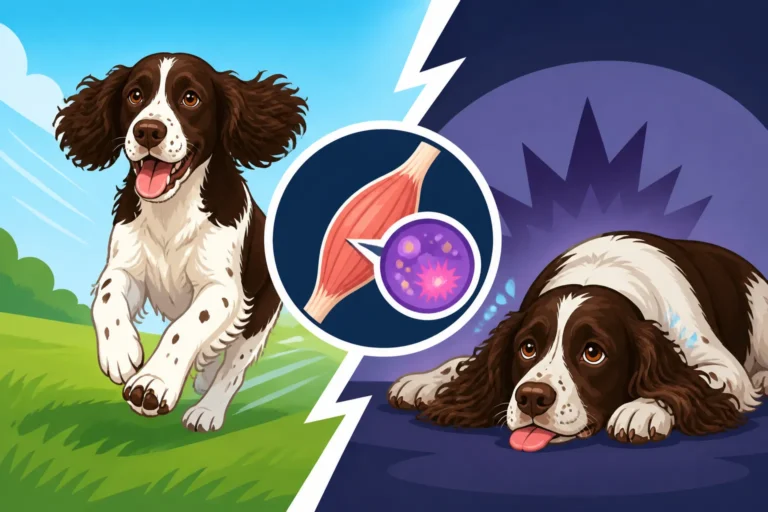
How Fast Fucosidosis Takes a Springer Spaniel
Finding out your beloved English Springer Spaniel is suffering from a progressive neurological disease like Fucosidosis is nothing short of devastating. It's a cruel diagnosis that leaves many owners reeling, wondering not only what lies ahead but, perhaps most urgently, how quickly this terrible condition will take its toll. The thought of watching your vibrant, energetic companion decline is truly heartbreaking, and it's a fear many Springer Spaniel families unfortunately face. This guide aims to shed light on the typical progression of Fucosidosis, detailing the stages your dog might experience and offering a realistic timeline for this insidious disease, so you can be as prepared as possible.
Understanding the Insidious Nature of Fucosidosis
Fucosidosis is a truly tragic genetic disorder that targets the central nervous system, and it's especially heartbreaking because it predominantly affects English Springer Spaniels. It’s not a sudden illness that appears overnight; rather, it’s a relentless, degenerative condition that slowly but surely erodes a dog's neurological function. The insidious nature of Fucosidosis means that its early signs can be subtle, easily mistaken for general clumsiness or just a dog "being a bit off," which makes diagnosis challenging in its nascent stages. Many owners report a creeping sense of unease long before any definitive medical answers are found.
What Fucosidosis Actually Is
At its core, Fucosidosis is a lysosomal storage disease. This means that affected dogs lack a specific enzyme called alpha-L-fucosidase. Without this enzyme, certain complex sugars (fucosides) cannot be broken down and instead accumulate in cells throughout the body, particularly in the brain and nervous system. Imagine your dog's cells as tiny waste disposal units; in Fucosidosis, the waste isn't being properly processed, and it just keeps piling up. This cellular "clogging" eventually impairs the normal function of cells, leading to widespread neurological damage. The consequences are far-reaching, impacting everything from movement and coordination to hearing and cognitive abilities. Understanding what Fucosidosis Does to a Springer Spaniel helps contextualize the progression you might observe.
The Genetic Basis of This Cruel Disease
Fucosidosis is an inherited condition, passed down through an autosomal recessive gene. This means a puppy must inherit two copies of the faulty gene—one from each parent—to be affected. If a dog inherits only one copy, they are considered a carrier. Carriers do not show symptoms of the disease themselves but can pass the gene on to their offspring. This genetic component is why responsible breeding practices, including thorough DNA testing, are so crucial in preventing Fucosidosis. Without this understanding, breeders might unknowingly produce affected puppies, perpetuating the cycle of suffering. The journey often begins long before a puppy is even born, with breeders having the power to eliminate this risk entirely.
Why Early Symptoms are Often Missed
One of the most frustrating aspects of Fucosidosis is how easily its initial symptoms can be overlooked or misinterpreted. Owners might notice their lively Springer Spaniel becoming a little less agile, perhaps stumbling occasionally or showing a slight imbalance, which could easily be dismissed as a minor sprain, a clumsy moment, or even just growing pains. Because Springers are so naturally enthusiastic and often a bit boisterous, a subtle lack of coordination might not immediately flag as a serious neurological issue. These early behavioral and motor changes are often so mild that they don't immediately prompt a veterinary visit, allowing the disease to progress silently until more overt signs emerge. For many, the gradual onset makes it harder to pinpoint an exact starting point.
The Initial Stages: Subtle Shifts and Growing Concerns
When Fucosidosis first manifests, it's rarely with a dramatic flourish. Instead, it often creeps in with subtle changes, making it incredibly difficult for even the most vigilant owner to identify. These early symptoms typically begin to appear when a Springer Spaniel is between 18 months and 4 years of age, though some cases might be seen slightly earlier or later. This period, often when a Springer is in the prime of its life, adds to the heartache, as you expect your dog to be robust and full of vitality. The Age Fucosidosis Appears in a Springer Spaniel can vary, but it almost always occurs during a dog's young adult years.
The First Signs: Clumsiness and Behavioral Changes
Initially, owners might observe a general change in their Springer Spaniel's gait or coordination. Your dog might seem a little more clumsy than usual, perhaps bumping into furniture, misjudging steps, or having difficulty navigating stairs they once bounded up effortlessly. This isn't just about physical changes, however. Behavioral shifts are also a hallmark of early Fucosidosis. You might notice your dog becoming more withdrawn, less enthusiastic about play, or showing signs of anxiety or disorientation. Some owners report their dogs becoming uncharacteristically aggressive or irritable, or simply "not themselves." This inexplicable shift in personality and demeanor can be incredibly puzzling and distressing for families who know their dog so well. Understanding Why a Fucosidosis Springer Spaniel Behaves Strangely First is key to recognizing these early indicators.
When Owners Start Noticing Something Isn't Right
Often, it's not a single dramatic symptom that sends an owner to the vet, but rather a slow accumulation of small, unsettling observations. Maybe your Springer, usually a fantastic retriever, starts missing the ball, or perhaps their once-impeccable recall becomes less reliable. The dog that once had boundless energy might tire more quickly or seem less interested in their favorite activities. These seemingly minor changes, when viewed together, start to paint a concerning picture. Many owners describe a gut feeling that something profound is wrong, even when their dog outwardly still seems relatively healthy. It's this persistent, nagging worry that often finally prompts a visit to the veterinarian, hoping for an explanation for these emerging peculiarities.
The Importance of a Timely Diagnosis
Given the progressive nature of Fucosidosis, a timely diagnosis, while not leading to a cure, can be crucial for managing the disease and preparing for the future. The sooner you have a definitive answer, the sooner you can work with your vet to implement supportive care strategies, adapt your home environment, and mentally prepare for the challenges ahead. Early diagnosis allows you to distinguish Fucosidosis from other conditions, such as ear infections or orthopedic issues, which might present with similar initial signs of incoordination. The DNA Test That Finds Fucosidosis in a Springer Spaniel is readily available and offers a clear path to confirmation, avoiding unnecessary treatments for misdiagnosed conditions and providing a definitive answer to those growing concerns. This test is vital for breeders and owners alike to prevent further suffering.
Progressive Deterioration: A Rapid Decline
Once the initial, subtle signs have given way to more overt symptoms, the progression of Fucosidosis tends to accelerate. This phase is often marked by a noticeable and sometimes rapid decline in your Springer Spaniel's neurological function, dramatically impacting their quality of life. Owners report feeling helpless as they watch their once-agile companions struggle with basic movements and activities. The disease doesn't just affect physical capabilities; it also deeply impacts a dog's sensory perception and cognitive abilities, leading to a profound change in their interaction with the world and their family.
Worsening Neurological Symptoms
As Fucosidosis advances, the neurological symptoms become impossible to ignore. The initial clumsiness escalates into significant ataxia, which is a severe lack of muscle control that causes uncoordinated movements. Your Springer Spaniel might develop a wide-based stance, frequent stumbling, and an inability to walk in a straight line. Tremors, particularly of the head or limbs, can also become apparent, especially when the dog is trying to focus or move. The brain's ability to process information deteriorates, leading to pronounced confusion and disorientation. They might stare blankly, get stuck in corners, or fail to recognize familiar people or places. Some dogs develop seizures, adding another layer of distress and challenge to their care. This worsening coordination and cognitive decline is a hallmark of the mid-to-late stages.
Impact on Mobility and Coordination
The deterioration in mobility and coordination is one of the most visible and distressing aspects of Fucosidosis progression. What began as occasional stumbles can quickly evolve into a persistent struggle to stand, walk, or even maintain balance. Dogs may develop a high-stepping gait, an inability to use stairs, or difficulty navigating uneven terrain. Everyday activities like getting up from a lying position, eating from a bowl without swaying, or simply walking across a room become monumental tasks. Eventually, many affected Springer Spaniels lose the ability to walk entirely, becoming recumbent. This loss of independence is incredibly hard to witness, especially in such an active breed. This is when the question of Whether a Fucosidosis Springer Spaniel Loses Coordination becomes tragically clear.
Sensory Loss and Cognitive Decline
Beyond just motor skills, Fucosidosis severely impacts a Springer Spaniel's sensory organs and cognitive function. Dogs may experience progressive hearing loss, making them unresponsive to commands or familiar sounds. Vision can also be affected, leading to difficulty navigating their environment, especially in low light. The intellectual decline is equally devastating; dogs may lose their house-training, forget learned commands, or exhibit inappropriate behaviors. Their personality can change profoundly, with some dogs becoming increasingly irritable, anxious, or even aggressive due to their confusion and discomfort. The ability to bond and interact with their families, a cornerstone of the Springer Spaniel personality, diminishes significantly. The heartbreaking reality of Whether a Fucosidosis Springer Spaniel Goes Deaf or blind highlights the complete systemic breakdown this disease causes.
The Final Stages and Heartbreaking Realities
The final stages of Fucosidosis are marked by a profound and overwhelming loss of bodily function and cognitive awareness. This is the period when your beloved Springer Spaniel is completely debilitated, and the question of quality of life becomes paramount. It's an incredibly difficult time for any owner, filled with emotional pain and agonizing decisions. The rate at which Fucosidosis takes a Springer Spaniel can vary, but once these late-stage symptoms are evident, the end is typically not far off.
Complete Loss of Function
In the advanced stages, a Springer Spaniel with Fucosidosis will experience a near-complete loss of physical and mental capabilities. They become unable to stand or walk without assistance, often unable to even hold their head up. Swallowing difficulties can make eating and drinking challenging, leading to aspiration pneumonia or malnutrition. Bladder and bowel control are lost, requiring constant care and hygiene. The tremors become more severe and constant, and seizures may increase in frequency and intensity. Mentally, the dog is often severely disoriented, unresponsive, or experiencing constant distress. They may no longer recognize their family or respond to affection, existing in a state of profound impairment. This level of decline represents the final, tragic phase of the disease.
Quality of Life Considerations
When Fucosidosis reaches these advanced stages, the most loving thing an owner can do is objectively assess their dog's quality of life. Is your Springer Spaniel experiencing more bad days than good? Are they in constant pain or distress? Can they still find joy in anything, however small? It's easy to cling to hope, but at this point, every decision must be made with your dog's comfort and dignity at its absolute core. This often involves honest, difficult conversations with your veterinarian about the dog's prognosis and suffering. Resources like the "Quality of Life Scale" can help objectify these emotional decisions, guiding you through a process that is never easy. Pet insurance providers like Healthy Paws often understand the difficult financial burdens these late stages can incur, covering palliative care or, if necessary, the compassionate end-of-life care.
Making Difficult Decisions
The ultimate, most heartbreaking decision for any owner facing a terminal illness like Fucosidosis is often whether and when to consider euthanasia. This is not a decision to be taken lightly, but rather a final act of love to prevent prolonged suffering. It means acknowledging that medical intervention can no longer improve or maintain a reasonable quality of life, and that releasing your dog from their pain is the most compassionate choice. It's a choice made out of profound love and mercy. The question of Whether a Fucosidosis Springer Spaniel Is Euthanized is not if, but usually when, as the disease inevitably leads to an unbearable existence. Support from your vet, family, and friends during this emotionally charged time is invaluable, as no one should face such a profound loss alone.
Managing the Progression and Supporting Your Springer
While there is currently no cure for Fucosidosis, managing its progression and providing the best possible quality of life for your Springer Spaniel is paramount. This involves a multi-faceted approach focusing on symptomatic relief, environmental adjustments, and continuous emotional support for both the dog and the family. Every day spent with your affected Springer is precious, and finding ways to enhance their comfort and well-being becomes the central focus.
Symptomatic Care and Palliative Measures
Symptomatic care aims to alleviate the distress caused by the various neurological symptoms. For instance, if seizures become an issue, anti-epileptic medications can help control their frequency and severity. Pain management may be necessary if the dog develops secondary issues from immobility. For those struggling with mobility, assistive devices like slings, harnesses, or even wheelchairs can provide support and allow some continued movement. Soft bedding is crucial to prevent bedsores in recumbent dogs, and frequent repositioning can help maintain circulation and comfort. Regular, gentle physical therapy can help maintain muscle mass and prevent contractures for as long as possible. Ensuring easy access to food and water, possibly with elevated bowls or hand-feeding, is also critical as their coordination declines.
The Role of Veterinary Specialists
When dealing with a complex neurological disorder like Fucosidosis, consulting with a veterinary neurologist can provide specialized insights and management strategies. These experts have a deeper understanding of the disease mechanisms and can offer more advanced diagnostic and palliative options. They can help tailor medication regimens, suggest specialized therapies, and provide a more accurate prognosis based on their extensive experience with such cases. While Fucosidosis itself doesn't have a treatment, a specialist can ensure that every possible measure is being taken to manage symptoms and improve comfort. This specialized care, while often costly, may be partially covered by comprehensive pet insurance plans like those offered by Healthy Paws.
Emotional Support for Families
Caring for a dog with Fucosidosis is emotionally exhausting and profoundly challenging. Owners often experience a rollercoaster of grief, frustration, and helplessness as they watch their beloved pet decline. It's essential for families to seek support for themselves during this period. Joining online forums for owners of dogs with Fucosidosis or other neurological diseases can provide a sense of community and shared understanding. Talking to friends, family, or even a pet bereavement counselor can help process the complex emotions involved. Remember, you are doing everything you can for your dog, and your emotional well-being is just as important. Don't be afraid to lean on your support system.
Preventing Fucosidosis: The Power of Genetic Testing
The heartbreak of Fucosidosis is amplified by the knowledge that it is entirely preventable through responsible breeding practices. Because it's a genetic disease, understanding a dog's genetic makeup before breeding is the single most effective tool we have to eradicate this condition from the English Springer Spaniel population. For any prospective puppy owner, this should be a non-negotiable aspect of their search. The ultimate solution lies not in treating affected dogs, but in preventing their existence in the first place.
The Critical Role of DNA Screening
DNA screening for Fucosidosis is a simple, non-invasive test that can identify whether a Springer Spaniel is clear, a carrier, or affected by the gene responsible for the disease. This test, often done via a cheek swab or blood sample, provides a definitive answer about a dog's genetic status. By screening all breeding dogs, breeders can make informed decisions to avoid producing affected puppies. For example, a carrier dog can be safely bred to a clear dog, as none of the offspring will be affected, though some may be carriers. However, breeding two carriers together guarantees that some puppies will be affected, which is an outcome every responsible breeder strives to avoid. This crucial test is part of The DNA Test That Should Precede Every Springer Spaniel Purchase.
Why Every Breeder Should Test
Responsible breeders are the first line of defense against genetic diseases like Fucosidosis. A breeder who truly cares about the long-term health and well-being of the breed will insist on DNA testing for all their breeding stock. Not only does this prevent suffering for the puppies and their future families, but it also helps preserve the integrity and health of the entire English Springer Spaniel breed. Any breeder who claims Fucosidosis isn't present in their lines or dismisses the need for testing should be viewed with extreme caution. Transparent presentation of health clearances, including Fucosidosis DNA test results, should be standard practice. For serious buyers, understanding The Health Tests Both Springer Spaniel Parents Should Have is a non-negotiable part of the puppy selection process.
What to Look for in a Puppy's Health Clearances
When you're searching for a Springer Spaniel puppy, always ask to see the health clearances for both parents. This should include documented DNA test results for Fucosidosis, showing that at least one parent is clear, and ideally, both. Reputable breeders will be proud to share these results and explain what they mean. Don't settle for verbal assurances; insist on seeing the official paperwork from a recognized laboratory. If a breeder is evasive or claims testing isn't necessary, walk away. While it's great news that Whether Fucosidosis Has Been Bred Out of Springer Spaniels is a question breeders are actively working on, it's not universally true yet, and vigilance remains critical. Choosing a puppy from health-tested parents is the best way to ensure you're bringing home a healthy, happy companion with the best possible start in life, free from the shadow of Fucosidosis.
| Stage of Fucosidosis | Typical Age of Onset | Key Symptoms | Estimated Duration of Stage |
|---|---|---|---|
| Early Stage | 1.5 – 4 years | Subtle clumsiness, mild incoordination, slight behavioral changes (e.g., withdrawal, anxiety, irritability), occasional stumbling, reduced stamina. | 6 – 12 months (or longer, subtle onset) |
| Mid Stage | 2 – 5 years | Noticeable ataxia (uncoordinated gait), frequent falling, tremors (head/limbs), increasing confusion, disorientation, some loss of house training, progressive hearing/vision impairment. | 6 – 18 months |
| Late Stage | 3 – 6 years | Inability to stand/walk without support, severe tremors, frequent seizures, significant cognitive decline (e.g., non-recognition of family), incontinence, difficulty eating/swallowing. | 2 – 6 months |
| Terminal Phase | Varies (often by 6 years) | Complete debilitation, constant pain/distress, severe neurological dysfunction, inability to perform basic life functions, profound loss of quality of life. | Weeks to a few months |
Disclaimer: This article is intended for informational purposes only and does not constitute veterinary advice. Always consult with a qualified veterinarian for any health concerns or before making any decisions about your pet's care.