Whether Springer Spaniels Worked With Nets and Hawks
It's quite common for us Springer Spaniel enthusiasts to ponder the deep history of our beloved breed. We look at our dogs, with their boundless energy and keen noses, and wonder how they truly fit into the grand tapestry of hunting before modern shotguns and game bags. The image of a dog working diligently with a hunter is timeless, but the specific methods, especially those involving nets and hawks, often feel like something out of a storybook rather than a practical application. This guide will delve into the historical role of spaniels, and specifically English Springer Spaniels, in these fascinating ancient hunting practices, unraveling how their innate abilities made them invaluable partners.
The Ancient Roots of Spaniels in Hunting
Long before the distinct "English Springer Spaniel" as we know it today was formally recognized, dogs of the spaniel type were essential companions for hunters across Europe. These were not specialized breeds in the modern sense; instead, they were categorized by their size and the way they worked. The very word "spaniel" itself often points to their probable origins in Spain, where their rich hunting heritage began to flourish centuries ago.
Early Spaniels: A Hunter's All-Purpose Dog
Imagine a time when hunting wasn't a sport but a vital means of survival, a way to put food on the table. In this era, having a versatile dog was paramount. Early spaniels were exactly that: general-purpose hunting dogs capable of adapting to various terrains and types of game. They weren't just pretty faces; they were workers, and their livelihoods depended on their ability to find and flush game. They moved through thick cover, their tails wagging like metronomes, stirring up birds and small game hidden in the dense undergrowth.
These dogs, whether larger or smaller, shared a common instinct: to search for game and "spring" it into the open. This "springing" action, where the dog would flush the game, often made it accessible for capture. It's a foundational behavior that still defines our Springers today. They were the original "finders," clearing the path for whatever next step the hunter had planned, be it a net, a bow, or a waiting hawk. The records from medieval times often mention "springing dogs" or "bird dogs" – these were the ancestors of our modern spaniels. You can learn more about their long history in How Old the Springer Spaniel Is as an English Gundog.
The Lineage of the Springer Spaniel
Over time, these general spaniel types began to diverge based on their specific uses and the size of game they were expected to find. The larger spaniels, robust and powerful, became known for "springing" larger game birds like pheasants and partridges. These were the direct precursors to the English Springer Spaniel. They weren't just flushing; they were expected to push game forward, making it accessible for various capture methods.
It's crucial to understand that the concept of a "breed" as we define it today, with specific pedigrees and conformation standards, is relatively recent. For centuries, dogs were bred for their utility above all else. A good hunting dog was a good hunting dog, and its appearance was secondary to its working ability. The formal split that eventually recognized Springers as distinct from Cockers, for instance, didn't happen until the early 20th century. Before this, large spaniel puppies from the same litter might be called Springers, while smaller ones might be called Cockers, reflecting the type of game they were best suited to hunt. This historical context is vital when considering their roles in earlier hunting techniques.
Spaniels and the Art of Netting
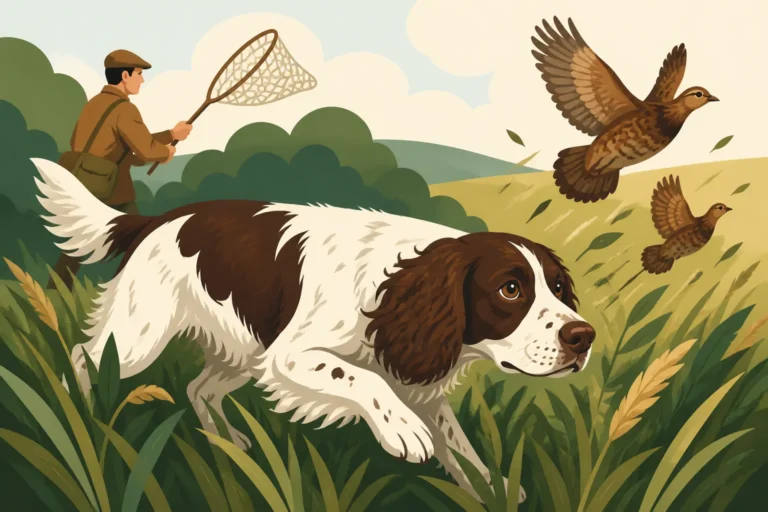
Hunting with nets might seem archaic to us now, but for centuries, it was a highly effective and widely practiced method of catching game birds and even small mammals. And where there were nets, there were almost certainly spaniels. Their natural flushing abilities were perfectly suited to drive game into these cleverly laid traps.
Driving Game into Nets
Imagine a vast field or a stretch of woodland edge where game birds like quail, partridges, or even hares might be lurking. Hunters would strategically place large nets, often made of fine, strong cord, designed to ensnare animals without injuring them too severely. The challenge, of course, was getting the game to move into the net's path. This is where the spaniel truly shone.
A team of spaniels, or even a single skilled dog, would be sent into the cover "to spring" the game. Unlike modern gundogs trained to retrieve shot game, these dogs were tasked with methodically working through an area, pushing the game forward in a controlled direction. They needed to cover ground thoroughly, using their incredible noses to locate hidden birds, and then flush them towards the waiting nets. It was a precise operation, requiring a dog that was both energetic and responsive to its handler's cues, ensuring the game didn't scatter in every direction but rather funneled into the desired trap. You can delve deeper into this specific skill in How a Springer Spaniel Drove Game Into Nets.
The Hunter's Strategy and the Dog's Role
The success of netting depended entirely on the synergy between the hunter and the dog. The hunter would understand the terrain, the wind, and the habits of the game, positioning the nets accordingly. The spaniel, in turn, would execute the "drive." This often involved working in a methodical "quartering" pattern, moving back and forth across the ground in front of the hunter, systematically covering every inch of potential cover.
This quartering behavior is deeply ingrained in the Springer Spaniel's DNA and is still trained into modern working Springers today. It's a testament to their heritage that a behavior developed for driving game into nets centuries ago is still a hallmark of their field work. The dogs had to be quiet, efficient, and able to work for extended periods, pushing birds consistently without causing them to panic and fly wildly. Once the game was flushed and entangled, the nets could be quickly drawn, securing the catch. This method allowed for the capture of multiple birds at once, making it a highly productive form of hunting.
The Falconry Connection: Spaniels Under Wing
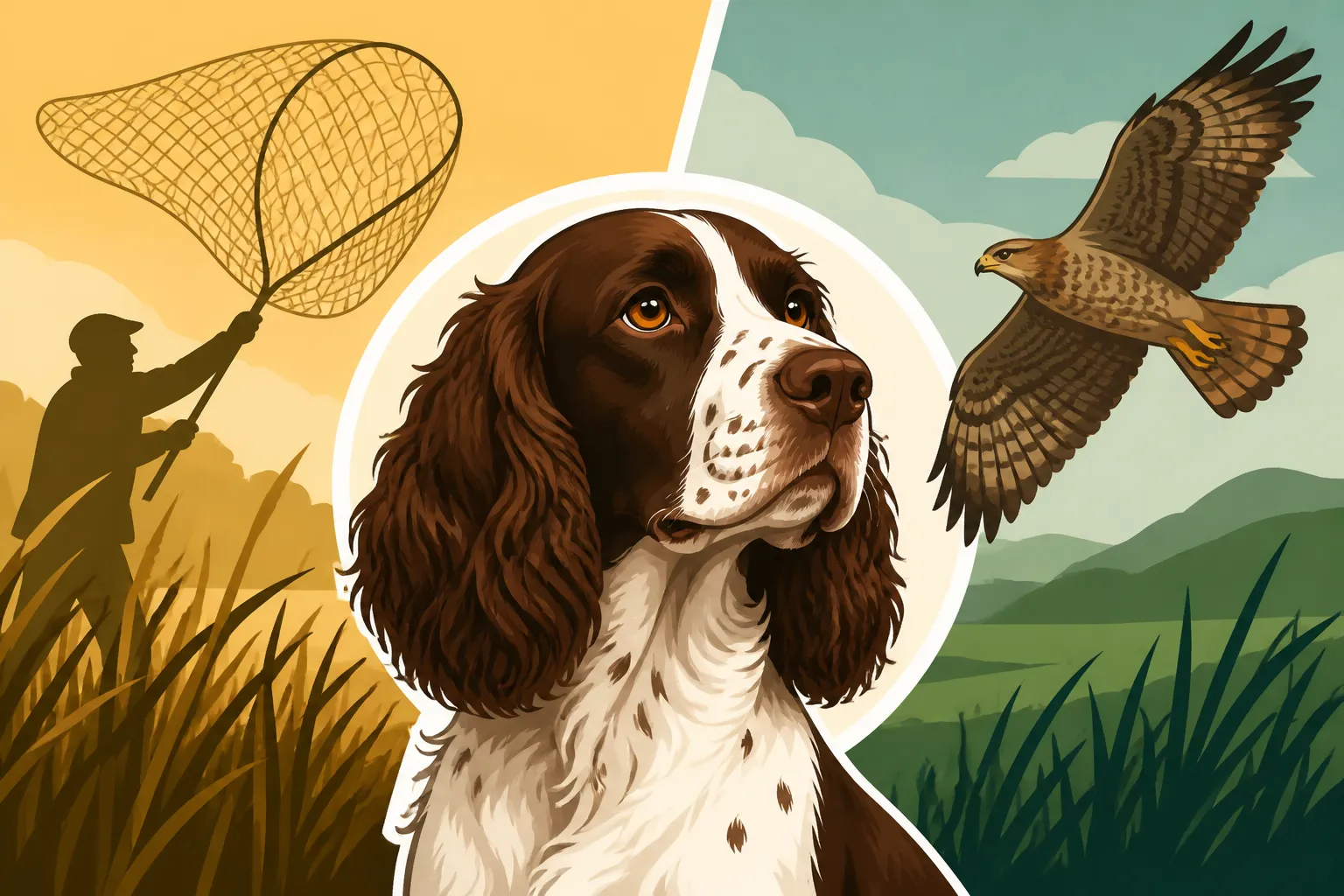
The ancient art of falconry, or hunting with birds of prey, is another practice where spaniels played an indispensable role. A hawk or falcon might be the star of the show, but without a dog to find and flush the quarry, the raptor often wouldn't have anything to hunt. Spaniels were the ground crew, the essential link between the hidden game and the waiting bird of prey in the sky.
Flushing for the Falcon
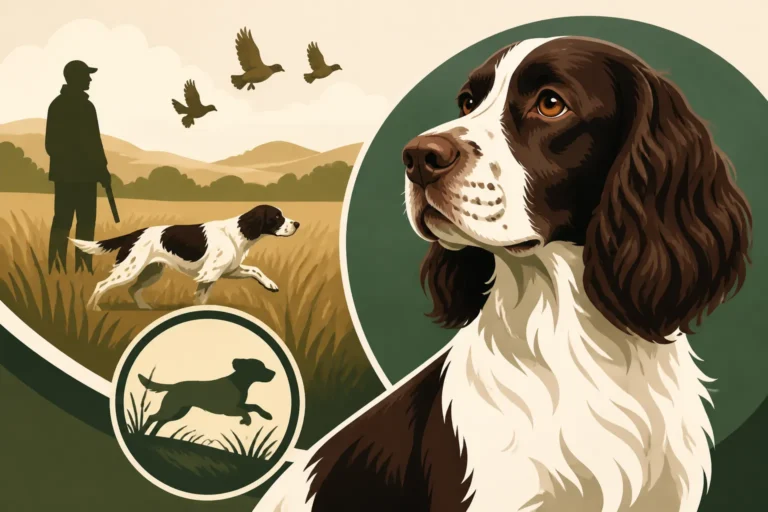
Imagine a medieval lord or lady, riding across open fields, a magnificent falcon perched on their gloved fist. The falcon is ready, but it cannot see what's hidden in the tall grass or dense brush. This is where the spaniel stepped in. The dogs were sent out into the cover, working ahead of the falconer, sniffing out birds and small game. Their job was to "spring" the game, flushing it into the air or into the open where the falcon could spot it and make its dramatic dive.
This required a dog with an exceptional nose and the drive to work cover thoroughly. The spaniel had to be bold enough to plunge into thorny thickets but also biddable enough to stay within a reasonable range of the falconer, ensuring the flushed game was within the falcon's striking distance. It was a thrilling spectacle: the spaniel working the ground, the sudden flush, and then the falcon launching into action, a perfect example of interspecies teamwork. You can read more about this ancient partnership in Springer Spaniels Working Under Falcons.
Steadiness and Control in the Field
While the spaniel's primary role was to flush, an equally important trait was steadiness. Once a bird was flushed and the falcon took to the air, the spaniel needed to remain calm and focused, not chasing the game itself. This "steadiness to flush" or "steadiness to wing" was critical; a wild, chasing dog could interfere with the hawk's flight path or even put itself in danger from the raptor.
Training for this kind of control would have been rigorous, much like the steadiness required for a modern gundog to remain calm when a bird is flushed and shot. The dogs would have learned to respond to whistle commands and hand signals, allowing the falconer to direct them precisely, ensuring they covered the right ground and maintained composure during the dramatic aerial pursuit. The focus was on ensuring the hawk had the best possible chance to make a successful strike, with the spaniel acting as a disciplined, ground-based partner rather than a competitor. This careful cooperation highlights the intelligence and trainability that are still hallmarks of the English Springer Spaniel today. Even today, you'll find modern dog trainers selling items like whistles and training dummies on sites like Chewy that aid in developing this kind of sophisticated control.
The Evolution of the Springer's Role
While nets and hawks might seem like ancient history, the skills developed by spaniels during those eras laid the groundwork for their transition into the modern gundog we know and love. The core instincts remain, even if the tools and techniques have changed dramatically.
From Nets to Guns: A Seamless Transition
The invention and widespread adoption of firearms for hunting gradually began to replace methods like netting and hawking. Instead of driving game into a net or flushing it for a hawk, hunters now sought dogs that could flush game into the air so it could be shot, and then retrieve it once fallen. This transition, while significant, was remarkably smooth for the spaniel.
Their inherent ability to find and flush game, their boundless energy, and their eagerness to please made them perfectly suited for this new role. The "springing" action that gave them their name became even more vital. They would still methodically work the cover, but now, instead of guiding the game to a net, they would put it in the air for the gun. The retrieve, a skill not as paramount in netting or hawking, became an increasingly important part of their repertoire. You can read about this pivotal shift in How Springer Spaniels Worked Before Guns.
| Ancient Hunting Method | Spaniel Role | Key Spaniel Traits Utilized | Transition to Modern Gundog |
|---|---|---|---|
| Nets | Drive game into nets | Thorough searching, controlled flushing, biddability, endurance | Flushing to gun, quartering patterns |
| Hawks/Falcons | Flush game for raptor | Keen nose, bold cover work, steadiness to wing, responsiveness to commands | Flushing to gun, steadiness to shot, advanced obedience |
| Bows/Slings | Find & flush stationary game | Scent work, close range flushing | General upland hunting, close working |
The Rise of Field and Show Types
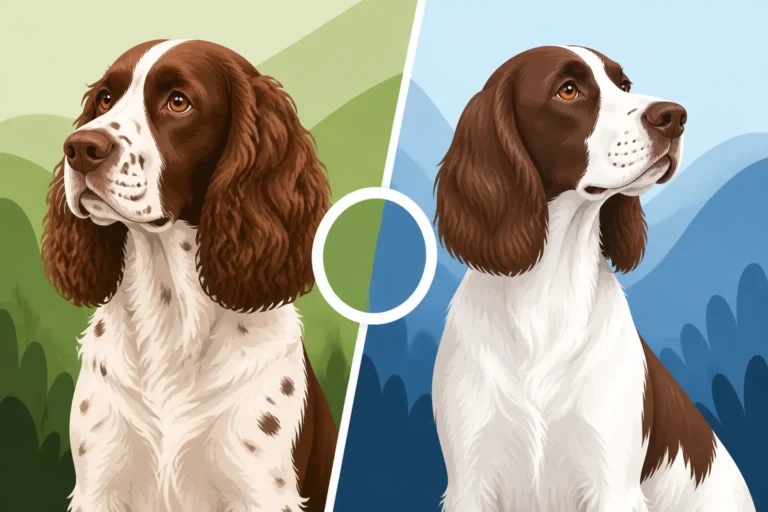
As hunting evolved, so too did the breeding of spaniels. By the late 19th and early 20th centuries, two distinct types of English Springer Spaniels began to emerge: the field-bred Springer and the show-bred Springer. While both share the same ancestry and core instincts, decades of selective breeding have accentuated different traits.
Field-bred Springers are bred primarily for their working ability, retaining the intense drive, quartering patterns, and retrieving instincts honed over centuries. They are typically leaner, with less coat, and bred for speed and endurance in demanding hunting conditions. Show-bred Springers, while still possessing the spaniel instincts, are bred more for conformation to a breed standard, emphasizing appearance, bone structure, and a temperament that excels in the show ring and as a family companion. This divergence is a fascinating aspect of the breed's history and has implications for their care and training even today. You might be interested in The Seventy Year Gene Pool Divide Inside One Springer Spaniel Breed.
This split, formalized in the early 1900s, meant that dogs were increasingly bred for specific purposes rather than general utility. The field lines continued the legacy of their ancient ancestors, albeit with new tools (firearms), while the show lines adapted to a different kind of "work" and companionship.
Modern Echoes of Ancient Instincts
Even today, our English Springer Spaniels carry the indelible mark of their ancestors who worked with nets and hawks. Those ingrained instincts to quarter, flush, and work closely with a handler are still very much alive, even if your dog's "prey" is a tennis ball rather than a pheasant.
The Instinct to Quarter and Flush
Take your Springer to an open field, and often, without any formal training, they'll begin to quarter. That methodical, zigzag pattern across the ground is not just random running; it's a deeply embedded hunting strategy. They are instinctively searching, using their nose to sweep the ground for scent, much like their ancestors systematically cleared cover for nets or waiting falcons. This natural quartering helps them cover an area efficiently, maximizing their chances of finding anything interesting.
This innate drive is why they are such fantastic partners for activities like scent work, agility, and even just a vigorous game of fetch in the park. Their desire to "spring" game, to find something hidden and make it appear, is a powerful motivator. We might not be using nets or hawks, but when your Springer excitedly flushes a squirrel from a bush or digs up a long-lost chew toy, you're witnessing a direct connection to those ancient hunting methods. Providing appropriate outlets for these instincts, such as retrieving games or scent work, is crucial for a happy and well-adjusted Springer. Many modern tools, from training dummies to scent kits, can be found readily available from retailers like Chewy to help owners channel these natural drives.
Trainability and Handler Focus
The success of spaniels in netting and falconry wasn't just about their instincts; it was also about their remarkable trainability and their desire to work cooperatively with their human partners. Hunters needed dogs that could be directed, that understood complex cues, and that were biddable under pressure. This deep bond and willingness to work together are hallmarks of the Springer Spaniel temperament.
Today, this translates into a dog that often thrives on having a "job" to do, whether it's competitive obedience, trick training, or simply being your enthusiastic companion on hikes. They want to be involved, they want to please, and they respond incredibly well to positive reinforcement and clear communication. Their intelligence and eagerness to learn make them excellent candidates for a variety of canine sports and activities. The same focus and responsiveness that allowed a spaniel to stay steady while a falcon flew overhead now make them stars in the obedience ring or reliable partners in modern hunting scenarios.
Providing Modern Outlets for Ancient Instincts
Understanding the historical roles of Springer Spaniels, whether working with nets, hawks, or guns, provides invaluable insight into their needs as modern companions. Their ancient instincts haven't disappeared; they just need appropriate outlets in our contemporary world.
Physical and Mental Stimulation
A Springer Spaniel from a lineage that once flushed game for nets or hawks is not content to be a couch potato. They require significant physical exercise to burn off their abundant energy. Daily vigorous walks, runs, or games of fetch are essential. Without adequate physical activity, their energy can manifest in less desirable ways, such as destructive chewing or excessive barking. Just like their ancestors needed to cover miles of ground, modern Springers still need that exertion.
Beyond physical exercise, mental stimulation is equally important. Their keen noses and intelligent minds thrive on challenges. Scent games, puzzle toys, and ongoing training are excellent ways to engage their brains. Think about how much mental focus was required to systematically quarter a field for a net or to remain steady for a hawk – that mental acuity still needs to be exercised. Even basic obedience training, reinforced with tasty treats often available on Chewy, helps keep their minds sharp and satisfies their desire to work with you.
Training for a Balanced Life
Training is not just about manners; for a Springer Spaniel, it's about fulfilling an ancient contract of partnership. Building a strong foundation of obedience, especially a reliable recall, is paramount given their strong prey drive and natural inclination to follow a scent trail. That powerful nose that once found birds for nets can easily lead them astray if they catch an interesting scent.
Consider enrolling your Springer in activities that tap into their innate abilities. Agility, flyball, or scent work classes can be incredibly rewarding for both dog and owner. If you're interested in more traditional avenues, joining a gundog club can provide excellent opportunities to train their natural flushing and retrieving instincts in a controlled environment, even if you never intend to hunt. These activities don't just provide exercise; they strengthen the bond between you and your dog, allowing them to express their true "spanielness" in a safe and structured way. Whether you get your training tools, high-value treats, or durable toys from Chewy, investing in quality gear to support their training journey is a wise choice.
Embracing the Springer Spaniel Legacy
Ultimately, understanding that Springer Spaniels once worked alongside hunters with nets and hawks enriches our appreciation for this magnificent breed. It connects us to a long, unbroken chain of partnership between humans and dogs. The energy, the nose, the biddability, the joy they find in working – these are all legacies of those ancient times.
While our Springers may not be driving game into nets or looking up at a circling falcon today, the spirit of that work lives on in their eager eyes and wagging tails. Providing them with opportunities to engage those deep-seated instincts through modern activities ensures they remain happy, healthy, and fulfilled companions, truly living up to the legacy of their versatile and industrious ancestors.
Disclaimer
This article is for general informational purposes only and does not constitute professional advice. Laws, prices and regulations vary by location and change over time. Consult a qualified professional for guidance on your specific situation.