How the Working Springer Spaniel Is Faring
A working English Springer Spaniel can still be a superb partner in the field, but the dogs and the lives they’re asked to fit into have changed. Hunting opportunities, breeding priorities, and expectations for a household companion all shape how the working Springer is faring. This guide looks at what’s going well, what’s under pressure, and what responsible owners and breeders can do.
What “working Springer” means today
A working line is more than a short coat
“Working Springer” usually refers to a dog bred with practical field ability in mind: finding game, flushing it within reach of the handler, and retrieving when asked. These dogs are often called field-bred Springers, though working lines vary in build, pace, coat, and intensity. A leaner outline or less feathering can be common, but appearance alone does not tell you how capable a dog is.
The label also doesn’t guarantee a particular temperament or level of training. One dog may be bred for a close-working style suited to rough shooting, while another may come from lines selected for field trials. Even among littermates, there can be differences in confidence, independence, sensitivity, and stamina. A prospective owner needs to ask what the parents actually do, not just whether they’re described as “working.”
The divide between field and show types developed over time, as breeders selected for different priorities. That history helps explain why some working dogs look and behave quite differently from a show-bred Springer. How the Field and Show Springer Spaniel Diverged gives more context on how those paths developed.
The work is still there, but it is not every dog’s daily life
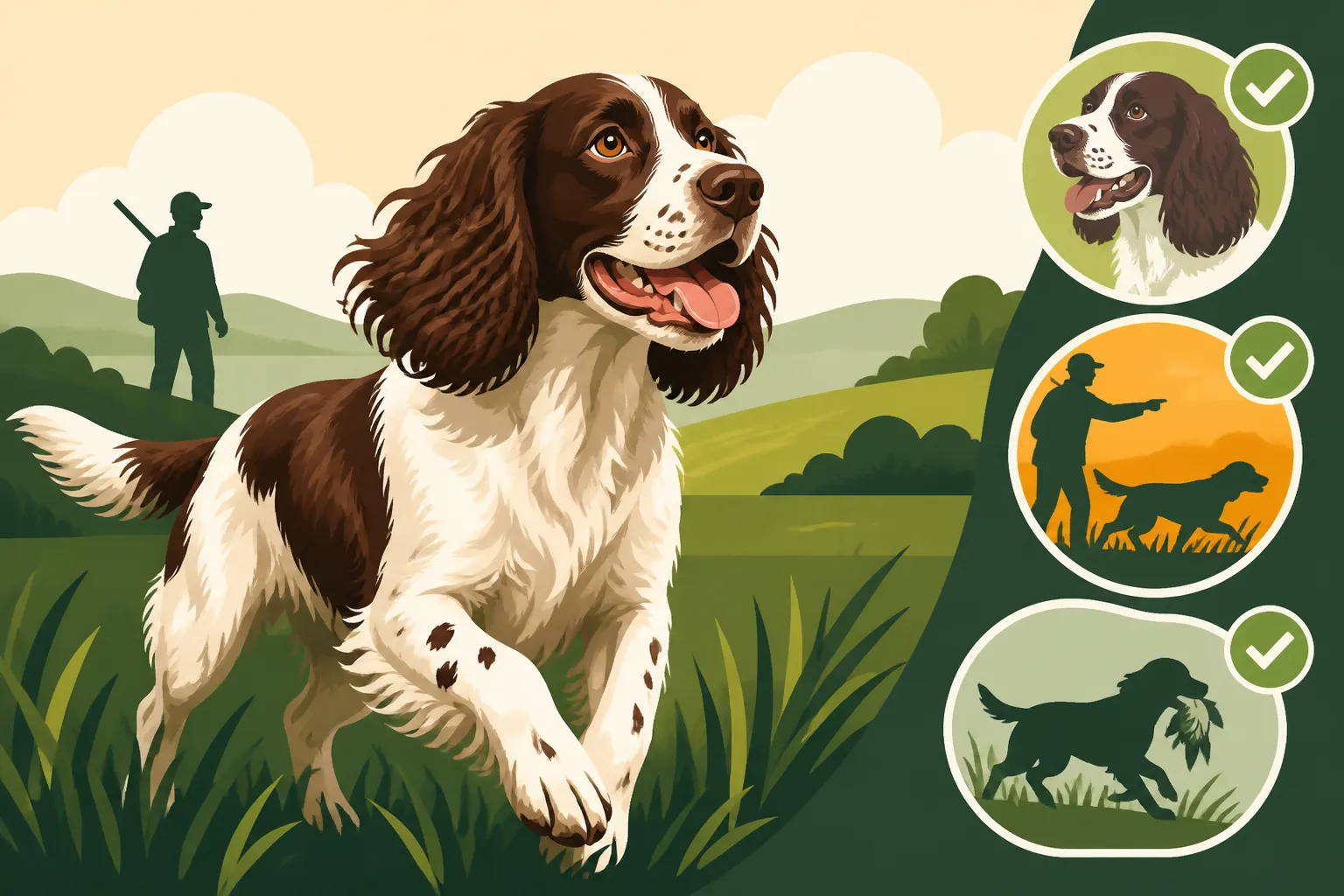
Working Springers remain valued for searching dense cover and flushing game, particularly where a handler wants an active dog working within range. In the UK, that may mean a day on a shoot; in the United States, it may involve hunting, spaniel field trials, or training for hunt tests. The details differ, but the underlying skills—using scent, responding to direction, and working cooperatively—remain central.
At the same time, many dogs from working lines live as companions rather than working gundogs. Some never see a hunting day. Others train regularly but only work occasionally. That doesn’t make them less “working” by pedigree, but it does mean their exercise, training, and enrichment need to be planned around the dog’s energy and instincts rather than the owner’s occasional outing.
That gap can create friction. A dog bred to search, move, and solve problems may find a short walk and a quiet afternoon insufficient, especially if it has learned that sniffing, retrieving, or chasing birds are rewarding. For a closer look at the difference between pedigree and home life, see Whether a Field Springer Spaniel Can Be a House Pet.
The strengths keeping working Springers in demand
A versatile partner with a strong nose
A good working Springer combines athleticism with an eagerness to engage with its handler. It searches cover with purpose, reacts quickly to scent, and can learn to respond to whistle cues, hand signals, and voice commands. That combination makes the breed useful in the field and gives many owners an enthusiastic training partner outside the shooting season.
The same qualities are useful in activities such as scent work, retrieving games, and structured outdoor training. A household that has no access to hunting can still give a Springer meaningful work through carefully designed search exercises or formal classes. The point is not to recreate a full day in the field in the backyard; it is to provide safe, varied outlets that use the dog’s mind and body.
There is a trade-off: strong working ability can come with a strong interest in scent and movement. A Springer that catches the trail of a rabbit or bird may struggle to hear a familiar cue until its recall has been trained in gradually harder settings. Owners should build reliability with a long line and controlled practice before trusting a dog off leash in wildlife-rich areas.
A living tradition with different regional paths
Working Springers continue to be shaped by the communities that train and use them. British shooting traditions and American field trials have influenced what handlers value, from close, controlled searching to speed and endurance. The expectations are not identical everywhere, and “working type” can mean different things depending on the country, activity, and breeder. How American Field Trials Shaped the Springer Spaniel and How Britain and America Diverged on Springer Spaniel Type explore some of those differences.
A strong working culture can help preserve practical skills. Experienced handlers pass on knowledge about introducing a young dog to cover, building steadiness, and keeping the dog responsive rather than simply fast. That experience matters: natural hunting instinct is valuable, but it does not replace training, sound handling, or careful exposure to gunfire.
Still, working tradition cannot by itself guarantee the breed’s future. If breeding choices focus narrowly on performance or fashionable traits, other qualities can receive less attention. Good breeders consider whether dogs are physically sound, manageable in everyday life, and suited to the work they are expected to do—not only whether they have impressive drive.
The pressures working Springers face
Drive can be a mismatch for an ordinary household
The most common difficulty is not that a working Springer is “too much” in every home. It is that a particular dog’s needs can exceed what its owners expected or can consistently provide. A high-drive dog that spends long stretches without activity may invent its own occupation: scavenging, digging, barking at movement, or fixating on birds beyond the garden fence.
Exercise helps, but simply adding more miles is not always the answer. A dog can become fitter without learning to settle. Many need a balanced routine that includes calm rest, short training sessions, sniffing, recall practice, and appropriate chances to retrieve or search. A household should be able to sustain that routine through wet weekdays, busy work periods, and the darker months—not just on a sunny weekend.
Families considering a working-line dog should discuss the parents’ energy and behavior with the breeder, then think honestly about their own schedule. A large garden does not automatically meet a dog’s needs, and a busy home is not necessarily a bad fit if adults can provide structure and teach children how to interact safely. The practical question is whether the dog’s daily life can be enriching and predictable. Whether a Field Springer Spaniel Is Too Much for a Family looks at that fit in more detail.
Breeding, health, and temperament need equal attention
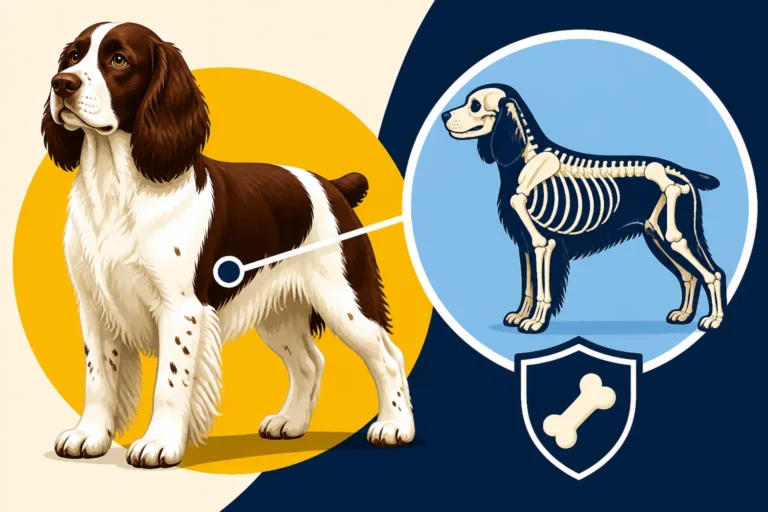
A dog that works hard needs a body capable of doing that work comfortably. Breeding decisions should take account of relevant health screening and family history, along with sound movement and a stable temperament. No single result guarantees a healthy dog, but asking what health checks have been completed—and what the results mean—is a sensible part of choosing a breeder.
Health discussions should be specific rather than reduced to “working dogs are healthier” or “show dogs are healthier.” Different lines may face different risks, and individuals vary. A working lifestyle also brings practical hazards, such as cuts, thorns, ticks, grass awns, and strains from rough or repetitive activity. After a day outdoors, checking paws, ears, coat, and skin can help owners notice trouble early. How Health Problems Differ Between Springer Spaniel Types offers additional breed-type context.
Temperament deserves the same attention as athletic ability. A dog needs to be willing to work, but it should also be able to recover from unfamiliar situations, learn without intimidation, and settle after activity. Breeders who consider behavior in daily life as well as performance are helping protect the breed’s future. The Push to Breed Springer Spaniels for Temperament explores why that balance matters.
How owners and breeders can help working Springers thrive
Choose the dog for the life you can actually offer
Before contacting a breeder, write down what a normal week looks like. Include work hours, exercise opportunities, training time, travel, and who will care for the dog when plans change. Then ask breeders about the parents’ actual routines and behavior: how they work, how they settle at home, how they respond to new environments, and what kind of home has suited their previous puppies.
It is also worth asking whether the breeder can explain how the litter’s likely drive and temperament vary. A careful match may mean choosing a puppy that is not the most intense in the litter, or waiting for a different pairing. That is not a failure to select a “real” working dog. It is a way to give the individual dog a better chance of fitting its future home.
| Owner’s situation | Questions to ask | Why it matters |
|---|---|---|
| You plan to hunt regularly | What work do the parents do, and how are they trained? | A working label alone does not describe the dogs’ real ability or style. |
| You want a companion from working lines | How do the parents behave at home after activity? | Drive and the ability to settle are related but not identical. |
| You are new to gundog training | What support is available after the puppy goes home? | Good guidance can prevent avoidable training and handling problems. |
| You have children or other pets | How do the parents handle household noise and routine? | A dog’s home behavior is important alongside field performance. |
Routine care is part of the arrangement too. A working dog that goes through wet cover may need regular coat checks and attention to its ears and feet. Owners who need to restock ordinary supplies such as grooming tools or ear-care products may use retailers including Chewy, while choosing products that suit their dog and following veterinary guidance when a medical issue is involved.
Protect the dog’s working ability without demanding constant performance
Training should build cooperation, not just excitement. Start with simple recall, walking calmly on lead, and short search games in low-distraction settings. Increase difficulty gradually. If a dog repeatedly rehearses ignoring a cue while chasing scent, the owner is not proving the dog is stubborn; the setup may be too challenging for the dog’s current training.
For a dog that works in the field, conditioning and recovery matter. Build activity gradually, allow rest, and check for soreness or changes in movement after demanding days. Keep water available and avoid pushing a dog through obvious fatigue or distress. A dog’s enthusiasm can make it easy to miss how tired it is, particularly when the dog is still keen to continue.
After outdoor work, a quick routine can catch small problems before they become bigger ones. Check between the toes and around the pads, look through feathering for burrs or thorns, and inspect the ears for dirt or irritation. Owners who buy routine items through Chewy or another retailer should still ask a veterinarian about persistent redness, odor, discharge, limping, or repeated head shaking rather than trying to solve those signs with a new product.
Keep the working dog connected to ordinary life
A working Springer’s future is not measured only by field results. It also depends on whether dogs can live comfortably with people, cope with everyday handling, and switch off when the work is done. Training for those skills benefits both active gundogs and companions from working lines.
Registries and breed communities have different ways of describing or recording field and show types, so a registration label may not fully explain a dog’s background. Ask breeders to describe the line and the dogs themselves. Whether Any Registry Separates the Two Springer Spaniel Types can help clarify why type labels do not always tell the whole story.
The working Springer is faring best where people value both ability and quality of life. That means preserving the dog’s instinct to search and flush while selecting for sound health, thoughtful temperament, and a level of drive that suits the intended home. For owners, it means giving the dog structured activity without expecting endless intensity. A capable Springer can be a rewarding field partner and a companion—but only when the match, training, and daily routine make room for both sides of the dog.
Disclaimer
This article is for general informational purposes only and does not constitute professional advice. Laws, prices and regulations vary by location and change over time. Consult a qualified professional for guidance on your specific situation.