Whether a Springer Spaniel Suits a Rural Property
A rural home can give an English Springer Spaniel room to explore, but acreage alone does not guarantee a happy, manageable dog. Open fields, livestock, wildlife, farm equipment, and unfenced roads bring their own challenges. This guide explains when a Springer Spaniel suits a rural property, what to prepare before bringing one home, and how to make country life safe and satisfying.
Is a rural property a good fit for a Springer Spaniel
Space helps, but it does not replace daily activity
Springer Spaniels were bred to work closely with people while searching cover for game. That instinct can show up in a pet dog as persistent sniffing, chasing birds, darting through long grass, and a strong desire to be involved in whatever you are doing. A large yard or field gives a dog room to move, but it does not automatically provide the exercise, training, or company this breed needs.
A dog left to roam alone may spend the day rehearsing habits you do not want: chasing livestock, digging under a fence, following a scent beyond the property, or barking at passing tractors. Even a dog that seems content outdoors may still need regular walks, games, short training sessions, and time with the family indoors. Rural life works best when the property is a backdrop for shared activity, not a substitute for it.
Consider what a normal weekday would look like. If you can include a walk, a few minutes of recall practice, a sniffing game, and relaxed time with the dog in the house, a country home may suit a Springer well. If the plan is to leave the dog outside for most of the day because there is “plenty of room,” think carefully before choosing this breed. Whether a Springer Spaniel Needs a Job to Be Happy
The type of Springer Spaniel matters
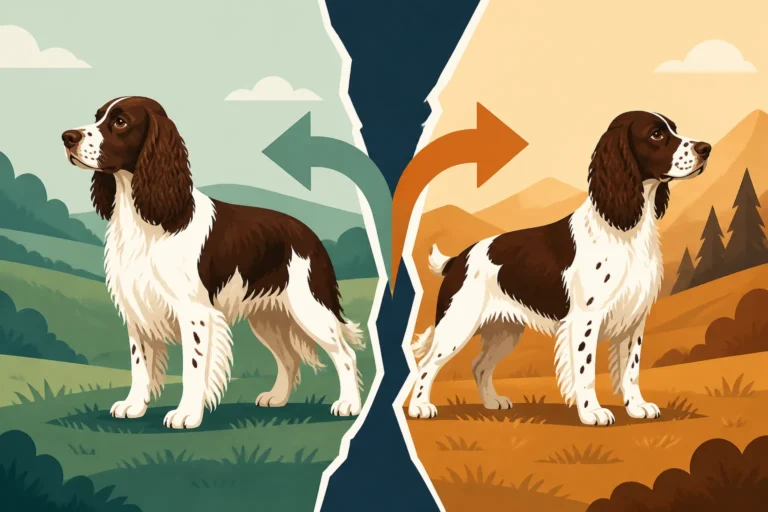
Field-bred and show-bred Springer Spaniels can differ in energy, working drive, coat, and the amount of structured activity they tend to seek. Neither type is automatically right or wrong for a rural home. The important question is whether the individual dog’s needs match the life you can offer. A working-bred dog may be especially keen to search, follow scent, and keep moving; a show-bred dog can still be active, curious, and eager to explore.
Talk with the breeder or rescue about the dog in front of you, not just the type in general. Ask how the parents behave at home, whether they settle after exercise, and what their response is to livestock, birds, and unfamiliar dogs. A puppy’s adult temperament cannot be guaranteed, but knowledgeable people should be able to describe the line and the puppy’s observed behavior honestly. How a Field Bred Springer Spaniel Differs in Drive
| Rural property feature | Why it can help | What still needs planning |
|---|---|---|
| Large garden or paddock | Offers space for supervised play and training | Secure boundaries and active supervision |
| Nearby footpaths or tracks | Makes varied walks easier to plan | Lead control around livestock, roads, and wildlife |
| Access to water | Can provide enjoyable enrichment for some dogs | Safe entry and exit, water quality, and ear drying |
| Distance from neighbors | May reduce some day-to-day noise concerns | Barking can still disturb neighbors or livestock |
| Working land nearby | Can suit owners who enjoy outdoor activities | Farm machinery, stock, shooting, and access rights |
What makes country life risky for a Springer Spaniel
Fences, roads, and livestock need real attention
A rural property can feel enclosed while still having gaps a dog can find. A Springer Spaniel following a scent may slip through a broken gate, push under loose wire, or squeeze through a space you did not realize was passable. Walk the boundary at the dog’s level and check gates, drainage ditches, hedges, and places where fencing meets a building. Do not assume a hedge is a dependable barrier.
A secure area is especially important near roads, even quiet lanes where traffic seems occasional. Rural drivers may be moving quickly, and tractors or farm vehicles can be difficult for a dog to predict. Train recall in safe, enclosed places first, then build reliability gradually. In open country, a long line can provide freedom to sniff while preserving control. A GPS collar may be an additional safeguard in some settings, but it does not replace a fence, lead, or trained recall. Whether a Springer Spaniel Can Be Trusted Off Leash
Livestock needs a separate plan. A dog that is friendly with its family can still frighten sheep, cattle, horses, or poultry by running toward them. Keep the dog leashed near stock unless you are in a place where it is safe and permitted to do otherwise. Teach calm attention around animals from a distance, and never assume that an early introduction makes unsupervised access safe. Local rules and land-access arrangements vary, so check what applies where you live.
Wildlife and farm work can trigger chasing
Rabbits, pheasants, deer, squirrels, and other wildlife can make a walk feel like a training test. A Springer’s nose may keep working after you call, especially if the dog is young or has not yet learned to respond around strong distractions. Build recall in stages: begin somewhere quiet, reward the dog for turning back, and gradually practice around more interesting scents while using a lead or long line.
A rural property also contains hazards that are easy to overlook when they are part of everyday life. Store chemicals, fuel, pest-control products, medicines, and animal feed securely. Keep dogs away from machinery, open wells, slurry or manure areas, and recently treated fields unless you know access is safe. After walks through brambles or long grass, check the coat, paws, ears, and face for cuts, ticks, burrs, and grass awns. What to Check on a Springer Spaniel After a Day in Cover
Think about seasonal changes, too. A field that is quiet in winter may become busy during lambing, harvest, or shooting season. A lane with little traffic on a weekday may see more vehicles during a local event or busy weekend. Having a lead, a secure resting place, and a plan for keeping the dog away from active work makes it easier to adapt without relying on luck.
How to prepare a rural home for a Springer Spaniel
Build security and training before giving more freedom
Before your dog arrives, inspect the property and decide where the dog can go safely. Repair gaps in fencing, secure gates, and set up a reliable way to separate the dog from livestock, machinery, or visitors. If the whole property cannot be enclosed, create a smaller secure exercise area. That gives you somewhere to play and practice without asking the dog to make difficult choices at every tempting scent.
Start with everyday skills that matter especially in the country: coming when called, walking on a lead, waiting at gates, settling on a mat, and responding to a stop or turn cue. Practice around mild distractions before trying the same skills near a flock or field full of birds. Keep sessions short and rewarding. A dog who has learned that checking in with you pays well is easier to manage than one who has only been allowed to run freely and is suddenly expected to obey when something exciting appears.
For puppies and newly adopted adults, freedom should increase gradually. Use a lead or long line while you learn how the dog responds to the property and its distractions. A recall that works in the kitchen may not work when a rabbit bolts across a field. If you are weighing up how much activity to provide, How Much Exercise a Show Bred Springer Spaniel Needs and How Much Exercise a Field Bred Springer Spaniel Needs can help frame the difference between a dog’s general exercise needs and the extra work some individuals may want.
Set up practical routines for grooming and health
Country walks can leave a Springer Spaniel with wet ears, muddy feathering, burrs, and debris between the toes. Keep a towel, a suitable brush, and a basic dog first-aid kit near the door. After a walk through cover, check the coat before the dog settles on the sofa or gets into the car. This quick routine can catch small problems before they turn into a painful mat, a sore paw, or an irritated ear.
Drop ears are worth checking regularly, particularly after swimming or a muddy, wet walk. Dry the outer ear gently and avoid putting cleaners or other products into the canal unless your veterinarian has advised you to. Persistent head shaking, redness, a bad odor, discharge, or signs of pain deserve veterinary attention rather than repeated home cleaning. The Springer Spaniel Ear That Never Fully Dries
You may find it useful to keep rural-walk supplies in one place: a lead, a long line, a tick-removal tool, a towel, and a coat brush. If you shop at Chewy, you can compare practical items such as leads, grooming tools, and travel bowls, but choose equipment that fits your dog and the conditions you actually encounter. A bright visibility vest may be helpful in some settings, while a sturdy lead and a secure gate are more fundamental.
Will a Springer Spaniel fit your particular rural lifestyle
Match the dog to your routine, not just the landscape
A rural home may be a particularly good fit if you enjoy walking, gardening, training, or spending time outdoors and want a dog involved in those activities. It can also suit someone who hunts or takes part in gundog training, provided the dog receives careful instruction and suitable rest. A Springer Spaniel does not need a hunting life to thrive, but it does need meaningful engagement and a close relationship with its people.
The fit may be harder if the property is remote but the dog would spend most days alone, or if the land cannot be secured and there is no safe place for lead-free exercise. A large plot does not solve separation distress, poor recall, or a lack of interaction. If you work long hours, consider who will provide a midday break and how the dog will spend time safely. Whether a Springer Spaniel Suits Someone Who Works Full Time
Think about the household as well. Children may enjoy country walks with a Springer, but an excited dog can rush through a doorway, chase a game, or knock a small child over. Teach children not to approach livestock with the dog, and supervise interactions rather than expecting either the dog or the child to manage alone. If your property includes cats, poultry, or other small animals, plan gradual introductions and secure separation. Each animal’s safety matters more than hoping the dog will simply get used to them.
Questions to ask before bringing a dog home
Use these questions to make the decision concrete:
- Is there a secure area where the dog can exercise without reaching a road, livestock, or neighboring land?
- Can you provide daily walks, training, and time with the dog inside the home?
- Are you prepared to use a lead or long line until recall is reliable around wildlife?
- Can you safely separate the dog from farm work, chemicals, machinery, and animals?
- Do you have a plan for wet, muddy walks and regular ear and coat checks?
- Have you talked with the breeder or rescue about the dog’s energy, behavior, and likely needs?
If you are not ready to answer yes to every safety question, that does not necessarily rule out a Springer Spaniel. It may mean you need to make changes first, such as improving a fence, creating a secure run, arranging help during the workday, or choosing an adult dog whose habits are already known. A thoughtful conversation with a reputable breeder or rescue can help you assess whether a particular dog is a realistic match.
Chewy can be one place to compare everyday supplies such as a long line, a washable bed, or a brush, but gear cannot replace secure boundaries, patient training, or supervision. Make your shopping list after you have assessed the property and the dog’s needs rather than buying equipment in the hope that it will solve a behavior problem. For more on choosing a household fit, see The Household a Springer Spaniel Was Built For.
A Springer Spaniel can thrive on a rural property when the owner combines outdoor opportunity with structure, company, and sensible safety measures. The best country home is not simply the one with the most land. It is the one where the dog can explore safely, learn what is expected, and spend plenty of time as part of family life.
Disclaimer
This article is for general informational purposes only and does not constitute professional advice. Laws, prices and regulations vary by location and change over time. Consult a qualified professional for guidance on your specific situation.