Which Slow Feeder Works for a Springer Spaniel
Is your sweet Springer Spaniel a vacuum cleaner in disguise, hoovering up their kibble in mere seconds as if a rival dog is about to snatch it away? It's a common, and often frustrating, sight for many of us Springer owners, leading to concerns about digestion and overall well-being. This comprehensive guide is here to walk you through why your beloved companion might be eating so fast and, more importantly, to explore the world of slow feeders that can help transform mealtime into a healthier, more enjoyable experience for everyone.
Why Your Springer Spaniel Becomes a "Hoover" at Mealtime
It’s easy to feel like your Springer Spaniel is just incredibly greedy when they finish their meal faster than you can pour your morning coffee. But often, there's more to this rapid consumption than just a love for food. Understanding the root causes can help you choose the right approach and the right tools, like the ideal slow feeder for your furry friend.
The Instinctive Drive to Eat Fast
Springer Spaniels, even the most pampered house pets, carry strong instincts from their working dog heritage. In the wild, or even in a less domesticated past, competition for food was real. Eating quickly meant securing a meal before another pack member, or even another animal, got to it. This isn't just a quirky habit; it's a deeply ingrained survival mechanism. When you put a bowl of delicious food down, that ancient wiring can kick in, urging them to gobble it up as fast as possible. It's not personal, it's just instinct.
Think about a litter of puppies all vying for the best spot at mom's milk bar. That early competition can set a pattern for life. Even if your Springer is an only dog now, those early experiences or genetic predispositions can translate into speedy eating habits. It’s part of their charm, but it's also something we need to manage for their health.
Potential Health Risks of Rapid Eating
While a quick meal might seem harmless, it can actually lead to several significant health concerns for your Springer Spaniel. One of the most talked-about risks, especially in deep-chested breeds like Springers, is bloat, or gastric dilatation-volvulus (GDV). Whether a Springer Spaniel Gets Bloat is a terrifying condition where the stomach fills with gas and can twist, cutting off blood supply. Eating too fast can cause them to swallow excessive air, which contributes to the risk of bloat. It's an emergency situation that often requires immediate veterinary intervention, and it's a fear many of us who own larger, active breeds live with.
Beyond bloat, rapid eating can also lead to indigestion, vomiting, and nutrient malabsorption. If food is rushed through the digestive system without proper chewing or mixing with saliva, it can be harder for their body to break down and absorb all the good stuff. You might notice them burping, or even regurgitating undigested food shortly after eating. It's not only messy but also means they aren't getting the full benefit from their carefully chosen diet, whether it's standard kibble or a fresh food like what Ollie provides. A simple change in how they eat can make a world of difference in preventing these uncomfortable and potentially serious issues.
Exploring Different Slow Feeder Designs for Your Springer
The market for slow feeders has really expanded, which is fantastic news for us Springer owners. Gone are the days of just a simple bowl; now there's a whole array of creative solutions designed to make mealtime a challenge, not a race. Finding the right one often depends on your dog's specific eating style, their enthusiasm, and even their intelligence.
Traditional Slow Feeder Bowls
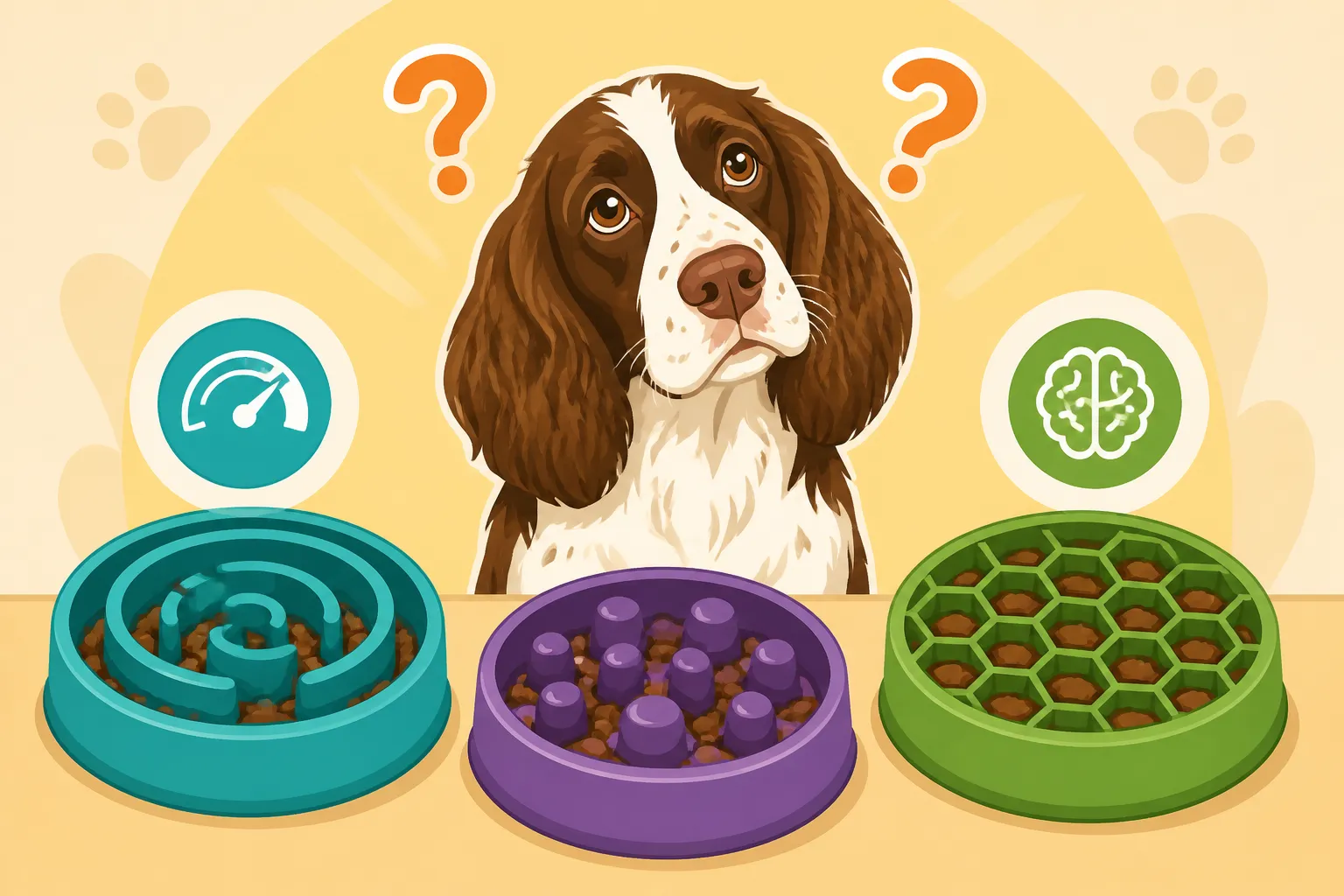
These are often the first type of slow feeder people think of, and for good reason: they're typically the most straightforward and easiest to integrate into a routine. A traditional slow feeder bowl features various ridges, mazes, or pillars molded into the bottom. Instead of a wide-open surface where your Springer can just shovel food, these obstacles force them to work around them, nudging individual kibble pieces out with their nose or tongue.
The effectiveness of these bowls varies greatly depending on the pattern and depth of the ridges. Some have gentle waves, while others have deeper, more intricate labyrinths. For a mildly fast eater, a simple design might be enough. For a true "speed demon," you'll want something with more challenging nooks and crannies. You can find a huge variety of these on sites like Chewy or Amazon, allowing you to compare different patterns and materials. The key is that the dog can't just gulp big mouthfuls; they have to slow down and pick at their food.
Snuffle Mats and Foraging Toys
Moving beyond rigid bowls, snuffle mats and foraging toys offer a different kind of mental engagement. A snuffle mat is a fabric mat with various flaps, fringes, and pockets where you hide kibble or treats. Your Springer has to sniff, root, and "forage" for each piece, mimicking natural hunting behaviors. This isn't just about slowing down eating; it's also a wonderful way to provide mental enrichment and satisfy their strong Springer Spaniel nose.
Foraging toys, on the other hand, are often more structured and can be made from rubber or hard plastic. They typically dispense food as your dog rolls, nudges, or manipulates them. Think of a Kong Wobbler or similar designs where your Springer has to figure out how to get the food to fall out. These are fantastic for dogs who need a significant challenge and can keep them occupied for longer periods. They also stand up well to enthusiastic chewing, which can be a consideration for a determined Springer. This approach taps into their natural curiosity and problem-solving skills, making mealtime an engaging activity rather than a quick pit stop.
Puzzle Feeders and Interactive Games
For the truly intelligent and highly motivated Springer Spaniel, puzzle feeders and interactive games take slow feeding to the next level. These are often multi-step challenges where your dog might have to lift lids, slide panels, or press levers to reveal their food. They demand more cognitive effort and can be incredibly rewarding for a dog that loves a challenge.
The complexity of puzzle feeders ranges from beginner-friendly models with just a couple of hiding spots to advanced puzzles requiring a sequence of actions. These are fantastic for mental stimulation and can burn energy in a way that a simple walk sometimes can't. If you're feeding a How Much a Working Springer Spaniel Should Eat kind of dog, these can also help manage their drive and focus. Just be prepared to supervise initially, as some dogs might try to solve the puzzle by simply flipping it over! Look for durable, non-toxic materials and make sure the parts are large enough not to be swallowed.
Selecting the Ideal Slow Feeder for Your Springer Spaniel
With so many options, how do you pick the right one? It's not a one-size-fits-all situation, and what works for one Springer might be easily defeated by another. Consider your dog's unique traits, from their chewing habits to their overall enthusiasm, to make the best choice.
Considering Your Springer's Chewing Habits
This is a big one! Springer Spaniels are often robust dogs, and some can be quite persistent chewers, especially if they get frustrated. If your Springer is known for destroying toys or trying to "solve" things with their teeth, a flimsy plastic slow feeder won't last long. You'll want to lean towards more durable materials like heavy-duty plastic, ceramic (if they don't tend to flip bowls), or robust rubber for puzzle toys.
For instance, if you've got a Springer puppy, you know The First Year With a Springer Spaniel Puppy involves a lot of chewing as they explore the world. A soft rubber snuffle mat might get torn up by determined puppy teeth, whereas a hard plastic maze bowl or a sturdy puzzle toy designed for tough chewers would be a better investment. It’s about matching the feeder's durability to your dog's chewing prowess to ensure safety and longevity.
Matching the Feeder to Their Enthusiasm and Intelligence
Some Springers are just mildly fast eaters, while others tackle their bowl like it's the last meal on earth. Your dog's level of "food drive" and intelligence plays a huge role in choosing an effective slow feeder.
For a dog with moderate speed, a basic maze bowl might be perfectly adequate. It creates enough obstruction to slow them down without causing frustration. However, if you have a highly driven Springer who is also quite clever, they might quickly figure out how to bypass simple obstacles. For these super-smart, super-speedy eaters, a more complex puzzle feeder or an intricate snuffle mat that requires genuine foraging effort would be more appropriate. These types of feeders turn mealtime into a mental workout, which can be incredibly satisfying for an intelligent breed like a Springer. Just as The Daily Routine a Springer Spaniel Actually Needs incorporates physical activity, mealtime can also be a chance for mental exercise.
Size and Type of Food
The type and size of your Springer's food also matter. If you're feeding small kibble, a slow feeder with very deep, narrow channels might be too frustrating, as the tiny pieces can get stuck. Conversely, very large kibble might not fit into smaller maze patterns. If you feed a fresh food diet, like one from Ollie, you'll need a slow feeder that can accommodate a softer, potentially wetter consistency. Some puzzle feeders work beautifully with fresh food, allowing you to spread it into crevices for your dog to lick.
| Slow Feeder Type | Best For | Considerations | Brands (Examples) |
|---|---|---|---|
| Traditional Maze Bowl | Moderate speed eaters, dry kibble | Easy to clean, durable options | Outward Hound, Neater Feeder (often available on Amazon, Chewy) |
| Snuffle Mat | All eaters, mental stimulation, treats | Needs cleaning, not chew-proof | Pet Parents, Paw5 (often available on Chewy) |
| Puzzle Feeder | Intelligent dogs, highly motivated | Can be complex, supervision needed | Nina Ottosson (available on Amazon, Chewy), Kong |
| Lick Mat | Slowing down, stress relief, wet food | Great for soft food, not for chewing | LickiMat (available on Amazon, Chewy) |
This table provides a quick overview, but always check product reviews and descriptions for specific details on food compatibility. For wet food, a Which Slow Feeder Works for a Springer Spaniel is often one that is designed for spreading, like a lick mat, which encourages gentle licking rather than gulping.
Integrating a Slow Feeder into Your Springer's Routine
So, you’ve picked out what you hope will be the perfect slow feeder. Now comes the critical part: successfully introducing it to your Springer Spaniel. It's not always an instant success, and patience is definitely a virtue here.
Gradual Introduction and Positive Reinforcement
When you first bring home a new slow feeder, don't just dump a full meal into it and walk away. This can be overwhelming or even frustrating for your dog, especially if they're used to a quick, easy meal. Start gradually. For example, if you've bought a maze bowl, put a small amount of their regular food in it first, and place it in their usual feeding spot. You might even mix some kibble in the slow feeder and some in their old bowl for the first few days, slowly increasing the amount in the new feeder.
The key is positive reinforcement. Praise them enthusiastically when they interact with the new feeder, even if it's just a tentative sniff or a successful nudge of one piece of kibble. Make it a positive experience. If they seem confused or frustrated, don't force it. Try again later with an even smaller amount of food, or simplify the challenge. Remember, The Soft Springer Spaniel That Shuts Down If You Shout can be very sensitive to your reactions, so keep your tone upbeat and encouraging. This is about making mealtime better, not more stressful.
Troubleshooting Common Slow Feeder Challenges
Even with the best intentions, you might run into some bumps along the road. One common issue is a Springer Spaniel getting too frustrated. If your dog whines, paws aggressively at the bowl, or gives up entirely, the feeder might be too challenging for them right now. In this case, try a simpler design or use less food. You can also make it easier by initially scattering some food around the feeder, so they get some instant gratification before tackling the main event.
Another challenge can be your Springer trying to pick up or flip the entire feeder. This is where durable, heavier feeders come in handy. Non-slip bottoms are also a lifesaver. If they insist on flipping a lightweight plastic bowl, try placing it on a mat with a non-slip grip, or consider a ceramic option that has more heft. Foraging toys or snuffle mats, by their nature, are harder to flip. Remember that Whether a Springer Spaniel's Nose Overrides Its Ears and sometimes their manners, so they might be solely focused on getting to the food as quickly as possible, even if it means resorting to less elegant methods.
Benefits Beyond Slower Eating
The advantages of slow feeders extend far beyond simply making your Springer eat at a more reasonable pace. For one, they provide valuable mental stimulation. Dogs, especially active and intelligent breeds like Springers, need to use their brains, and figuring out how to get food from a puzzle is a great way to do that. This mental workout can actually contribute to a calmer, more satisfied dog, reducing boredom-driven behaviors like chewing on furniture or excessive barking.
Slower eating also aids in better digestion. When food is properly chewed and mixed with saliva, the digestive process starts more effectively, leading to better nutrient absorption and potentially less gas or stomach upset. It also encourages satiety; because they're working for their food and taking longer to eat it, their brain has more time to register that they're full. This can be particularly helpful for Keeping a Springer Spaniel at a Working Weight, as it can reduce begging between meals. It transforms mealtime from a frantic race into a purposeful, enriching activity, benefiting both their physical health and their mental well-being.
Disclaimer
This article is for general informational purposes only and does not constitute professional advice. Laws, prices and regulations vary by location and change over time. Consult a qualified professional for guidance on your specific situation.